Neuenberg Benedictine Provostry (Andreasberg): A Medieval Reform Monastery in Fulda
Site at a Glance
- Rating
- 4.8
- Popularity
- Very Low
- Country
- Germany
- Primary era
- Medieval
- External website
- Open
- Eras represented
- Medieval, Early Modern
- Civilizations
- Holy Roman Empire
- Site type
- Religious
- Remains
- Church
On this page13 sections
History
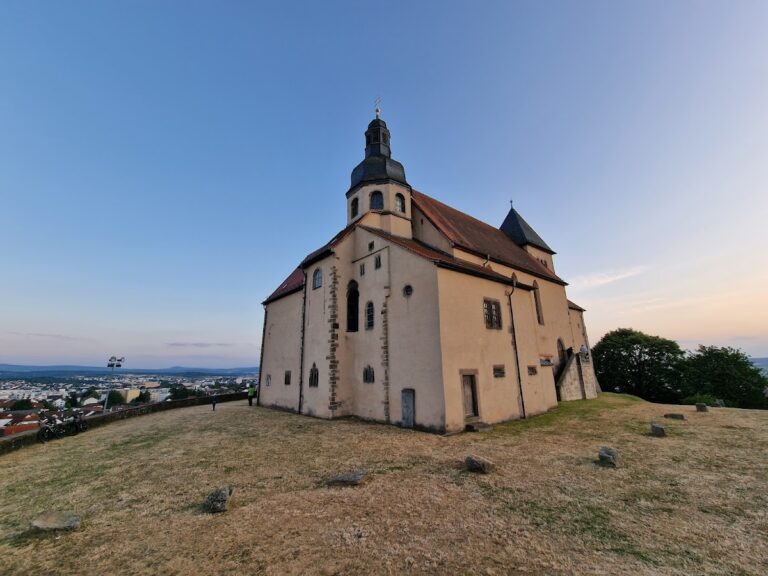
Neuenberg Benedictine Provostry (Andreasberg) is a former Benedictine provostry in Fulda, Germany, founded in 1023 on Neuenberg hill outside the city walls. Dedicated to the Apostle Andrew and subordinate to Fulda Abbey, it was established as a reform monastery during the renewal of Benedictine religious life in the early eleventh century.
Foundation and Benedictine reform
Richard of Amorbach, the abbot of Fulda, founded Neuenberg in response to the need for reform at Fulda Abbey. He probably intended the new community to serve as a model for the Gorze reform, a movement to renew Benedictine discipline, communal life, and religious observance. Emperor Henry II had pressed the monks of Fulda in 1013 to elect Richard, who had been abbot of Amorbach since 1010, as their leader.
The completed monastery church was consecrated in 1023 by Aribo, archbishop of Mainz. Around 25 monks lived at Neuenberg during its first years. Richard was buried there on 20 July 1039, and his grave in St. Andrew’s Church is the only surviving grave of a Fulda abbot from before 1700.
Bardo, a relative of Emperor Conrad II who later became archbishop of Mainz, served as the first provost. Neuenberg came to be regarded as the most important of Fulda’s provostries, and its provost acted as the abbot’s deputy until the middle of the sixteenth century. Sixty provosts served there between 1023 and 1802.
Growth and fifteenth-century reform
The provostry was supported by extensive landed property, and a village developed beside it during the twelfth century. Neuenberg formed the western part of Fulda’s surrounding sacred landscape, together with Frauenberg to the north, Petersberg to the east, and Johannesberg to the south.
In the early fifteenth century, Dean Franz of Bohemia introduced a reform influenced by the movement associated with Kastl. The reform abolished prebends, arrangements that provided individual monks with separate income and were considered incompatible with the Benedictine rule. Neuenberg gained a reputation as a reform monastery, and its monks were sent to other houses to encourage similar changes.
Provost Johannes of Angersbach attended the Council of Constance to advocate monastic reform. Provost Arnold of Vache later spent an extended period at the Council of Basel for the same purpose. Nicholas of Cusa, a German theologian, philosopher, cardinal, and church official, appointed Arnold as a monastic visitor and papal legate.
Fire, destruction, and decline
A major fire in 1441 destroyed most of the monastery buildings. Reconstruction continued for several decades, and Prince-Abbot Hermann II of Buchenau raised funds by pledging the town of Herbstein to the Riedesel family. During this rebuilding period, the monks’ reforming energy declined.
During Easter Week in 1525, rebellious peasants from Swabia, Franconia, and the Rhön reached Fulda during the German Peasants’ War and devastated the monastery. The destruction was probably so extensive that the expelled monks did not return. Four monks were living at Neuenberg again in 1631, but the monastery became deserted once more during the Thirty Years’ War, the seventeenth-century conflict that devastated much of central Europe.
Parish use and later religious occupation
St. Andrew’s Church was remodeled in the Baroque period, and the monastery’s thirteen surviving provosts’ grave monuments preserve inscriptions important to local history. Monastic life ended permanently at the beginning of the eighteenth century. In 1710, the church became the parish church of the village.
The former monastery buildings were occupied by Pallottines from 1940 to 1989. This Catholic congregation, founded by Vincent Pallotti in the nineteenth century, served the parish through its pastors and chaplains.
Remains
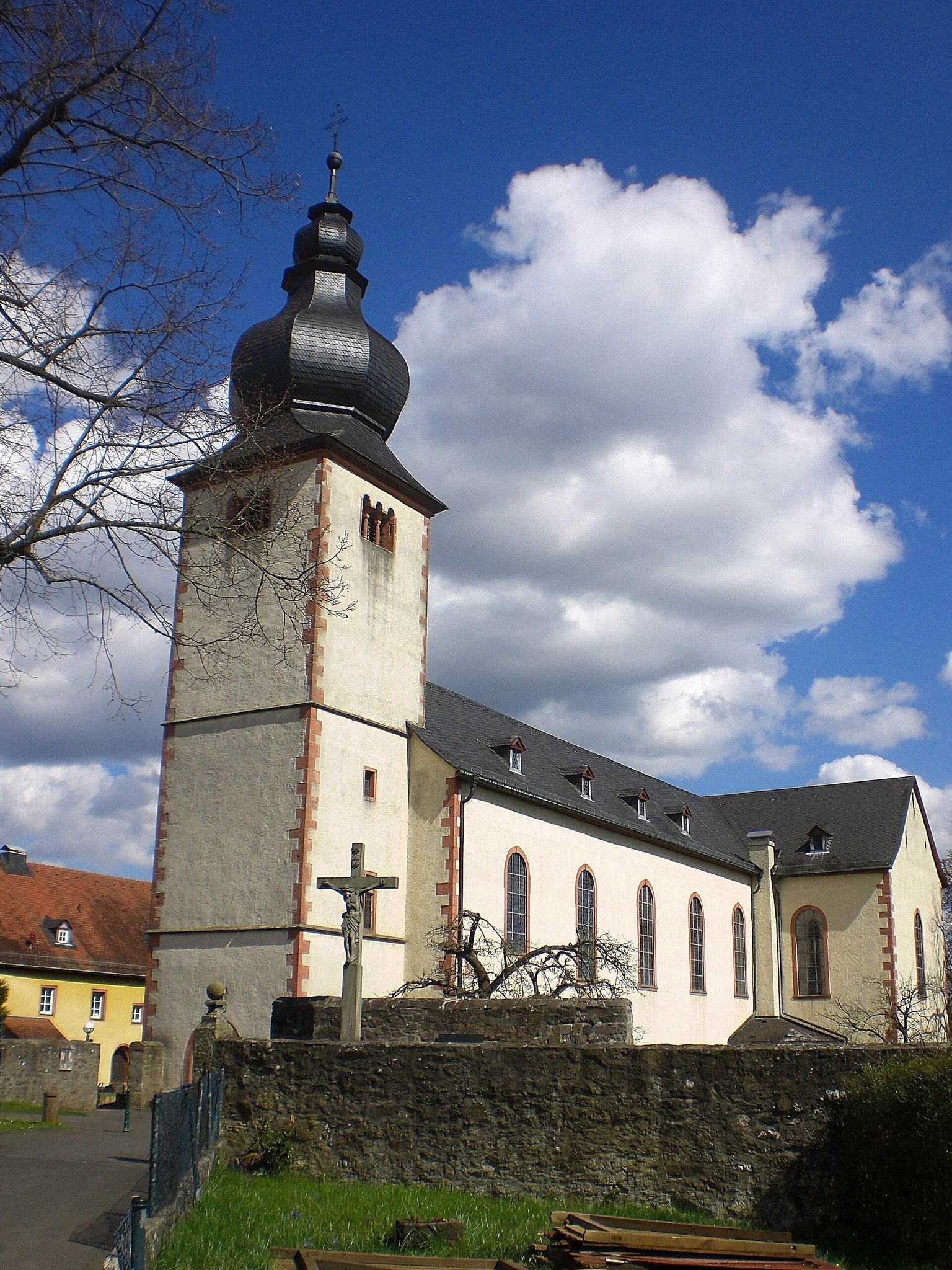
The surviving site is centered on St. Andrew’s Church, the former monastery church. Most of the conventual buildings were destroyed by the fire of 1441 and the devastation of 1525, while the church remained and was later adapted for parish use. Its surviving fabric combines the early medieval church, the Gothic Chapel of St. John, Baroque alterations, and the Ottonian crypt beneath the present altar area.
Church and medieval chapels
St. Andrew’s Church
St. Andrew’s Church was completed in 1023. Its original interior contained a rood screen, a partition separating the monks’ enclosed area from the part of the church used by villagers, with an altar set across the middle of the long nave. In the Baroque period, large windows were added to the nave, and the original Romanesque beam ceiling was replaced by a stucco vault.
Chapel of St. John
The Gothic Chapel of St. John was built in 1480 by Provost Gerlach II in the first level of the church tower. Its surviving features include an altar niche with a view into the choir, a stone altar table, and a Gothic cross-ribbed vault with a trefoil-shaped keystone.
Ottonian crypt
The Ottonian crypt beneath the present altar area has remained substantially unchanged since the monastery’s foundation. Four columns support the crypt, each with an Attic base and a Romanesque cushion capital. The vault contains secco paintings, a technique in which paint is applied to dry plaster, dating to around 1025.
The paintings show a liturgical procession of 22 angels moving toward the altar. Three small Romanesque windows in the eastern apse wall have reveals decorated with figures of Abel, Abraham, and Melchizedek. The paintings are described as unique within medieval mural painting, with comparable surviving Ottonian wall paintings in Germany at St. George’s Church on Reichenau.
The crypt paintings were rediscovered and uncovered during repair work in 1932. The crypt remains beneath the present Propsteikirche St. Andreas in its original condition. After fifteen years of analysis and restoration, it was reconsecrated on 3 February 2006 by Bishop Heinz Josef Algermissen.
Monastery buildings and memorials
Conventual buildings
The former monastery complex included the church and the buildings used by the community. Most of these structures were destroyed in the fire of 1441 and suffered further devastation in 1525. A new dormitory was added at the beginning of the sixteenth century, during the later phase of the complex’s medieval development.
Provosts’ grave monuments
Thirteen grave monuments to former provosts survive inside the church. Several carry inscriptions of importance for the history of the locality, preserving memorial evidence from the period when Neuenberg was governed by successive provosts subordinate to Fulda Abbey.