Santa Cristina: A Neoclassical Church in Pisa
Site at a Glance
- Rating
- 4.2
- Popularity
- Very Low
- Country
- Italy
- Primary era
- Modern
- Eras represented
- Medieval, Modern
- Civilizations
- Grand Duchy of Tuscany, Holy Roman Empire
- Site type
- Religious
- Remains
- Church
On this page12 sections
History
Santa Cristina is a Roman Catholic church in Pisa, Italy, rebuilt in its present Neoclassical form in 1816. Dedicated to Saint Christina of Bolsena, an early Christian martyr associated with the town of Bolsena, it belongs to the Archdiocese of Pisa. The church was initially dedicated to Saint Bartholomew, but received its current dedication in 1028 after relics of Saint Christina were brought there.
Medieval church
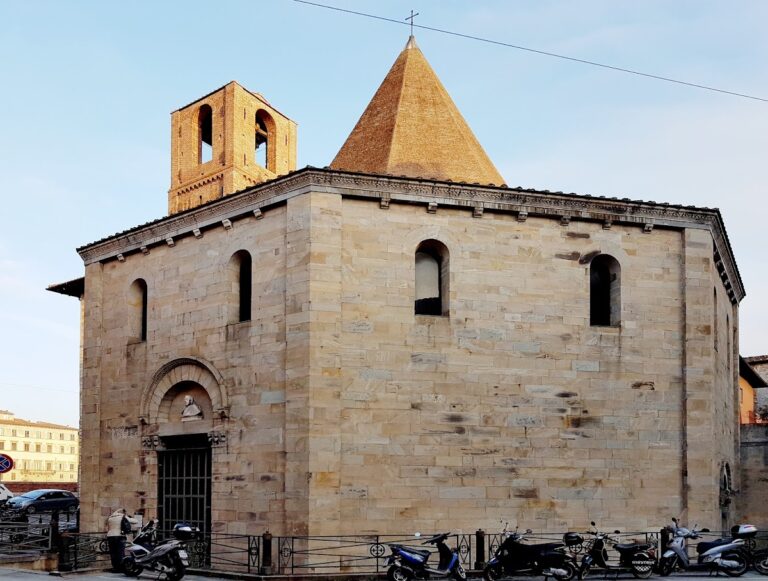
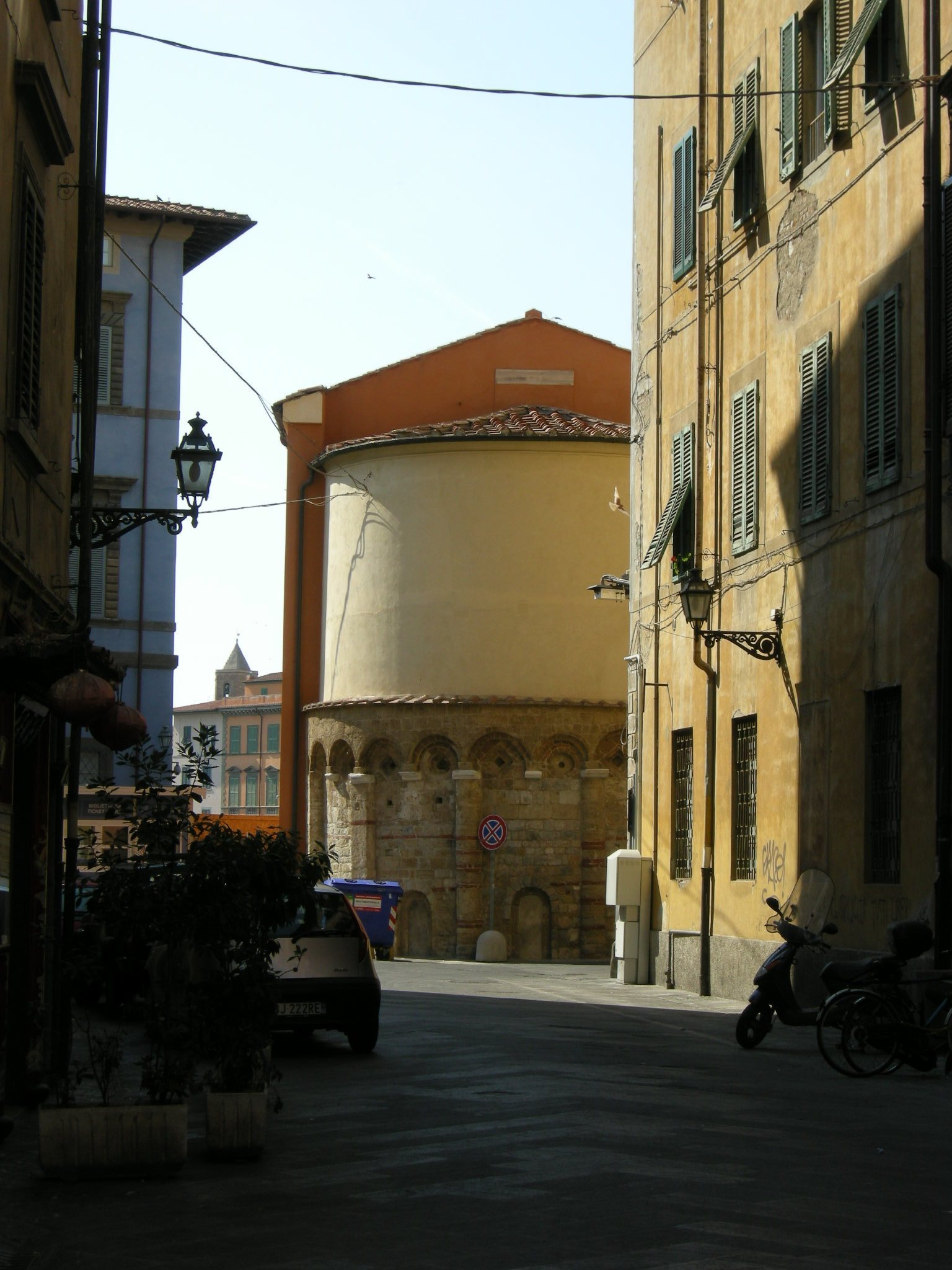
Santa Cristina was known by the early medieval period, and the lower part of its apse survives from the earlier Romanesque building. These external structures date from the tenth or eleventh century. A flood destroyed the church in 1115, after which it was rebuilt in 1118.
From the thirteenth through the sixteenth century, the church belonged to the canons of Pisa Cathedral. These clergy served the cathedral chapter and maintained an institutional connection between Santa Cristina and Pisa’s principal ecclesiastical foundation.
Saint Catherine and the later rebuilding
On 1 April 1375, Saint Catherine of Siena received the stigmata while praying before a crucifix in Santa Cristina. Catherine was a fourteenth-century Dominican tertiary, mystic, and religious writer. The stigmata are traditionally understood as bodily marks corresponding to Christ’s crucifixion wounds.
The original crucifix was transferred to Siena in 1565. By the late eighteenth century, the church had deteriorated. Count Luigi Archinto, who acquired the adjoining Agnello Palace in 1814, commissioned the engineer Francesco Riccetti to reconstruct it. Completed in 1816, the work established the church’s present appearance, and Riccetti also worked on the bell tower.
In 1854, plans to widen the Lungarno Gambacorti led to a proposal for complete demolition. The church was preserved instead. Its riverside rectory was straightened, and its windows were regularized to harmonize with the neighboring palaces.
Remains
Church and medieval apse
Neoclassical church
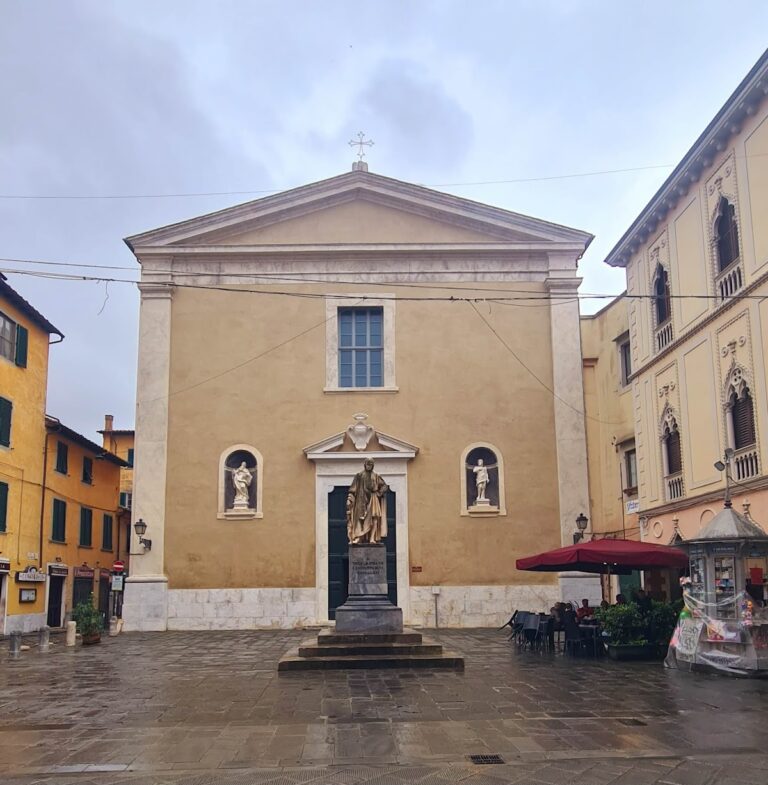
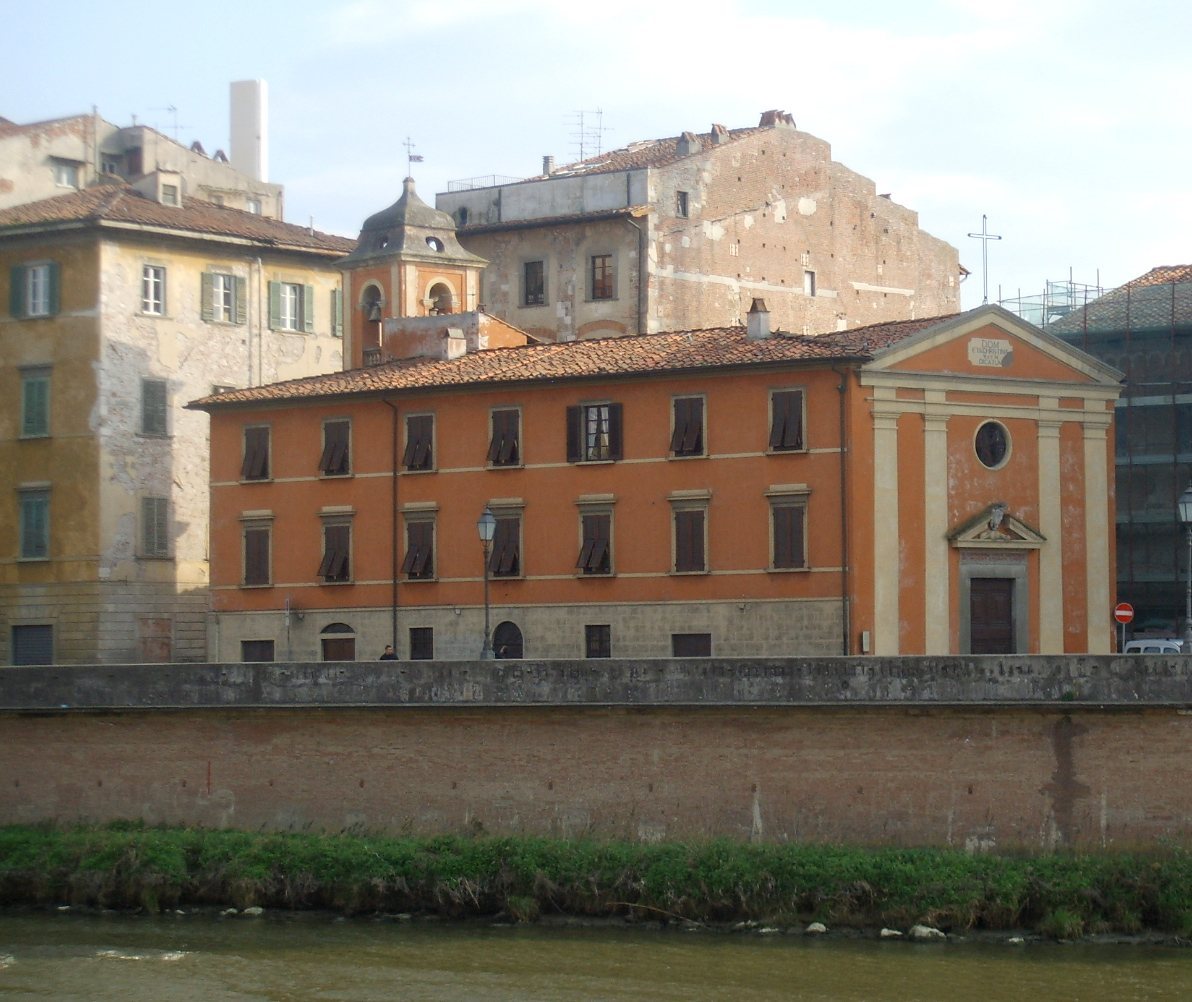
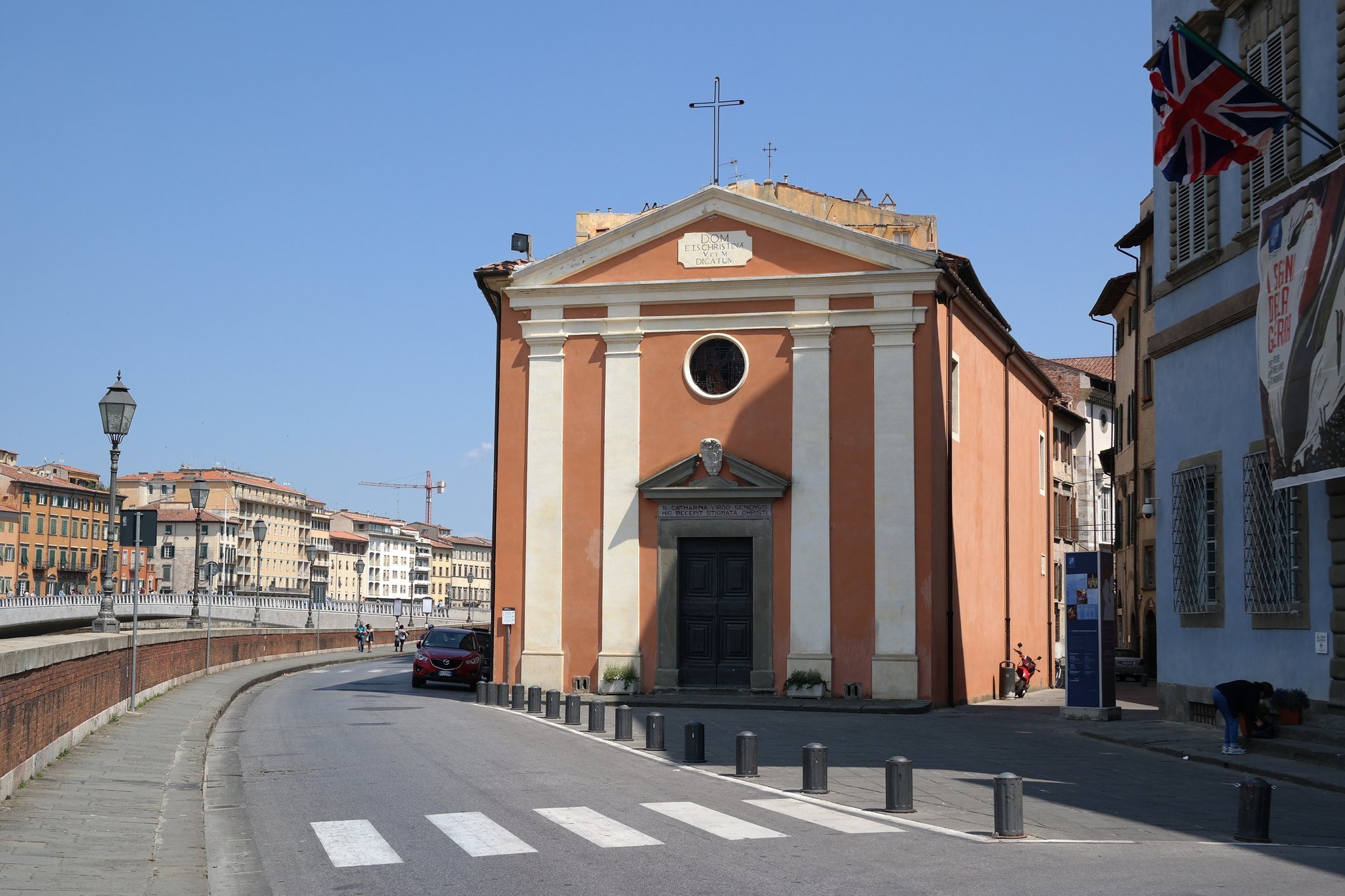
Santa Cristina stands on the Lungarno Gambacorti as a Neoclassical building incorporating the lower apse of the earlier Romanesque church. Its terracotta-colored facade is set off by white architectural details. Two pairs of pilasters frame the front and appear to support the upper pediment, while the entrance portal is topped by an oculus, a circular opening.
Romanesque apse
The surviving apse, the curved end of the earlier church, retains a lower zone decorated with paired blind arches. These are ornamental arches applied to the wall rather than openings into a passage or interior. Each pair is carried on half-columns, preserving a visible element of the medieval structure within the later building.
Interior
The interior consists of a single nave covered by a wooden roof. Remnants of nineteenth-century monochrome Neoclassical decoration remain on the walls, linking the interior to Riccetti’s rebuilding of the church.
Paintings and devotional objects
Madonna and Child
A fourteenth-century panel painting of the Madonna and Child is preserved inside the church, representing an important surviving work from the medieval period.
Saint Catherine Receiving the Stigmata
To the right of the high altar hangs a canvas by Domenico Passignano, an Italian painter active in the late sixteenth and early seventeenth centuries. The early seventeenth-century painting depicts Saint Catherine receiving the stigmata and includes a rare contemporary view of Pisa’s northern riverfronts.
Crucifix and portal inscription
The church contains a nineteenth-century copy of the medieval crucifix associated with Saint Catherine’s experience in 1375. The event is also commemorated by an inscription on the portal stating that Saint Catherine of Siena received Christ’s stigmata at that place.