Sheikhupura Fort: A Mughal and Sikh-Era Stronghold in Pakistan
Site at a Glance
- Rating
- 4.2
- Popularity
- Low
- Country
- Pakistan
- Primary era
- Early Modern
- External website
- Open
- Eras represented
- Early Modern, Modern
- Civilizations
- Mughal, Sikh Empire
- Site type
- Military
- Remains
- Fort
On this page6 sections
History
Mughal Foundation
Sheikhupura Fort is a 17th-century Mughal-era fort in Sheikhupura, Pakistan, traditionally associated with the reign of Emperor Jahangir, who ruled from 1605 to 1627. Around 1607, Jahangir wrote in his autobiography that he had entrusted the construction of a fort at Jahangirpur, identified with Sheikhupura, to Sikander Muin, a local landlord.
Sikh Expansion and Royal Residence
The fort was extensively altered during the Sikh period, when numerous buildings were added. In 1808, a Sikh force led by Kharak Singh, the six-year-old son of Ranjit Singh, conquered it. Ranjit Singh, the ruler who established the Sikh Empire in Punjab, granted the fort as a jagir, a territorial or landholding grant, to his wife Datar Kaur in 1811. Datar Kaur, who was also Kharak Singh’s mother, played a major part in the fort’s rehabilitation and lived there until her death in 1838.
Colonial Uses
During the mid-19th-century transition to British rule, the fort was used to hold Jind Kaur under house arrest. She was Ranjit Singh’s last queen and the mother of Duleep Singh. Under colonial administration, the fort served as the district headquarters of Gujranwala District until 1881. After 1918, it was also used as a police station.
Sheikhupura Fort was declared a protected monument in 1967 and remains in the custody of the Department of Archaeology and Museums, Government of Pakistan.
Remains
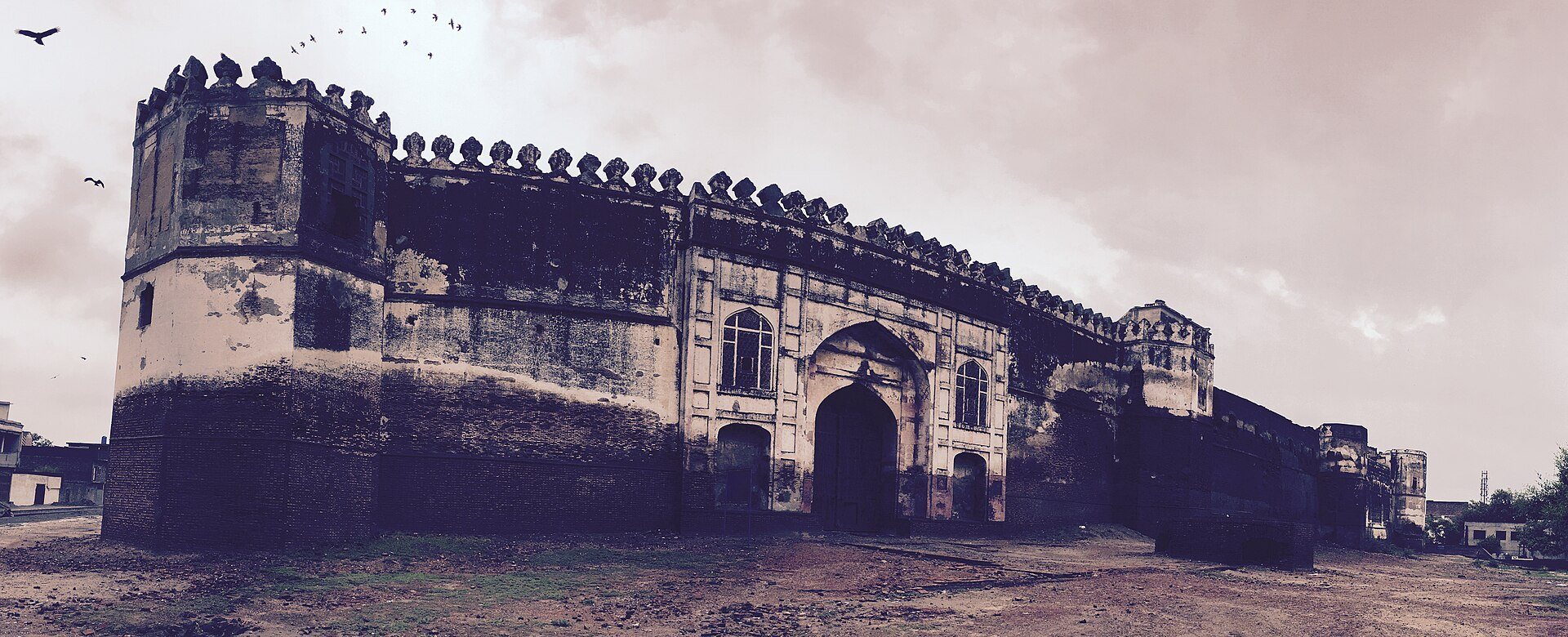
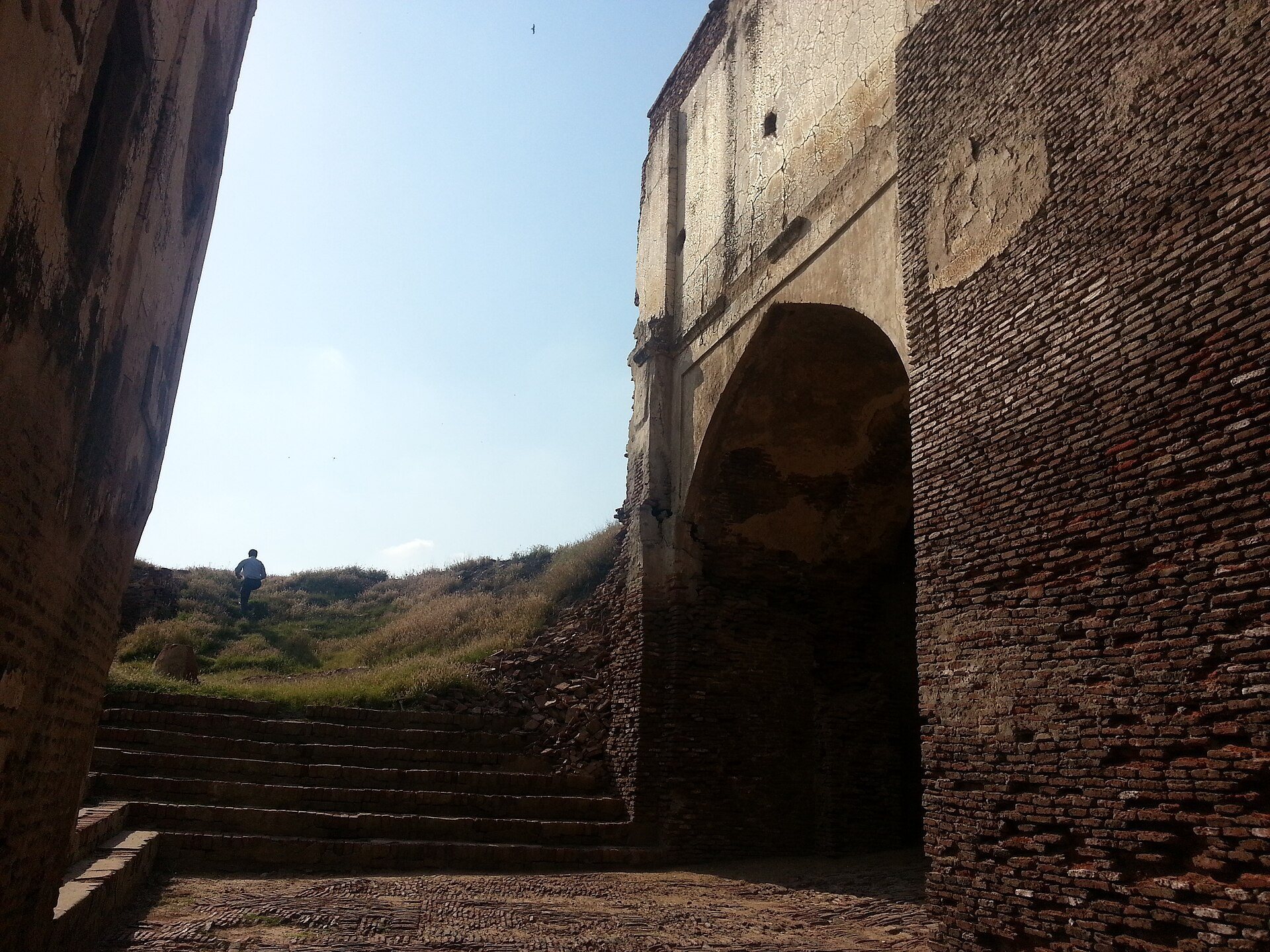
The surviving fort has a roughly square plan, measuring 128 metres by 115.5 metres. Its walls average 11.5 metres in height, with recorded heights ranging from 11.12 to 12.4 metres. Four octagonal bastions, projecting defensive structures built into the walls, occupy the corners, while five additional semi-circular bastions are positioned within the fortification line. The main gate opens on the eastern side, and the formidable outer walls dominate the skyline of the surrounding neighbourhood.
Sikh-Period Buildings
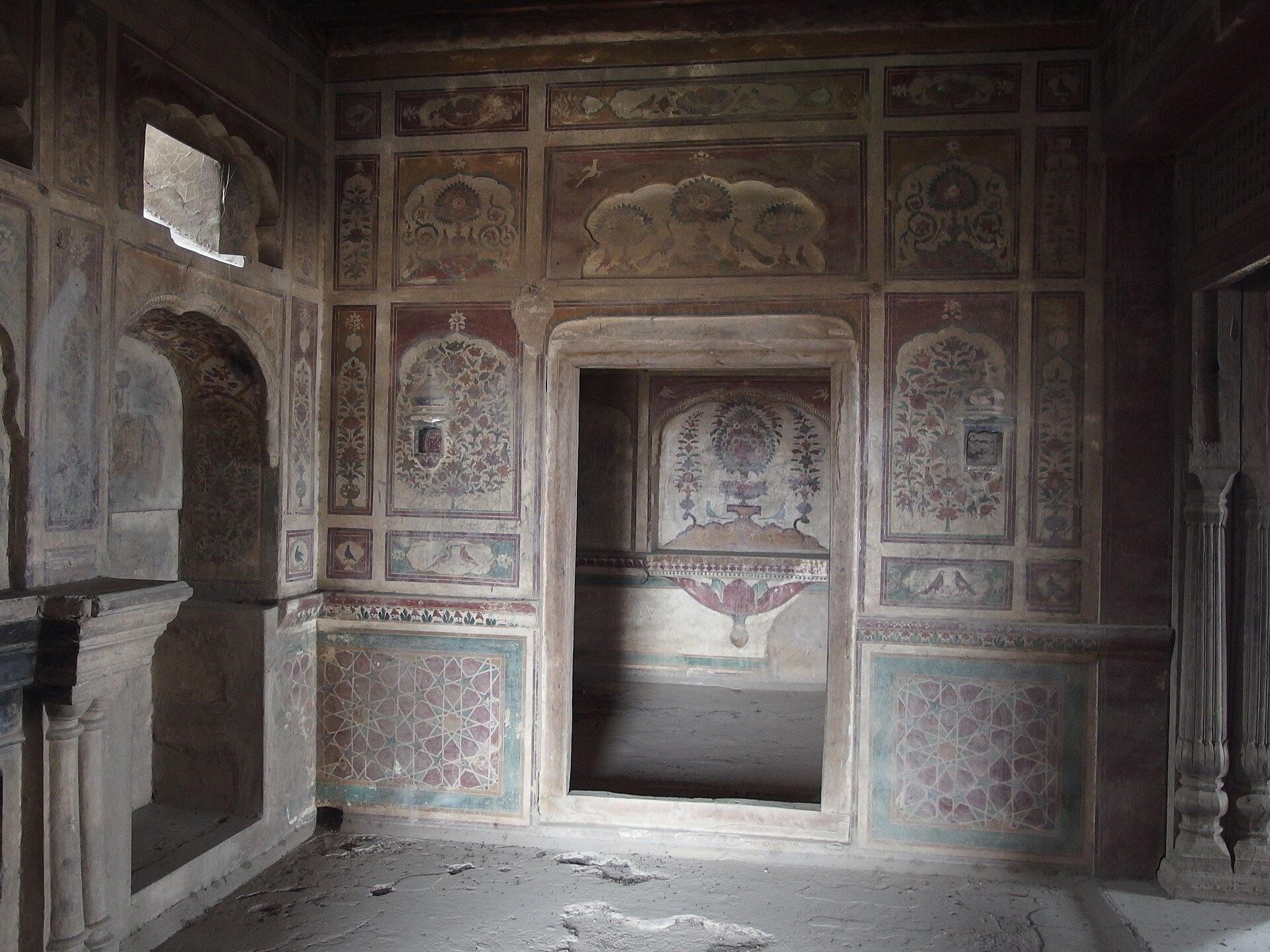
Several Sikh-period havelis, substantial residences often arranged around internal courtyards, survive within the fort. Some retain colourful Sikh frescoes, wall paintings made on plaster. These later residences reflect the extensive building activity that reshaped the Mughal fort during the Sikh period.