Neevin Mosque: A Fifteenth-Century Lodi Mosque in Lahore
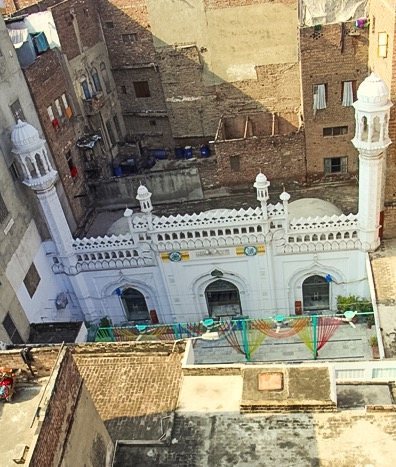
Site at a Glance
- Rating
- 4.6
- Popularity
- Very Low
- Country
- Pakistan
- Primary era
- Medieval
- Eras represented
- Medieval
- Civilizations
- Delhi Sultanate
- Site type
- Religious
- Remains
- Mosque
On this page7 sections
History
Neevin Mosque is a fifteenth-century Indo-Islamic mosque in Lahore, Pakistan, built during the Lodi dynasty of the Delhi Sultanate. Its completion is conventionally dated to 1460, during the reign of Bahlul Lodi, the dynasty’s founder and first ruler. The Delhi Sultanate was a succession of Muslim dynasties that governed much of the Indian subcontinent before the Mughal Empire. Neevin Mosque is regarded as one of Lahore’s few surviving pre-Mughal monuments.
Lodi Foundation
The mosque is generally believed to have been built by Zulfiqar Khan, who served under Haybat Khan, the governor of Lahore. The Lodi dynasty was the last ruling dynasty of the Delhi Sultanate, governing from 1451 to 1526. Its founders were of Pashtun origin, and the dynasty was established in Multan, in present-day Punjab.
Later Preservation
Unlike several other Lahore mosques, Neevin Mosque was not desecrated under Sikh rule. Its appearance was also not substantially altered during either Sikh or British rule. The local community continues to administer the mosque under the leadership of an imam, the prayer leader who also oversees the congregation’s religious affairs.
Remains
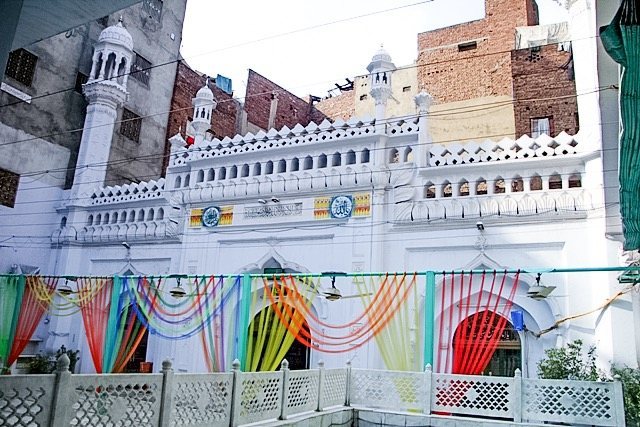
Neevin Mosque stands in Lahore’s ancient Walled City along the small street of Kucha Dogran, near the historic Lohari Gate and Chowk Matti square. Built of brick in a Lodi-influenced Indo-Islamic style, it has a compact plan arranged around a central courtyard. Its most distinctive physical feature is its position below the modern street level.
Sunken Layout and Construction
Foundations and Entrance
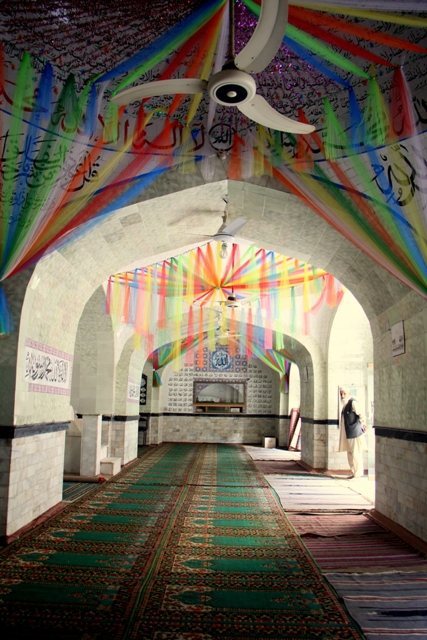
The mosque’s foundations lie approximately 25 feet, or about 7.6 metres, below the street. From the entrance, worshippers reach the prayer hall by descending a staircase. This sunken construction is unusual among Lahore’s mosques. It has led to speculation that the building may stand over the remains of an earlier Hindu temple, because some Hindu temples were built with underground vaults and chambers. That interpretation remains conjectural.
Prayer Hall and Domes
The prayer hall can accommodate approximately 100 worshippers and is divided into three sections of roughly equal size. Each section contains a short Lodi-style dome and opens onto the central courtyard through an arch. The mosque therefore has three domes in total. Its minarets were rebuilt after an earthquake in the early twentieth century.