St Sepulchre-without-Newgate, Holborn: An Anglican Parish Church and Memorial Chapel
Site at a Glance
- Rating
- 4.7
- Popularity
- Low
- Country
- United Kingdom
- Primary era
- Early Modern
- External website
- Open
- Eras represented
- Medieval, Early Modern, Modern
- Civilizations
- British, English
- Site type
- Religious
- Remains
- Church
On this page14 sections
History
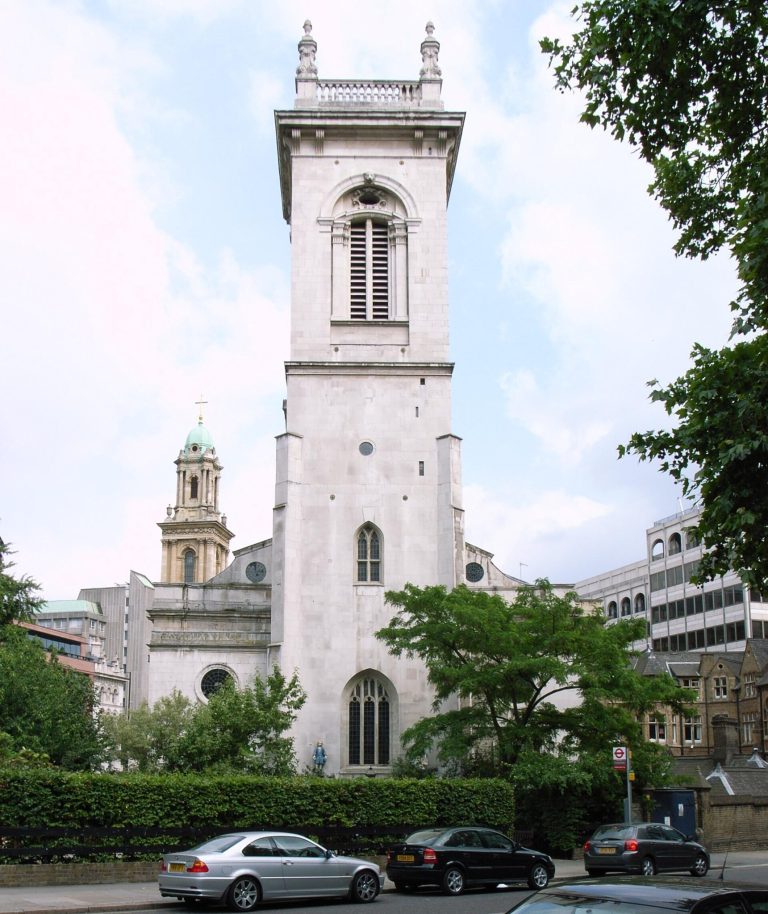
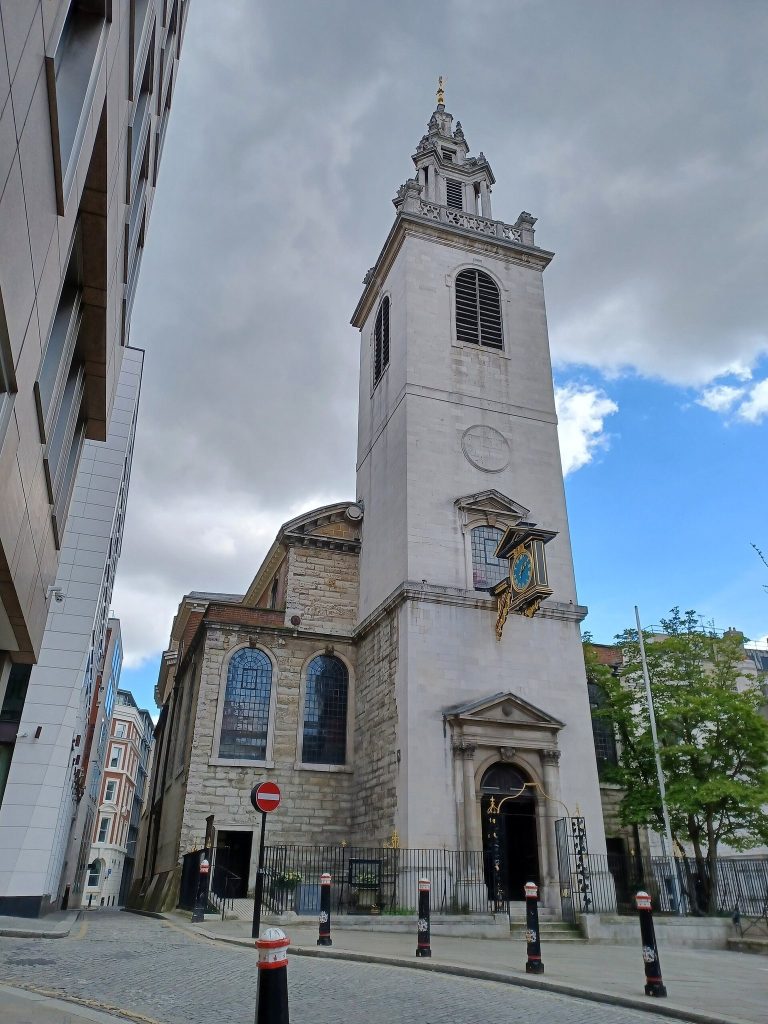
St Sepulchre-without-Newgate is an Anglican parish church in London, United Kingdom, with medieval foundations and a principal rebuilding in the fifteenth century. Its surviving tower is Perpendicular Gothic, while the rebuilding after the Great Fire of London gave much of the church an English Baroque character. The church stands outside the former City wall, beside Newgate and near the Old Bailey.
Medieval origins and changing dedication
The church is traditionally said to have been founded in the eleventh century by Canute, the king of England, Denmark, and Norway. Its original dedication was to Edmund the King and Martyr. In 1137, Bishop Roger of Salisbury gave the church to the nearby Priory of St Bartholomew, a monastic institution governed by a prior. After the Second Crusade, the dedication was expanded to St Edmund and the Holy Sepulchre, referring to the Church of the Holy Sepulchre in Jerusalem. The name was later shortened to St Sepulchre.
During the Crusades, knights travelling to the Holy Land attended parish Mass at the church, led by a canon of St Bartholomew’s Priory. The Guild and Fraternity of St Katharine also held religious feasts there until the middle of the fifteenth century. In the medieval period, the parish lay west of New Gate and outside the City wall, which gave rise to the description “without-Newgate.” The parish belonged to Farringdon Without and historically included Smithfield Market.
Rebuilding and religious change
The church was completely rebuilt during the fifteenth century, with the work traditionally dated to about 1450. It was formerly Roman Catholic, but became part of the Church of England in 1538. In 1555, during the religious persecutions under Mary I, John Rogers was burned at the stake for heresy in Smithfield. Rogers was an English Protestant Bible translator and an early Protestant martyr in England; he had been the church’s incumbent and a Reader of St Paul’s.
The Great Fire of London in 1666 severely damaged St Sepulchre. The city-wide fire destroyed much of the medieval City and led to extensive rebuilding. At St Sepulchre, the outer walls, tower, and porch survived, while Joshua Marshall, the King’s Master Mason, rebuilt the church from 1667 into the later seventeenth century. Marshall’s royal office identified him as a leading mason working for the Crown. The church reopened during this rebuilding period.
The building was lightly modified during the eighteenth century, then re-faced and altered in 1878. Sir Charles Nicholson remodelled it in 1932. During the Second World War, the church narrowly escaped destruction, although its watch house was destroyed by bombing and later rebuilt. An eighteenth-century watch house had been built in the churchyard to deter grave robbers.
Executions, patronage, and later uses
St Sepulchre’s position near Newgate Prison and the Old Bailey connected it with London’s execution culture. From the seventeenth to the nineteenth centuries, its bells announced executions and the movement of condemned prisoners to Tyburn, London’s principal public execution site until the eighteenth century. On the night before an execution, the sexton rang a handbell outside the prisoner’s cell and delivered a warning urging the condemned person to prepare, pray, and repent. These bells became associated with the “bells of Old Bailey” in the nursery rhyme Oranges and Lemons.
In 1605, Robert Dowe, a Master Merchant Taylor, gave the parish £50 to commission the handbell used for the warning. The bell remains at the church. The President and Fellows of St John’s College, Oxford, have held the patronage of the advowson since 1622. An advowson is the legal right to nominate a priest to a vacant ecclesiastical benefice.
The south aisle was selected for a Royal Fusiliers chapel in 1946 and dedicated in 1950. The Royal Fusiliers were a British infantry regiment historically associated with the City of London. After the regiment’s amalgamation in 1968, the chapel was rededicated as the Royal Fusiliers Memorial Chapel, and its garden of remembrance came to commemorate Royal Fusiliers from all periods. Memorials to the City of London Rifles stand at the west end of the north aisle.
A former chapel dedicated to St Stephen Harding became the Musicians’ Chapel in 1955, and the church was known for about seventy years as the National Musicians’ Church. In 2017, parish funding for its requiem and free rehearsal time ended, while the hiring of its facilities for non-religious events was prohibited. These changes prompted protests and mediation efforts. In 2021, Nick Mottershead became Priest-in-Charge and was instituted as rector in 2024. By 2024, the church was no longer a member of the HTB network, and its rector stated an intention to restore its identity as a musicians’ church and as a place welcoming people of all faiths and none.
St Sepulchre was designated a Grade I listed building on 4 January 1950. Since that year it has also served as the memorial chapel of the Royal Regiment of Fusiliers. The church was united with the benefices of Christ Church, Newgate Street, and St Leonard, Foster Lane, in 1954. It remains an Anglican parish church associated with the Diocese of London and a Low Church Evangelical tradition.
Remains
Building and interior
Exterior and surviving medieval fabric
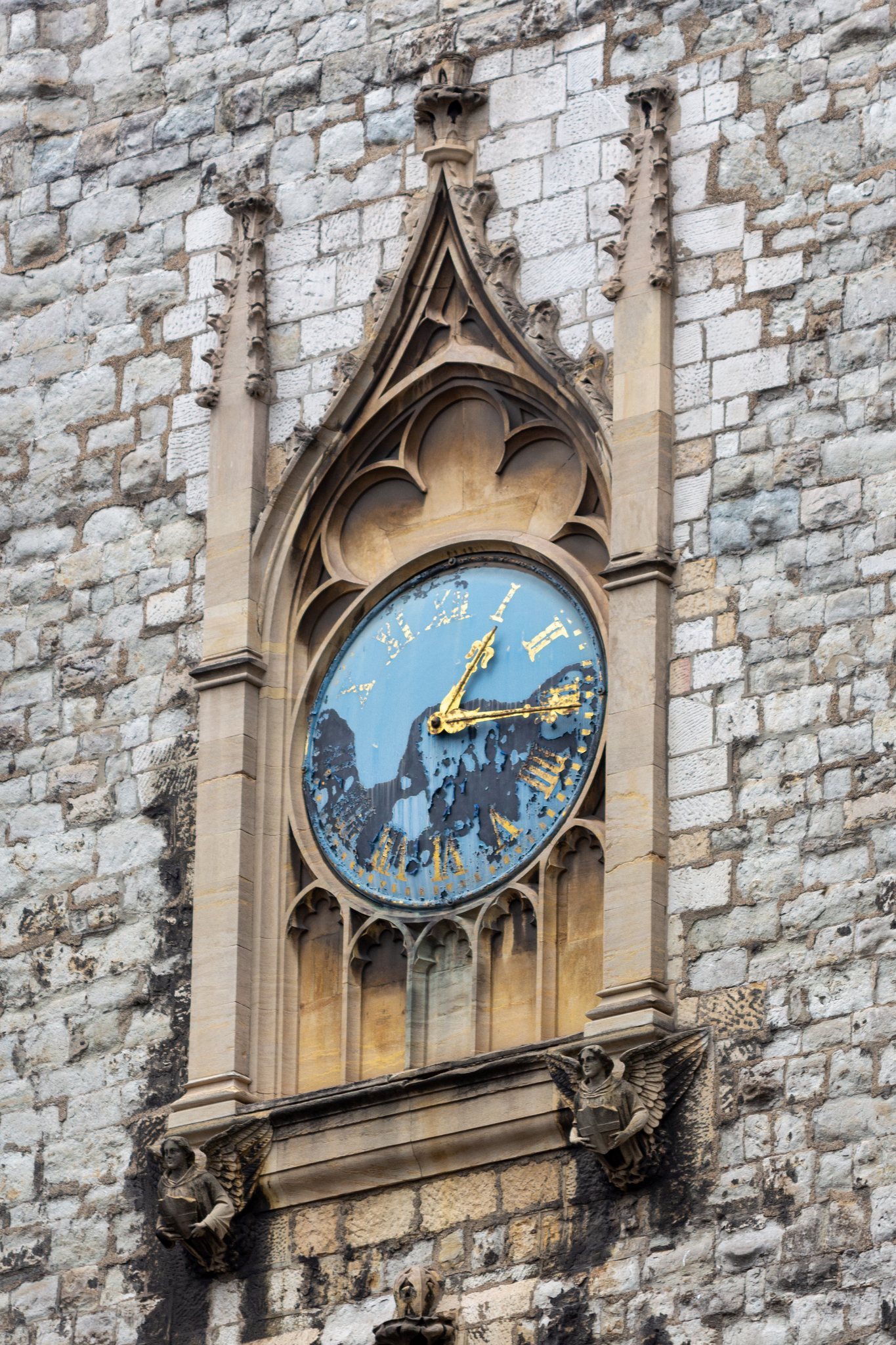
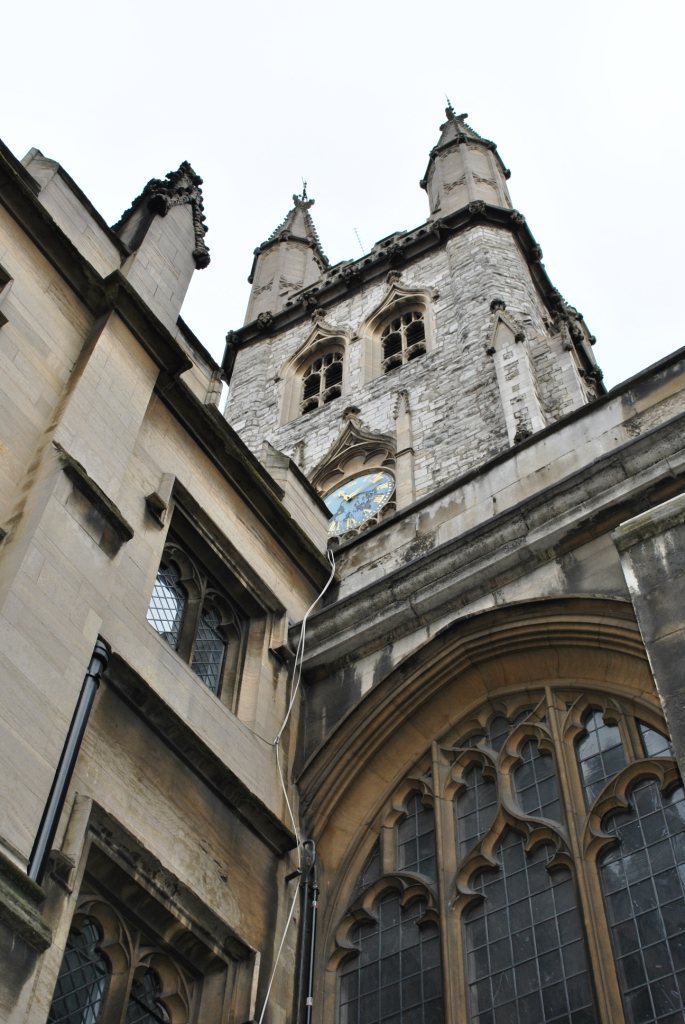
St Sepulchre stands at the top of Snow Hill on the north side of Holborn Viaduct, beside the crossroads near the Old Bailey. Its site lies outside the former City wall and within the Newgate Street Conservation Area. The fifteenth-century rebuilding formed the main medieval fabric. The tower is Perpendicular Gothic, a late medieval English style marked by strong vertical lines and elaborate window tracery. The outer walls, tower, and porch survived the Great Fire, while the later rebuilding of the church gave the building its English Baroque character.
Interior and commemorative objects
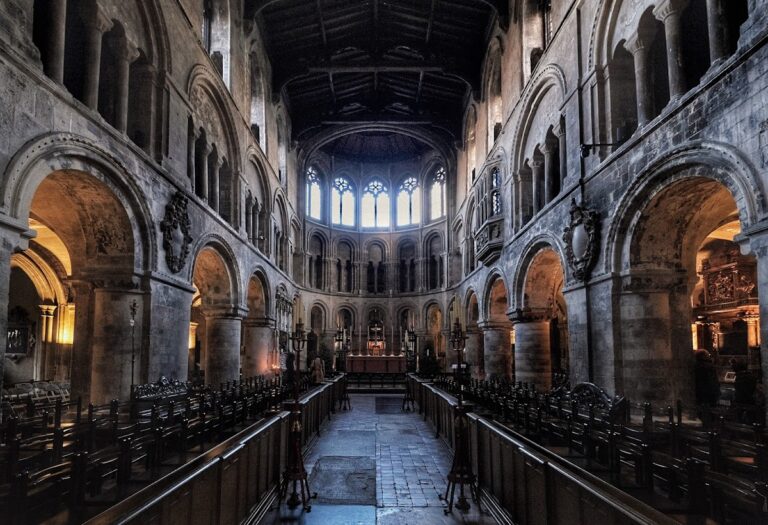
The church has a wide interior with a coffered ceiling installed in 1834 and plasterwork completed in 1837. The interior was substantially remodelled in 1878 and 1932. The execution bell commissioned in 1605 is displayed in a glass case in the nave. A window designed by Francis Skeat and installed in 1968 commemorates Captain Sir John Smith, who was buried in the south aisle in 1631.
Organ and musicians’ memorials
Historic pipe organ
The north aisle contains the pipe organ built by Renatus Harris in 1670. Its surviving organ case is dated 1677. John Byfield added the swell around 1730, James Hancock enlarged the instrument in 1817, and John Gray enlarged it in 1828 and 1835. Gray and Davison made further enlargements in 1849, 1852, and 1855. J. W. Walker rebuilt the organ in 1891, and Harrison & Harrison rebuilt it again in 1932. The historic instrument is currently unplayable, so a Makin digital organ is used when required for services while restoration efforts continue.
Musicians’ Chapel
The Musicians’ Chapel occupies the former St Stephen’s Chapel beside the north aisle. Four windows commemorate Walter Carroll, John Ireland, Dame Nellie Melba, and Sir Henry Wood, and the chapel contains the Musicians’ Book of Remembrance. Sir Henry Wood’s ashes are interred there. He learned to play the organ at St Sepulchre as a boy and later became the founding conductor of the BBC Proms, a major annual series of classical music concerts founded in the nineteenth century.
Military chapels and churchyard features
Royal Fusiliers Memorial Chapel
The south aisle contains the Royal Fusiliers Memorial Chapel, with its associated garden serving as a memorial to the regiment. The west end of the north aisle contains memorials to the City of London Rifles. Together, these features preserve the church’s connections with military units associated with the City of London.
Watch house and drinking fountain
The churchyard watch house was rebuilt after its destruction by bombing during the Second World War. On the church railings stands the first drinking fountain of the Metropolitan Drinking Fountain and Cattle Trough Association, erected by Samuel Gurney. It was restored in 1913 and remains in place.