Church of St Andrew, Holborn: A Wren Church in London
Site at a Glance
- Rating
- 4.5
- Popularity
- Low
- Country
- United Kingdom
- Primary era
- Early Modern
- External website
- Open
- Eras represented
- Medieval, Early Modern
- Civilizations
- English
- Site type
- Religious
- Remains
- Church
On this page15 sections
History
Church of St Andrew, Holborn, is a Church of England church in London, United Kingdom, on the northwestern edge of the City of London. Dedicated to Saint Andrew and belonging to the Diocese of London, it is an active Guild Church with a traditional Catholic identity. Roman pottery found beneath the building points to activity here during the Roman period, while tradition places a church on the site by the tenth century or earlier.
Early and Medieval Church
The first written reference appears in a charter associated with Westminster Abbey, which describes an old wooden church on the hill above the River Fleet. The charter is generally dated to 951, although both its authenticity and date are uncertain, and 959 has also been proposed as a possible reading. In the early medieval period the church was known as St Andrew Holburnestrate and later as St Andrew de Holeburn.
After the Norman Conquest, a priest called Master Gladwin assigned the church to St Paul’s Cathedral while arranging for its advowson, the legal right to appoint its priest, to be granted to the Cluniac foundation that became Bermondsey Abbey. The arrangement was made around 1086 to 1089 in return for an annual payment of 12 pence. A deed from about 1200 names James the parson, Roger his chaplain, Andrew the deacon, and Alexander his clerk. In 1280, Simon de Gardino left money for a stone belfry and bells.
The earlier wooden building was replaced by a medieval stone church in the fifteenth century. Its long-term maintenance was strengthened in 1348, when the local armourer John Thavie left a substantial estate for the support of the church fabric. The endowment survived the English Reformation through careful investment and still contributes to maintenance.
Rebuilding after the Great Fire
Lightning badly damaged the steeple during a storm on 8 July 1563. The churchyard later received the body of Swithun Wells, who was executed in 1591 for serving at a Catholic Mass. The medieval church survived the Great Fire of London in 1666 after a last-minute change in the wind, but its poor condition led to a complete rebuilding from the foundations by Sir Christopher Wren, the leading architect of many City churches rebuilt after the fire. Work took place between 1684 and 1690 and created the present crypt, while the medieval stone tower was retained and altered.
Henry Sacheverell served as rector from 1713 to 1724 and was buried beneath the altar. The church also stood within a district shaped by new religious and charitable institutions. St George the Martyr, Holborn, was built between 1703 and 1706 as a chapel of ease for the parish and became an independent parish church in 1723. In 1741, Thomas Coram founded the Foundling Hospital, an institution for abandoned children, in nearby Hatton Garden. It moved to Bloomsbury the following year and remained there until 1935.
People and Social Reform
St Andrew’s became associated with several events in London’s religious, cultural, and social history. James Somerset was baptised there in 1771 after being brought to England as a slave. His white godparents later took his case to court, contributing to the 1772 ruling that slavery was not legal in England.
Marc Isambard Brunel married Sophia Kingdom at the church in 1799. William Hazlitt married Sarah Stoddart there in 1808, with Charles Lamb as his best man and Mary Lamb as a bridesmaid. Benjamin Disraeli was received into the Christian Church at St Andrew’s in 1817.
In 1828, the surgeon William Marsden found a homeless girl suffering from hypothermia on the church steps. Nearby hospitals refused to admit her, and she died in Marsden’s arms. The experience led him to establish the Royal Free Hospital for poor and destitute patients.
Victorian Changes and Wartime Destruction
The Holborn Valley Improvement Scheme transformed the area in the nineteenth century. The church’s north churchyard was acquired for Holborn Viaduct, which opened in 1869. Some bodies were reinterred in the crypt and others at the City of London Cemetery in Ilford. When the crypt was cleared in 2002 and 2003, the remaining burials were transferred to Ilford.
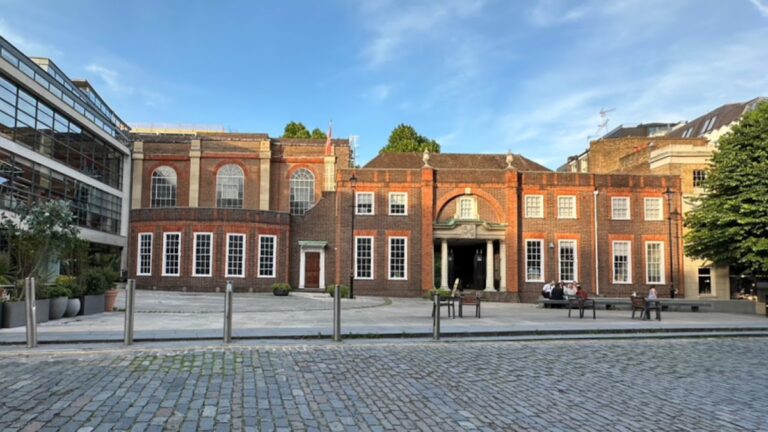
Compensation from the improvement scheme funded replacement assets, including a new rectory and courthouse south of the church designed by Samuel Sanders Teulon. The complex now accommodates the foundation’s offices, associated charities, the Archdeaconry of Hackney, the rectory, and conference rooms.
German bombing during the London Blitz, the aerial campaign against London in the Second World War, gutted the church on the night of 7 May 1941. The exterior walls and tower survived. After a prolonged delay, the building was restored stone for stone and brick for brick according to Wren’s designs. Reconstruction and refitting were completed by 1960, and the church reopened in 1961 as a non-parochial Guild Church serving the local working population rather than a greatly reduced residential population.
Modern Church
The church received Grade I listing on 4 January 1950. In 1955, objects from the former Foundling Hospital chapel at Ashlyns School in Berkhamsted were transferred to St Andrew’s, including Thomas Coram’s exhumed remains. The church continues as a Church of England Guild Church and hosts worship, recitals, lectures, and evening concerts. A large icon made for the church by the Monastic Family Fraternity of Jesus in Vallechiara was installed in 2005, and its cross was motorised in 2010 so that the icon could be raised and lowered during services. A London Fashion Week event in September 2017 caused controversy after runway models displayed satanic images and symbols.
Remains
Exterior and Medieval Tower
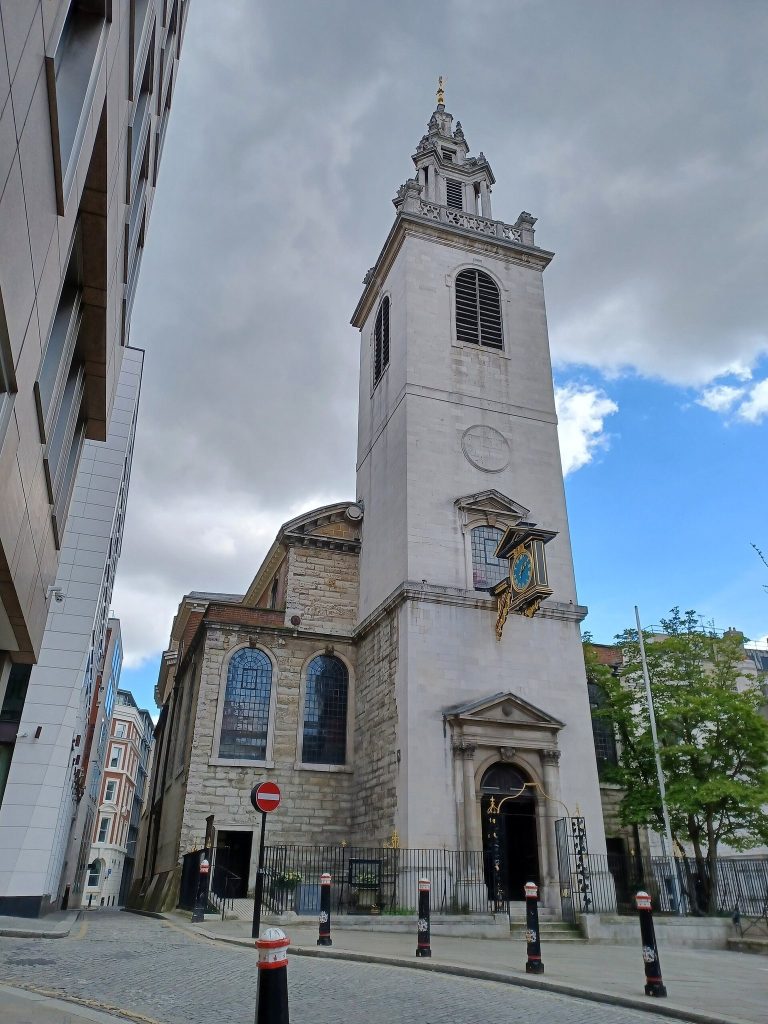
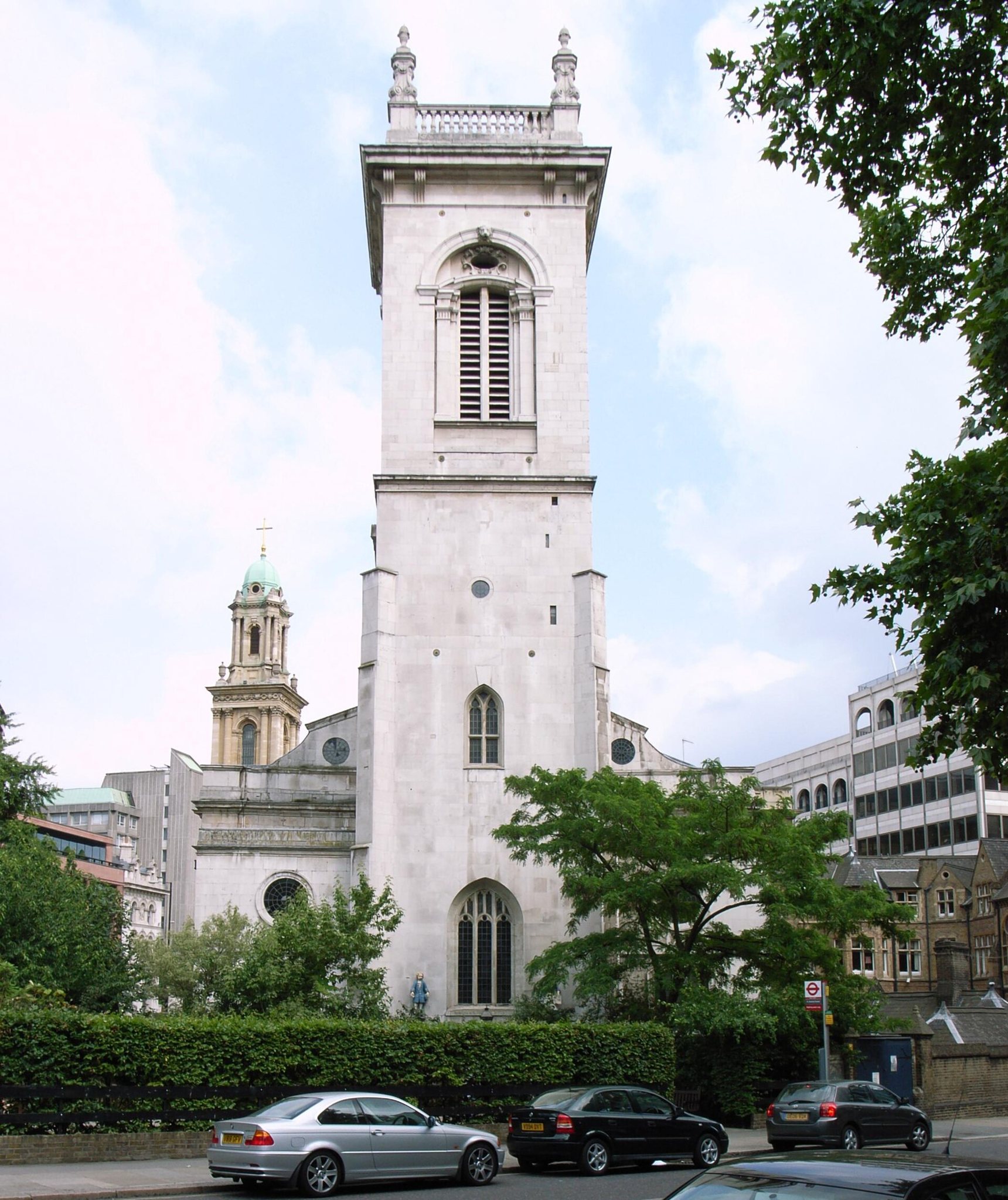
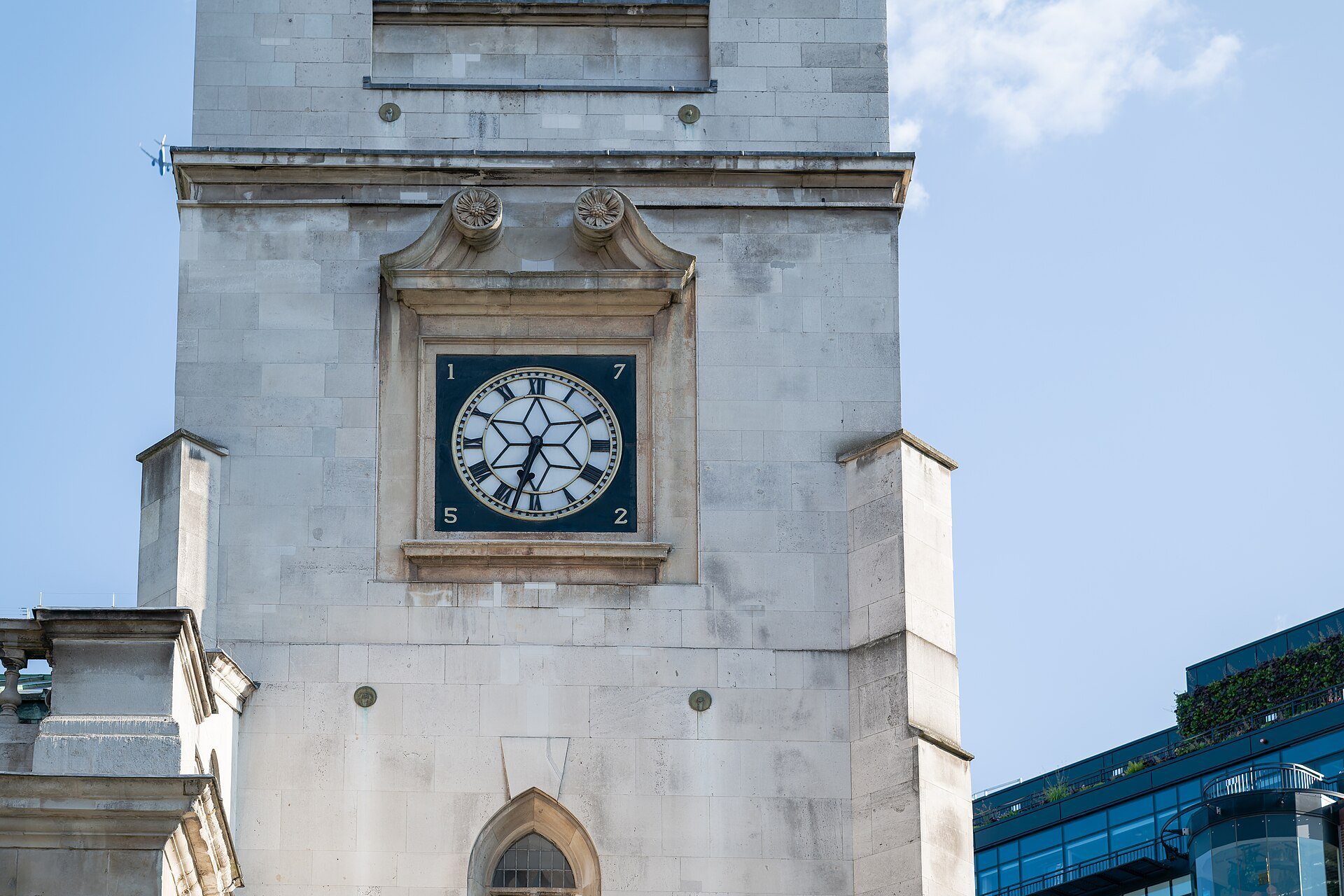
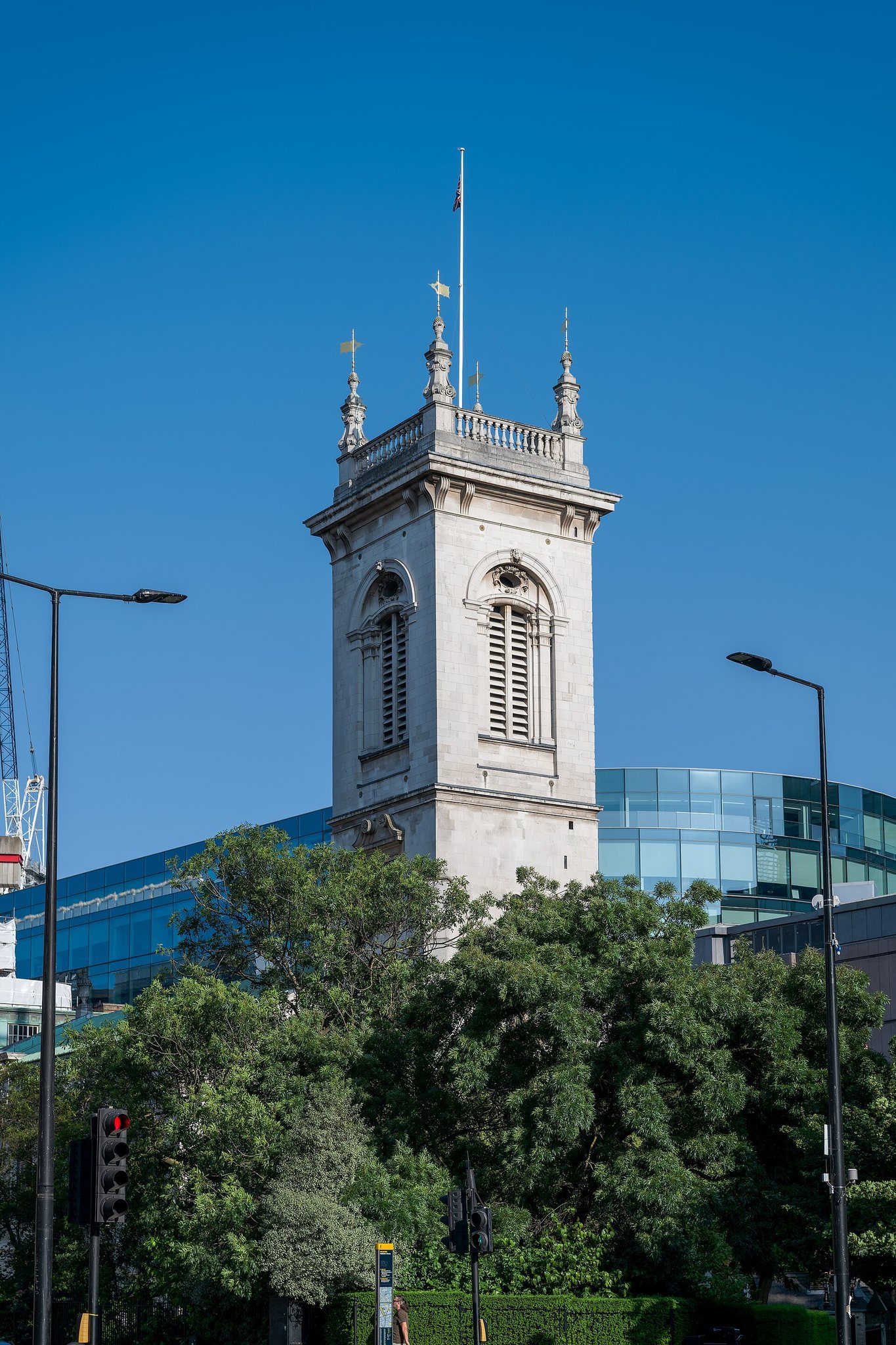
The present church is an English Baroque building in Portland stone, designed by Sir Christopher Wren beside Holborn. English Baroque architecture uses classical detailing and carefully controlled monumental compositions. The retained medieval tower dates from the fifteenth century. Its original window openings display the Perpendicular style, a late medieval English Gothic form noted for strongly vertical window tracery. The tower was clad in marble in 1703 and raised by an additional storey.
Interior and Crypt
Gallery Hall
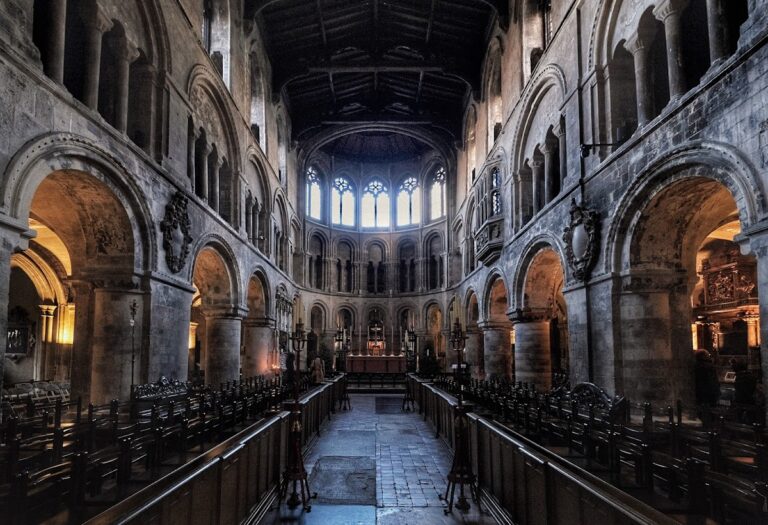
Inside, the church forms a seven-bay, three-aisled gallery hall. The central nave has a barrel vault, while the side aisles have groin vaults. The structure is made as a stuccoed timber construction. In the chancel, a two-storey window uses a Palladian motif derived from the classical architectural vocabulary associated with Andrea Palladio.
Crypt
Wren’s rebuilding created the crypt beneath the church. Excavations there in 2001 and 2002 recovered Roman pottery, linking the physical remains beneath the later building with activity at the site during the Roman period. The crypt burials were cleared in 2002 and 2003, and the remains were transferred to the City of London Cemetery in Ilford.
Furnishings and Memorial Objects
Foundling Hospital Objects
The church contains stained glass and a mural by Brian Thomas showing the Holy Spirit as a dove. Objects brought from the former Foundling Hospital chapel in 1955 include Thomas Coram’s mortal remains, the pulpit, and the baptismal font. Coram’s remains were placed in a tomb within the church.
Organ
The organ installed in the west gallery in 1989 was built by Mander Organs. It is a twentieth-century instrument housed in an eighteenth-century case. The upper part of the case incorporates original elements from the 1750 organ designed by George Frideric Handel, the German-born composer who worked in Britain, for the Foundling Hospital chapel in Bloomsbury. The case later stood in the chapel at Ashlyns School in Berkhamsted before being dismantled and reinstalled at St Andrew’s.
Rectory, Courthouse, and Churchyard
The rectory and courthouse south of the church were designed by Samuel Sanders Teulon. Their principal room, formerly a courtroom, contains a seventeenth-century fireplace taken from the Quest Room that served the part of the parish outside the City boundary.
The churchyard once extended north of the church. Its removal for Holborn Viaduct resulted in the reinterment of many bodies, with some placed in the crypt and others transferred to the City of London Cemetery in Ilford.