Hluboš Chateau: A Bohemian Estate and Presidential Summer Residence
Site at a Glance
- Rating
- 3.9
- Popularity
- Very Low
- Country
- Czechia
- Primary era
- Early Modern
- External website
- Open
- Eras represented
- Early Modern, Modern
- Civilizations
- Austria-Hungary, Habsburg, Holy Roman Empire, Kingdom of Bohemia
- Site type
- Domestic
- Remains
- Castle
On this page13 sections
History
Hluboš Chateau is a historic aristocratic residence in Czechia, developed from a medieval fortress and rebuilt in the Late Baroque period with later Neo-Renaissance alterations. The site’s twentieth-century history is closely associated with Tomáš Garrigue Masaryk, the first president of Czechoslovakia, who used the chateau as a summer residence in 1920 and 1921.
Medieval origins and early owners
The earliest written reference to the Hluboš fortress dates from 1502, although the village was already associated with the local nobleman Zbraslav of Hluboš, who lived there at the beginning of the fifteenth century and died in 1415. The village then passed through his son Oldřich of Drasovice and grandson Jan of Hluboš. Václav of Koněprus owned Hluboš around 1455. By 1502, the village and fortress belonged to Jan of Svárov, whose son sold them in 1533 to Petr Vamberský of Rohatce.
Petr’s descendants Adam, Petr, Hynek, and Felix Vamberský of Rohatce sold Hluboš in 1575 to Bedřich Hořčice of Prostý. Václav Šturm of Hyršfeld held it by 1579, followed by Albrecht Vtelenský of Vtelno in 1580. Albrecht’s son Karel took part in the Bohemian Revolt of 1618 to 1620, an uprising by the Bohemian estates against Habsburg rule. After the revolt, his property was confiscated.
Seventeenth-century estate changes
In 1623, Václav Bechyně of Lažany bought the Hluboš estate for 12,000 gulden. The estate included Bratkovice and Sádek with their farmsteads, together with the village of Drahlín. Mandaléna Bechyňová of Olbramovice acquired it in 1629. After her death, half passed to her husband Jan Humprecht of Račín, while the other half went to her daughters Eliška, Alena Markéta, and Kateřina. Her sons Kryštof František and Jindřich Adam also claimed inheritance rights, and in 1637 the heirs transferred Hluboš jointly to Jan Humprecht.
After Jan Humprecht’s death in 1641, the estate passed to his sons Kryštof František and Jindřich Adam of Račín. Kryštof František became its sole owner in 1648 and probably died in 1673. His three sons divided the inheritance into thirds, with one share including Hluboš and its dilapidated fortress. The shares were soon reunited. In 1705, the estate belonged to the siblings Václav, František Karel, Kateřina, and Tereza Bechyně of Lažany.
From fortress to chateau
Jan Antonín Hochberg of Hennersdorf acquired Hluboš in 1741. His descendants had the old fortress rebuilt as a chateau, establishing the residence’s Late Baroque character. The Hochberg family retained the estate until 1816. Later owners included Prince Otto Viktor of Schönburg-Waldenburg, who held it from 1826 to 1835, and Count Ludvík Pourtalès, who owned it from 1835 to 1872.
The Oettingen-Wallerstein family became the final aristocratic owners. Prince Karel Bedřich I of Oettingen-Wallerstein commissioned a Neo-Baroque reconstruction during the 1870s, while the chateau was expanded and given Neo-Renaissance alterations around 1872. The grounds also changed substantially. Neglect had affected them during the later first half of the nineteenth century, and the earlier French garden, botanical garden, and arboretum created under the Hochbergs disappeared in their original form. After the main road from Jince to Příbram was moved east of the chateau, a new landscape park was laid out around the complex.
The botanical garden had been established by Antonín Hochberg of Hennersdorf at the beginning of the nineteenth century. Emperor Francis I of Austria visited it in 1810. This imperial visit forms part of the estate’s nineteenth-century history.
Presidential residence and twentieth-century uses
Following the dissolution of Austria-Hungary and the establishment of Czechoslovakia in 1918, the estate was affected by land reform. In 1920 and 1921, President Tomáš Garrigue Masaryk used Hluboš as his summer residence. The Presidential Office rented the chateau from Prince Oettingen for 4,000 Czech crowns.
The entire property passed to the state in 1925. Příbram industrialist Josef Kolařík bought it in 1926, and his family retained the chateau and the large estate until nationalization in 1948. Under later institutional ownership, the complex served as a political school, barracks, accommodation for uranium-mine workers, and a secondary vocational school with a boarding facility.
Restitution and reconstruction
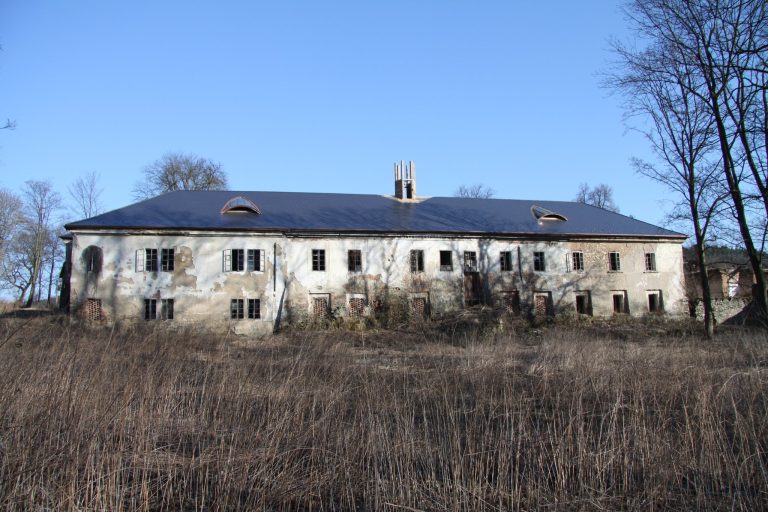
After 1989, most of the property was restituted to the descendants of Josef Kolařík, who gradually repaired the chateau. A large exhibition about Masaryk’s stay and the history of Hluboš opened in May 2001. The chateau closed in 2010 and was offered for sale. In 2017, it was sold to the company Zámek Hluboš. Plans for a manufactory producing hand-made food without chemicals, colourants, or preservatives, together with a small brewery, were not realized. A failed resale and subsequent court dispute contributed to the continued deterioration of the protected monument.
In 2025, the company Chateau Masaryk acquired the chateau complex and began reconstruction work. Hluboš Chateau is protected as a cultural monument.
Remains
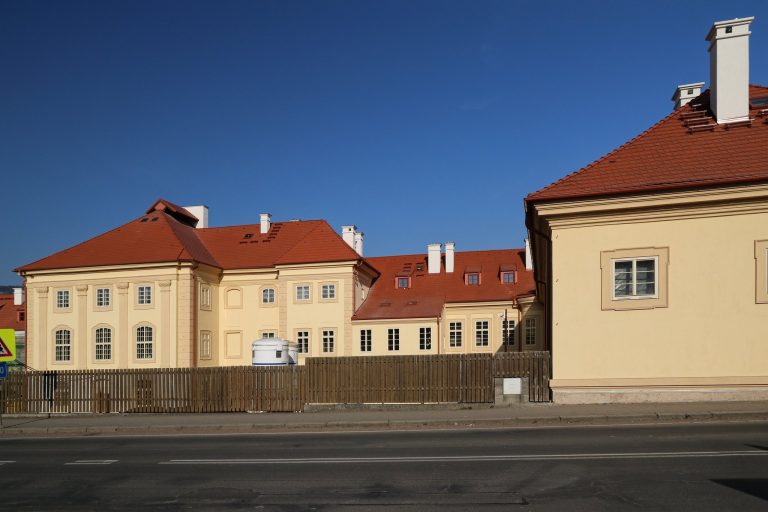
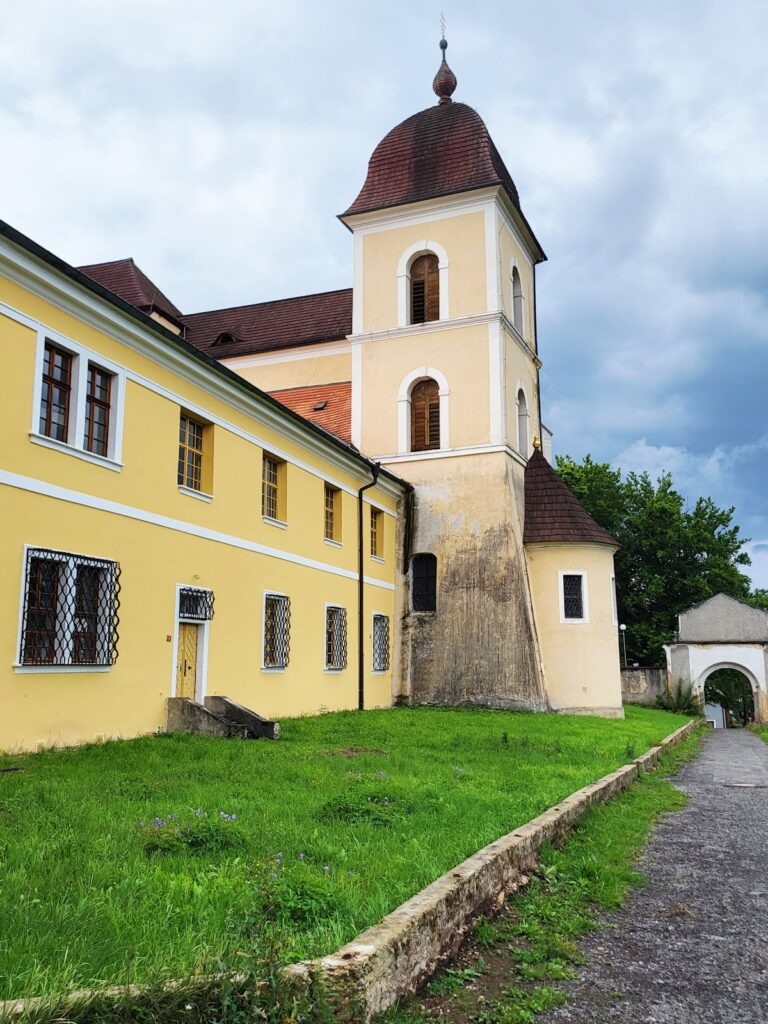
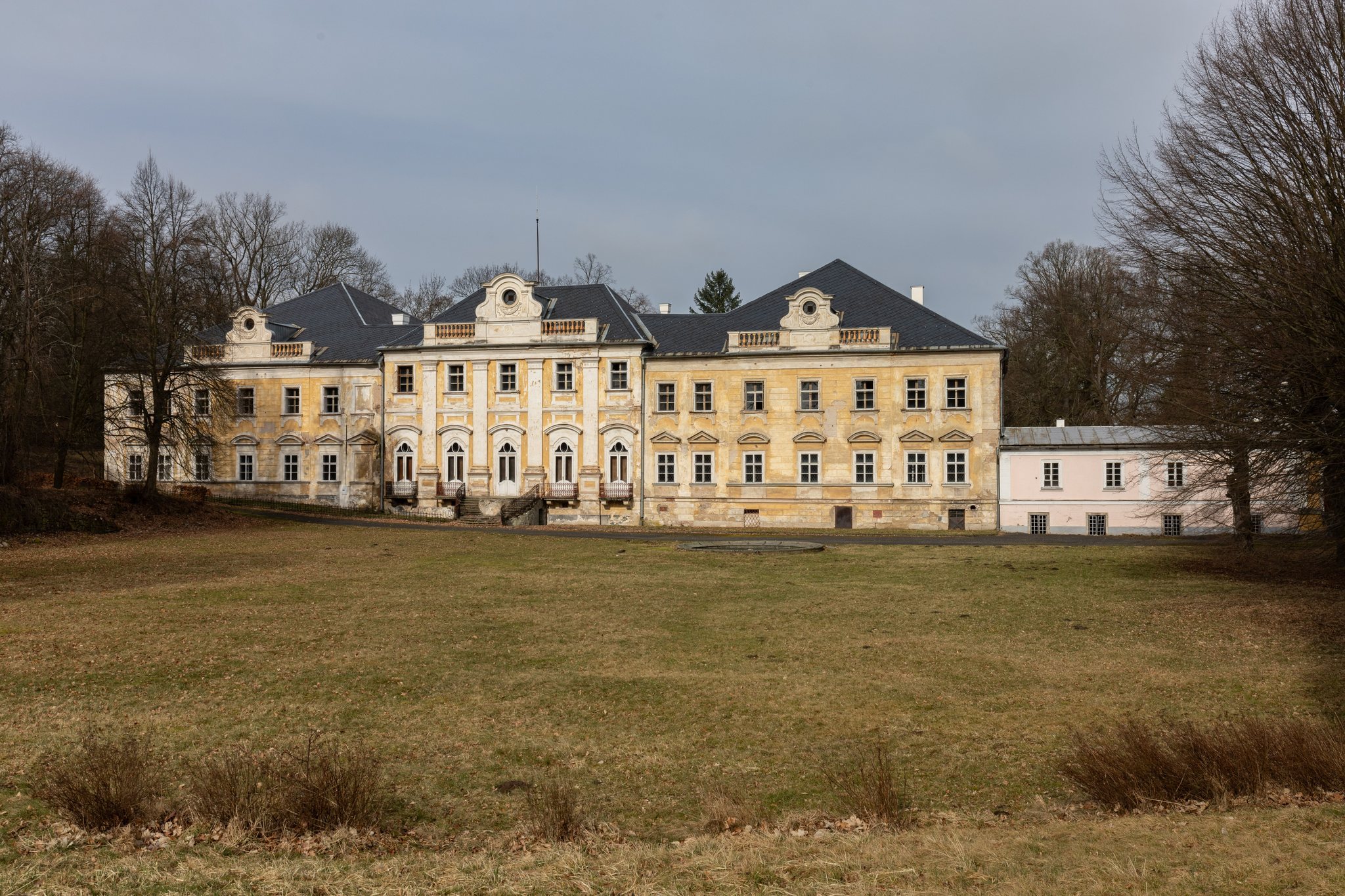
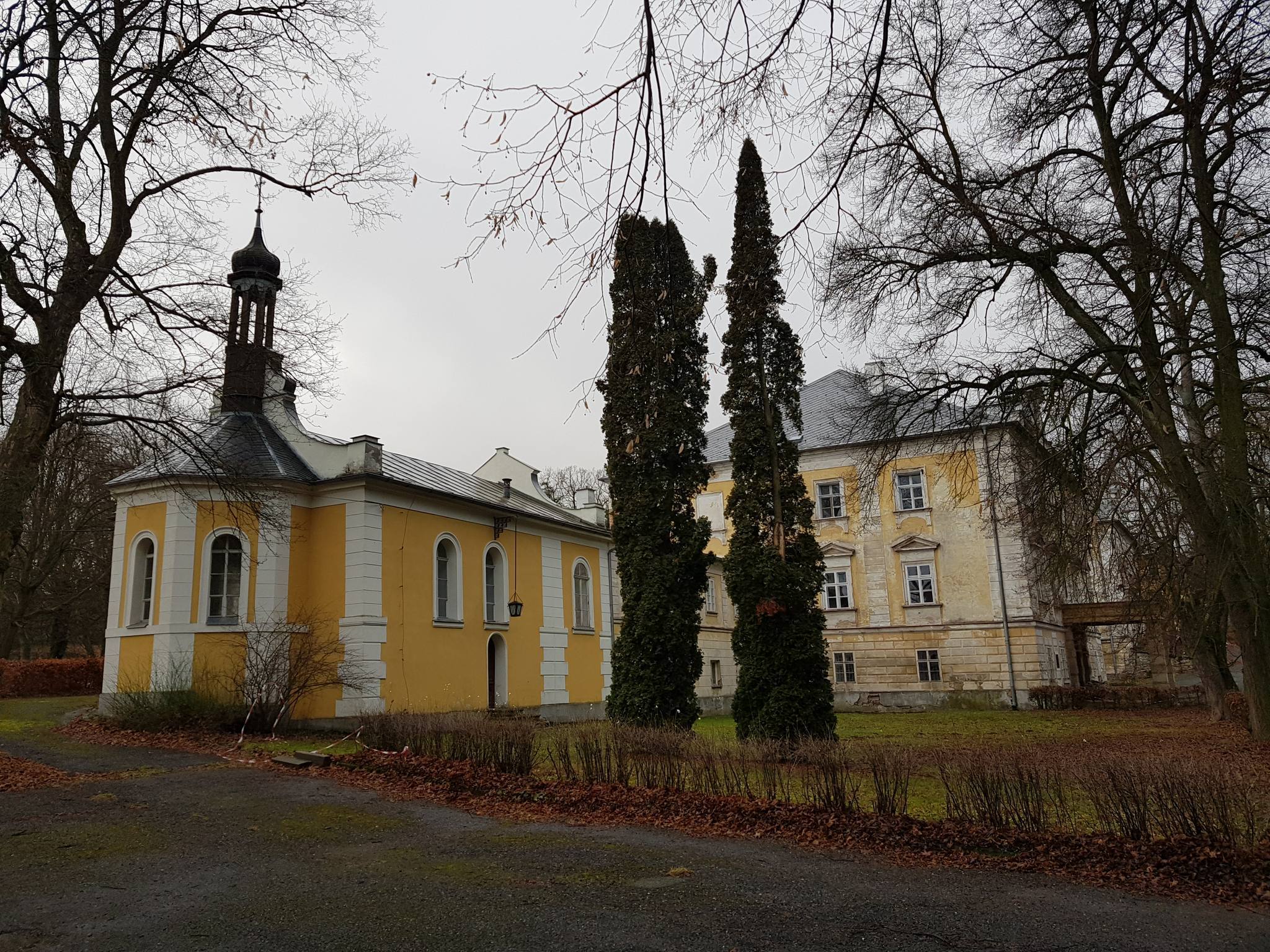
Hluboš Chateau preserves a rectangular main building whose fundamentally Late Baroque form incorporates Neo-Renaissance and later changes. The complex also includes entrance wings, a terrace supported by an arcaded gallery, a nineteenth-century chapel and winter garden, a manager’s house, stables, and a landscape park. The surviving cellars probably incorporate parts of the earlier fortress.
Main chateau
Central building and garden facade
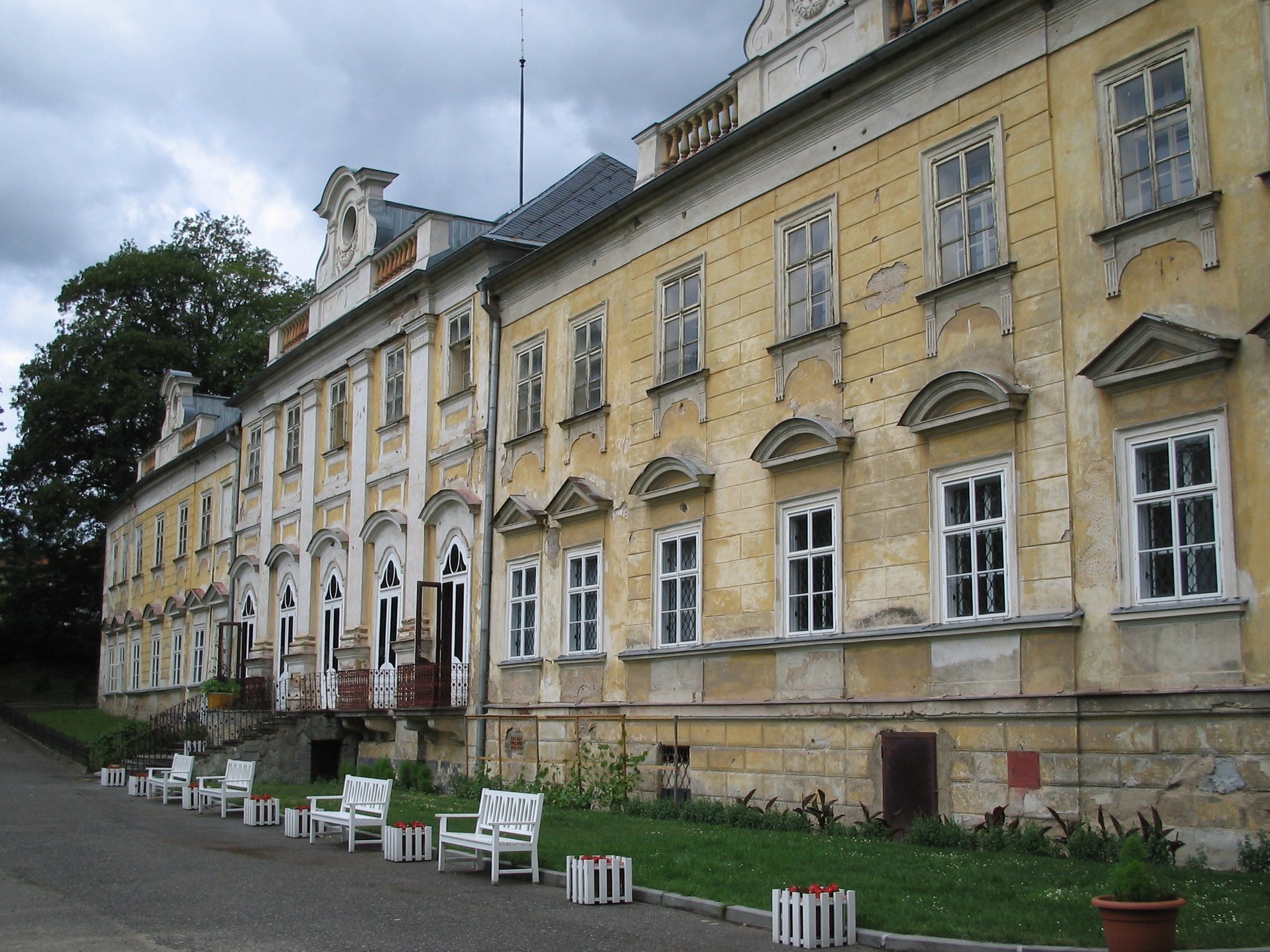
The main building has a rectangular plan with a projecting central section, or risalit, on the principal facade. Four pilasters, which are shallow vertical elements attached to a wall, emphasize the projection. Decorative panels above the lower-floor windows further mark the central section. It ends in an attic wall topped by a volute gable, whose curved scrollwork gives the upper facade its distinctive form.
Two lateral entrance wings project in front of the garden facade. Between them, an arcaded gallery supports a terrace. The central part of the chateau contains a large hall with Late Baroque fireplaces, while the barrel-vaulted cellars, formed by continuous tunnel-like ceilings, probably preserve remnants of the original fortress.
Chapel and winter garden
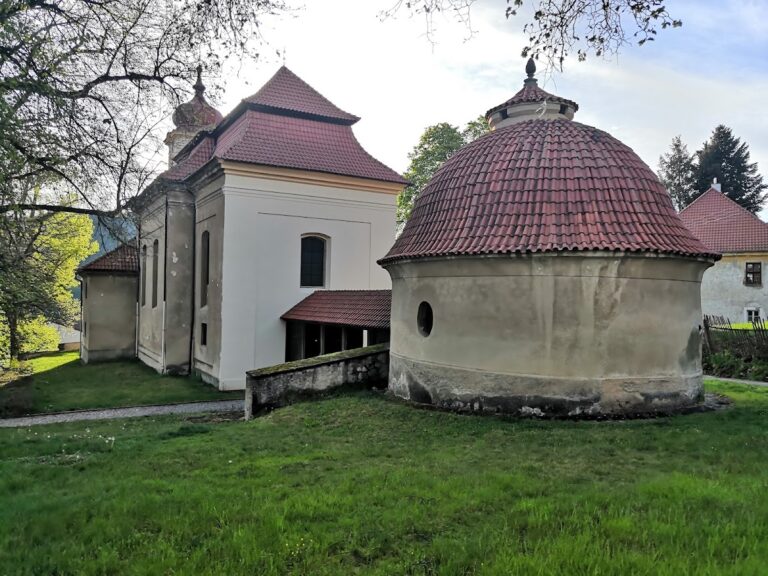
The former Baroque greenhouses were replaced by a more modest winter garden. A Chapel of the Holy Cross was added during the nineteenth-century alterations. The winter garden lies between the chateau’s eastern wing and the chapel and was later rebuilt into its present form under Josef Kolařík.
Service buildings and grounds
Manager’s house and stables
The present form of the manager’s house and the stables dates from the nineteenth-century redevelopment of the estate. These buildings form part of the surviving group of structures associated with the chateau’s later aristocratic administration.
Landscape park
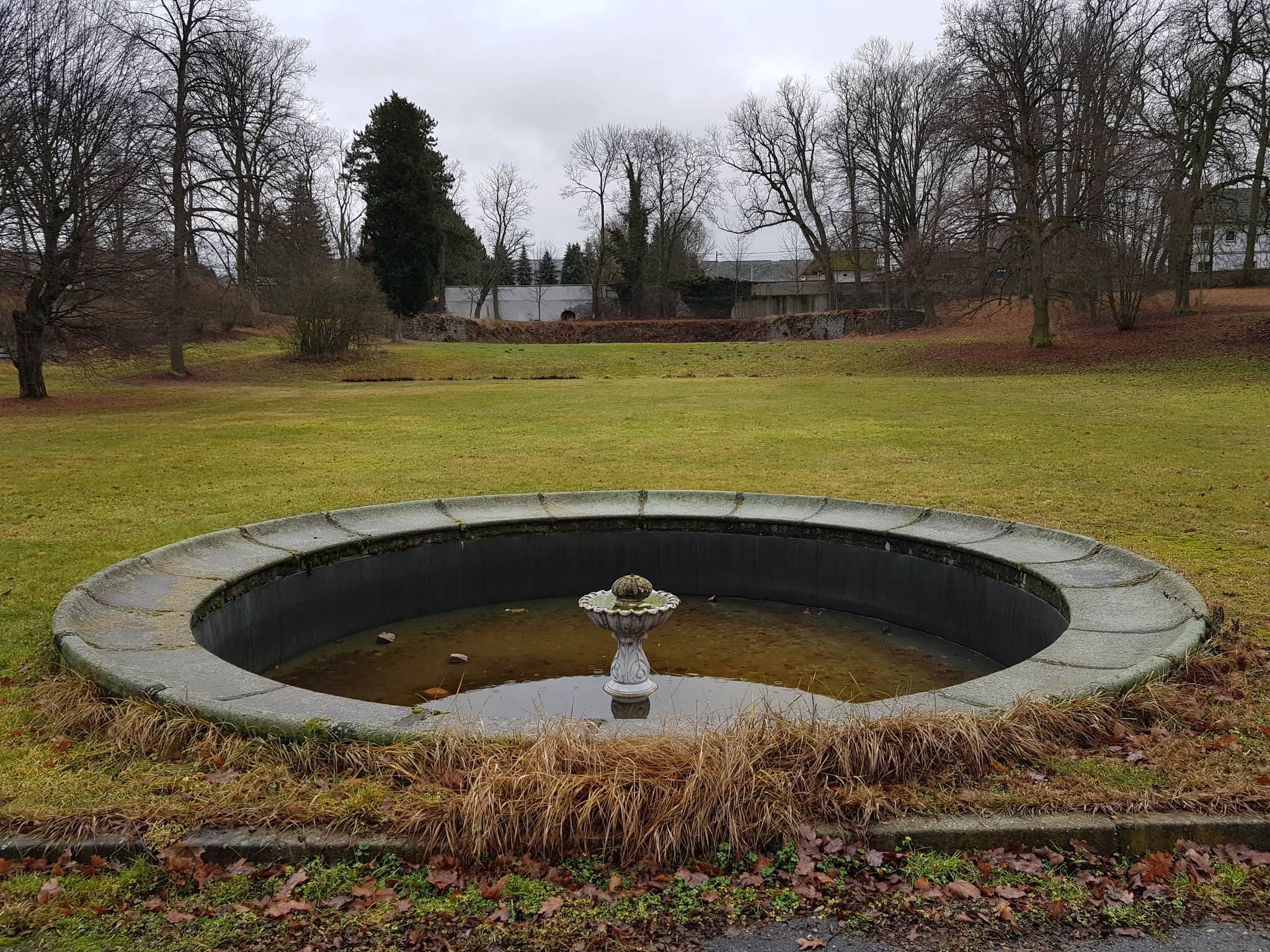
The chateau is surrounded by a landscape park planned after the road from Jince to Příbram was relocated east of the complex. The park replaced the earlier arrangement associated with the French garden, botanical garden, and arboretum established under the Hochbergs. Those earlier gardens no longer survive in their original form.