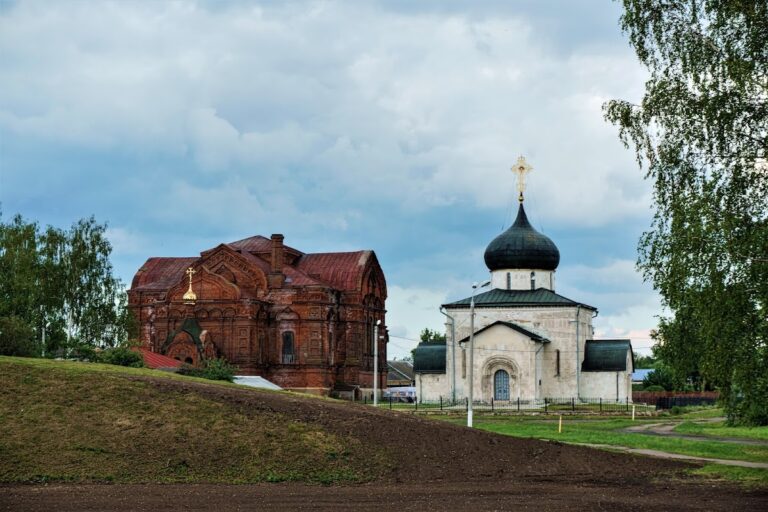
Goritsky Monastery: A Historic Russian Orthodox Monastery in Pereslavl-Zalessky
Site at a Glance
- Rating
- 4.6
- Popularity
- Medium
- Country
- Russia
- Primary era
- Early Modern
- External website
- Open
- Eras represented
- Early Modern, Modern
- Civilizations
- Russian
- Site type
- Religious
- Remains
- Fortified Monastery
On this page19 sections
History
Goritsky Monastery is a historic Russian Orthodox men’s monastery in Pereslavl-Zalessky, Russia, traditionally founded in 1362 during the medieval expansion of monastic communities across northeastern Rus. Its origins are also generally placed in the early fourteenth century, possibly during the reign of Ivan I of Moscow, a grand prince associated with the political consolidation of Moscow. Later traditions proposed a twelfth-century foundation, but that earlier date remains uncertain.
Medieval foundation and destruction
The monastery’s early history is difficult to reconstruct because its archive was destroyed by fire on June 12, 1722. One of the best-known traditions concerns the destruction of Pereslavl and Goritsky Monastery by the forces of Tokhtamysh in 1382. Tokhtamysh, a khan of the Golden Horde, invaded northeastern Rus during that campaign.
According to the tradition, Grand Princess Eudoxia, the wife of Dmitry Donskoy, arrived at the monastery on pilgrimage shortly before the attack. She escaped across Lake Pleshcheyevo on a raft hidden by fog and later helped finance the monastery’s restoration. A boat procession across the lake was then held on the sixth Sunday after Easter. The account remains part of the monastery’s historical tradition.
The claim that the monk Dmitry Prilutsky received his monastic tonsure at Goritsky is disputed. The chronology is problematic because he was already abbot of a monastery he founded in 1362. In the fifteenth century, Daniel of Pereslavl lived at Goritsky and later became its abbot. In 1508 he moved to the nearby monastery he had founded, now known as Trinity Danilov Monastery.
Landholding and episcopal transformation
During the Middle Ages, Goritsky Monastery owned numerous villages, including Bolshie Sokolniki, Veslevo, Veskovo, Voskresenskoye, Dubnevo, Yermovo, Ilyinskoye, Kruzhkovo, Maurino, Nila, Pertsevo, Rodiontsevo, Slavitino, Solomidino, Chashnitsy, Chentsy, Chernitskoye on Oselka, Chernitskoye on Shakha, Chernetskoye-Knyazheskoye, and Yaropoltsy.
The monastery was suppressed in 1744, when its premises were assigned to the episcopal residence of the newly established Pereslavl diocese. This change transformed the complex. Several older buildings were demolished, while major parts of the surviving ensemble were constructed or rebuilt for the bishops’ administration. The Pereslavl diocese was abolished in 1788, ending the site’s use as an episcopal residence.
The Dormition Cathedral continued to serve for about half a century as a church for the city. From 1838, services there were held mainly on feast days after cathedral status returned to the Church of the Transfiguration in the kremlin, the fortified central enclosure of the historic town.
School, museum, and conservation
From 1881 until 1919, the buildings were used for education, including a theological school. A hurricane in 1887 damaged the historic ensemble and removed the tops of its towers. By 1904, the former monastery was in an advanced state of neglect, with overgrown grounds, debris, a silted pond, and deteriorated walls, gates, and towers.
After the Russian Revolution, the Pereslavl-Zalessky State Historical, Architectural, and Art Museum-Reserve was established within the monastery in 1919. Major restoration continued from the 1950s through the 1970s, including work directed by I. B. Purishev. The complex is a federally significant cultural-heritage monument of the peoples of Russia. In 2012, the Russian Orthodox Church expressed an intention to recover the monastery complex. By 2022, regular worship was taking place only in the gate church while the territory was being transferred to the Church. As of 2020, almost all of the buildings were described as dilapidated and in need of repair.
Remains
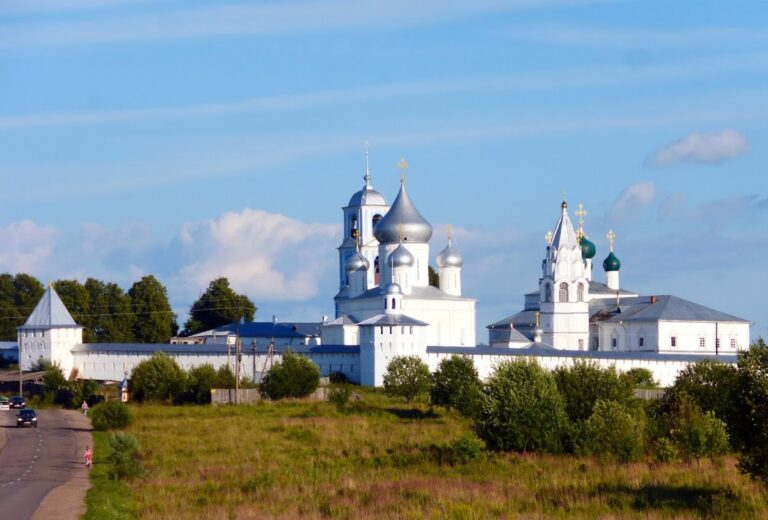
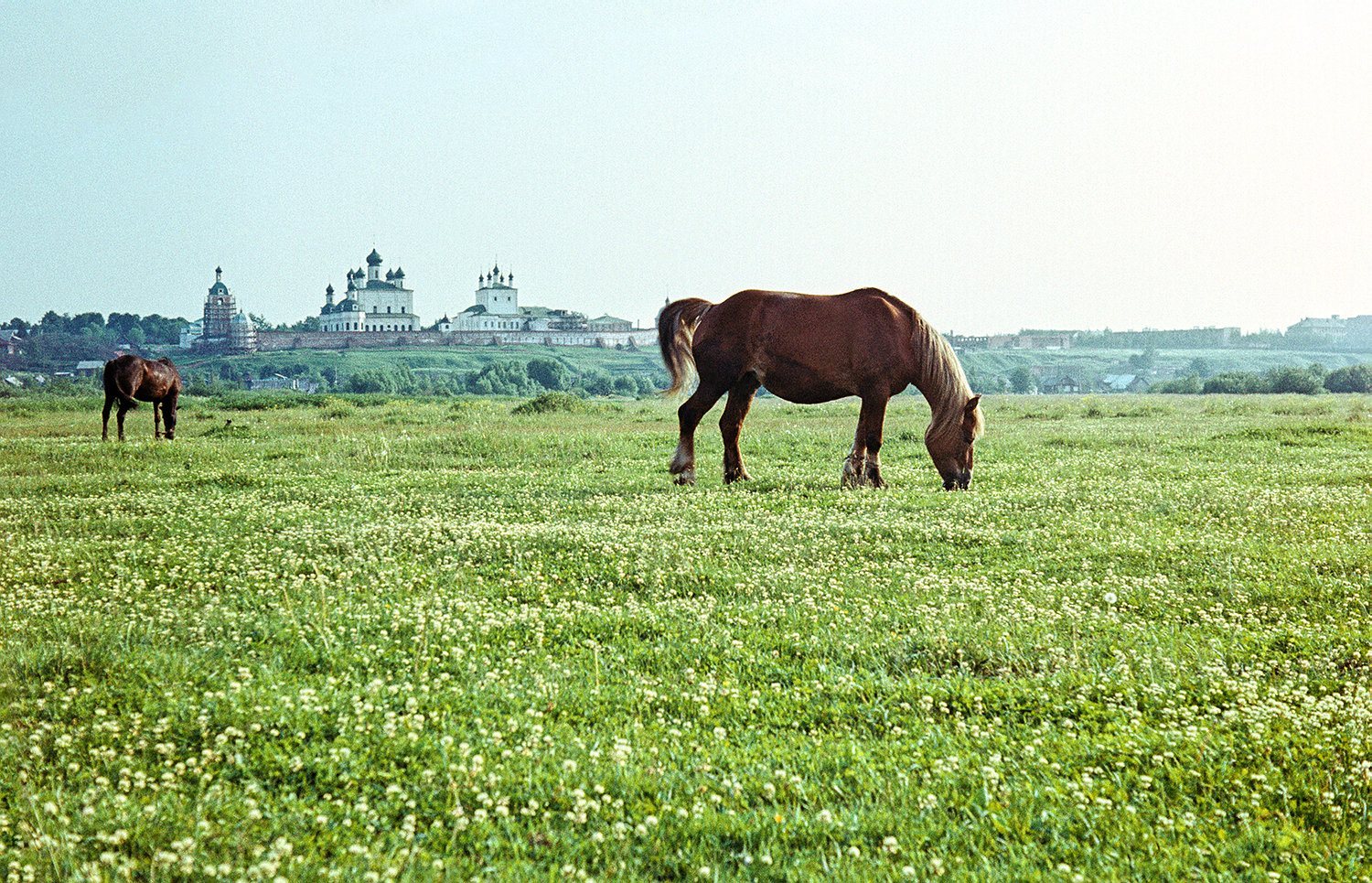
Goritsky Monastery occupies an elevated site south of Pereslavl-Zalessky. Its churches are arranged in a line along the northern enclosure wall, a layout established by sixteenth-century architects and retained through later rebuilding. The surviving ensemble consists principally of buildings from the seventeenth and eighteenth centuries. No architecture from the monastery’s earliest period survives.
Churches and religious buildings
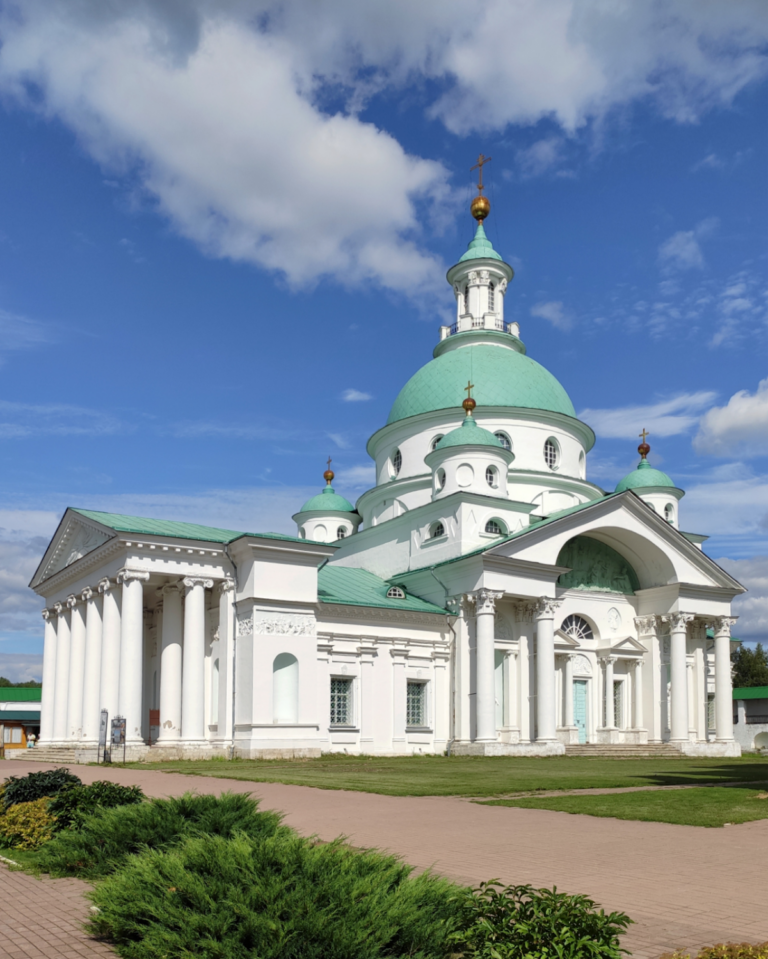
Dormition Cathedral
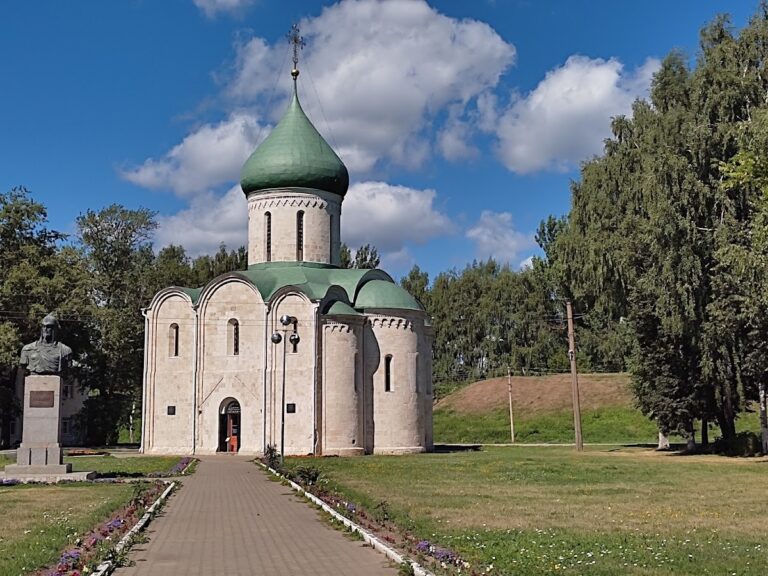
The Dormition Cathedral was built in the 1750s, after the monastery had become an episcopal residence. The Dormition is the Christian feast commemorating the death, or “falling asleep,” of the Virgin Mary. Inside, the cathedral has a prominent multi-tiered iconostasis in the Elizabethan Baroque style, an eighteenth-century Russian style associated particularly with the reign of Empress Elizabeth. The building is now used for an exhibition and storage.
Church of the Epiphany
The Church of the Epiphany and its bell tower date from 1768 to 1777. The building now houses the museum’s methodological department, while its upper level serves as a viewing platform over Pereslavl.
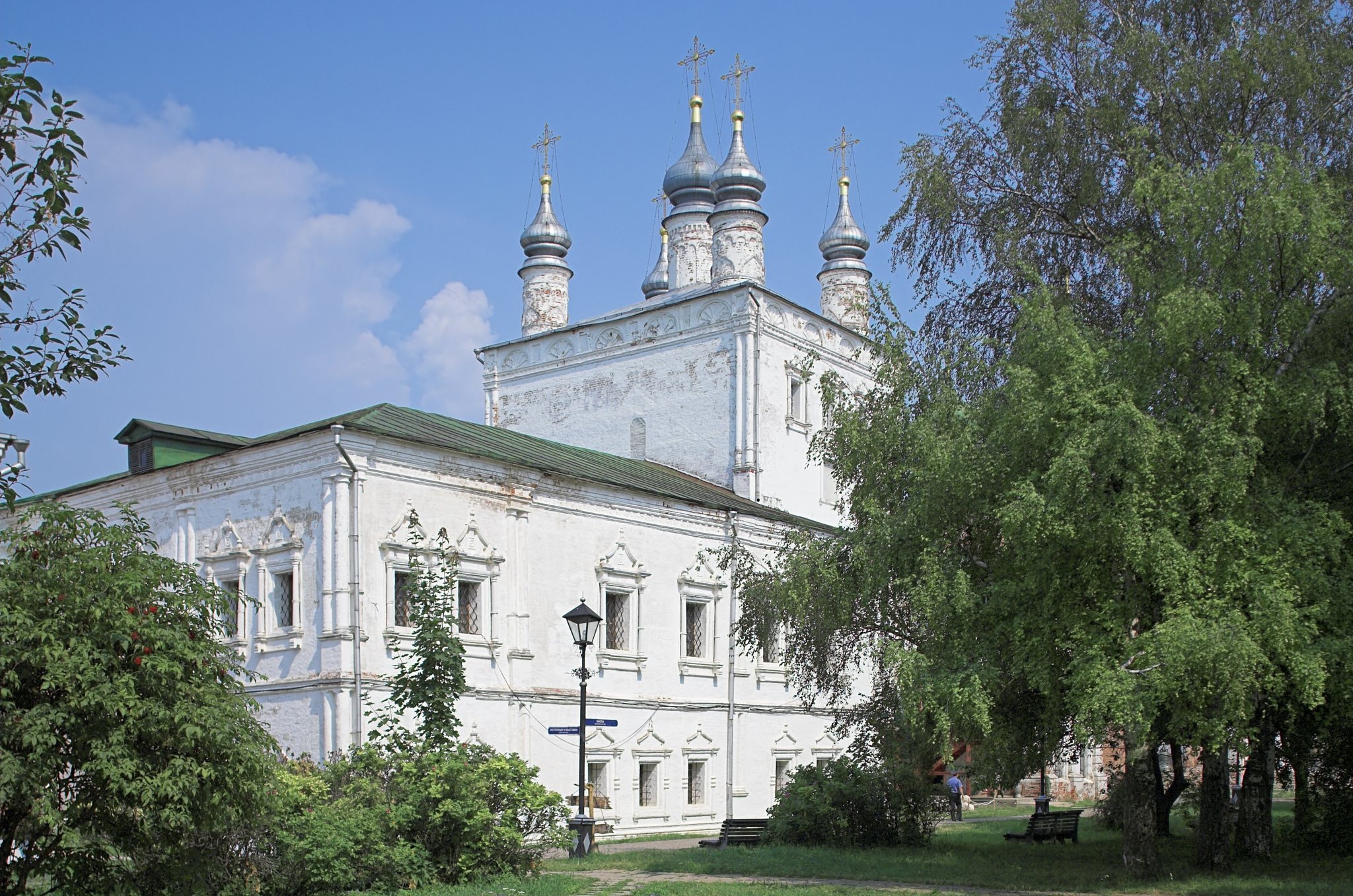
Church of All Saints
The Church of All Saints, together with its refectory chamber, dates from the late seventeenth century. Later additions substantially changed its original appearance. The complex is now used for exhibition and storage.
Gate Church of Saint Nicholas
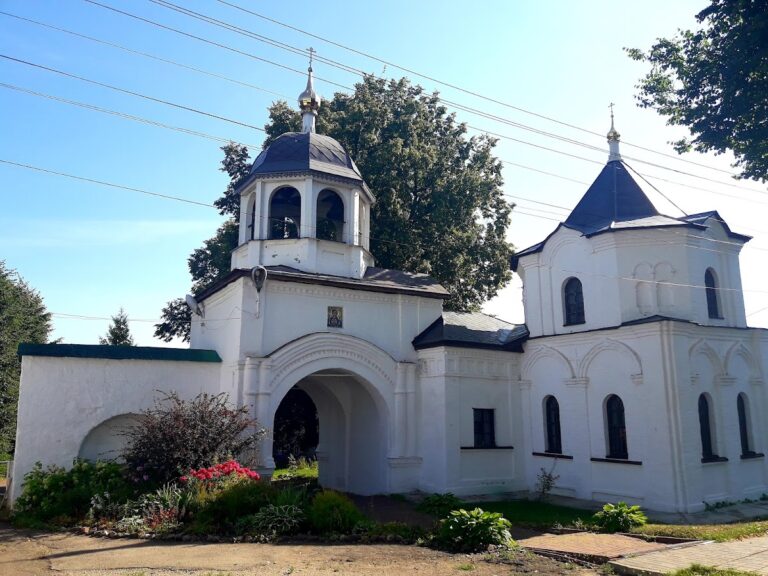
The Gate Church of Saint Nicholas the Wonderworker dates from the seventeenth or eighteenth century. It has been returned to the Russian Orthodox Church and remains an active church operated by the Goritsky episcopal metochion. A metochion is a church-affiliated representative compound or subordinate establishment administered on behalf of a bishop or monastery.
Gates, walls, and enclosure
Holy Gates and gatekeeper’s chamber
The Holy Gates and the gatekeeper’s chamber form part of the entrance complex. The Holy Gates are regarded as an important example of early Russian architecture and are usually associated with the ornamental style of the mid-seventeenth century, although their exact construction date is unknown. Along with a second gate, the southern enclosure wall with one tower, and the Church of All Saints, they belong to the oldest surviving components known to have existed by the seventeenth century.
Enclosure walls and towers
The monastery’s enclosing walls and towers date mainly from the seventeenth and eighteenth centuries and are now used partly for storage. A section beginning at the bell tower and extending along the northern and part of the western sides was rebuilt between 1768 and 1777. The southern enclosure wall and one tower form part of the earlier surviving fabric.
Gethsemane complex
The Gethsemane complex was built between 1753 and 1761 and dismantled for its bricks in 1883. The name refers to the garden near Jerusalem associated in Christian tradition with Jesus’s prayer before his arrest, and was also applied to some Christian religious compounds.
Fire-prevention pond
A pond was dug during the episcopal period as protection against fires. Pipes connected it with another pond outside the monastery walls. The pond survives within the complex.
Later buildings and museum grounds
School, bathhouse, and belfry
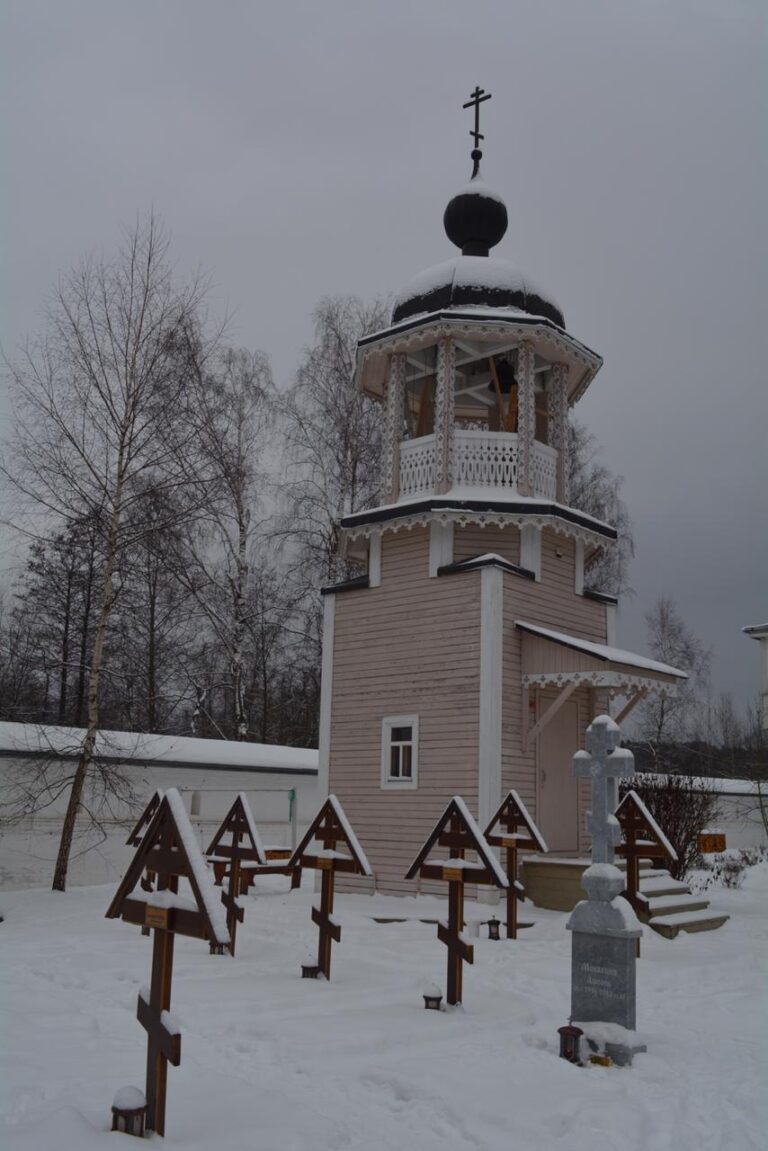
The nineteenth-century theological-school building now houses an art gallery. A nineteenth-century bathhouse has been converted into the administration building, while a nineteenth-century belfry is used as a viewing platform.
Wooden chapels
Two wooden chapels were moved to the museum grounds during the 1960s. The nineteenth-century Chapel of the Intercession came from Starovo village, and the late-nineteenth-century Chapel of Saint George came from Foninskoye village.
Sculpture and cemetery
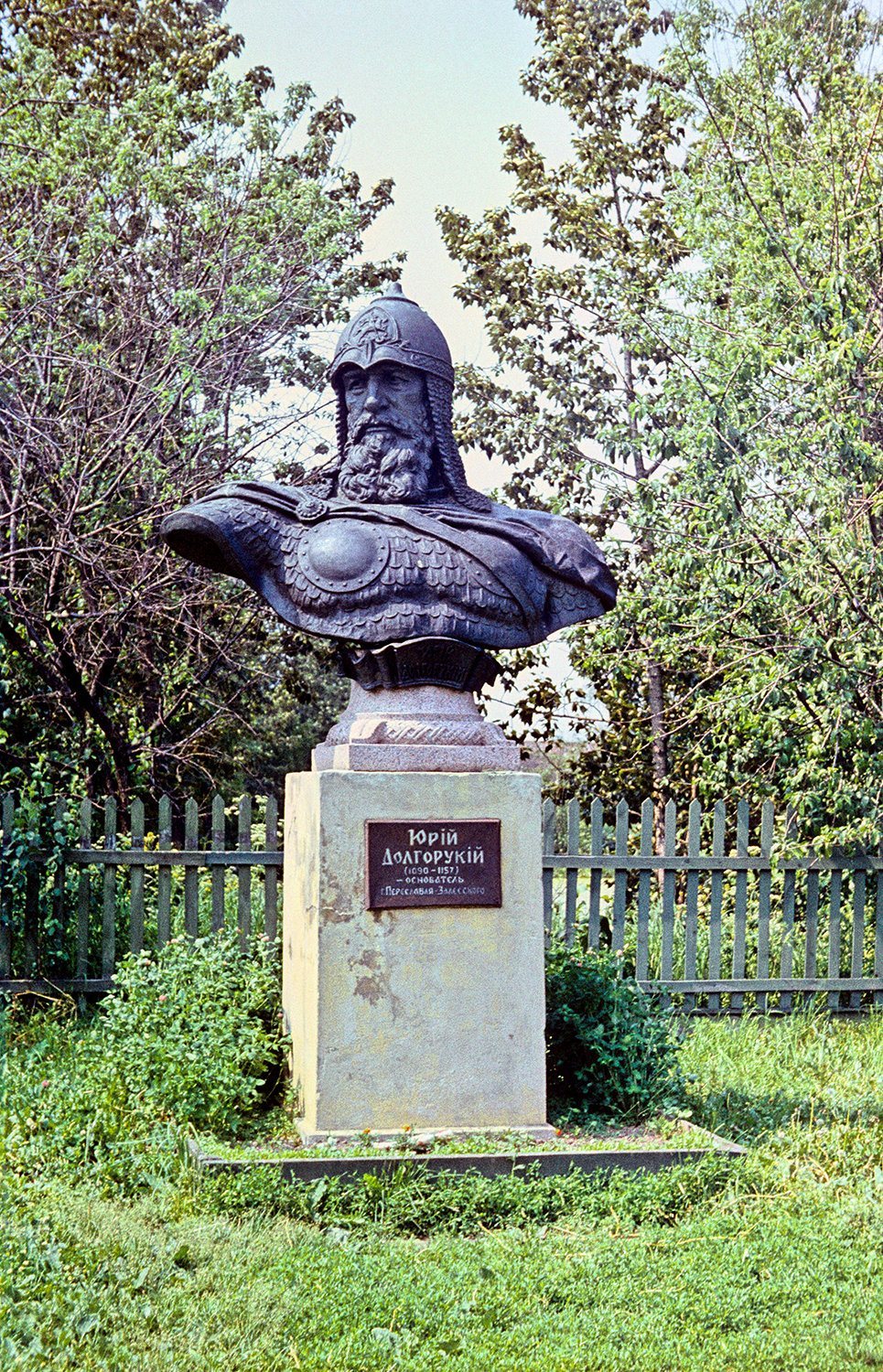
The grounds contain a 1963 bust of Yuri Dolgoruky by the sculptor S. M. Orlov. It is a bust-length replica of the monument on Tverskaya Square in Moscow. Memorial sculpture dating from the early nineteenth century survives in the former monastery cemetery, which also contains the grave of the painter and theatre designer Dmitry Kardovsky, who died in 1943.