Holy Trinity Stefan Makhrishchsky Monastery: A Russian Orthodox Monastic Complex


Site at a Glance
- Rating
- 4.9
- Popularity
- Low
- Country
- Russia
- Primary era
- Modern
- External website
- Open
- Eras represented
- Medieval, Early Modern, Modern
- Civilizations
- Russian
- Site type
- Religious
- Remains
- Monastery
On this page12 sections
History
The Holy Trinity Stefan Makhrishchsky monastery is a Russian Orthodox monastery in Makhra, Russia, founded in the fourteenth century by the monk Stefan Makhrishchsky, probably around 1370. Built as a male monastery, it developed through successive periods of destruction, rebuilding, expansion, and religious revival. Its churches and associated buildings are now protected as a federally significant cultural-heritage property of the Russian Federation.
Foundation and Early Development
Stefan Makhrishchsky had previously lived an ascetic life at the Kyiv Pechersk Monastery. He founded the community at Makhra and died in 1406. A fire damaged the monastery in the fifteenth century, after which it was rebuilt. Between 1557 and 1570, a stone church was constructed within the monastery, while its landed estates had expanded by the end of the sixteenth century.
The monastery suffered a major crisis during the Time of Troubles, a period of political instability, warfare, famine, and foreign intervention in the Russian state during the late sixteenth and early seventeenth centuries. It was looted and destroyed during this period. Monks who came from the Trinity Lavra of St Sergius, one of the principal monasteries of Russian Orthodoxy, later resumed monastic life at Makhra. From 1615 until the 1920s, the monastery remained affiliated with the Trinity Lavra of St Sergius.
Expansion and Nineteenth-Century Building
The monastery reached its greatest prosperity at the turn of the eighteenth and nineteenth centuries, when Platon Levshin was Metropolitan of Moscow. Platon was an influential hierarch of the Russian Orthodox Church. A group of masonry buildings was erected during this period, and construction and embellishment of the churches continued throughout the nineteenth century. A bell tower was added at the end of that century.
In 1906, marking five hundred years since Stefan Makhrishchsky’s death, the first church he had built for the community was reconstructed. This work connected the monastery’s later architectural development with the memory of its founder and its early religious life.
Closure and Revival
Soviet authorities closed and desecrated the monastery in the early 1920s. Its buildings then deteriorated for approximately seventy years. In 1993, the Russian Orthodox Church regained the complex and established a women’s community there. With the blessing of Archbishop Evlogy of Vladimir and Suzdal, nuns initially created a dependency, a subordinate monastic community administered by another monastery, of the Dormition Monastery of Alexandrov. They began at the small Church of the Apostles Peter and Paul, amid ruins whose surviving fragments indicated the site’s original purpose. The community became an independent monastery in 1995.
The restored Church of St Stephen was consecrated by Patriarch Alexy II of Moscow and All Rus in 1997. Since 2002, the nuns have operated a children’s home. On 17 August 2004, the monastery received stauropegial status, an Orthodox monastic status placing it directly under patriarchal authority rather than ordinary diocesan administration. In 2010, Patriarch Kirill of Moscow and All Rus consecrated the Church of the Holy Trinity. The monastery is a women’s monastery of the Russian Orthodox Church and is also described as a stauropegial monastery.
Remains
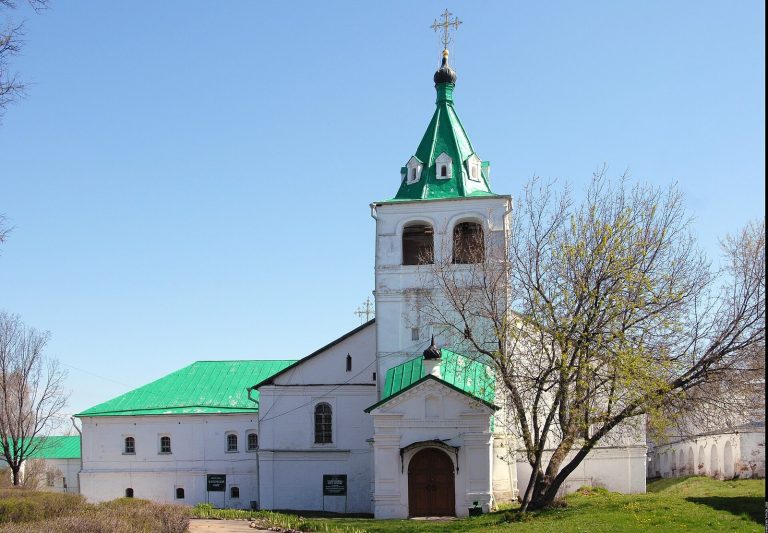
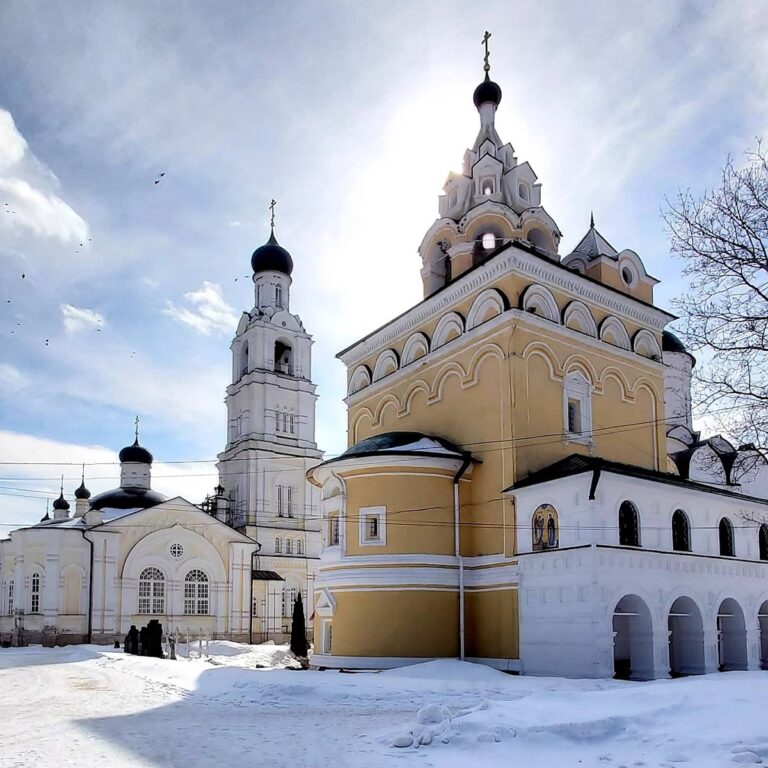
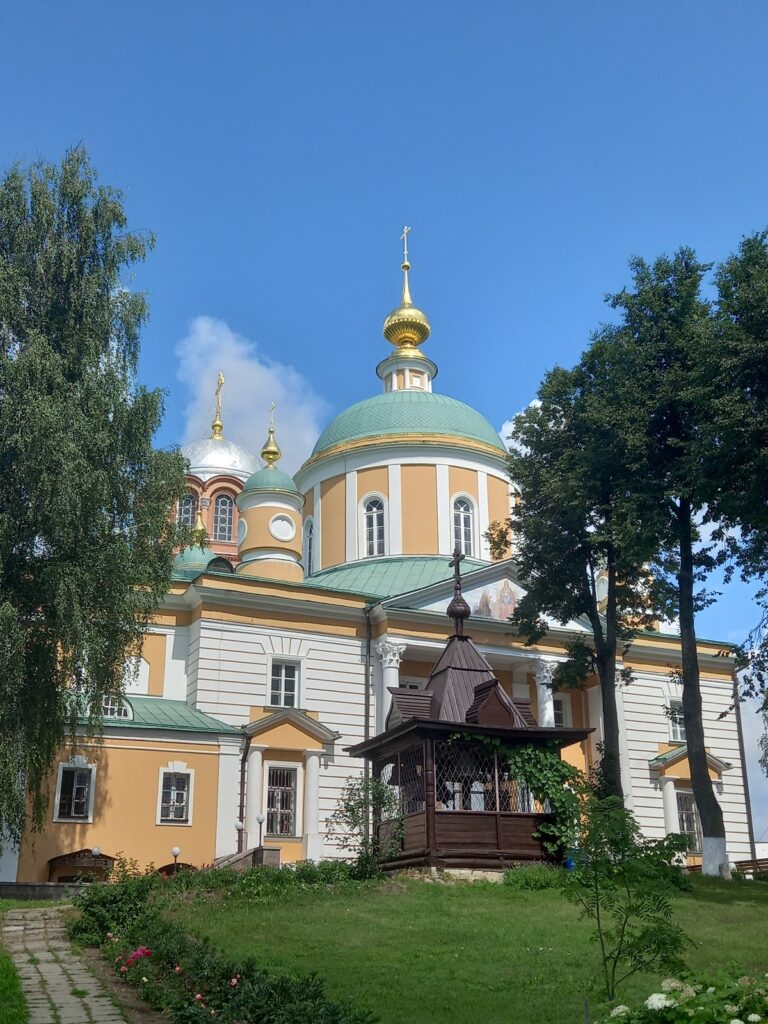
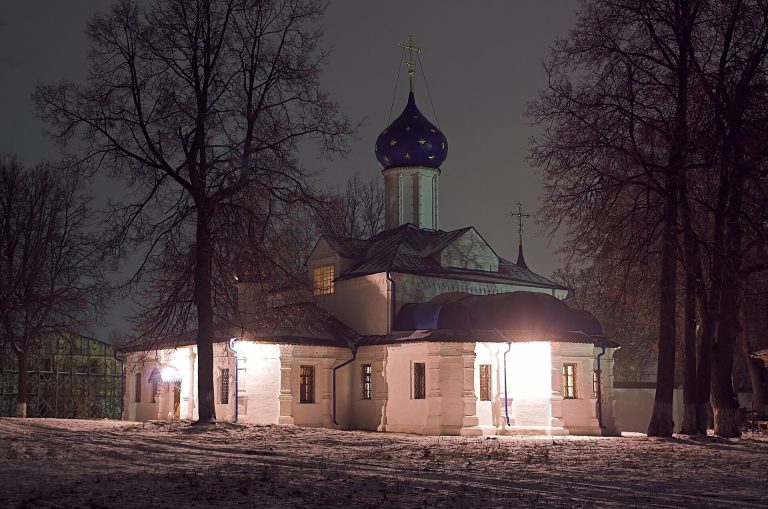
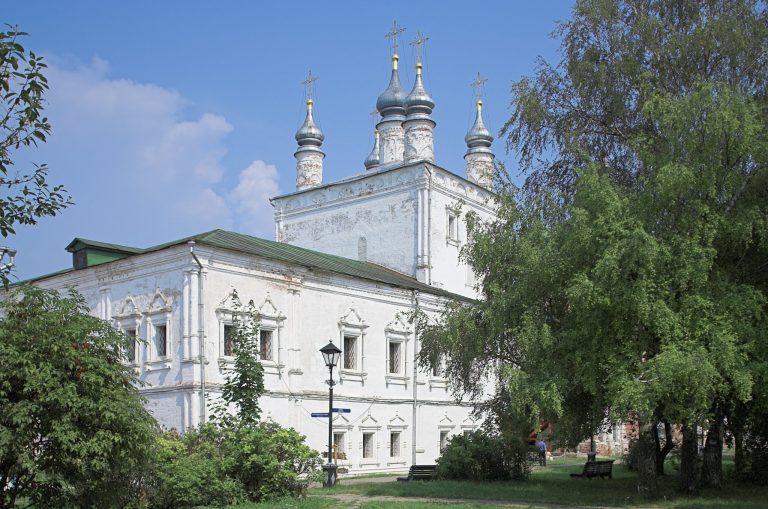
The monastery stands in the village of Makhra in Vladimir Oblast, on the Molokcha River. Its buildings form a religious complex chiefly constructed of brick in a Byzantine-Russian style, which combines elements derived from Byzantine church design with Russian ecclesiastical architecture. The principal religious buildings include the Church of St Stephen, the Church of the Holy Trinity, and a gate church dedicated to St Sergius of Radonezh.
Churches and Sacred Remains
Church of St Stephen
The Church of St Stephen is one of the principal churches of the monastery. It was restored after the community returned in the 1990s and was consecrated in 1997 by Patriarch Alexy II of Moscow and All Rus. The church preserves the relics of St Stefan Makhrishchsky, the Orthodox monk and founder of the monastery who is venerated as a saint.
Church of the Holy Trinity
The Church of the Holy Trinity forms another principal element of the monastery complex. Patriarch Kirill of Moscow and All Rus consecrated it in 2010, during the monastery’s renewed life as a women’s community.
Gate Church of St Sergius
A gate church dedicated to St Sergius of Radonezh is also part of the monastery. Its dedication recalls the monastery’s long affiliation with the Trinity Lavra of St Sergius, which supplied monks who resumed the community’s life after its destruction during the Time of Troubles.
Relics of Varlaam
The monastery also preserves the relics of Varlaam, Bishop of Suzdal. They remain among the sacred objects associated with the complex.
Talitsy Dependency
The monastery has an associated dependency in the village of Talitsy in Moscow Oblast, near Sofrino. This subordinate establishment contains several churches and chapels, extending the monastery’s religious presence beyond its principal complex in Makhra.
Cave Church
Among the buildings at Talitsy is a restored cave church. A cave church is established in a natural or artificially excavated cave or underground chamber. Its restoration forms part of the surviving religious features of the monastery’s associated dependency.