Chōfuku-ji Temple: A Rinzai Zen Temple in Kiso, Japan
Site at a Glance
- Rating
- 3.8
- Popularity
- Very Low
- Country
- Japan
- Primary era
- Early Modern
- Eras represented
- Early Modern
- Civilizations
- Toyotomi regime
- Site type
- Religious
- Remains
- Monastery
On this page17 sections
History
Chōfuku-ji Temple is a Japanese Buddhist temple in Kiso, Japan, traditionally originating in 702 as a Tendai temple near Yakushidaira on the ancient Kiso road. Tendai is a major Japanese Buddhist tradition. The temple later became a Rinzai Zen institution, a school emphasizing disciplined meditation and the study of kōan, under the Myoshinji branch, one of the principal Rinzai lineages centered on Myoshinji in Kyoto.
Early Foundations and Medieval Revival
In 1430, Kiso Toyofusa became Chōfuku-ji’s founder-patron and invited Chikuin Hakugan, the twenty-second abbot of Kenchō-ji in Kamakura, to revive the temple. Chikuin Hakugan died in 1436. The institution’s medieval history includes differing traditions. A record from 1467 states that a monk associated with Chōfuku-ji entered Jōchi-ji and later became its head seat, while a genealogy names a younger brother of Kiso Ietoyo as the temple’s abbot. Chōfuku-ji’s own tradition instead describes the temple as having been without an abbot during this period.
The temple’s decline was associated with the relocation of the Kiso family’s base to Suhara in Ōkuwa. During the Eishō era, from 1504 to 1521, Kiso Yoshimoto returned the family base to Kiso Fukushima, donated land to Chōfuku-ji, and repaired its Buddhist hall. He also invited his uncle Shinsoku, the abbot of Myōshin-ji, to restore the institution. Chōfuku-ji was then converted to the Rinzai Myoshinji branch.
A temple called Ryūgen-ji existed in Fukushima during the same period. It was later merged with Chōfuku-ji, forming the institution known as Ryūgen-zan Chōfuku-ji, although the date of the merger is unknown. The second, sixth, and seventh abbots of Chōfuku-ji served as imperial envoy monks of Myōshin-ji.
Kiso Patronage and Associated Temples
During the Eiroku era, Kiso Yoshimasa rebuilt the mausoleum of successive Kiso family ancestors, gave Chōfuku-ji additional lands and forests, and erected a stone five-ring pagoda in the precincts as a memorial to Takeda Shingen. A five-ring pagoda, or gorintō, is a Buddhist monument whose five stacked forms represent earth, water, fire, wind, and the void. Takeda Shingen was a powerful sixteenth-century warlord of the Takeda family.
Chōfuku-ji also helped establish several related temples. In 1558, the Kiso retainer Kuwabara Gyōbuemon no Jō Shigehisa founded Fumon-in at Kuga because the settlement had no temple. He endowed it with one tan, four se, and five bu of fields and invited Kōan, Chōfuku-ji’s sixth abbot, to become its founding abbot. In 1652, the headman Matsubara founded Hōsen-an in Ōtaki and likewise invited Kōan to lead it. In July 1665, Kōan served as founder-patron of Genryū-an at Kaida, where a statue of Shaka was installed as the principal image. Chōfuku-ji’s seventh abbot, Takudō Chijin, became Genryū-an’s founding abbot.
Yamamura Patronage and Early-Modern Changes
In 1590, Kiso Yoshimasa left the Kiso Valley after Tokugawa Ieyasu was transferred to the Kantō region and received a fief of 10,000 koku at Ajito in Shimosa. A koku was a historical measure of rice-based land revenue conventionally linked to the amount needed to support one person for a year. Ishikawa Mitsuyoshi, a senior retainer of Toyotomi Hideyoshi who became magistrate of the Kiso region, subsequently guaranteed the continued standing of Chōfuku-ji and the two other temples traditionally associated with the Kiso family.
A fire destroyed the temple complex in 1594. It was rebuilt in 1595 by an official of the Yamamura family who had returned to the Kiso Valley and was serving under Ishikawa Mitsuyoshi. After Kiso Yoshitoshi was dispossessed in 1600, Chōfuku-ji became the mortuary temple of the Yamamura family. A mortuary temple conducts memorial rites and maintains graves for a family or household. The precincts contain the tombs of Yamamura Ryōkō and his father, Yamamura Ryōri.
In 1629, Yamamura Ryōhō succeeded his father, Yamamura Ryōkatsu, as magistrate of the Kiso region. At that time, Kōan, Chōfuku-ji’s sixth abbot, was descended from the Kiso family but came from the Kamado-Baba family, whose members had become direct retainers of the Edo shogunate. Kōan and Yamamura Ryōhō had a poor relationship, while Kōan maintained a close relationship with Shūkoku of Kōzen-ji.
When Yamamura Ryōkatsu died in 1634, the Yamamura Jinbei household changed its principal family mortuary temple from Chōfuku-ji to Kōzen-ji. Chōfuku-ji thereafter served as the mortuary temple for the wives of that household. Together with Kōzen-ji in Kiso and Jōshō-ji in Ōkuwa, it is regarded as one of the three major temples of the Kiso area. It is also known locally as the temple where dogwood blooms.
Fire, Destruction, and Reconstruction
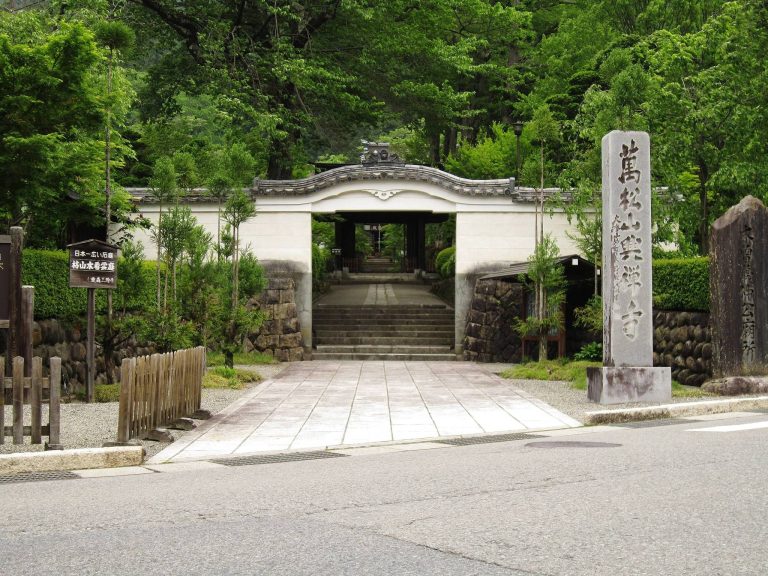
Chōfuku-ji suffered another fire in 1850. The entire complex was destroyed in the great fire of Kiso Fukushima in 1927. Reconstruction began under the twentieth abbot, Bunryū, in 1965. A wholly cypress-built main gate was completed in 1967, followed by the abbot’s quarters in 1973, the main hall in 1974, and the bell tower in 1983.
Remains
Temple Buildings and Garden
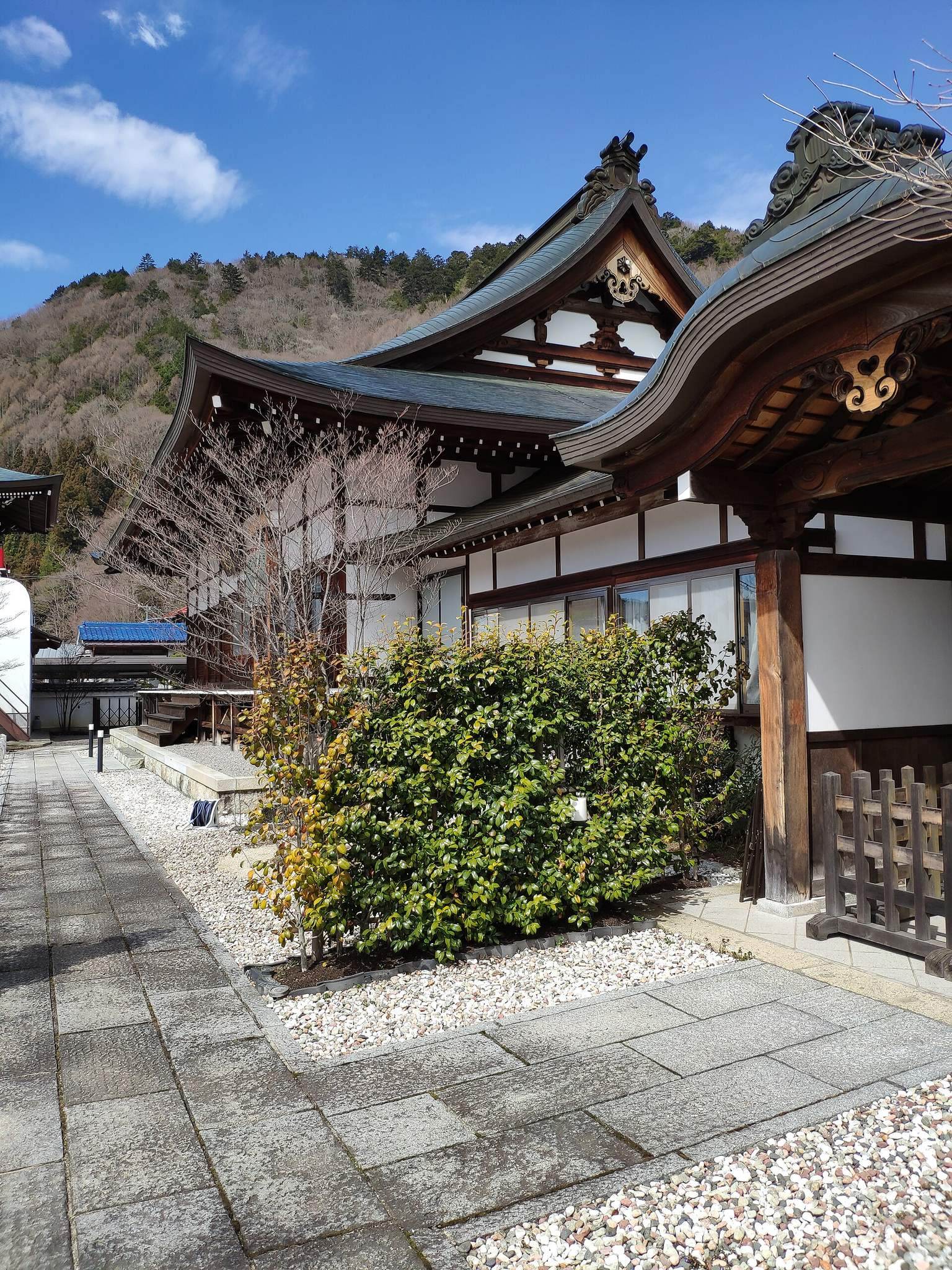
The present precincts are organized around buildings reconstructed between 1967 and 1983, together with memorial monuments, cemetery levels, and a garden behind the main hall. The temple bears the mountain name Ryūgen-zan, an honorific designation traditionally attached to a Japanese Buddhist temple’s name, and Shaka is its principal image.
Main Gate
The main gate was completed in 1967 as part of the postwar reconstruction. It is built entirely of cypress and forms one of the principal surviving structures of the rebuilt temple complex.
Abbot’s Quarters
The abbot’s quarters were completed in 1973. They belong to the sequence of reconstructed buildings that re-established the temple precinct after the destruction of 1927.
Main Hall
The main hall was completed in 1974 and houses the temple’s religious focus, including Shaka as the principal image. A small garden lies behind it.
Bell Tower
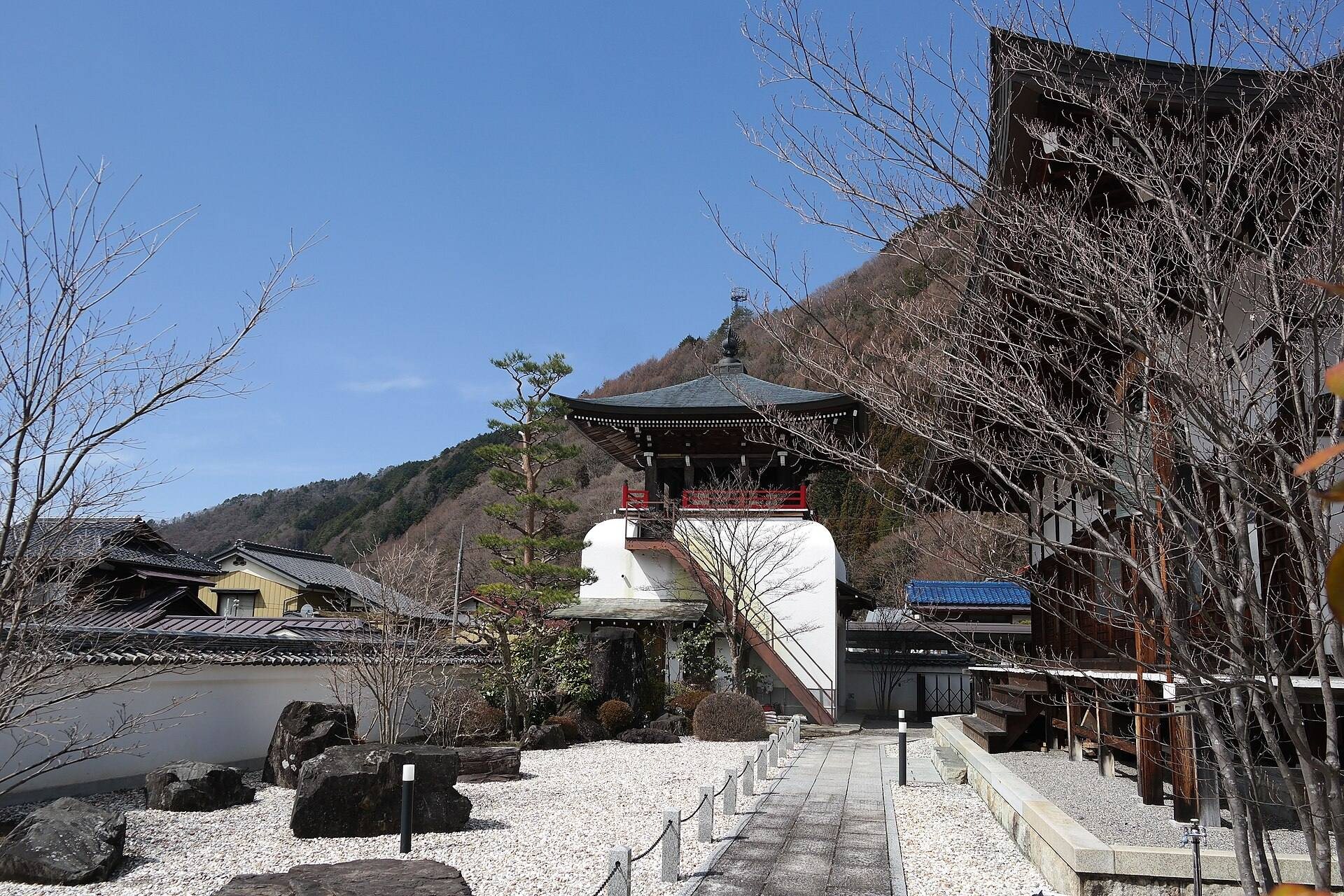
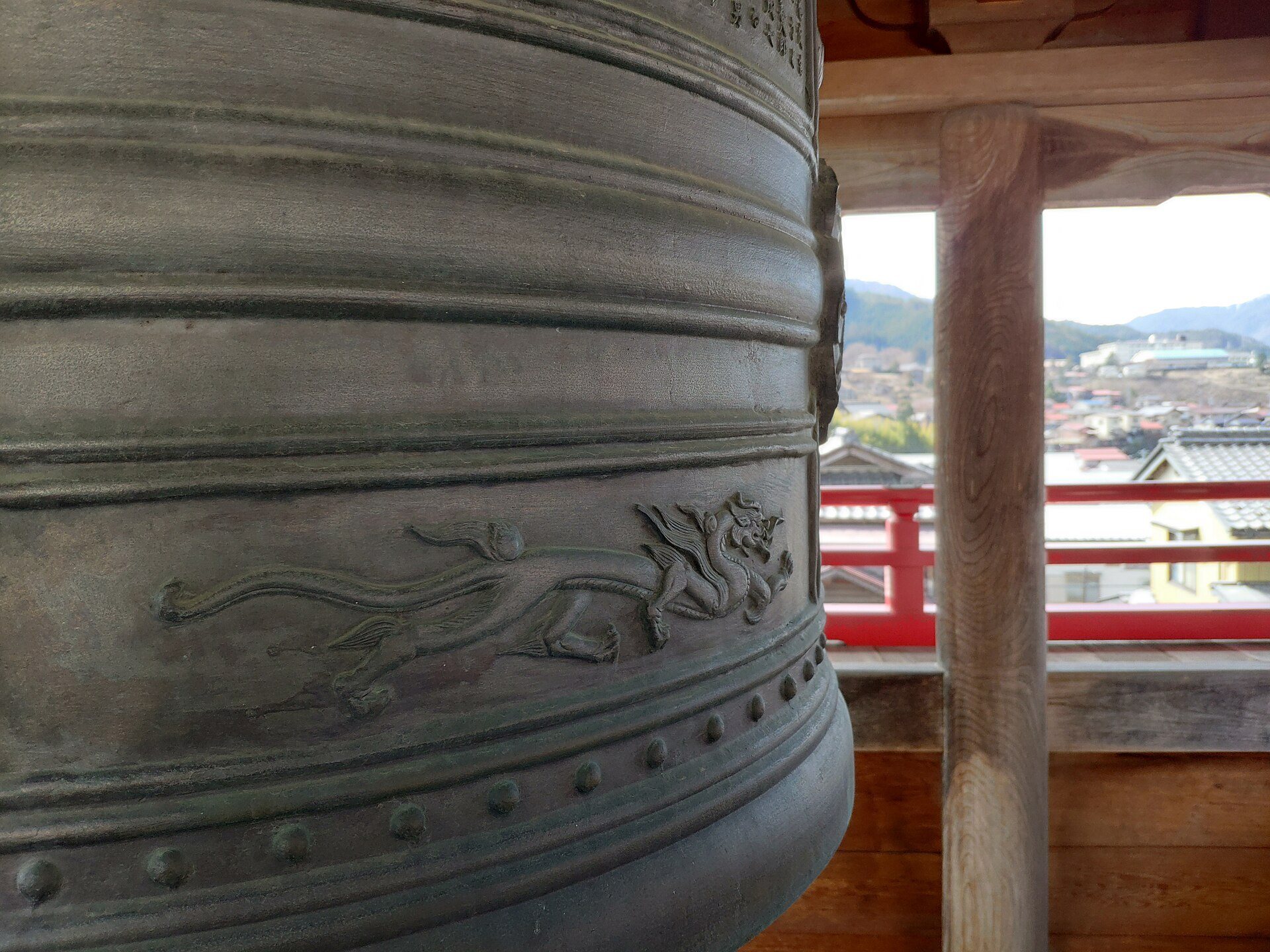
The bell tower was completed in 1983, bringing the principal reconstruction program to completion.
Rear Garden
The garden behind the main hall uses white sand and includes a notable stone known as the “Reclining Ox.” Its simple arrangement is described as evocative.
Memorial Pagodas and Cemetery
Five-Ring Pagoda
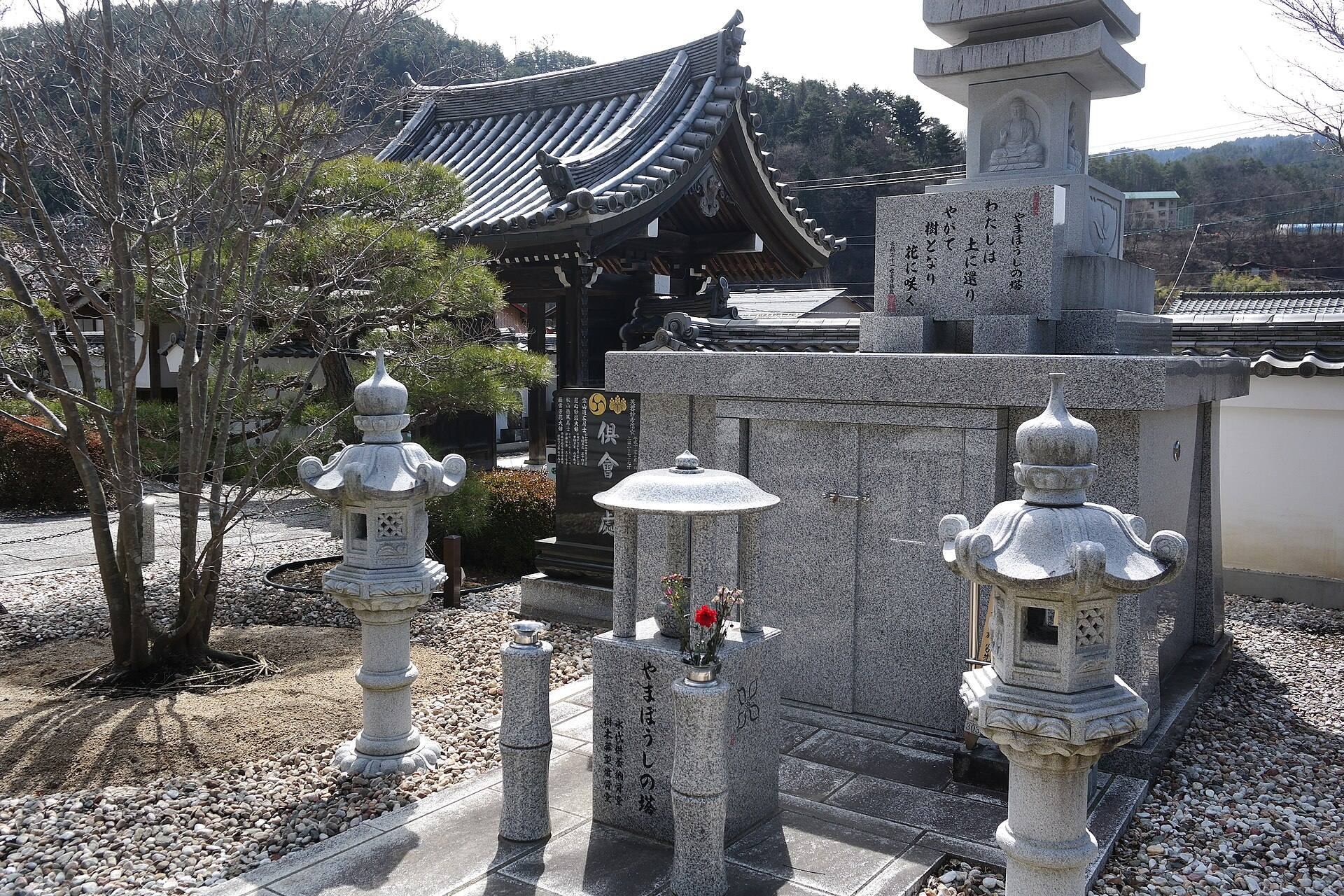
A stone five-ring pagoda stands in the precincts as a memorial to Takeda Shingen. Its five stacked forms represent earth, water, fire, wind, and the void.
Middle Cemetery Level
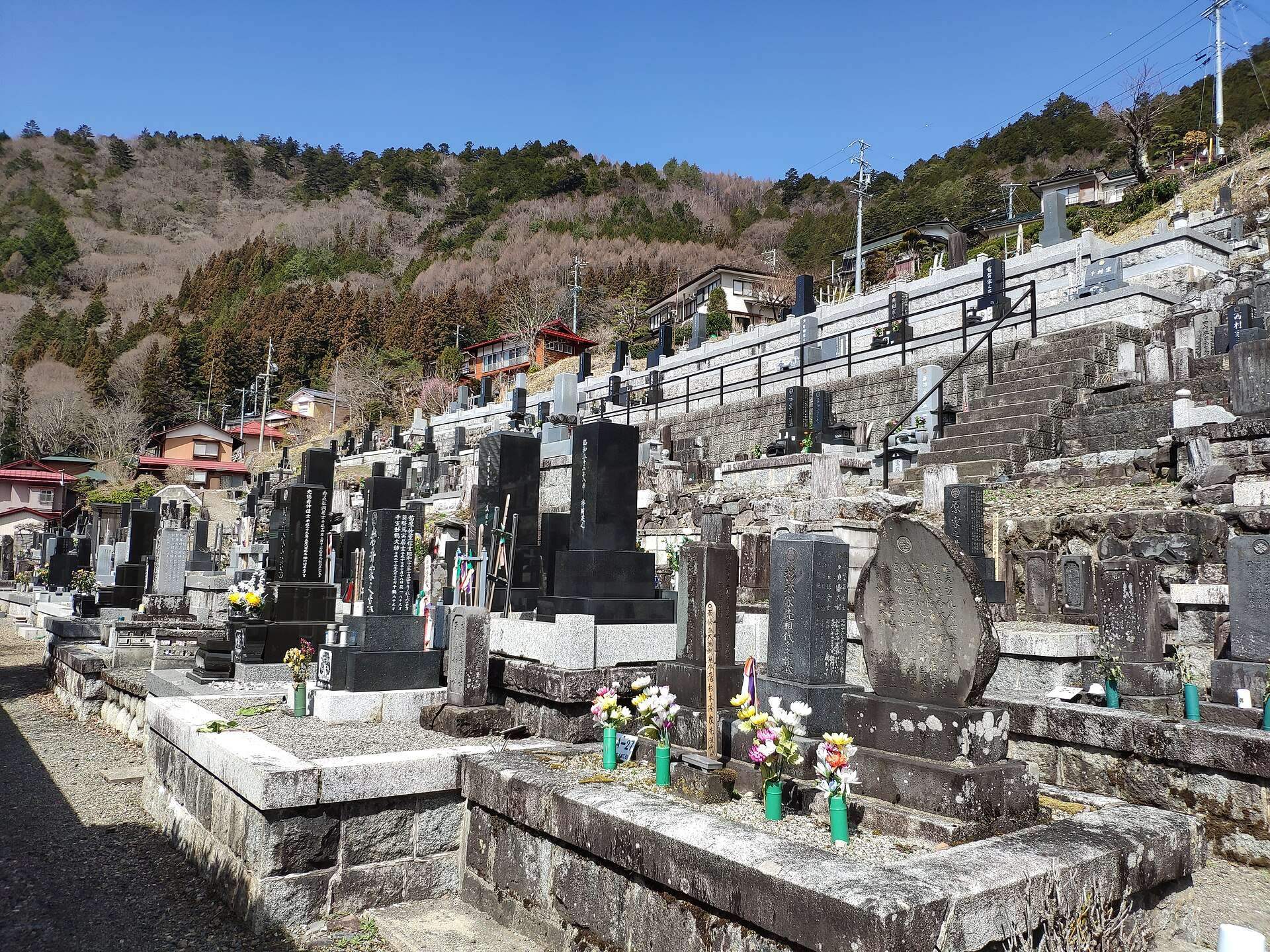
The middle level of the cemetery contains five hōkyōintō pagodas. A hōkyōintō is a Buddhist memorial pagoda traditionally associated with prayers for the deceased. These five monuments serve as gravestones for women of the Yamamura Jinbei household.
Upper Cemetery Level
The upper level contains five hōkyōintō pagodas. One is attributed to founder-patron Kiso Toyofusa and bears an inscription dated to the thirteenth day of the first month of 1432, although it is not regarded as a gravestone erected at that time. Three of the other four are considered to be the graves of Yamamura Ryōkō, Yamamura Ryōri, and Yamamura Ryōdō. The owner of the remaining pagoda is unknown.
Jizō Statue
The precincts also contain a stone Jizō statue made by the Takato stone sculptor Moriya Sadaharu. Jizō is a Buddhist bodhisattva widely associated with protecting travelers, children, and the dead.