Basilica of Our Lady of Sorrows (Bazilika Panny Marie Bolestné): A Marian Shrine in Czechia
Site at a Glance
- Rating
- 4.5
- Popularity
- Very Low
- Country
- Czechia
- Primary era
- Early Modern
- Eras represented
- Early Modern
- Civilizations
- Holy Roman Empire, Kingdom of Bohemia
- Site type
- Religious
- Remains
- Basilica
On this page18 sections
History
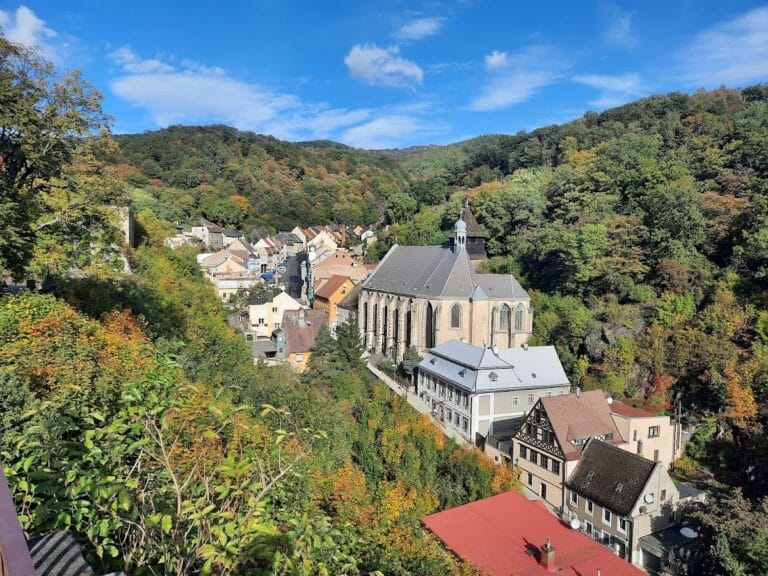
The Basilica of Our Lady of Sorrows, known locally as Bazilika Panny Marie Bolestné, is a Roman Catholic pilgrimage church and Marian shrine in Bohosudov, a district of Krupka in Czechia. The shrine developed from a fifteenth-century pilgrimage tradition and became a Baroque Jesuit church between 1701 and 1708. Pope Pius XI granted it the title of minor basilica in 1924, a papal designation recognizing a church’s religious and historical importance rather than a particular architectural plan.
Origins of the pilgrimage
A pilgrimage chapel existed at Bohosudov by the fifteenth century. Tradition places the first pilgrimage around 1425, when a girl supposedly found a small image of the Sorrowful Virgin in a hollow lime tree. A procession carried the image from Krupka to the parish church, but it was reportedly found again in the tree. The story says that a chapel was then built at the place of discovery.
Another tradition connects the chapel with the aftermath of the Battle of Aussig in 1426. According to this account, a chapel was erected near the Schein estate in memory of fallen knights and in honor of the Sorrowful Virgin. A further version says that nuns fleeing the convent at Světec hid the image there. These accounts belong to the religious tradition of the shrine rather than to established historical fact.
From chapel to pilgrimage church
Albrecht von Kolowrat, a Bohemian nobleman and royal official, ordered the chapel’s conversion into a pilgrimage church from 1507. The church was consecrated in 1515. It remained Catholic during the Reformation and became a center of support for local Catholics during the Counter-Reformation, the Catholic renewal and institutional campaign opposing the spread of Protestantism. Pilgrims arrived from the Schluckenau area, Lusatia, Zittau, and other distant regions.
In 1584 Emperor Rudolf II transferred the Franciscan convent at Krupka and the church to Georg Popel von Lobkowicz, a Catholic nobleman. He restored the church and built an enclosing wall with seven chapels. In 1587 the church was entrusted to the Jesuits of the Clementinum, the historic Jesuit college complex in Prague. The Society of Jesus, a Catholic order associated with education, missions, and the Counter-Reformation, later established a college at Chomutov in 1590 and became the principal organizer of the shrine’s development.
War, protection, and Baroque rebuilding
Pope Paul V granted pilgrims a plenary indulgence for seven years in 1615. In Catholic teaching, this is the remission of temporal punishment associated with sin after the required religious conditions have been met. The growth of the pilgrimage was interrupted by the Thirty Years’ War, the European conflict of 1618 to 1648. The Jesuits were expelled from Bohemia in 1618, and the church was damaged and despoiled during the fighting.
To protect the Marian image, it was moved repeatedly. It was taken to Dux between 1618 and 1624, Prague between 1631 and 1635, and Chomutov from 1639 to 1640 and again from 1642 to 1651. After the war it returned permanently to Bohosudov, although later military threats led to further concealment in Prague in 1706, Chomutov in 1756, and Litoměřice in 1756 and 1779.
Anna Maria von Bleileben left a substantial inheritance to the church and the Jesuits after the war. Her bequest supported new construction, the expansion of the pilgrimage complex, and the present Baroque church. The name Maria-Schein became established for the pilgrimage site from about 1665. The bishops of the newly founded Diocese of Litoměřice, Maximilian Rudolf von Schleinitz and Jaroslav Ignaz von Sternberg, also became important patrons and protectors of the shrine.
As pilgrim numbers increased, the earlier church was replaced. The foundation stone of the present building was laid on 3 July 1701, and the church was solemnly consecrated on 1 September 1706. Building continued until 1708. The pilgrimage reached its eighteenth-century peak: more than 100,000 pilgrims were recorded in 1720, while approximately 29,000 communions were recorded in September 1709 and 68,700 during the whole of that year. In 1720, about 100,000 annual sacraments required processions to be scheduled separately. Records also mention more than 500 answered prayers in 1721 and approximately 1,500 answered prayers and miraculous healings by 1706.
Reform, revival, and the Jesuit period
The suppression of the Jesuit order in 1773 and Emperor Joseph II’s prohibition of pilgrimages and processions after 1782 threatened the shrine’s institutional life. Ferdinand Kindermann, the reforming bishop of Litoměřice, preserved it by making Bohosudov an independent ecclesiastical station in 1786. It became a provostry, an ecclesiastical institution headed by a provost, in 1798. Pilgrimage activity revived in the early nineteenth century, and about 115,000 communions were recorded in 1802.
The Jesuits returned in 1853 and remained until 1950, when the communist regime interned them during Action K, the state operation against religious orders in Czechoslovakia. They operated schools, a minor seminary, Marian congregations, missions, retreats, and other religious programs. The principal pilgrimage days are the Sunday after the Nativity of Mary, the Sunday after the Feast of Our Lady of Sorrows, and the Feast of the Assumption.
The shrine also served wider Catholic networks. Pilgrims came from Ústí nad Labem, whose main feast procession had a documented privilege from 1672, and from the Catholic Wettin court in Dresden. Young singers were recruited for the Dresden court choir, while Catholic nobles were buried at Bohosudov before Dresden’s Old Catholic Cemetery opened. A chapel dedicated to the Bohosudov Virgin was also the seventeenth chapel on the Holy Way, a pilgrimage route between Prague and Stará Boleslav established between 1674 and 1690.
Twentieth-century changes and present status
Pilgrimages were prohibited in 1939 and resumed after the Velvet Revolution in the 1990s. Bohosudov remains an active pilgrimage center, including an annual gathering attended by about 500 Sorbs from neighboring Lusatia. Until the pilgrimage basilica at Filipov was established in the 1880s, Bohosudov was the most visited Marian shrine in the Diocese of Litoměřice and one of the important pilgrimage centers of northern Bohemia. In 1911 it was the second most visited pilgrimage site in the diocese and the fifth in Bohemia.
Pope Pius XI elevated the church to a minor basilica on 6 June 1924, before commemorations of the supposed five-hundredth anniversary of the pilgrimage in 1925. A Marian Congress was held that year. The pilgrimage tradition was commemorated as having reached its six-hundredth anniversary in 2025. The church has been protected as a cultural monument since 1964 and became a national cultural monument of the Czech Republic in 2018. Architectural heritage conservation work was carried out between 1995 and 2014.
The former Jesuit residence and school complex underwent several changes of use. A residence begun in 1650 was followed by a new Jesuit residence in 1677. The gymnasium was dissolved in 1773, restored as a bishop’s gymnasium in 1853, and operated until March 1939. During the Second World War the buildings housed a police school, and they later served as barracks, including for Soviet soldiers from 1968 to March 1991. Since 1993 they have housed the Bishop’s Gymnasium.
Remains
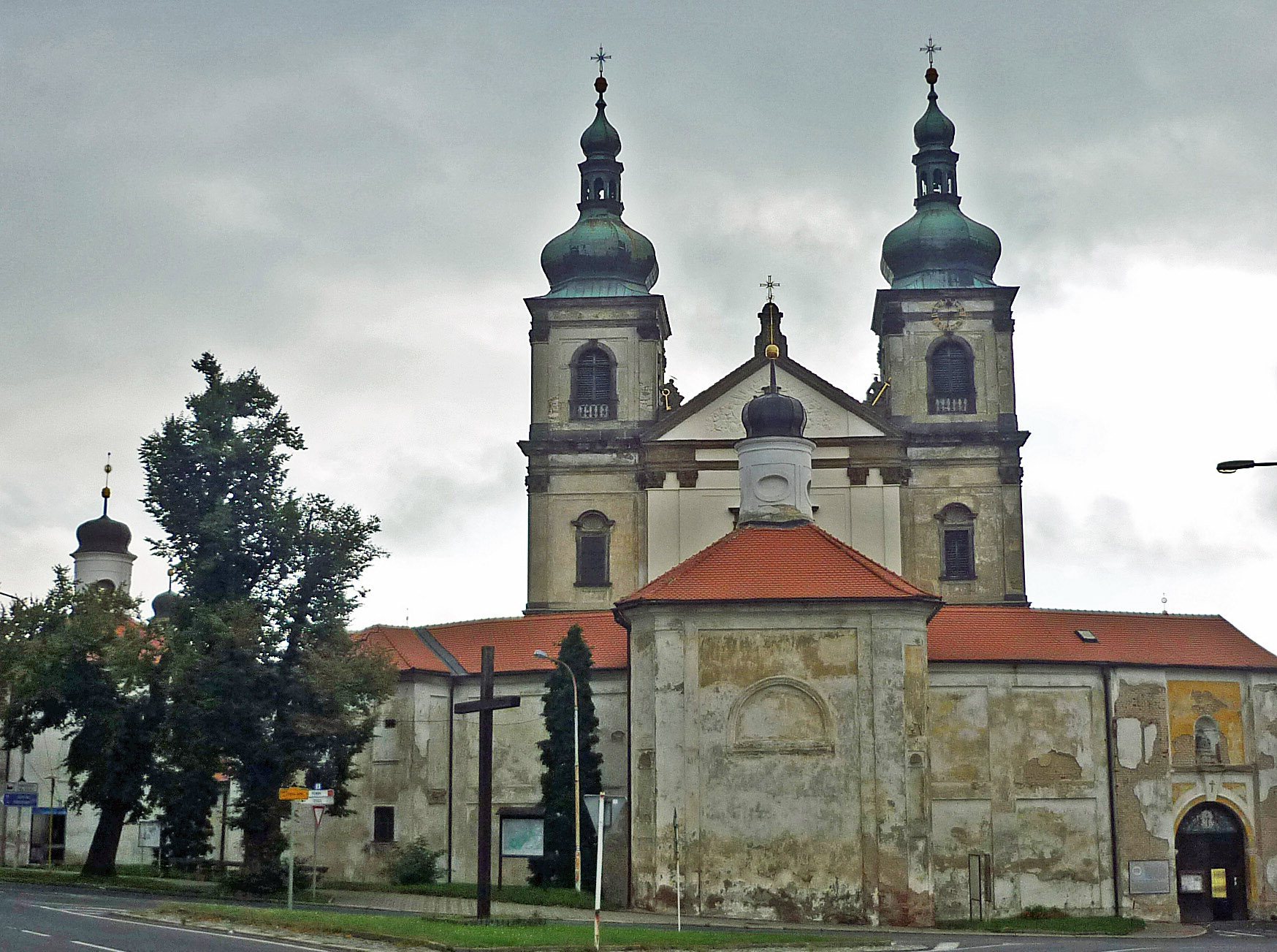
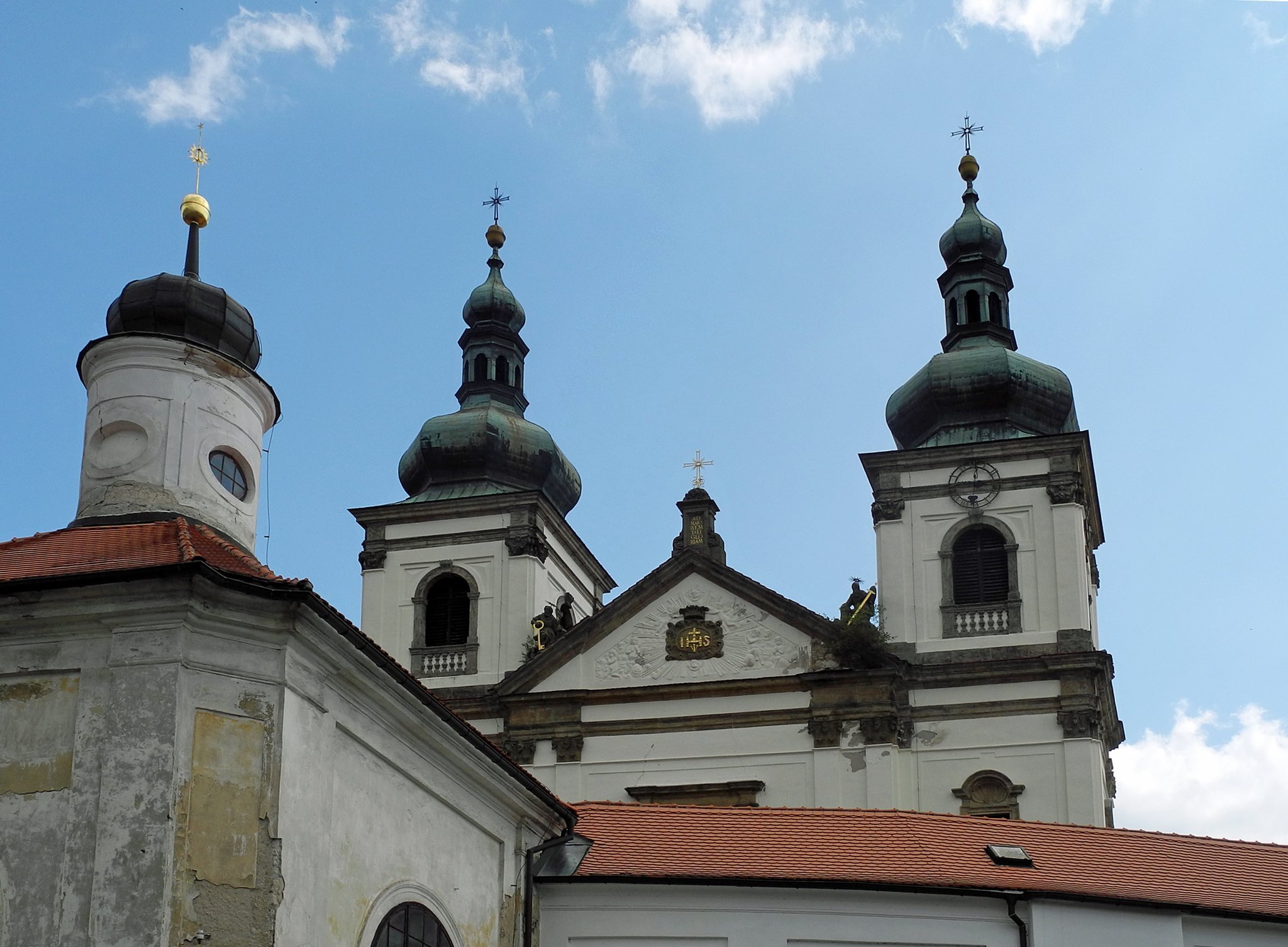
The pilgrimage complex is organized around a Baroque church and an oval covered ambulatory, or processional cloister, with chapels and associated educational buildings to the south. The present church is a stone building approximately 52 meters long and 25 meters wide. Its rectangular plan has a single nave, a semicircular presbytery, and two square towers forming the west facade.
The Baroque church
The church was built between 1701 and 1708 by the diocesan builders Giulio and Octavio Broggio. Pilasters and shallow wall strips articulate the exterior, while the windows have semicircular or rectangular openings with segmental pediments. The west facade has an intermediate cornice, pilasters, a broken pediment over the entrance, and a triangular upper gable. A niche above the entrance contains an enlarged Pietà, a representation of the Virgin Mary mourning while holding the dead Christ. Free-standing angels surround it. Niches beside the entrance contain statues of Saints Francis Xavier and Ignatius of Loyola, and the upper gable bears the IHS monogram with statues of Saints Peter and Paul. Franz Tollinger made the exterior sculpture in 1705, including figures of Saints Anne, Titus, Joseph, Adalbert, Ludmila, Wenceslas, John of Nepomuk, and Procopius.
The nave and main altar
The nave has a barrel vault with lunettes, a masonry choir gallery, and three side chapels with altars on each side. Two sacristies flank the sanctuary. The sacristy on the pulpit side was originally intended for secular priests, while the opposite one served the Jesuits. The main altar is a double-sided Baroque baldachin altar, meaning an altar covered by a canopy. Franz Tollinger made it between 1707 and 1714. Its 21-meter-high canopy rests on four spiral columns decorated with garlands and is crowned by Christ standing on a globe.
Linden leaves on the canopy recall the lime tree of the traditional discovery story. Beneath it is the approximately 15-centimeter-high image of the Sorrowful Virgin in a copper shrine. The small seated figure is made of fired clay and holds the dead Christ on her lap. Protective gold sheet was applied in 1709 because the image had suffered damage over the centuries. The lower altar contains the tabernacle and four niches with apostle figures made in the late nineteenth or early twentieth century. The upper structure holds votive offerings from the nineteenth and twentieth centuries. The rear altar table has a panel of the Seven Sorrows of Mary and a copy of the Marian image, donated by Jaroslav von Martinitz in 1609. Baroque candlesticks in front of the altar date from 1693.
Side altars and furnishings
The six side altars are dedicated to Saints Ignatius, Francis Xavier, Joseph, Anne, Barbara, and John of Nepomuk. The Ignatius altar has a 1712 painting by Johann Georg Heinsch, an oval image of Francis Borgia, and figures of Church Fathers. The Francis Xavier altar includes paintings of the saint and Jesuit missionaries, figures of Saints Andrew and Philip, and further Church Fathers. The Joseph altar contains a painting by Ignaz Raab, figures of the archangels Michael and Gabriel, and an image of John the Baptist. The Anne altar has paintings of Saint Anne and Mary Magdalene, while the Barbara altar contains images of Saint Barbara and Christ. The John of Nepomuk altar has a painting by Raab, figures of Saints Wenceslas and Vitus, and an upper painting of the Death of Francis Xavier.
The architecture of the side altars is attributed to the Master of Teplice, probably Jan Edmund Richter of Osek. Johann Georg Heinsch and Ignaz Raab produced most of the paintings. The last two side altars are portal-and-column structures with later statues by the Prague sculptor Eduard Veselý. The Francis Xavier chapel also contains a painting of the saint and the tombstone of Ladislav Przichowsky.
The Baroque pulpit dates from 1714 and is probably by Franz Tollinger. Its carved decoration includes Moses, David, Daniel, Isaiah, and the Conversion of Saul into Paul before Damascus. Two confessionals beneath the west gallery date from the middle of the eighteenth century. They have spiral columns, painted medallions of saints, and small angels. Other confessionals in the side chapels have medallion reliefs showing scenes from Christ’s life, made around 1735 by the Master of Teplice. The carved sides of the Baroque pews date from about 1730.
Organ and bells
The organ stands in a carved Baroque case from 1734. Its decoration includes figures of King David and Saint Cecilia, angels with musical instruments, and additional angels on the gallery parapet. The organ itself was made in 1904 in Heinrich Schiffner’s Prague workshop.
The church originally had at least eight bells, including two in the south tower, five in the north tower, and one in the sacristy. Two remain. The north tower contains a 1541 bell by Matěj Špic with a Czech inscription, while the sacristy holds a 1713 bell by Jan Baltazar Crommel. The bell-support structure dates from 1923, and two bell-shaped hour chimes are installed in the lantern of the south tower.
The ambulatory and Seven Sorrows chapels
The oval ambulatory surrounds the church. Its first form was built between 1584 and 1590 around the earlier church and already contained seven chapels. It was expanded and remodeled between 1625 and 1722. The present covered and paved structure opens toward the courtyard through arches on pillars and has cross vaulting. Octavio Broggio completed its final form in 1722. The seven chapels represent the Seven Sorrows of Mary, a devotional grouping of episodes in which the Virgin suffers in connection with Christ’s life and death.
Reichstadt and Teplice chapels
The Reichstadt Chapel was built between 1684 and 1688, renovated in 1857, and consecrated in 1709. Its altar painting of the Flight into Egypt came from the castle chapel at Horní Police. The chapel also contains a late-eighteenth-century statue of Saint Wenceslas and an iron grille with floral ornament and the arms of Saxony-Lauenburg. The Teplice Chapel acquired its present form in 1671 and 1672. Its altar painting shows the Finding of Jesus in the Temple, with side paintings of the Adoration of the Shepherds and the Entombment. A Baroque grille completes the chapel.
Litoměřice and Bleileben chapels
The Litoměřice Chapel was built in 1688 after the model of the Teplice Chapel. Its altar has twisted columns and a painting of the Way of the Cross. Between the Litoměřice and Bleileben chapels, a niche contains an early-sixteenth-century Gothic polychrome wood carving of Ecce Homo, showing Christ presented to the people, with Baroque putti on either side.
The Bleileben Chapel was built in memory of Anna Maria von Bleileben in 1665 and renewed in 1693. It contains a Baroque tombstone and Baroque statues of saints in niches beside the altar. Her financial support after the Thirty Years’ War helped make possible the later expansion of the pilgrimage complex.
Kolowrat, Osek, and Dux chapels
The Kolowrat Chapel was remodeled in 1629 and renewed in 1693. Its early-seventeenth-century side altar came from the original pilgrimage church. It contains a Pietà, figures of Saints Peter and Paul, a group of the Holy Trinity with four saints, and additional saint sculptures in side niches. The iron grille bears the Kolowrat arms and dates from 1719.
The Osek Chapel was completed in 1722. Its altar painting represents Saint Bernard of Clairvaux, and the chapel commemorates the sandstone supplied by the municipality of Osek for construction of the present church. The Dux Chapel was built in 1625, enlarged and renovated in 1721, and renovated again in 1818. It has an iron grille and eighteenth-century statues of Saints Veronica and Helena on consoles.
Marian spring chapel
The chapel above the Marian spring is a Baroque building from 1722. It has a square plan, corner pilasters, a dome with a cylindrical lantern and onion-shaped roof, segmental windows and entrances, and a triangular pediment above the entrance.
Fresco cycle and processional imagery
The ambulatory contains 37 wall frescoes painted between 1701 and 1706 and restored in 1925 by Richard Schneider of Marientreu. Their subjects combine the foundation traditions, the history of pilgrimage, Jesuit activity, reported miracles, and the church’s elevation to a minor basilica. The scenes include the hiding and discovery of the Marian image in the lime tree, the first wooden and stone chapels, early processions from Ústí nad Labem, the first votive offering, and the preservation of the church during wartime.
Other scenes show Albrecht Kolowrat ordering the first church, the granting of privileges and indulgences, the placing of the young King Louis II under Mary’s protection, and rescues attributed to vows to the Sorrowful Mother. The cycle also depicts Georg Popel von Lobkowicz with the plan for the enclosing wall and chapels, the 1610 pilgrimage from Ústí nad Labem, Pope Paul V’s indulgence of 1615 and its extension by Pope Innocent XII in 1693, and the church’s elevation to a minor basilica.
Further frescoes portray the Second Defenestration of Prague, the healing of twelve Chomutov students during the plague, healings at the Marian spring, the protection of Most during the Thirty Years’ War, the conversion of a citizen of Most, and rescues from danger and captivity during the Turkish wars. One scene concerns the healing of an abbess after two pilgrimages. Several of the frescoes are severely weathered.
Former Jesuit residence and schools
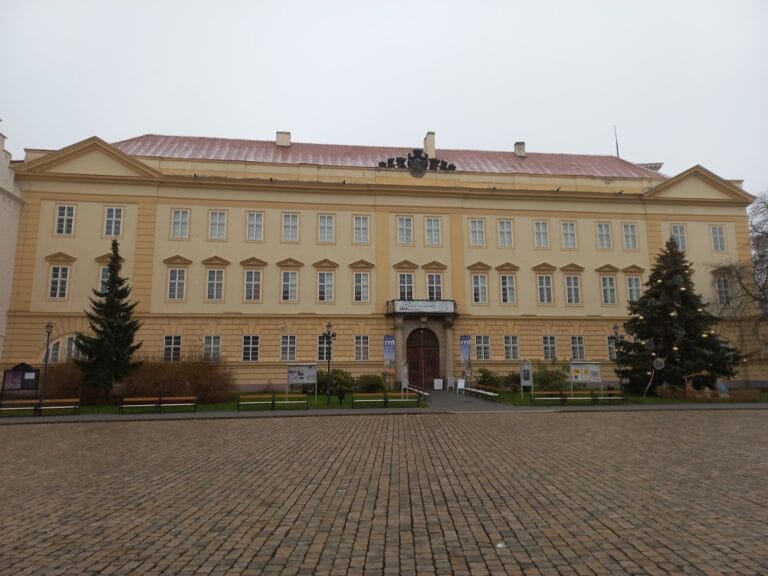
The former Jesuit residence forms part of the pilgrimage complex south of the ambulatory. Its oldest section was built in 1650 as accommodation for a cleric and shelter for higher-status pilgrims. It is a two-storey, four-wing building connected with the ambulatory by a decorated staircase. After the new residence was built, the older structure became a singing and Latin school and later the main school building.
A new Jesuit residence was constructed in 1677, and a gymnasium was established in 1679. A seminary building was added in 1855, while the educational complex was enlarged substantially in 1905 and again in 1912 and 1913. These buildings preserve the institutional side of Bohosudov’s pilgrimage history, alongside the church, chapels, and processional cloister.