Church of the Assumption in Wągrowiec: A Former Cistercian Abbey Church in Poland
Site at a Glance
- Rating
- 4.5
- Popularity
- Low
- Country
- Poland
- Primary era
- Early Modern
- External website
- Open
- Eras represented
- Medieval, Early Modern
- Civilizations
- Kingdom of Poland, Polish–Lithuanian Commonwealth
- Site type
- Religious
- Remains
- Monastery
On this page14 sections
History
The Church of the Assumption in Wągrowiec is a former Cistercian monastic church in Poland, rebuilt in the late eighteenth century in the Late Baroque style. Its history began with the Cistercian abbey founded at Łekno by Zbylut of the Pałuki family. Monks came from Altenberg near Cologne, the mother house of the foundation, and a foundation document was issued in 1153. Recent research places the beginning of the foundation process probably around 1143. The abbey became one of the earliest Cistercian foundations in Poland, and its original foundation document was added to Poland’s Memory of the World register in 2016.
From Łekno to Wągrowiec
The abbey acquired extensive landed property during the medieval period. In 1319, Abbot Gotszalk purchased several villages, including Prostynia, which became the origin of Wągrowiec. The settlement received town rights in 1381. The Cistercians then transferred their monastery from Łekno to Wągrowiec in a process that lasted nearly a century, and the new monastery inherited the traditions of the earlier abbey.
The monastic building campaign began around the turn of the fourteenth and fifteenth centuries. The church’s principal altar was solemnly consecrated in 1493, marking the completion of the abbey’s relocation. The church’s construction is broadly dated to 1381–1451, while the building visible today largely reflects its later rebuilding. In 1451, Abbot Gotfryd purchased the town’s wójtostwo rights, the authority associated with the town’s chief municipal office, from Michał. Wągrowiec thereby became a monastic town owned exclusively by the Cistercians. This ownership was also represented by the figure of a monk on the town’s coat of arms.
Reform, education, and monastic prosperity
Until the middle of the sixteenth century, the monastery generally admitted candidates of German origin, especially from Cologne and its surroundings. The abbey was then Polonized, meaning that its leadership and recruitment became Polish in character. In 1553, Andrzej Dzierżanowski became its first Polish abbot, and the previous German monks left in protest.
Dzierżanowski established a higher school for boys from the local nobility beside the monastery in 1557. During his abbacy and those of his two successors, the monastery and town entered a period of prosperity. The school later became associated with important figures in Polish religious and cultural history. Maciej Łubieński eventually became primate of Poland, while Jakub Wujek, a Jesuit scholar and translator known for a major Polish Bible translation, studied there as a boy. Adam of Wągrowiec served the abbey as an organist and composer, and compositions previously unknown were rediscovered in Lithuania in the early twentieth century.
In 1580, a Cistercian chapter met at Wągrowiec. Edmund a Cruce, the order’s general commissioner and abbot of Chatillon in France, attended the meeting. Its main purpose was to reform monastic life in Poland and establish an independent Polish Cistercian Province. The province included Wągrowiec and other male and female monasteries, which were placed under a vicar general elected by the abbots or their delegates.
War, fire, and rebuilding
Wars and natural disasters impoverished the monastery and town during the seventeenth and eighteenth centuries. Swedish forces occupied Wągrowiec in 1655–1656, caused extensive damage, and imposed a contribution on the monastery. Russian forces damaged the town in 1708 and again in 1717. A concordat concluded in 1737 gave the Polish kings the right to appoint commendatory abbots, who held the abbacy while the day-to-day monastic administration remained with others.
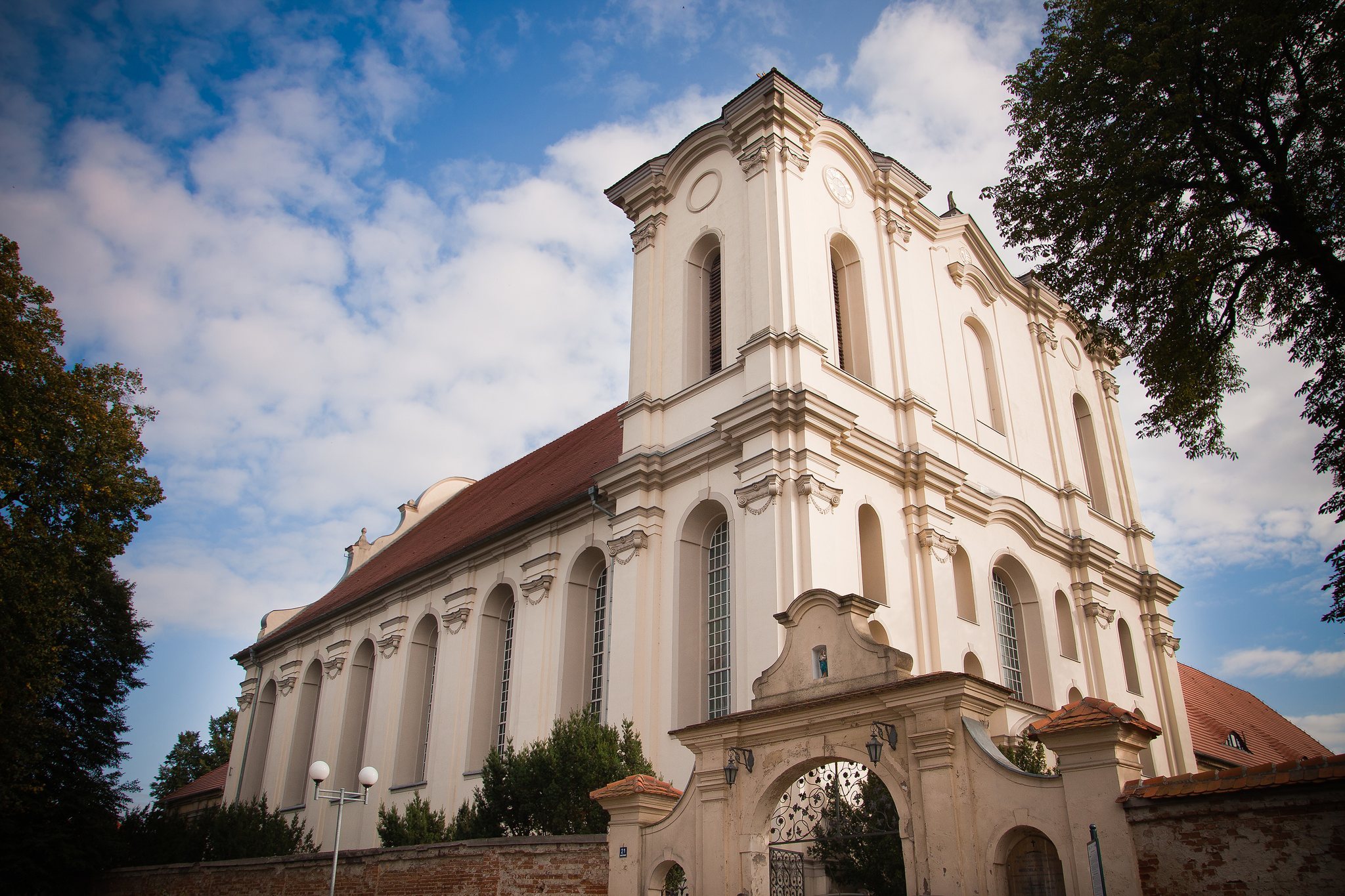
In 1747, a fire that began in the brewery destroyed the monastery and its buildings. The complex was rebuilt on its Gothic foundations, while the church took on a Late Baroque form. This rebuilding accounts for much of the character of the present church, although later destruction and reconstruction altered its appearance further.
Secularization and wartime destruction
Prussian authorities reduced the clergy’s monastic income by half in 1793. That year, after more than 340 years of Cistercian ownership, Wągrowiec became a royal town. The state took over the monastery’s estates in 1796 and prohibited the admission of novices in 1816. These measures initiated the abbey’s decline. The Cistercian presence ended in 1835, when the abbey was secularized and the monks were forced to leave. The church passed into parish care, while the monastery was converted into a court and prison. Its library, which contained more than 1,940 volumes at the time of dissolution, was abolished.
During the Second World War, German forces closed the church and monastery and used them to store medical equipment and medicines. Retreating German forces set fire to the buildings during the night of 20–21 January 1945, destroying much of the complex. The church was reconstructed between 1946 and 1962, and rebuilding of the wider complex continued during the postwar period. The restored buildings did not regain the full Baroque appearance they had possessed in the eighteenth century.
Postwar religious and cultural use
In 1968, the monastery buildings became the Home for Distinguished Priests of the Archdiocese of Gniezno, named after Jakub Wujek. The institution operated until 1997. In 1973, the buildings hosted the Congress of Polish Biblical Scholars, attended by Cardinal Stefan Wyszyński and Cardinal Karol Wojtyła, who later became Pope John Paul II. Plaques commemorating Jakub Wujek and John Paul II are now mounted inside the church.
The former monastic church functions as the parish church of the Assumption of the Blessed Virgin Mary in Wągrowiec. The former monastery is used by the parish and the Wągrowiec Regional Museum. On 1 September 2013, administration of the parish and abbey passed to the Pauline Fathers. The former Cistercian complex is entered in Poland’s historic-monument register, including the church, the adjoining gate, the monastery, and the late-eighteenth-century former abbots’ palace known as Opatówka.
Remains
The church
Plan and surviving fabric
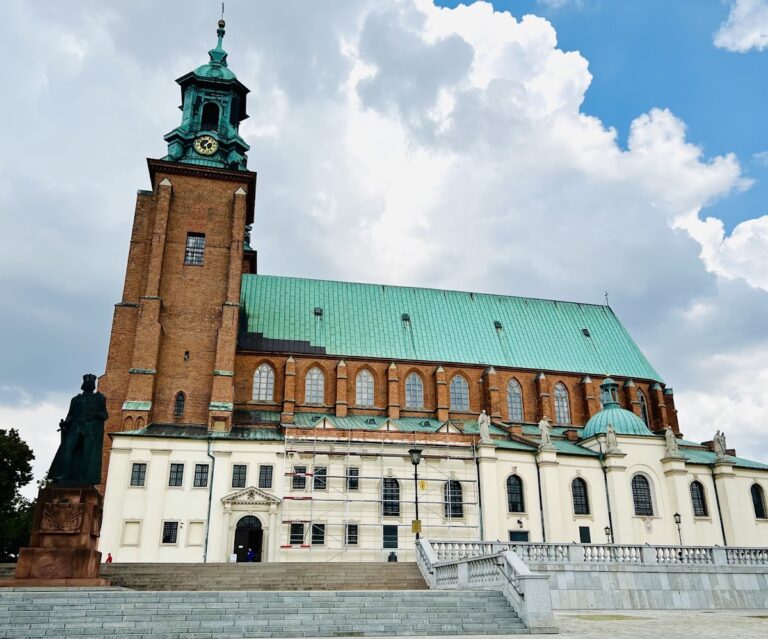
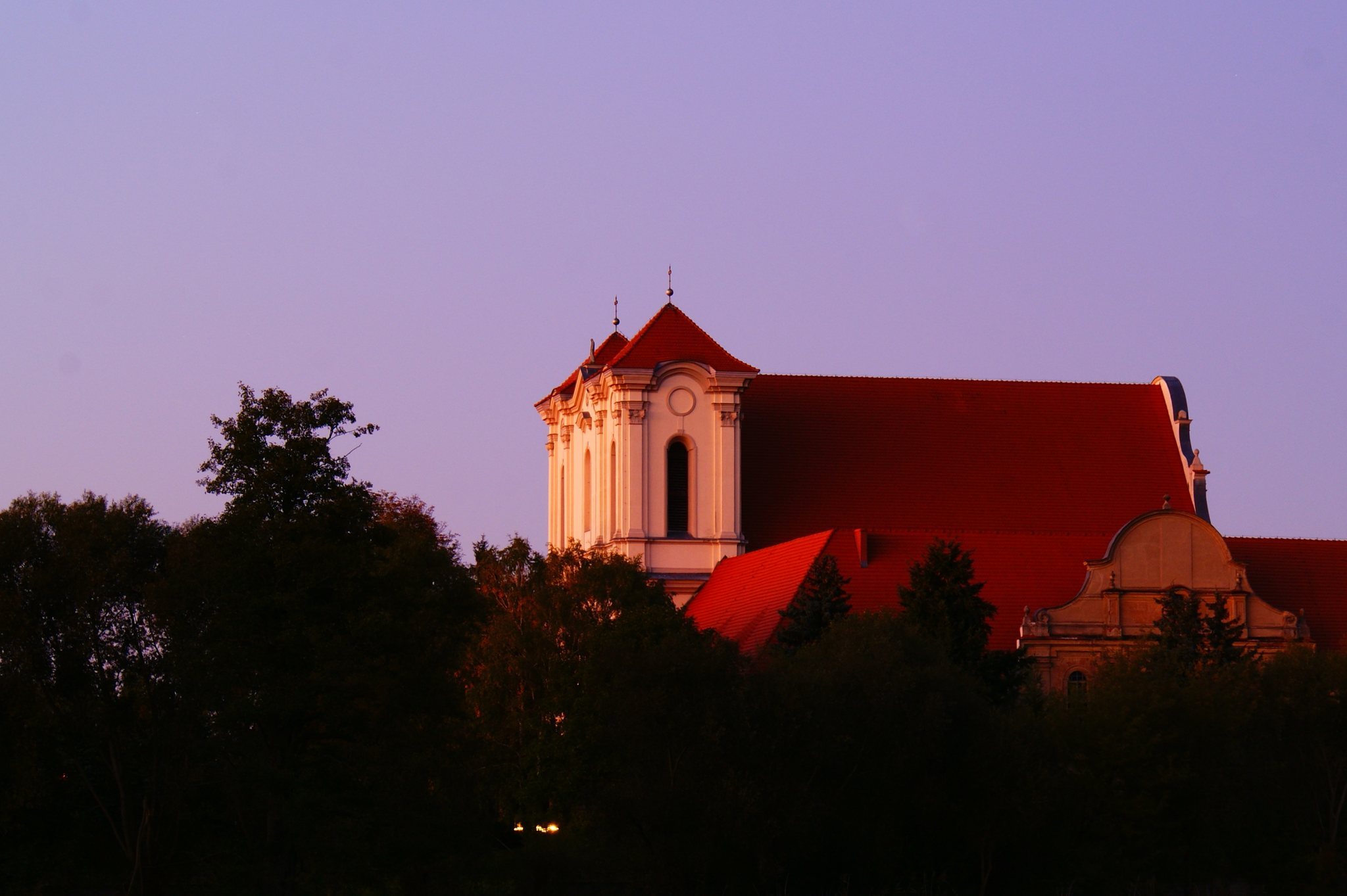
The present Church of the Assumption of the Blessed Virgin Mary and Saints Peter and Paul is oriented broadly along an east-west axis. It is a plastered, three-aisled and five-bay hall church on a rectangular plan, with aisles of approximately similar height forming a unified interior space. The building has vaulted interiors, a gable roof, and two low western towers that create a two-tower facade. Its present form results substantially from the postwar reconstruction.
Elements of the earlier architecture survive in the capitals of the pillars and responds, in corbels, in fragments of cornices with vegetal decoration, and in a vault keystone in the southern arm. These details preserve parts of the church’s medieval and eighteenth-century architectural history within the reconstructed building.
Altar and interior furnishings
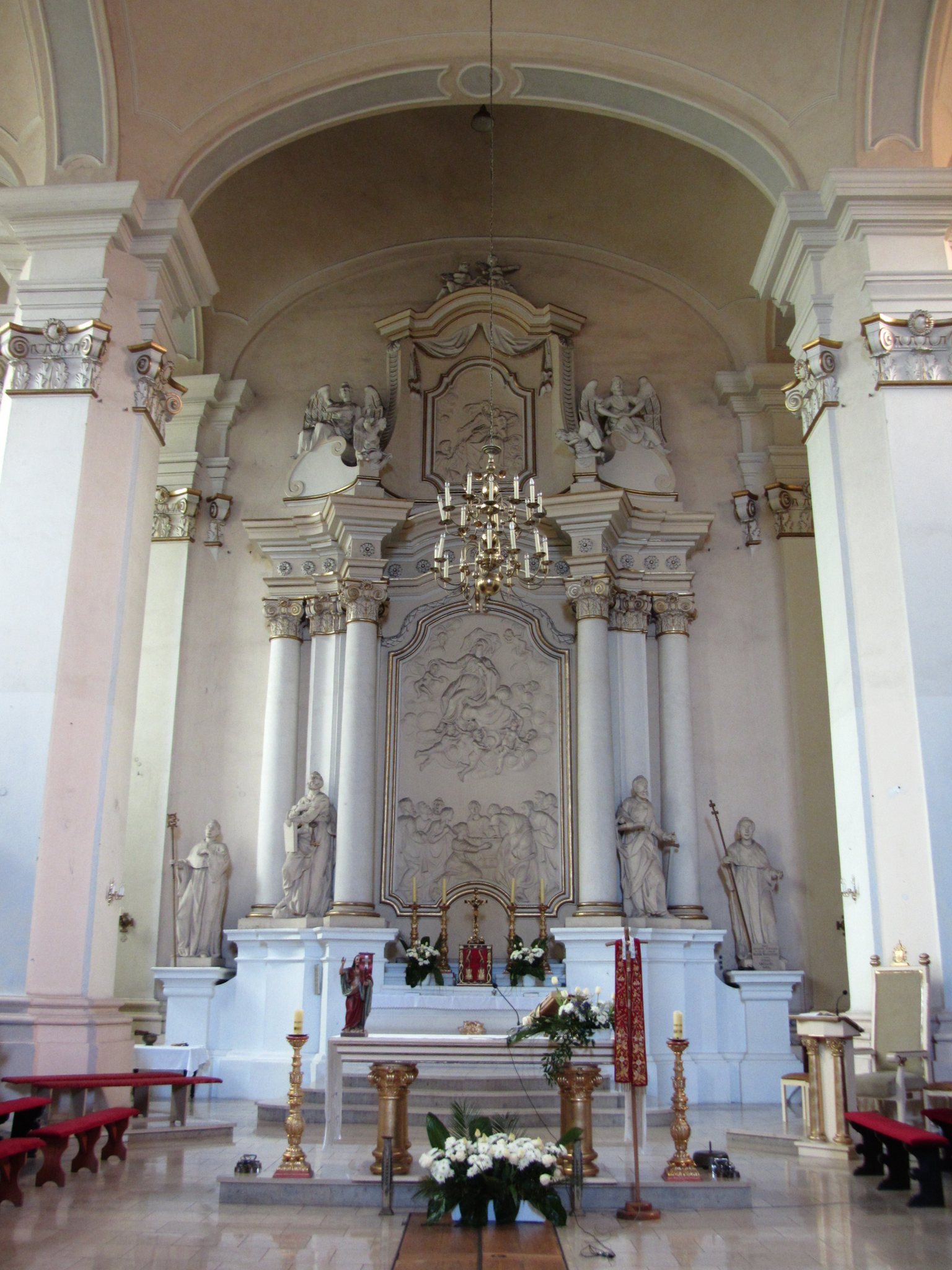
Much of the earlier furnishing was destroyed in the fire of 1945, leaving the interior comparatively modest. The present high altar was made in 1960 and follows the design of the altar created in 1799. It is built of stone, brick, and plaster. At its centre is an image of the Assumption of the Blessed Virgin Mary, framed by columns and pilasters. Life-size sculptures of Saints Peter and Paul stand between these architectural elements.
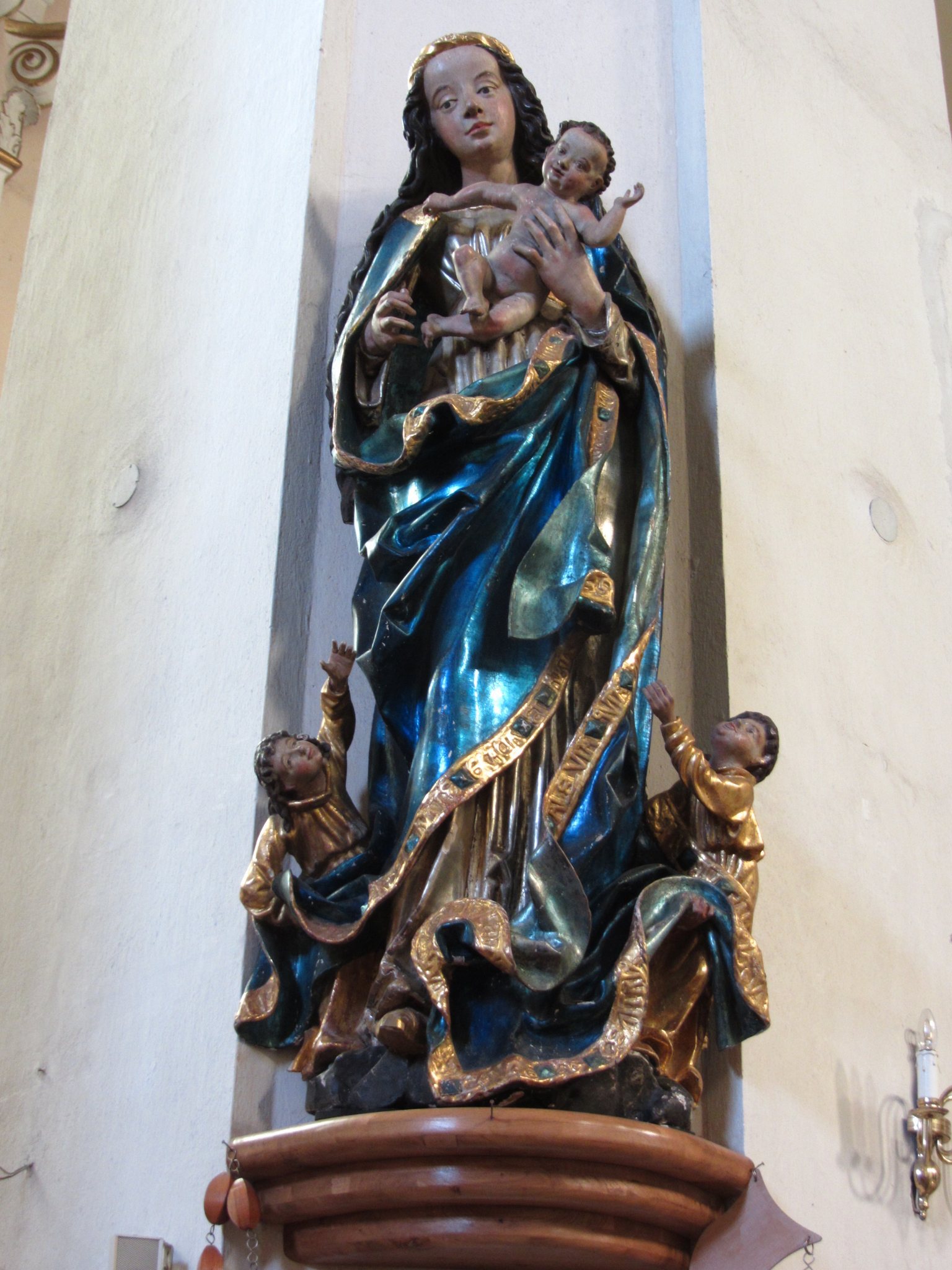
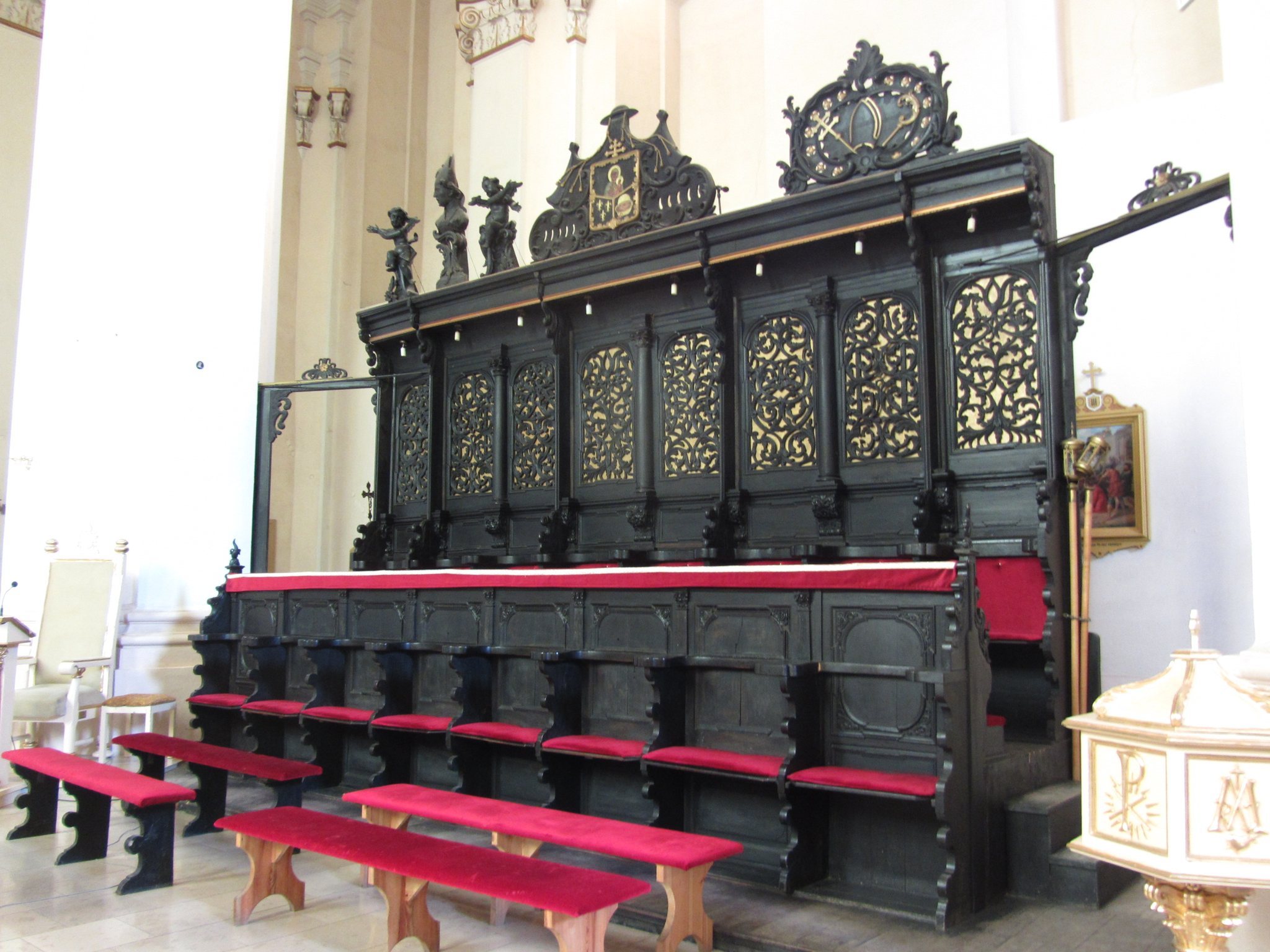
The church preserves choir stalls made in 1713 and transferred from Gniezno Cathedral in 1970. It also contains a Late Gothic sculpture of the Madonna and Child dating from around 1510, which survived from the prewar church. The plaques dedicated to Jakub Wujek and John Paul II connect the interior with the monastery’s educational and religious history, including the 1973 congress attended by John Paul II.
The monastic enclosure
Cloister and courtyard
The monastic buildings adjoin the church and form an enclosure around a courtyard. A cloister, meaning a covered walkway enclosing a monastic courtyard, runs around this space. At the centre is a well six metres deep. Two wings of the enclosure are occupied by the parish, while the enclosure itself stands to the right of the church.
Gate and abbots’ palace
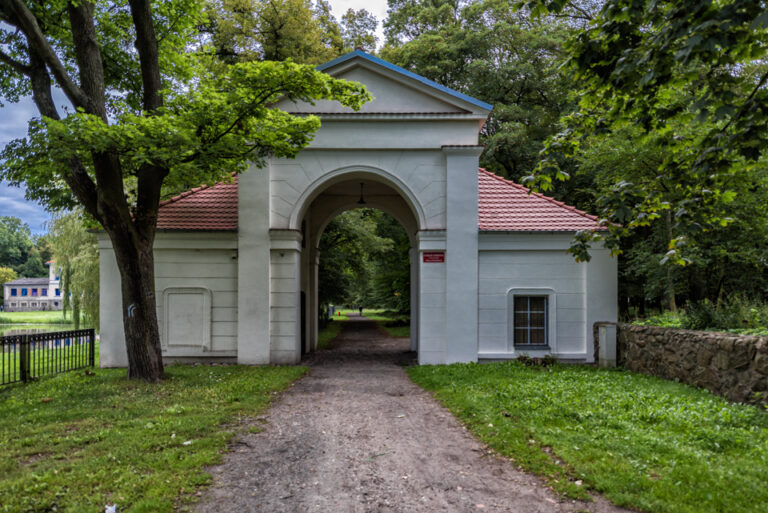
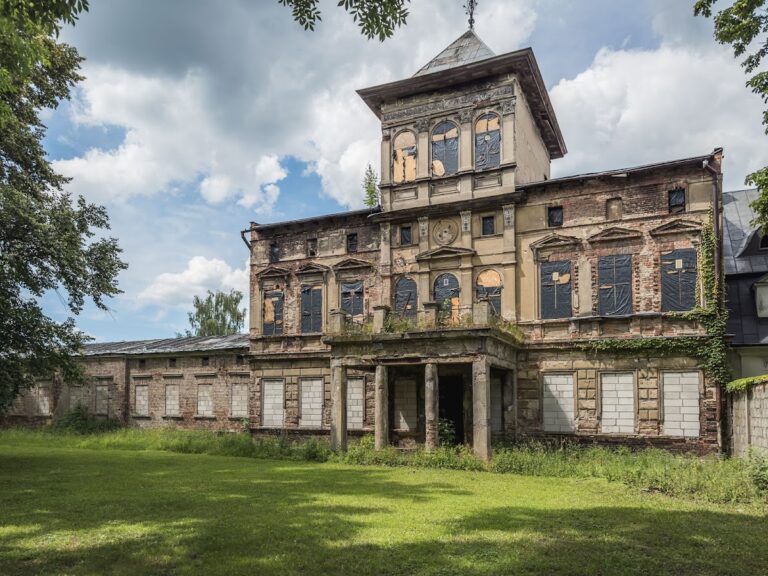
A gate beside the church belongs to the former monastic complex. The former abbots’ palace, known as Opatówka, dates from the end of the eighteenth century and now houses the Wągrowiec Regional Museum. Together with the church and monastery, these buildings form the surviving architectural core of the former Cistercian establishment.
The earlier site at Łekno
The Cistercian site at Łekno retains foundations of monastic buildings. A fully enclosed complex had not been completed there before the monks departed for Wągrowiec, leaving the foundations as physical evidence of the abbey’s earlier location and of the long transition between the two settlements.