Bhangarh Fort: A Sixteenth-Century Fortified Settlement in India
Site at a Glance
- Rating
- 4.3
- Popularity
- Very High
- Country
- India
- Primary era
- Early Modern
- External website
- Open
- Eras represented
- Early Modern
- Civilizations
- Mughal, Rajput
- Site type
- Military
- Remains
- Fortified Town
On this page12 sections
History
Foundation and Settlement
Bhangarh Fort is a sixteenth-century fort in Rajasthan, India, whose construction is dated to 1573. It was founded during the rule of Bhagwant Das as the residence of his second son, Madho Singh. The fort formed the centre of a settlement that included royal, religious, residential, and commercial buildings.
Abandonment and Local Traditions
The fort town and the surrounding settlements were later abandoned, leaving the city in ruins while the fort precincts remained comparatively well preserved. The site is now vacant, and its structures are administered by the Government of India and archaeological authorities.
Local traditions explain the destruction and desolation through curses. One version tells of a sadhu, a Hindu renunciant or holy person, who forbade buildings within the fort precinct from rising higher than his own house. When construction cast a shadow over it, the town was said to have been destroyed. Another form of the story names the ascetic as Baba Balau Nath and identifies Ajab Singh as the person who broke the restriction.
A separate legend concerns Princess Ratnavati and a practitioner of black magic who fell in love with her. After she rejected a love potion by throwing it onto a boulder, the boulder crushed him, and he cursed the town to be destroyed and remain uninhabited. A related version describes the woman simply as a Bhangarh princess and the man as a priest who offered her the potion in a marketplace.
Bhangarh is popularly regarded as a place inhabited by spirits, although scientists reject that belief. Local claims include hearing women’s cries, breaking bangles, unusual music, other strange sounds, and fragrances at night.
Remains
Fortified Settlement and Gates
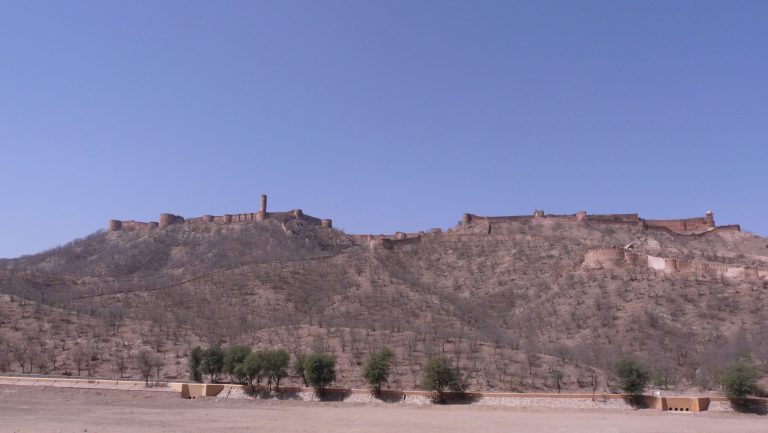
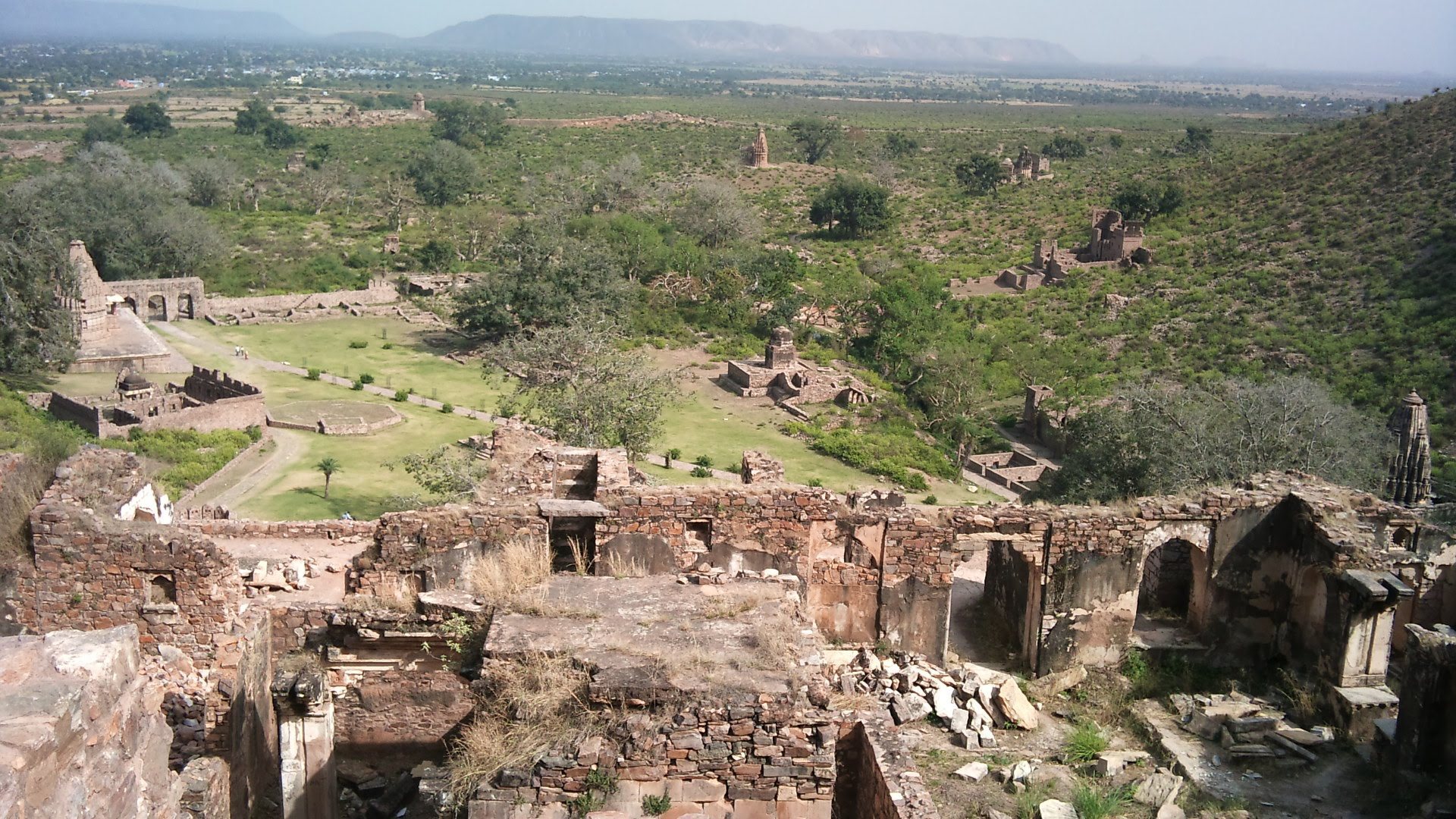
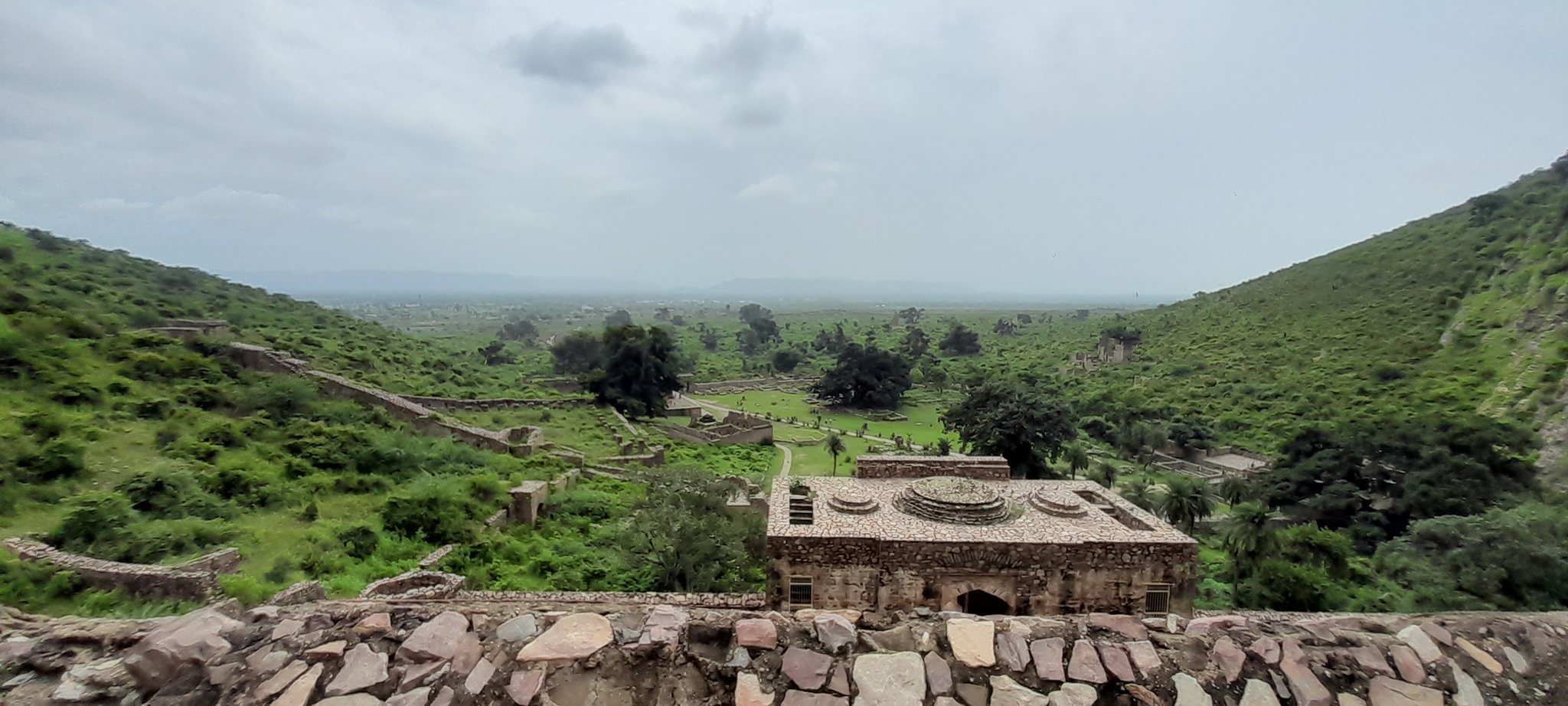
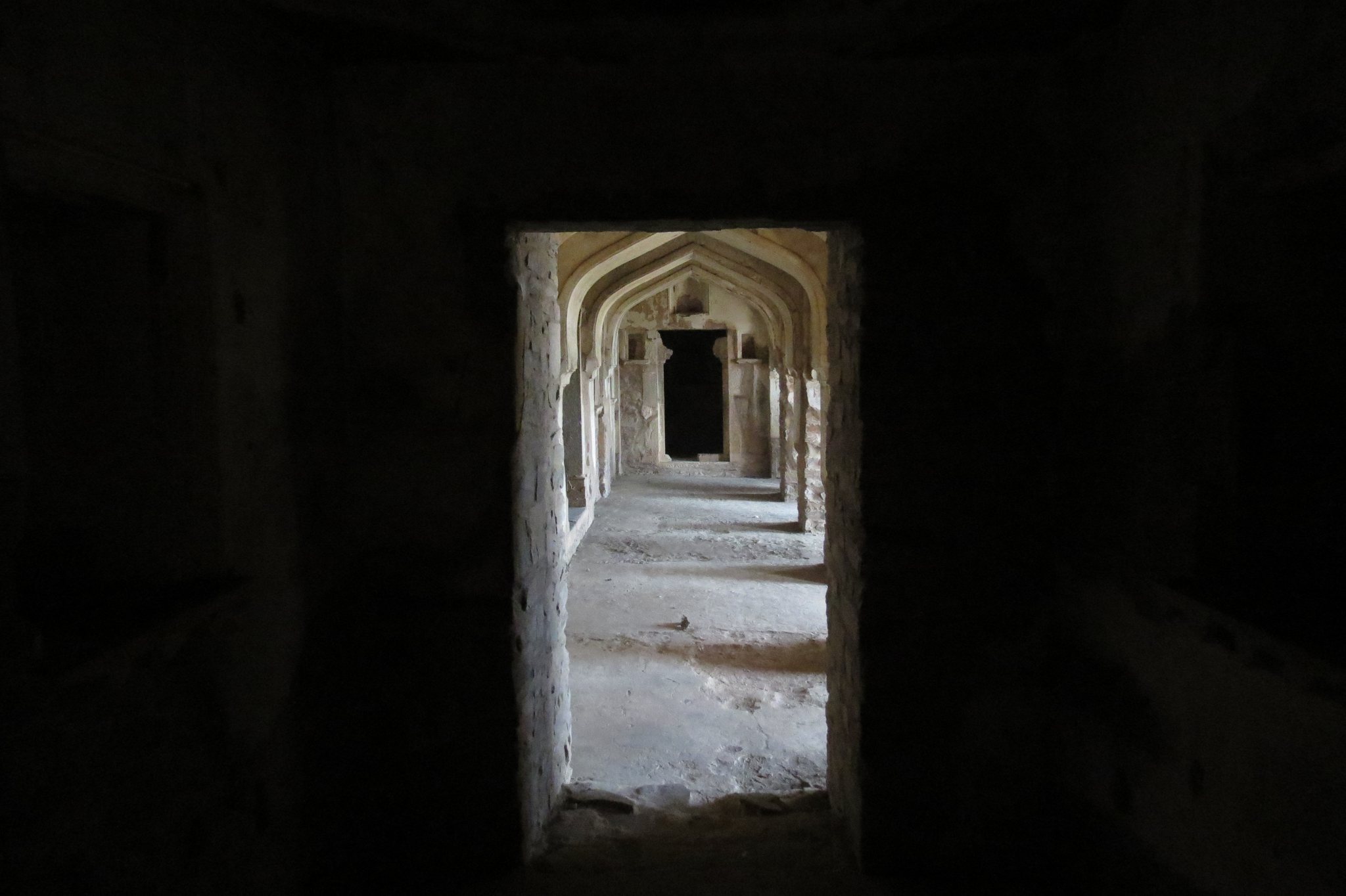
Bhangarh is a stone-and-brick fortification built on sloping ground at the foot of the Aravalli hills, a major hill system in northwestern India. It lies near the border of the Sariska Reserve, a protected wildlife area in Rajasthan. The ruins of the royal palace occupy the lower slope, while the fortified settlement contains temples, palaces, substantial residences, and a marketplace.
The city is entered through a main gate and four additional entrances named the Lahori Gate, Ajmeri Gate, Phulbari Gate, and Delhi Gate. Within the settlement, the principal sequence includes Purohitji Ki Haveli, Nachan Ki Haveli or Dancer’s Palace, Jauhari Bazar, and Gopinath Temple, with the Royal Palace at the far end of the fort.
Temples and Religious Buildings
Gopinath Temple and Purohitji Ki Haveli
Gopinath Temple stands on a raised plinth 14 feet high. Its carvings were made from yellow stone, and the temple precinct includes Purohitji Ki Haveli, a substantial residence associated with the temple priest.
Hanuman and Shiv Mahadev Temples
The Hanuman and Shiv Mahadev temples use a cenotaph-like architectural form rather than the conventional form of temples. A cenotaph is a commemorative monument that does not necessarily contain the remains of the person commemorated. Jhiri marble was used in both structures.
Other Temple Remains
Several other Hindu temples stand near the entrance area, including the Someshwar, Keshav Rai, Mangla Devi, Ganesh, and Navin temples, as well as the Hanuman and Gopinath temples.
Royal Palace and Tomb
Royal Palace
The Royal Palace ruins lie on the lower hillside at the extreme end of the fort. Trees surround a pond within the palace precinct, and a natural stream flows into it.
Muslim Tomb
Outside the fort gate is a Muslim tomb reported to be that of one of the sons of King Hari Singh.