Santomé: An Archaeological and Natural Site in Spain
Site at a Glance
- Rating
- 4.5
- Popularity
- Low
- Country
- Spain
- Primary era
- Classical
- External website
- Open
- Eras represented
- Classical
- Civilizations
- Roman
- Site type
- Military
- Remains
- Fortified Town
On this page10 sections
History
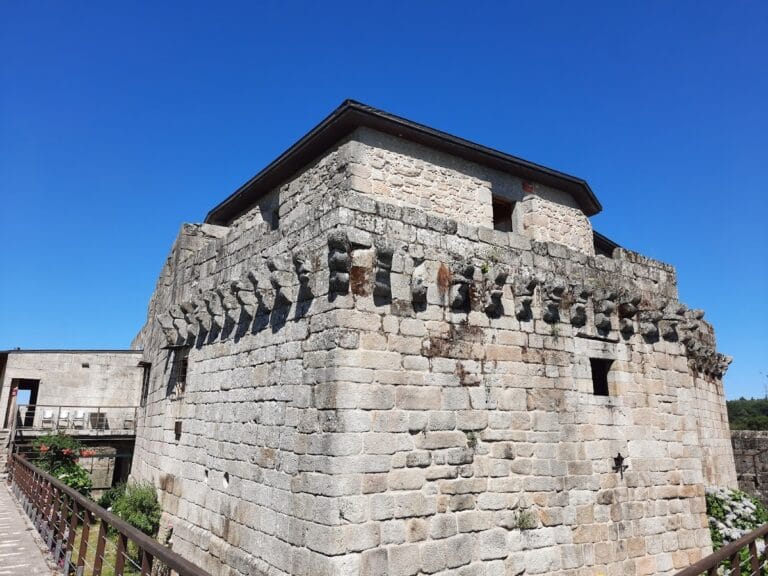
The Archaeological and Natural Site of Santomé is an archaeological site in Spain, near the city of Ourense, preserving remains from the Castro culture and the Roman period. Its occupation begins around the middle of the 1st century BC and continues through successive Roman settlements into the later Roman period. The site brings together a fortified northwestern Iberian settlement and later Roman residential occupation within a landscape shaped by the Loña River.
The Castro settlement
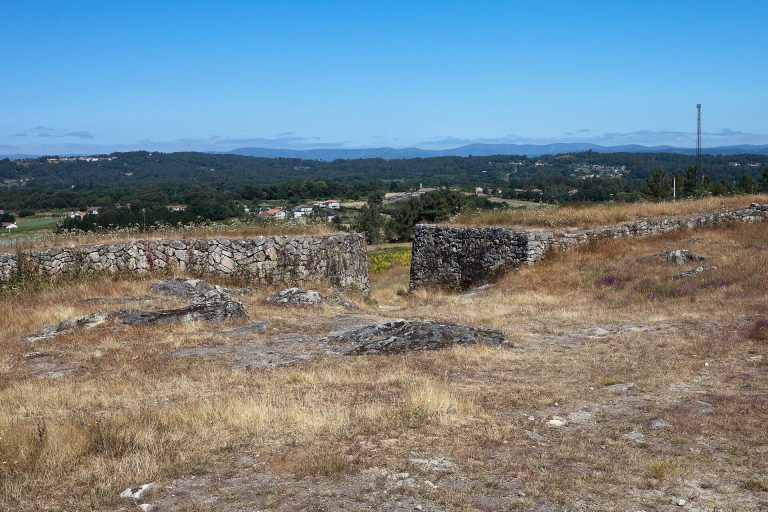
Santomé represents the final phase of the northwestern Iberian Castro culture, a tradition of fortified settlements often established on elevated, defensible ground and organized around domestic compounds. The settlement began around the middle of the 1st century BC and remained in use until the middle of the 2nd century AD. Its position on a mountain spur and its defensive works reflect the importance of naturally protected and fortified locations during this period.
Roman occupation
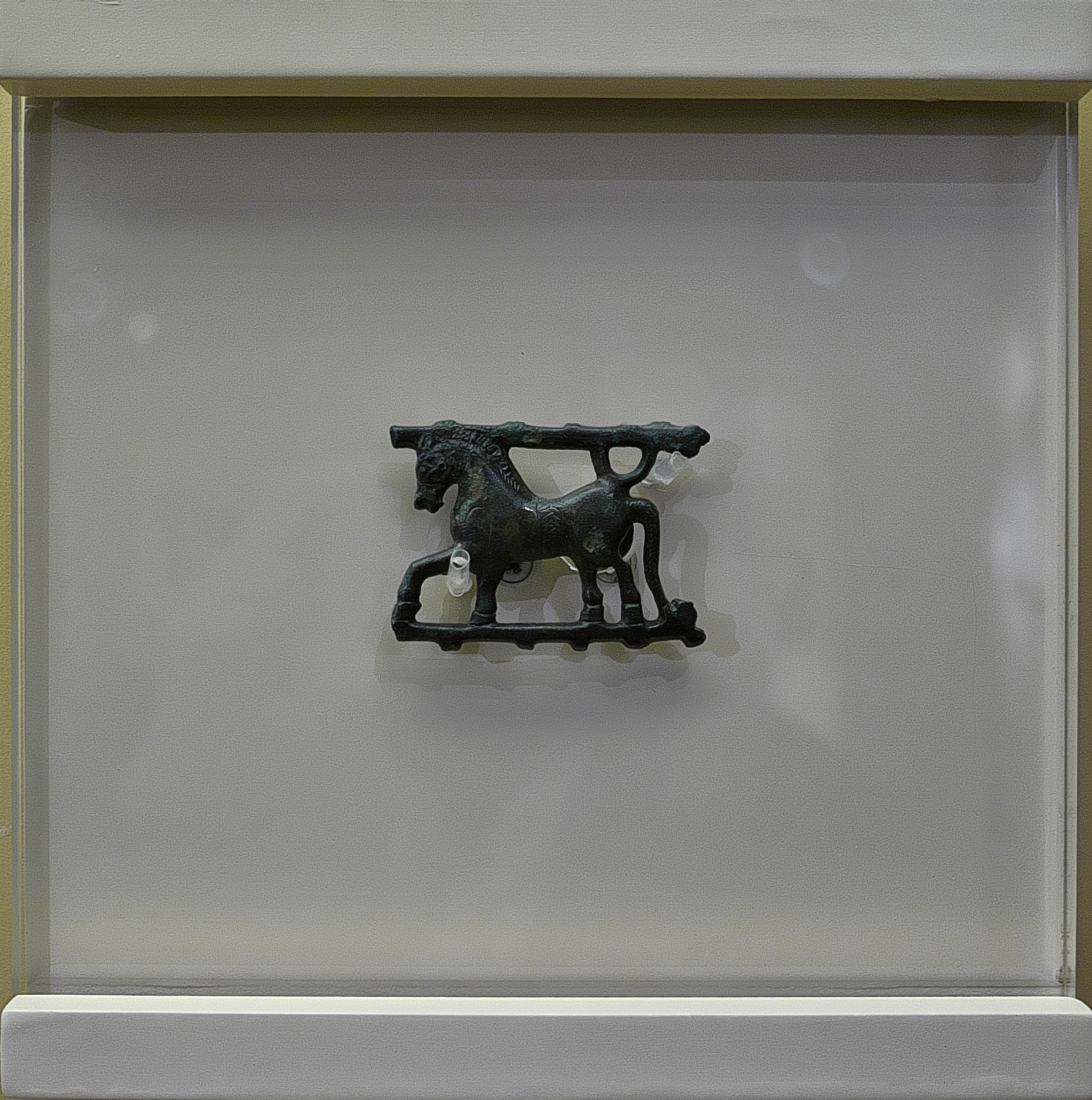
A High Imperial Roman occupation, belonging to the earlier imperial phase of Roman history, developed in the northern and northeastern part of the site on the lower slope of the Castro. Its structures were later heavily damaged by construction during the Late Roman period, the later phase of the Roman Empire. Despite this disturbance, the occupation contained a representative group of Roman materials.
Approximately a century after the earlier Roman settlement was abandoned, another Roman settlement was built over its remains. Two residential units from this later phase have been excavated, revealing a change in the organization and use of the site during the later Roman period.
Discovery and archaeological investigation
The site came to attention in 1969, when Manuel Blanco Guerra, a municipal councillor, carried out exploratory test pits. These amateur investigations continued until 1974. From 1983, the Provincial Archaeological Museum of Ourense undertook systematic scientific excavations, which revealed the site’s complex sequence of Castro and Roman occupation.
Remains
Castro fortifications and terraces
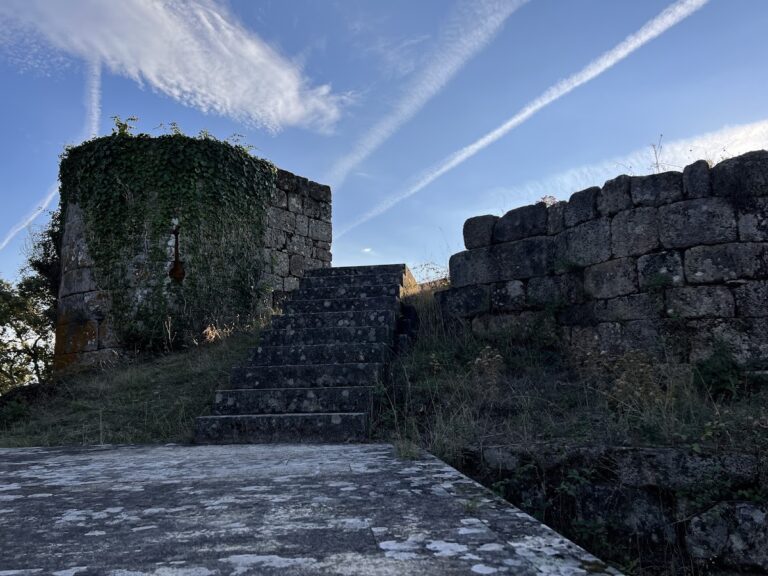
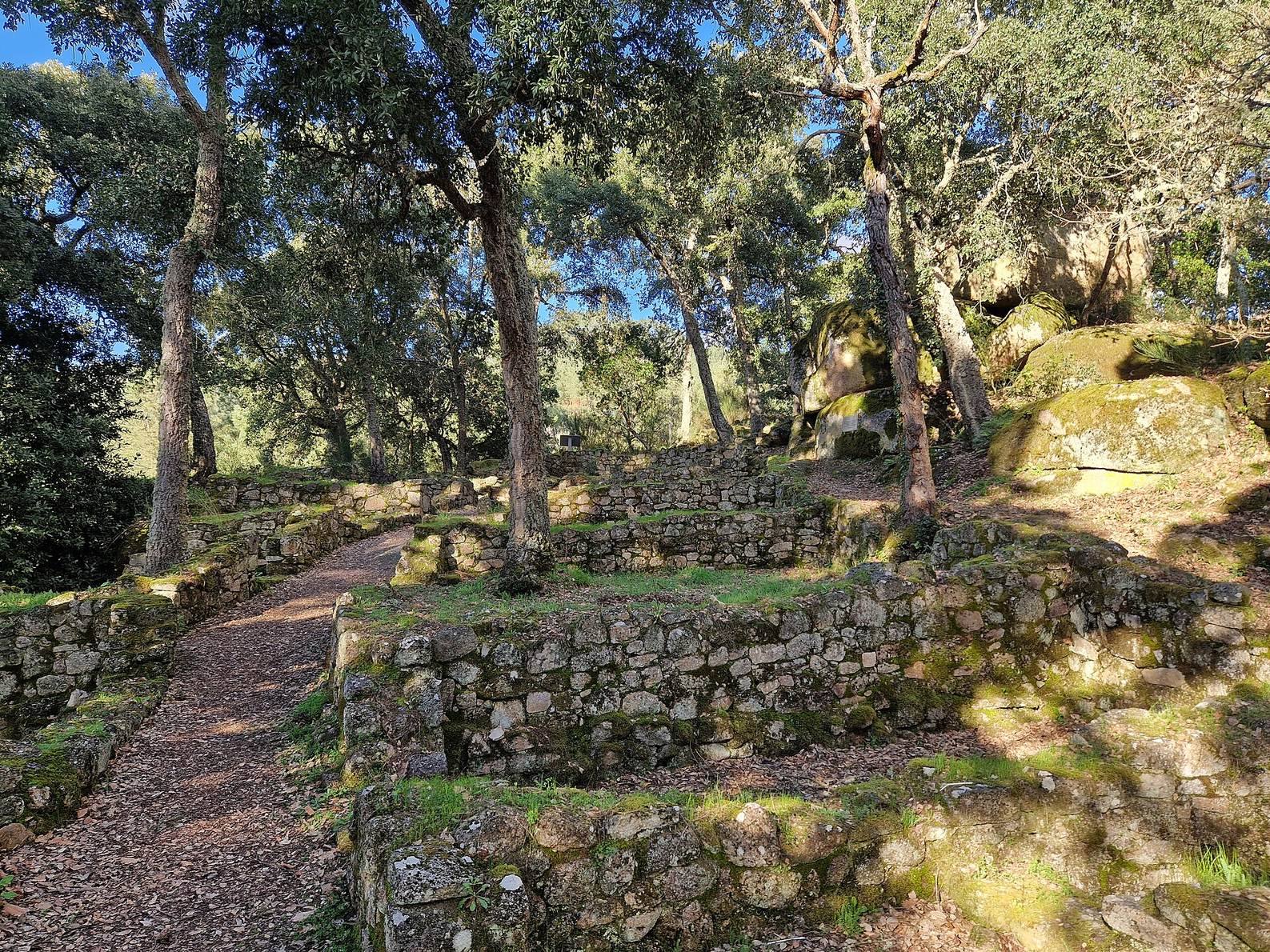
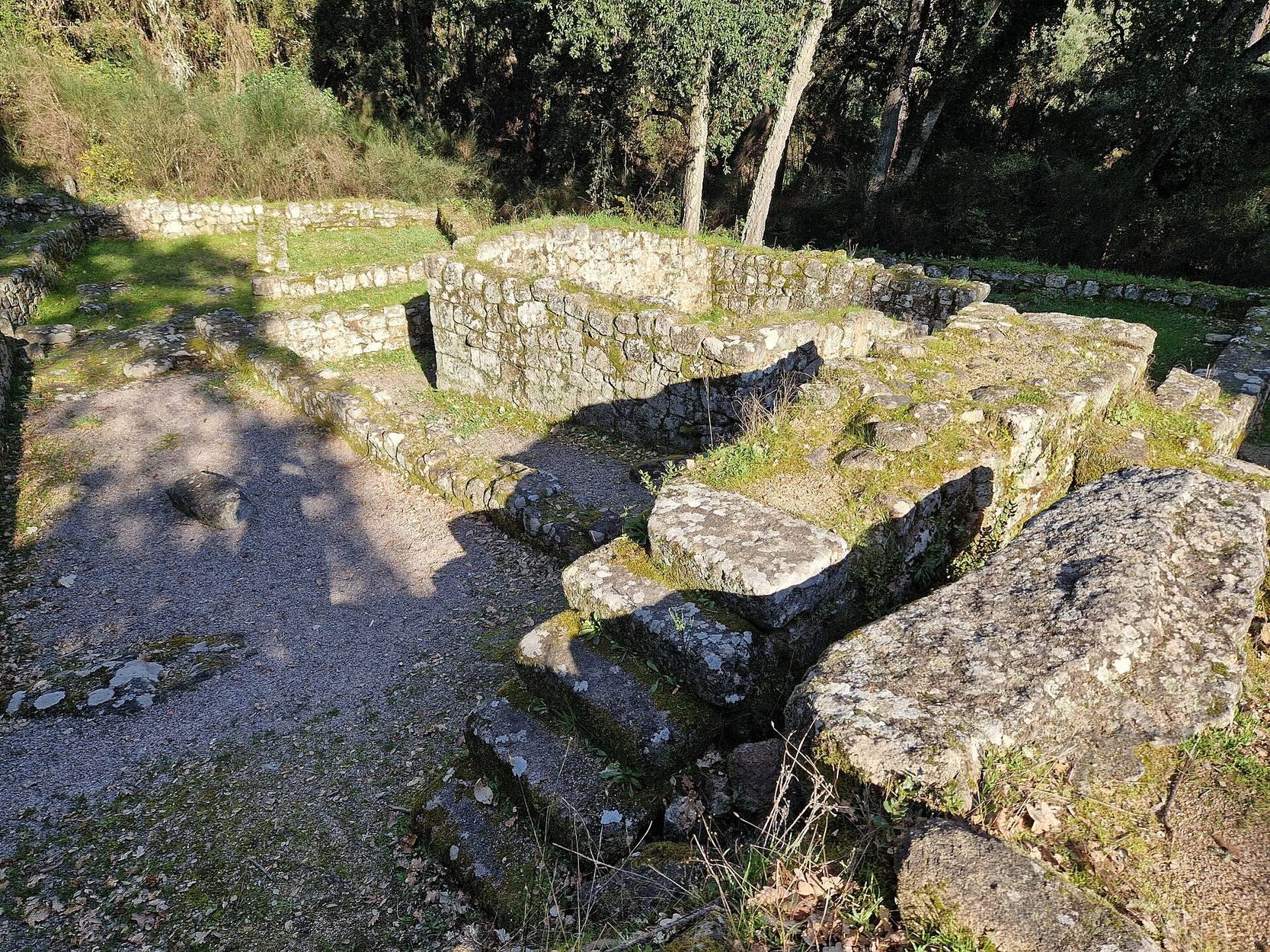
The Castro settlement occupies a mountain spur with a high position over its surroundings. A steep cliff above the Loña River protects the site on its southern and southwestern sides, while the more accessible approaches were defended by a line of walls, a tower, and a ditch. Houses stood on natural terraces and on additional terraces constructed by the inhabitants, producing a stepped settlement connected by streets.
Roman residential area
Earlier Roman occupation
The earlier Roman structures lay on the northern and northeastern lower slope of the Castro. Later building activity damaged these remains, but Roman materials from the area help identify the character of the occupation and its place within the site’s broader chronological sequence.
Later Roman houses
The later Roman settlement contains two residential units arranged, with variations, around a central courtyard resembling an atrium, an open or partly open space around which rooms could be organized. One unit had stairs leading to an upper floor, an unusual feature for rural Roman housing. The houses were constructed over the earlier Roman occupation and preserve the later residential phase of Santomé.
River and woodland setting
The archaeological remains lie within a landscape of high natural value dominated by Mediterranean-type oak woodland. Cork oak and holm oak grow alongside gall oak, which is uncommon in Galicia, as well as fine examples of stone pine and abundant strawberry trees. The Loña River runs immediately beside the site between rocks shaped into rounded hollows by the erosive movement of water and stones, known as giant’s kettles.