Ponte Vella: The Historic Bridge over the Minho in Ourense
Site at a Glance
- Popularity
- High
- Country
- Spain
- Primary era
- Early Modern
- Eras represented
- Classical, Medieval, Early Modern
- Civilizations
- Crown of Castile, Roman, Spanish
- Site type
- Infrastructure
- Remains
- Bridge
On this page7 sections
History
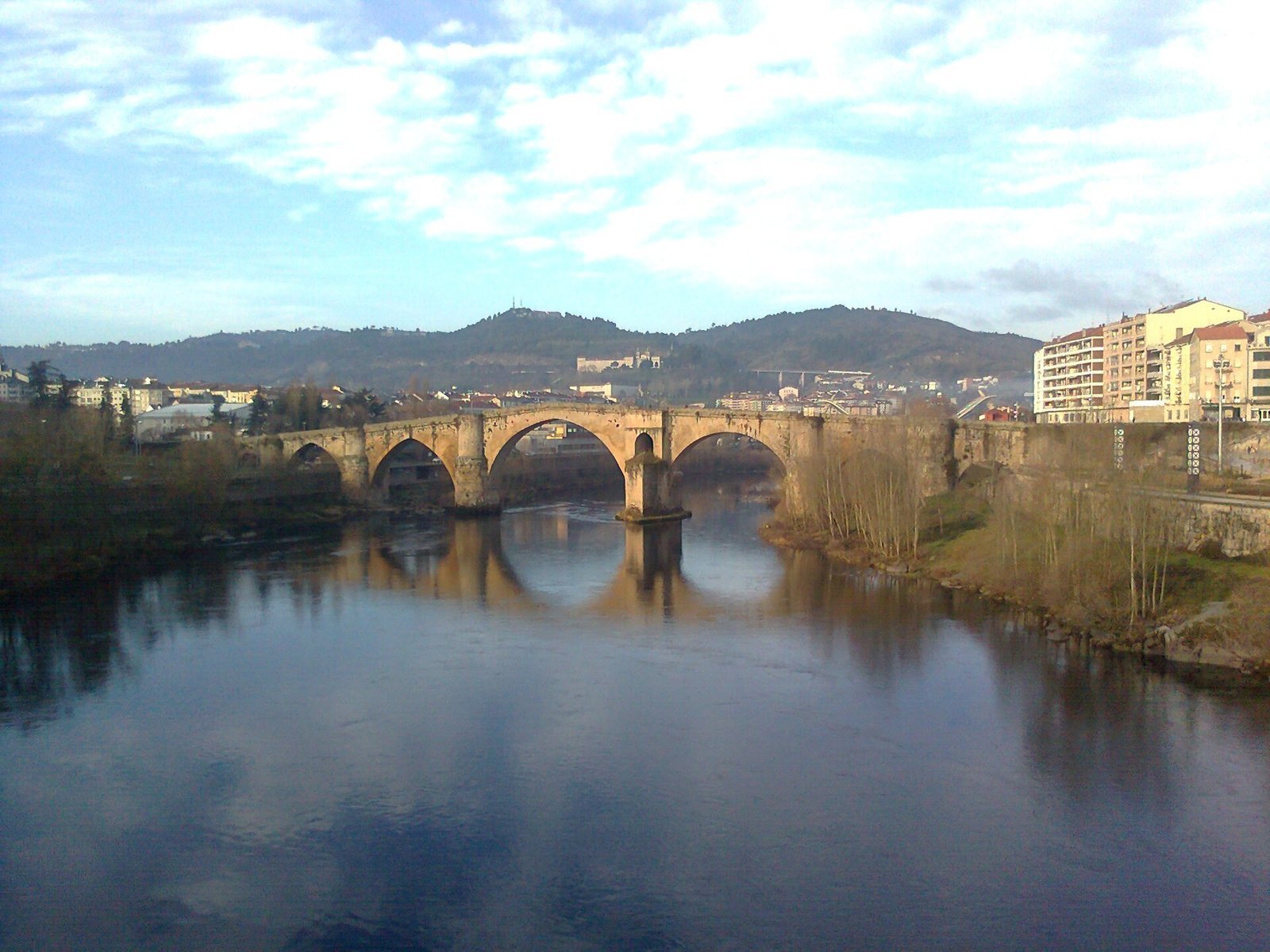
Ponte Vella is a stone bridge over the Minho River in Ourense, Spain, whose Roman predecessor was built in the first century CE and whose present form dates to a 1679 reconstruction. It served as a strategic communications junction in Gallaecia, Rome’s province in the northwest of the Iberian Peninsula, and contributed to Ourense’s development.
Roman origins
The Roman crossing formed part of a road between Bracara and Lucus, on a branch of Via XVIII, also known as Via Nova, a Roman road. Its construction is generally placed in the reign of Augustus, Rome’s first emperor, although a date under Trajan, a later emperor, has also been proposed. Historical, inscriptional, and archaeological evidence does not resolve the question.
Medieval use and rebuilding
During the Middle Ages, the bridge carried trade and pilgrims into Ourense and formed part of a route connecting the city with Santiago de Compostela. The will of Doña Urraca, a medieval queen of León and Castile, records that Ferdinand III, king of Castile and León, provided funds for repairs. Bishop Lorenzo funded a reconstruction on the Roman foundations in 1230, and Bishop Pedro de Silva repaired the bridge in 1449. Its main arch failed during the medieval period, and further repairs and collapses followed.
Seventeenth-century rebuilding and later history
A rebuilding completed in 1679 gave the bridge its present form. It remained the only crossing of the Minho at Ourense until another bridge was built in 1816. Its central arch was once regarded as the widest in Spain, a distinction it retained until the mid-nineteenth century; the bridge itself was also once considered Spain’s largest. The opening of the Villacastín–Vigo road led to the demolition of a tower on the bridge, which had appeared on Ourense’s coat of arms.
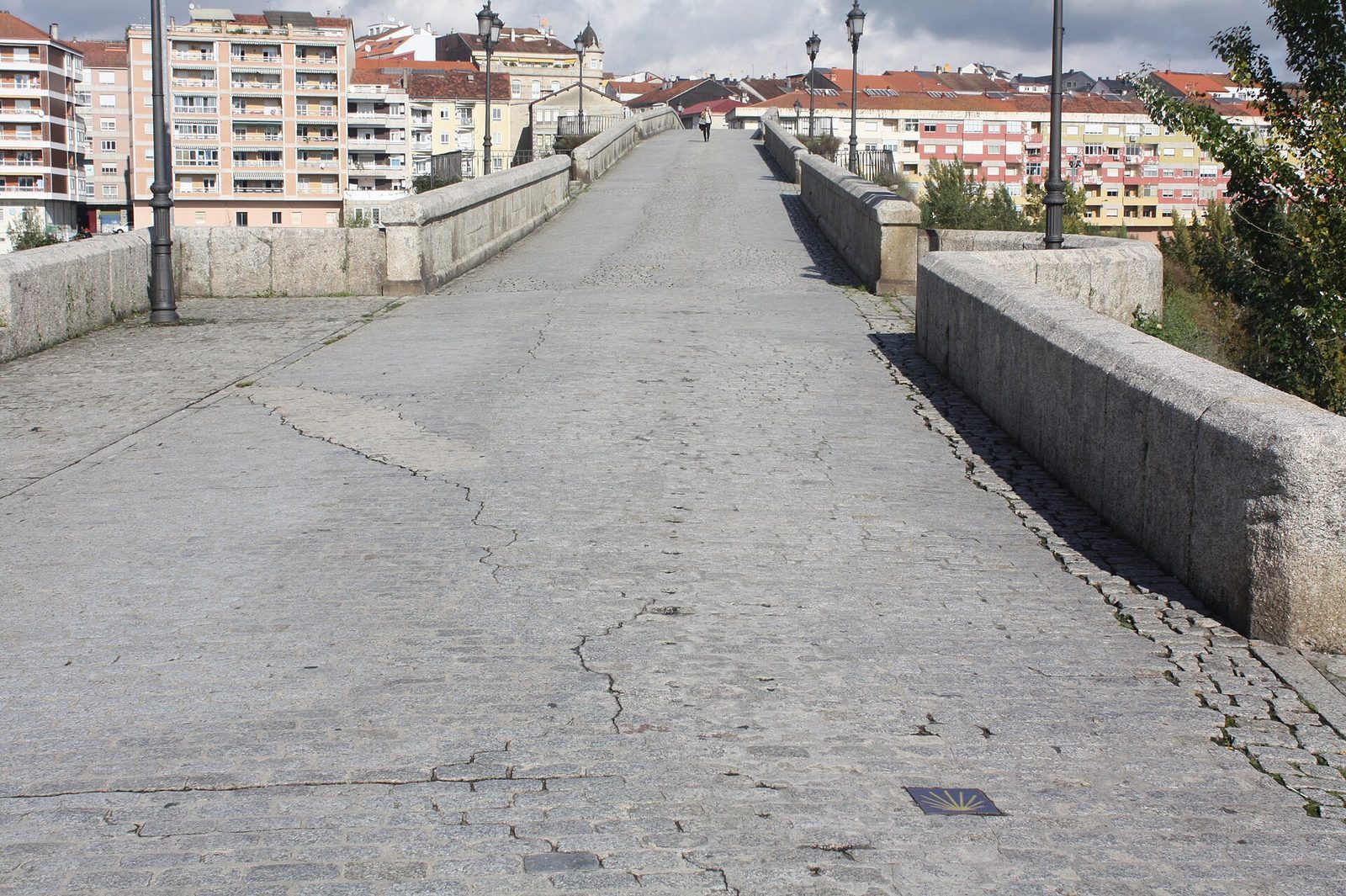
On 6 April 1961, the bridge ensemble, including the adjacent Chapel of Our Lady of Remedies, was designated a protected cultural-property monument in Spain. The bridge became pedestrian-only in 1999.
Remains
Bridge form and dimensions
The stone bridge has seven arch spans and measures approximately 370 metres long and 5 metres wide. It rises about 38 metres above the water, and its longest span is approximately 43 metres. A medieval phase associated with the 1449 repair is described as 402 metres long, with an arch span of 48 metres.
Surviving fabric and pier features
The medieval bridge was built on the foundations of a Roman predecessor described as wooden. Vertical masonry embedded within the present structure was attributed to the Roman crossing after structural probing in the 1960s. The bridge retains a medieval appearance. Semicircular passing bays sit atop the projecting supports of its piers, and a recess in the central pier is associated by tradition with a valuable statue once kept there.