Nishiyamazuka Kofun: A Sixth-Century Keyhole Burial Mound in Japan
Site at a Glance
- Rating
- 3.8
- Popularity
- Very Low
- Country
- Japan
- Primary era
- Medieval
- External website
- Open
- Eras represented
- Medieval
- Civilizations
- Yamato
- Site type
- Burial
- Remains
- Burial Mound
On this page9 sections
History
Nishiyamazuka Kofun is a large Japanese burial mound in Tenri, Nara Prefecture, Japan, built during the first half of the sixth century in the early part of the Late Kofun period. A kofun is a large Japanese burial mound, and this monument forms part of the Oyamato Kofun Group, specifically its Kayou branch. Its date makes it an unusual Late Kofun-period monument within a group whose other mounds mostly belong to the Early Kofun period.
A possible royal connection
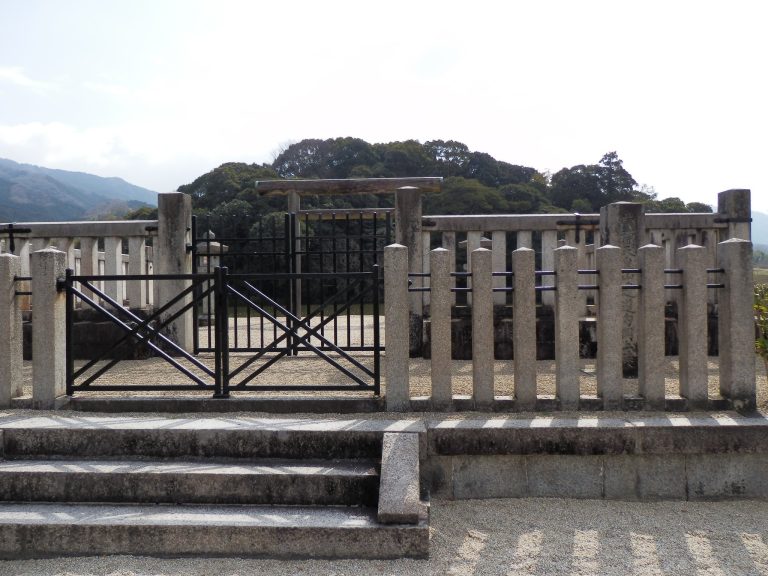
The person buried at Nishiyamazuka Kofun is unknown. One prominent interpretation identifies it as the tomb of Princess Tashiraka, traditionally regarded as the empress of Emperor Keitai and the daughter of Emperor Ninken. The imperial tomb currently assigned to her is Nishitonozuka Kofun at Nakayama in Tenri, but that mound has been dated archaeologically to around the latter half of the third century, considerably earlier than Nishiyamazuka Kofun’s proposed sixth-century date.
The proposed identification rests partly on the mound’s unusual date and considerable size among the surrounding early burial-mound groups. Its associated haniwa, clay objects placed on and around burial mounds, came from the Niike Haniwa Kilns in Takatsuki. This was also the production area associated with the haniwa of Imashirozuka Kofun, which archaeological interpretation regards as Emperor Keitai’s actual tomb, although the officially assigned imperial tomb is elsewhere.
Setting within the royal landscape
Nishiyamazuka Kofun occupies a different geographical position from the Furuichi Kofun Group in Kawachi, associated with Princess Tashiraka’s father, Emperor Ninken, and from Imashirozuka Kofun in Settsu. It lies near the Yamato, Yanagimoto, and Makimuku Kofun Groups, concentrations of large burial mounds associated with the early development of the Yamato royal polity. This placement has been interpreted either as a statement of dynastic legitimacy or as an intentional association with the tomb of Emperor Sujin.
These interpretations relate to the succession tradition surrounding Emperor Keitai, traditionally counted as Japan’s twenty-sixth emperor. Emperor Buretsu was said to have left no heir, after which Oho-doto, a fifth-generation descendant of Emperor Ojin, was summoned from Echizen and became emperor. He did not move the capital to Yamato for more than a decade after his accession, a situation interpreted as reflecting resistance from established political forces. His marriage to Princess Tashiraka has therefore been understood as a union with the established royal line that could strengthen his legitimacy.
Discovery of the burial remains
In 1887, cultivation at the summit was said to have exposed a stone coffin and associated objects. The reported finds included magatama beads, tubular beads, bells, pottery, and artificial stone objects. No archaeological excavation has been conducted at the mound, and the present whereabouts of these items are unknown.
Remains
Mound structure and orientation
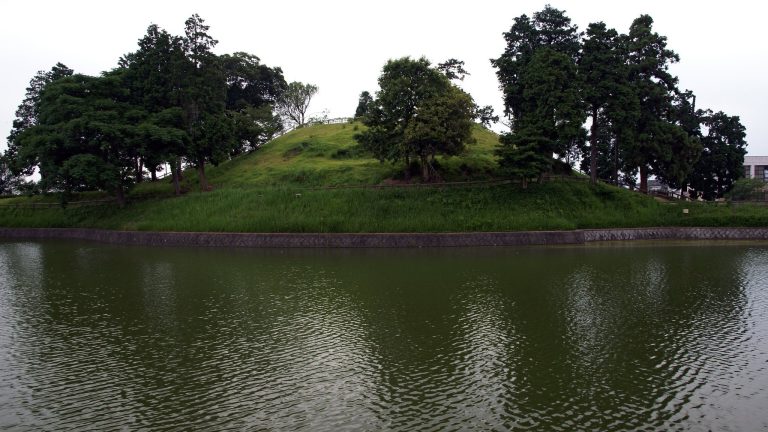
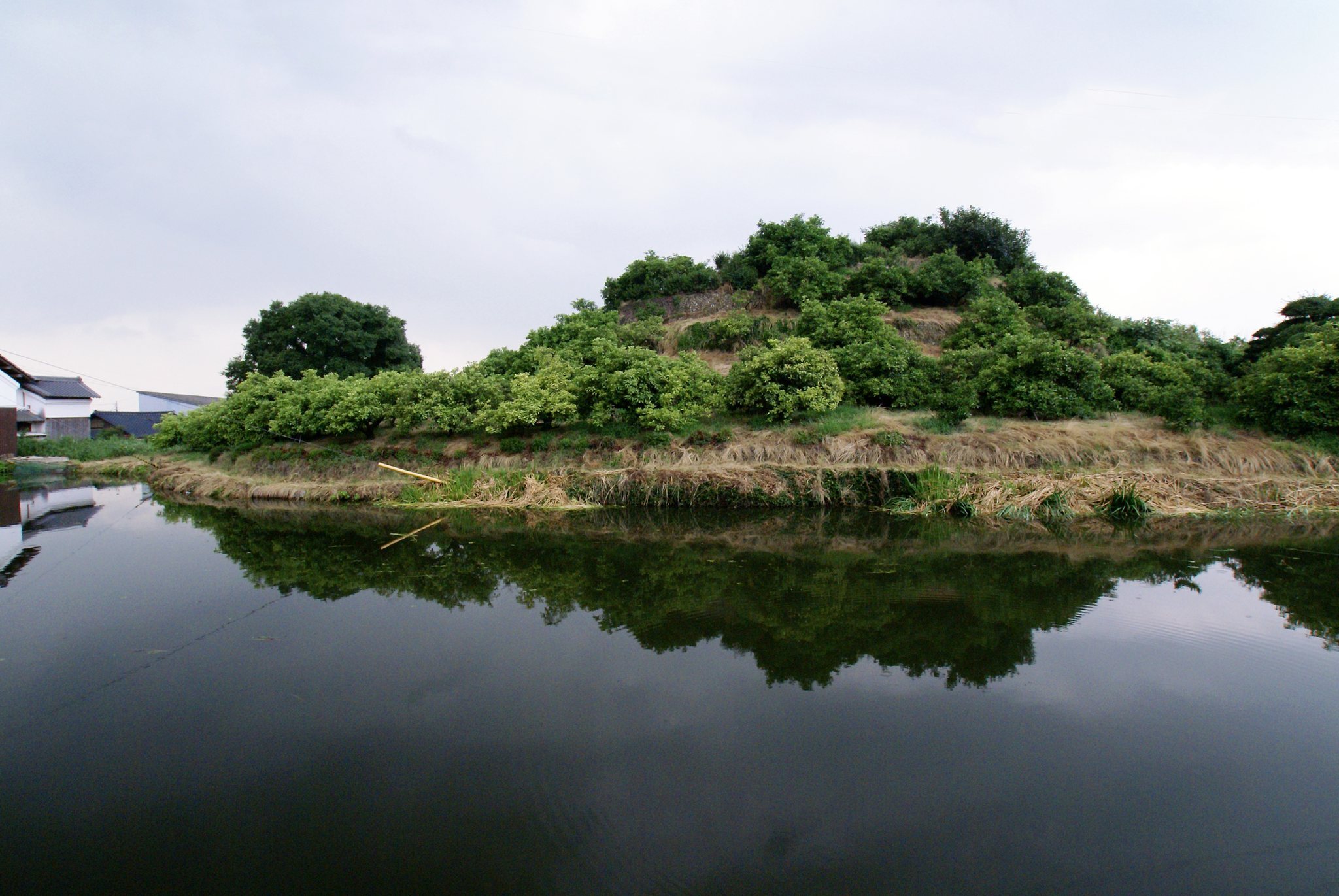
Nishiyamazuka Kofun is a keyhole-shaped mound, combining a rounded rear burial area with a projecting rectangular front section. It measures approximately 114 meters in total length, while the rear circular section rises about 13 meters high. The mound was built on sloping ground at the eastern edge of the Nara Basin, on the western edge of the Kayou settlement.
Terraces and northern front
The rear circular section has three constructed terraces, and the front section has two. Stone revetment covered parts of the exterior, which also carried haniwa. The front section points north, an unusual orientation within the Yamato Kofun Group, where most mounds face west. Nishiyamazuka Kofun and Ninoseike Kofun are identified as exceptions with northern orientations.
Moat and outer boundary
A moat surrounded the mound. Its surviving traces appear as four ponds around the site, while remains of an outer embankment can be seen beyond the moat. Together, these features preserve elements of the mound’s wider enclosure as well as its central burial form.
Burial facility and associated objects
The burial facility itself has not been established. The stone coffin reportedly exposed in 1887 was accompanied by magatama beads, tubular beads, bells, pottery, and artificial stone objects. The mound’s associated haniwa were supplied by the Niike Haniwa Kilns in Takatsuki, the same production area linked with the haniwa of Imashirozuka Kofun.