Nishitonozuka Kofun: A Keyhole-Shaped Burial Mound in Japan
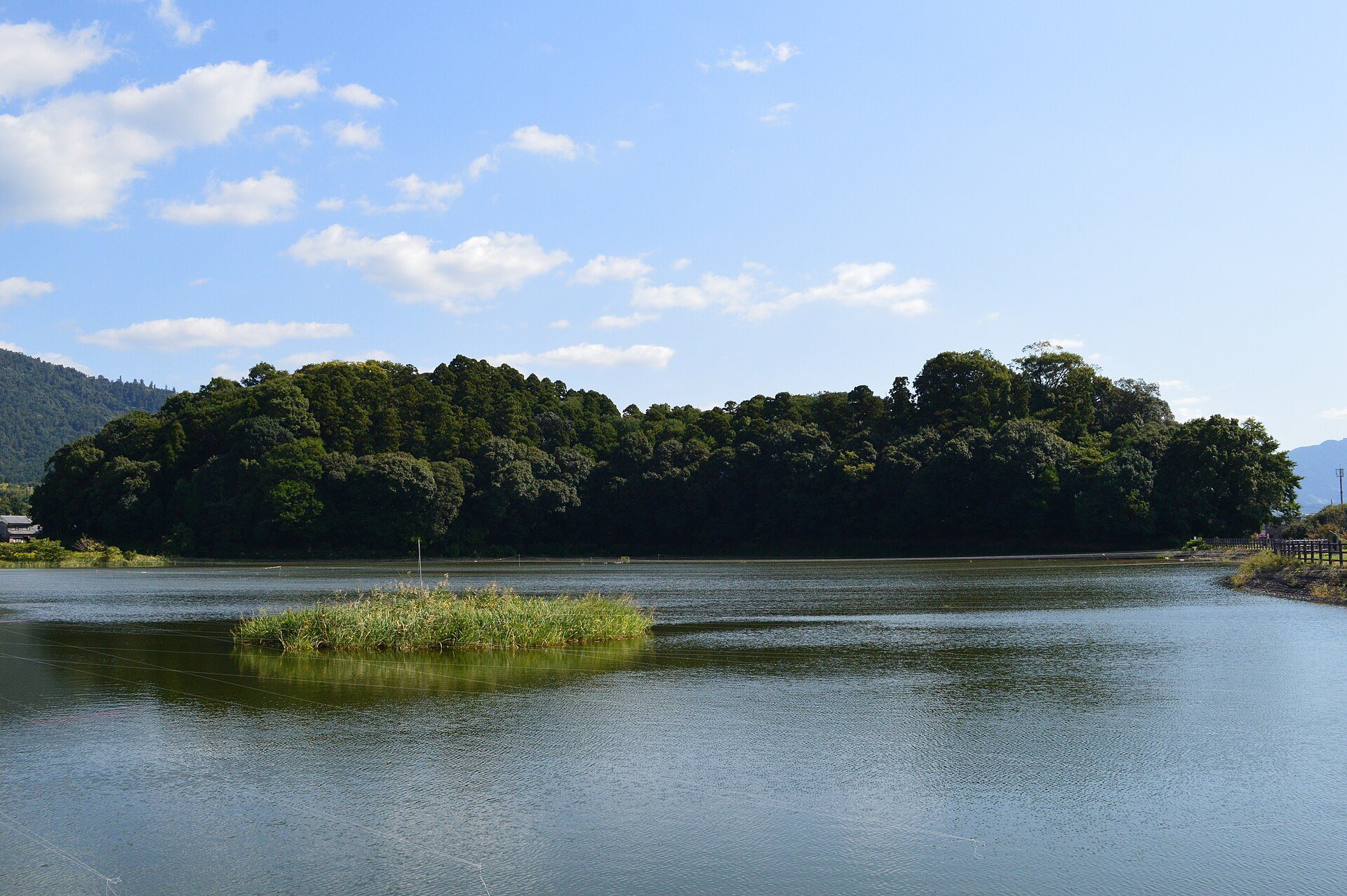
Site at a Glance
- Rating
- 4.3
- Popularity
- Very Low
- Country
- Japan
- Primary era
- Classical
- External website
- Open
- Eras represented
- Classical
- Civilizations
- Yamato
- Site type
- Burial
- Remains
- Burial Mound
On this page10 sections
History
Nishitonozuka Kofun is a large keyhole-shaped burial mound in Tenri, Nara, Japan, built in the latter part of the third century during the early Kofun period. It stands within the Nakayama sub-group of the Oyamato Kofun Group, one of the major clusters of early burial mounds associated with the formation of the Yamato kingship, the political authority centered in the Kinai region that later developed into the Japanese imperial state.
Construction and the early Yamato polity
Nishitonozuka was built on the eastern edge of the Nara Basin after Hashihaka Kofun. Some scholars regard it as the later tomb of a great ruler connected with the emergence of Yamato kingship. Nishitonozuka and the adjacent Higashitonozuka Kofun are also understood as a consecutive construction sequence, with Nishitonozuka built first.
The person buried in the mound remains a matter of interpretation. One theory identifies the occupant as Toyo, the female successor to Himiko in Chinese historical tradition. Another proposes Emperor Sujin, traditionally numbered the tenth emperor. These identifications remain scholarly theories rather than established conclusions.
Imperial mausoleum identification
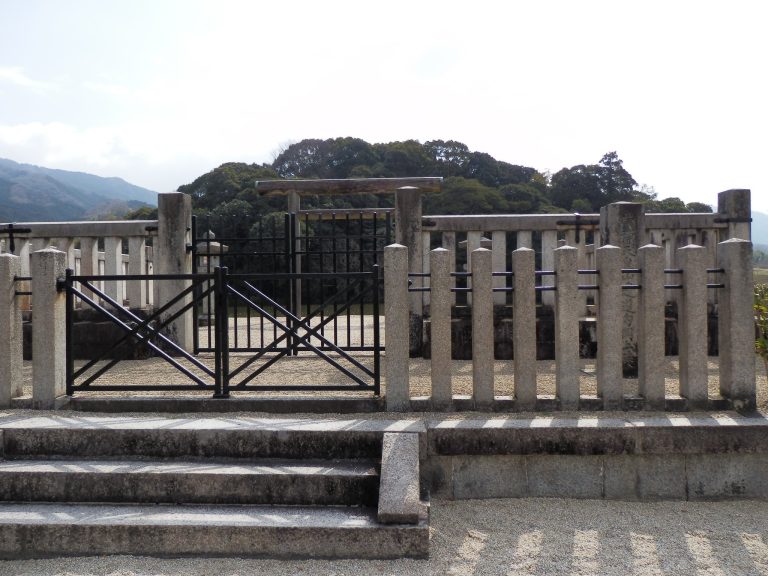
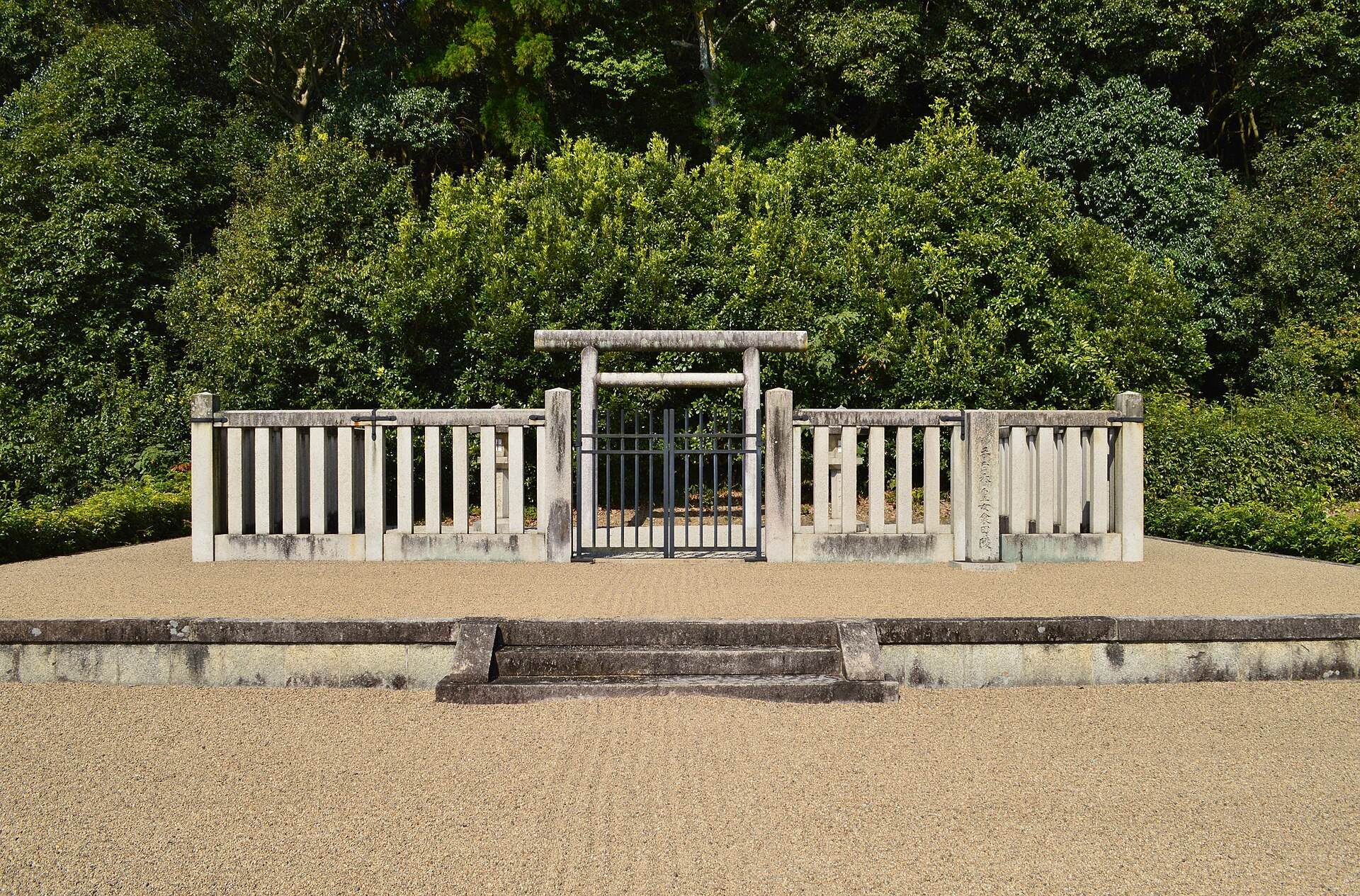
The Imperial Household Agency designates Nishitonozuka as Fusumada Mausoleum, identified with the tomb of Princess Tashiraka, the empress of Emperor Keitai. The designation was made in 1876, and the mausoleum was repaired in 1889. Princess Tashiraka is associated with the sixth century, however, while Nishitonozuka is generally dated to the latter part of the third century. Because of this chronological difference, Nishiyamazuka Kofun, whose estimated date is in the sixth century, has also been proposed as a more likely tomb for her.
The traditional identification partly draws on the Engishiki, a tenth-century compilation of court regulations and administrative records. Its section on imperial mausoleums describes a distant tomb for Princess Tashiraka in Yamato Province’s Yamabe District, measuring two cho from east to west and two from north to south. It also states that the tomb had no dedicated guard households and that guards assigned to Emperor Sujin’s mausoleum protected it. The medieval tradition locating the tomb was later lost before the 1876 designation.
Administration and investigation
Nishitonozuka is administered by the Imperial Household Agency as an imperial mausoleum. A first survey took place in fiscal year 1986, followed by an exterior survey of the mound by the agency in fiscal year 1989. The Tenri Municipal Board of Education surveyed areas around the mound from fiscal years 1992 to 1994. Aerial three-dimensional surveying was carried out in 2012, and representatives of 15 archaeological and historical societies conducted an academic entry survey in 2013.
A tomb-robbing incident occurred in August 2012. The Imperial Household Agency investigated the site while restoring the affected area, and the incident did not destroy an archaeological structure.
Remains
Keyhole mound and terraces
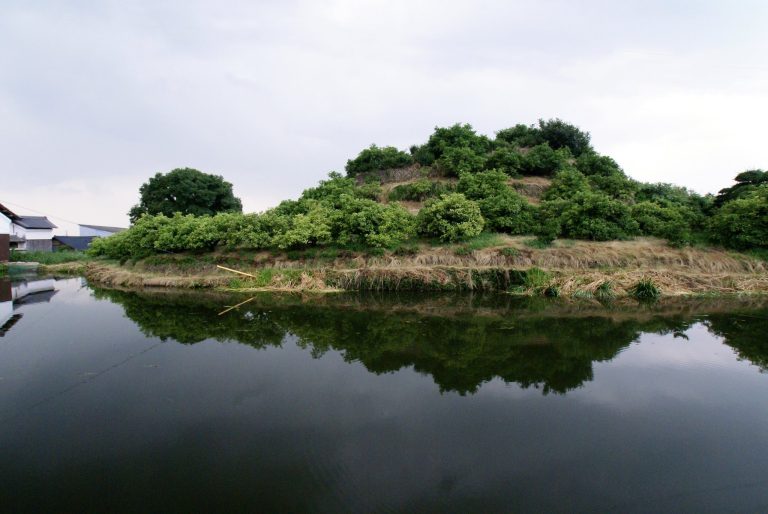
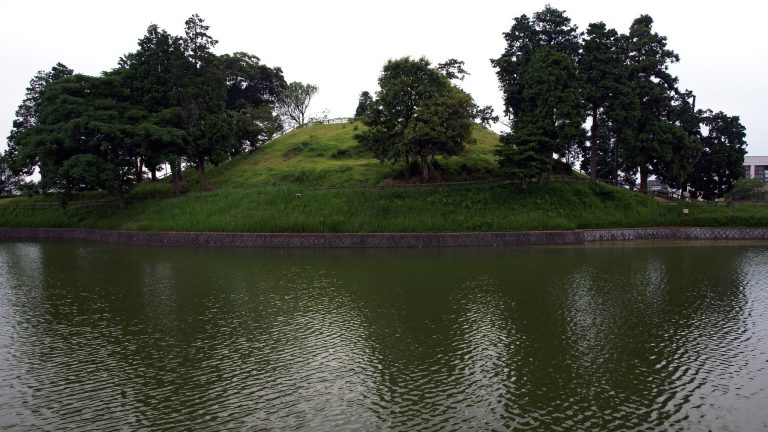
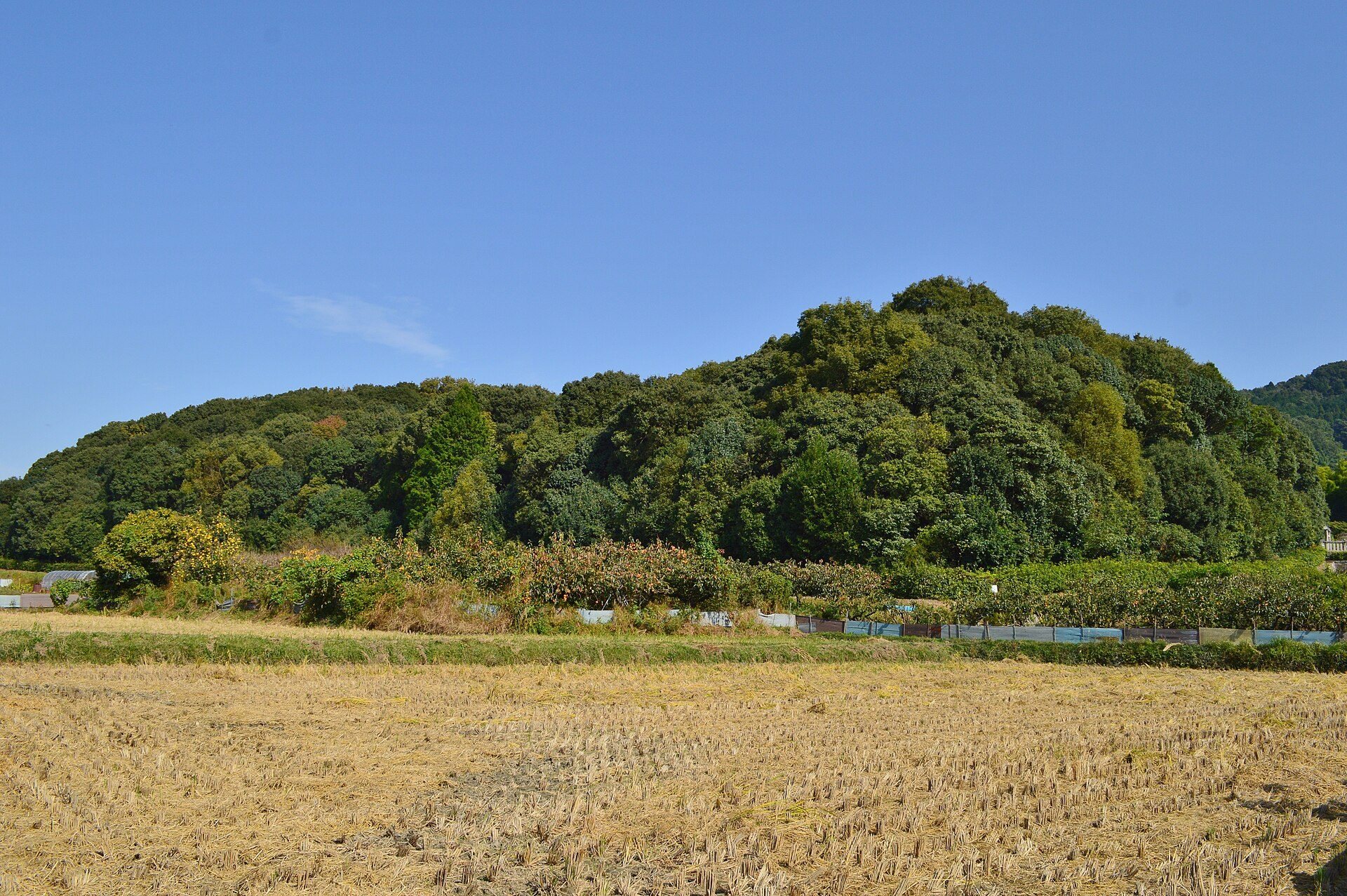
Nishitonozuka is a keyhole-shaped mound, a form combining a circular rear section with a projecting rectangular front section. It is built on a hillside at the eastern edge of the Nara Basin, with the front facing south and the circular rear portion extending north. The mound lies at right angles to an east-west slope, where higher ground on the east produces an asymmetrical plan.
The mound is approximately 230 metres long, with other measurements ranging from 219 to 234 metres. Using the 219-metre measurement, it ranks approximately twenty-fourth among Japanese burial mounds. It is the largest mound in the Oyamato Kofun Group. The circular rear portion is about 140 metres in diameter and 16 metres high on the east, with three construction stages on that side and four on the west. The projecting front portion is about 130 metres wide and 12 metres high on the east, with one stage on the east and two on the west.
The terraced surfaces of the rear and front portions meet through a narrow junction that resolves the difference between their tiers. Along the western side, a broad, level apron forms the lowest terrace, a feature distinctive to Nishitonozuka. Fitted stones cover parts of the mound’s exterior, and the mound remains well preserved.
Summit platforms
Rear platform
A square platform stands on the summit of the circular rear portion. It is one tier high, measures 25.15 metres from east to west and 26.54 metres from north to south, and rises about 3 metres. The platform is described as a stone-built ritual terrace constructed after burial.
Front platform
A second square platform occupies the summit of the projecting front portion. It measures 12.92 metres from east to west and 14.43 metres from north to south, with a height of 1.87 metres. Like the rear platform, it is regarded as a stone-built ritual terrace added after burial. The presence of platforms on both summits has led to the theory that separate individuals may have been buried in the rear and front portions.
Connections and funerary ceramics
Two bridge-like facilities extend from the eastern side of the mound. One is positioned at the centre of the rear portion, while the other projects from the southern side of the front portion. Both connect with the adjacent Higashitonozuka Kofun.
The areas around the mound have produced Kibi-style special pedestal vessels and special jars, along with special pedestal-shaped haniwa, special jar-shaped haniwa, and early cylindrical haniwa with raised rims. Haniwa are clay funerary figures and cylinders placed around or on burial mounds. Investigations in 1993 recovered large examples with black markings and raised-rim pedestal-type haniwa, together with the earliest Tsukizuki-type cylindrical haniwa and jar-shaped haniwa. These finds provide material evidence for the mound’s early date and funerary context.