Kloster Rosenthal (Pfalz): A Cistercian Nuns’ Abbey in Germany
Site at a Glance
- Rating
- 4.5
- Popularity
- Low
- Country
- Germany
- Primary era
- Medieval
- External website
- Open
- Eras represented
- Medieval
- Civilizations
- Holy Roman Empire
- Site type
- Religious
- Remains
- Monastery
On this page9 sections
History
Kloster Rosenthal (Pfalz) is a former Cistercian nuns’ abbey near Kerzenheim in Germany, founded in 1241 by Count Eberhard IV of Eberstein, lord of Stauf, and his wife, Adelheid of Sayn. Dedicated to the Virgin Mary and built in the Early Gothic period, the convent belonged to the Diocese of Worms and is now within the Diocese of Speyer.
Foundation and noble connections
Eberhard IV belonged to an extensive network of Rhineland nobility. He was the brother of Konrad of Eberstein, Bishop of Speyer, and a cousin of Saint Hedwig. Through his mother he descended from the Andechs family, while his sisters married into the Leininger and Raugraf families. A Raugraf was a nobleman of a family prominent in the Rhineland.
Eberhard IV’s nephew, Raugraf Eberhard I, Bishop of Worms, consecrated the convent church on 22 May 1261. In October of the same year, Raugraf Heinrich I, the bishop’s brother, was buried at Rosenthal. His grave slab remains among the church ruins. Heinrich was reportedly the knight who exchanged letters with Duchess Maria of Brabant before she was beheaded in 1256 on the orders of her husband, Ludwig the Strict of Bavaria, reportedly because of unfounded jealousy.
The medieval community
The convent attracted many daughters of the landed nobility. In 1496, its community consisted of 31 choir nuns, 14 lay sisters, and 24 servants, making 70 people in all. Choir sisters took part in the formal liturgical life of the community, while lay sisters generally handled practical and domestic work. Marriage portions contributed by the nuns, together with other donations, enabled the convent to acquire extensive property in the surrounding region, including land at Asselheim, Bechtolsheim, Breunigweiler, Göllheim, Guntheim, Hillesheim, Kerzenheim, Lautersheim, and Sippersfeld.
Rosenthal also became associated with the death and burial of King Adolf of Nassau. He was killed at the Battle of Göllheim on 2 July 1298 and remained buried at Rosenthal for eleven years because his rival, Albert of Austria, refused him burial in Speyer Cathedral. After Albert’s death, Adolf was transferred there in 1309. Tradition holds that Adolf’s wife, Imagina of Isenburg-Limburg, prayed in the convent church during the nearby battle. She later commissioned the early Gothic King’s Cross at the place where her husband died.
Late medieval changes and dissolution
The convent was affected by the Mainz Stiftsfeud of 1461–1462, a conflict over control of the Mainz ecclesiastical principality and its political interests. This occurred during the abbacy of Anna of Lustadt, who died in 1485. Late in the fifteenth century, her successor but one, Margaretha of Venningen, ordered the church to be remodelled in the Late Gothic style. The distinctive pinnacle turret belongs to this phase.
During the Palatine Peasants’ War, a 1525 uprising against aspects of feudal and ecclesiastical authority, the convent was plundered and devastated under Abbess Barbara Göler of Ravensburg. The community continued to function, but its position weakened. In 1572, its fourteenth abbess, Elisabeth of Geispitzheim, surrendered all the convent’s rights to Count Philipp IV of Nassau-Weilburg.
Philipp had already prohibited the admission of new sisters and pressed for the institution’s closure. He dissolved the convent, took control of its property, and appointed a secular administrator for the estates. The revenues thereafter became an income source for successive branches of the Nassau family.
Restoration, renewed expulsion, and later survival
At the end of the Thirty Years’ War, the European conflict of 1618–1648, Emperor Ferdinand III restored the Cistercian order’s rights. Under the abbess of Königsbruck, nuns returned to Rosenthal in spring 1646 and renovated the complex. The Counts of Nassau invoked the arrangements of the Peace of Westphalia, the 1648 settlement that affected the legal and religious status of territories and institutions in the German lands, and expelled the nuns again in February 1651. The convent remained dissolved and was administered as a state domain.
In 1794, French authorities confiscated the property and auctioned it in sections. Mennonites, members of a Christian Anabaptist tradition that emerged during the sixteenth-century Reformation, then settled at Rosenthal. They farmed the former convent estates, divided the buildings among their families, and used the church as a source of building stone. Demolition began in the choir area.
The Bavarian state halted the destruction in 1851, when the district administrator of Kirchheim acquired the church ruins for the Historical Society of the Palatinate and the Bavarian government in Speyer. The ruins passed to the Rosenthal Association in 1863. The Historical Society of Rosenthal and Environs now cares for the complex, which has developed into a small settlement around the monastic remains. A museum occupies part of the site, and some former convent buildings have been converted into a restaurant.
Name and local identity
Two traditions explain the name Rosenthal. One connects it with the rose in the Eberstein coat of arms. The other says that flowering roses were found in the bushes during the winter construction of the convent. The alternative name, Saint Mary in Rosenthal, reflects the abbey’s dedication to the Virgin Mary.
Remains
The former convent lies in the Rodenbach valley in the northern Palatinate. Its surviving complex includes the roofless church, remaining convent buildings, a pond, and the settlement that developed around the abbey. The church ruins are privately owned by an association, while parts of the former convent continue in adapted use.
Church ruins
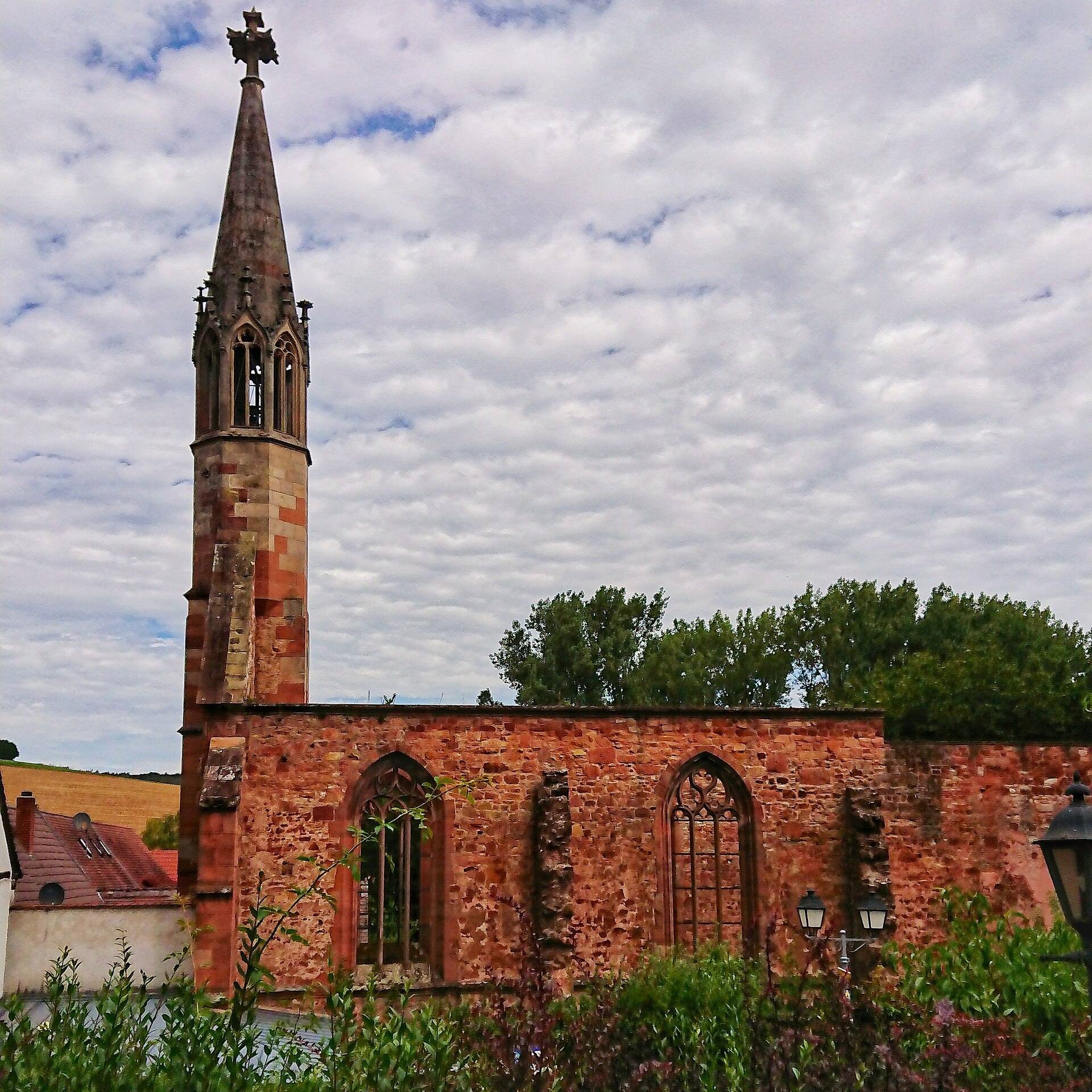
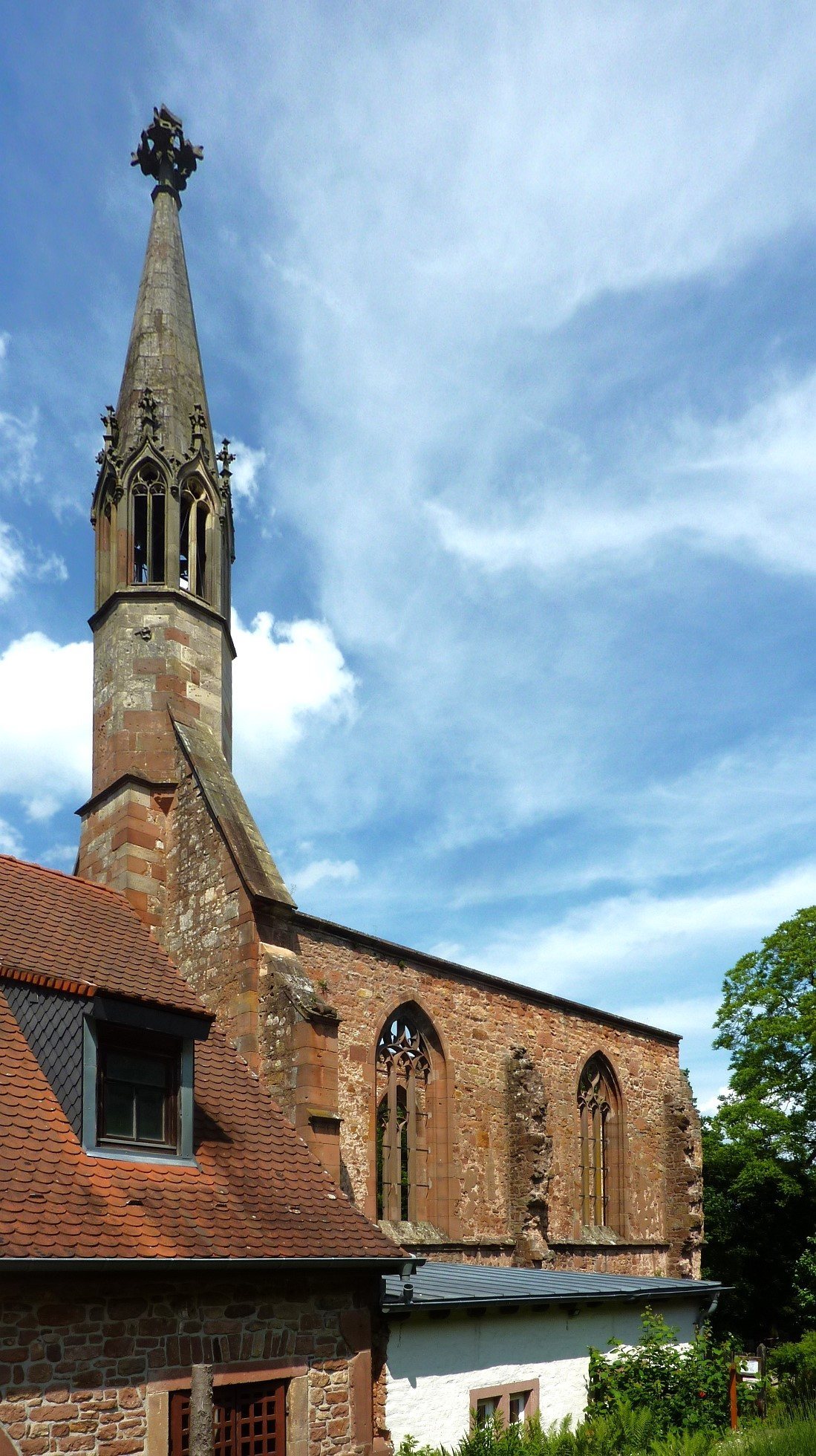
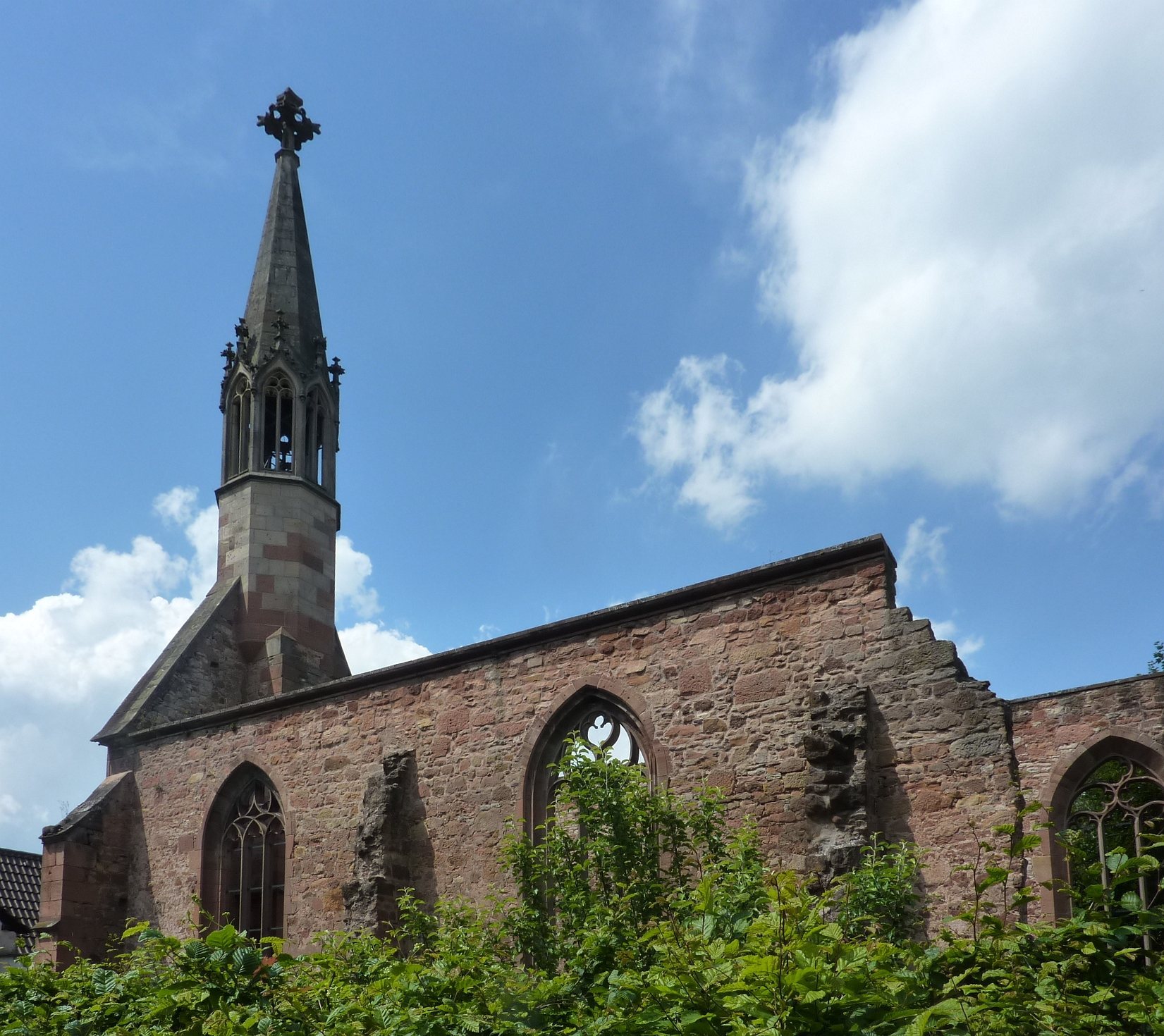
The former convent church was a single-nave Early Gothic building consecrated in 1261. It was remodelled in the Late Gothic style at the end of the fifteenth century, when its distinctive pinnacle turret was added. Most of the nave and the western architectural block, or westwork, survive, together with the Late Gothic bell turret. A bell has been rehung there. The turret and the Eberstein heraldic rose form prominent elements of Rosenthal’s identity, and both the church silhouette and the rose were incorporated into the municipal arms of Kerzenheim.
The grave slab of Raugraf Heinrich I remains in the church ruins. A well-preserved gravestone belonging to Abbess Ursula of Venningen was discovered and excavated at the site in 1999.
Convent buildings and grounds
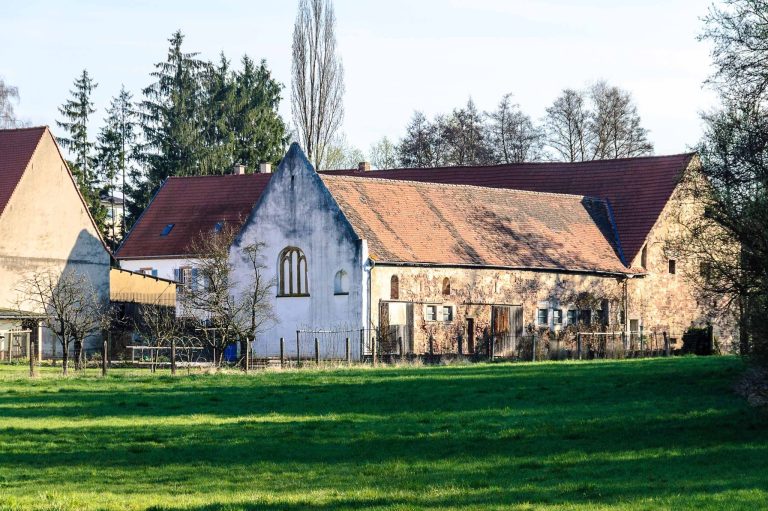
The surviving convent buildings retain architectural details from the former abbey complex. Some continued to be used for agriculture until 1990, while another part has been fitted out as a restaurant. The pond and the small settlement form part of the surviving physical setting around the former convent.