Castle Horní Libchava: A Renaissance Manor House in Czechia
Site at a Glance
- Rating
- 4.4
- Popularity
- Low
- Country
- Czechia
- Primary era
- Early Modern
- Eras represented
- Early Modern
- Civilizations
- Holy Roman Empire, Kingdom of Bohemia
- Site type
- Domestic
- Remains
- Castle
On this page10 sections
History
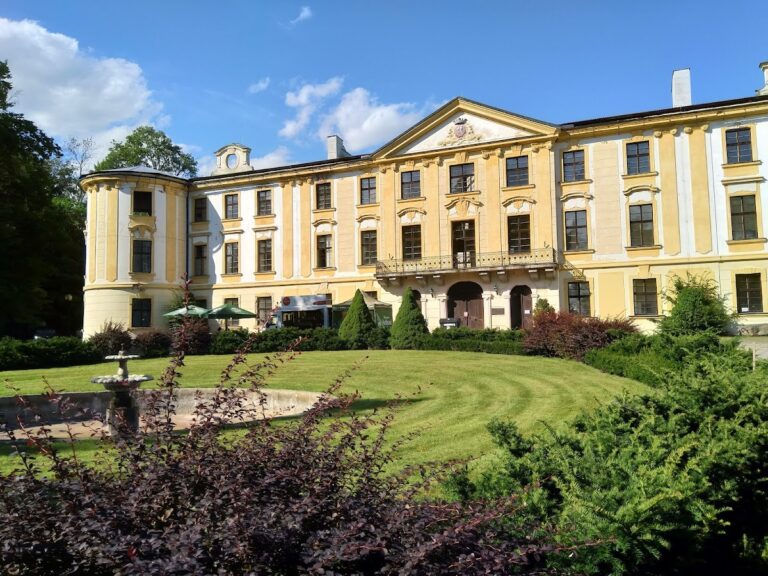
Castle Horní Libchava is a Renaissance manor house in Czechia, built between 1574 and 1593 by the Bohemian nobleman Jindřich z Vartenberka. It stands on the right bank of the Šporka stream, beside the abandoned Klinštejn castle on Vinný vrch, also known as Weinberg or Kirschberg. The building probably replaced or occupied the site of an earlier fortified residence.
Foundation and Renaissance estate
A stone formerly set into the first-floor wall commemorated the construction. It carried the date 1593 and a drawing resembling a coat of arms. Jindřich z Vartenberka also established the castle park during the sixteenth century. The estate later incorporated the surrounding settlements of Volfartice, Slunečná, Dolní Libchava, Horní Libchava, and Skalice u České Lípy.
Order of Malta ownership
After the Battle of White Mountain, the Horní Libchava estate was acquired by Count Vratislav z Mitrovic. In 1623, the confiscated property passed to the Order of Malta, a Catholic religious and military order that held estates and operated administrative institutions across Europe. The order retained Horní Libchava until 1926.
During this period, the castle served mainly as a repository for the order’s archives and as a residence for its grand priors, senior regional dignitaries of the order. It also housed a large picture gallery. The park and the nearby Dubový and Viniční hills provided recreational grounds, while hunting formed part of the estate’s activities. White partridges were shot there, otters were hunted extensively, and about 40 to 50 polecats were trapped each year.
Land reform and the Second World War
During land reform, Senator Josef Vraný acquired the 800-hectare residual estate of Horní Libchava, meaning the portion of a large landed property left after reform had redistributed or confiscated much of the original estate. In 1930 and 1931, he made insensitive alterations to the castle and its farmyard.
In early 1939, after trustee administration was introduced for agricultural and forest land, the Dresden-based Sächsische Bauernsiedlung company took over the residual estate. It established an agricultural colony for the Reich Labour Service. In 1942, the company’s forest administration at Horní Libchava controlled 562.62 hectares, including 542.61 hectares of forest and 26.58 hectares of unforested land.
In 1943, a secret archive of the Reich Security Main Office, the principal security and intelligence authority of Nazi Germany, was transferred from Berlin to the castle. The building probably served as a storage or transfer point for archives and works of art.
Postwar administration and military use
Shortly after the Second World War, SMERSH, the Soviet military counterintelligence organization active during and immediately after the conflict, searched castles in northern Bohemia, including Horní Libchava. Its personnel seized an archival collection belonging to the French security service and military intelligence. The material was transported to Moscow in July 1945 under the personal supervision of Lavrentiy Beria. It remains in the Special Archive of the Russian State Military Archive and forms the basis of that archive.
After the war, the estate became German confiscated property administered by the Czechoslovak Ministry of Agriculture. Following February 1948, it passed definitively to the state. From 1 October 1948, it was administered as part of the central state farm at Zákupy. A school farm for the agricultural vocational school in Česká Lípa was established at Horní Libchava in 1954. From 1959, the castle housed a two-year agricultural vocational school with a boarding facility and an agricultural master school.
From 1964 until 2003, the castle complex belonged to the Czechoslovak People’s Army. The army garrison at Bělá pod Bezdězem administered the fenced complex, which served as a civil-defense storage facility. The castle has been protected as a cultural monument of the Czech Republic since 1958.
Municipal ownership and preservation
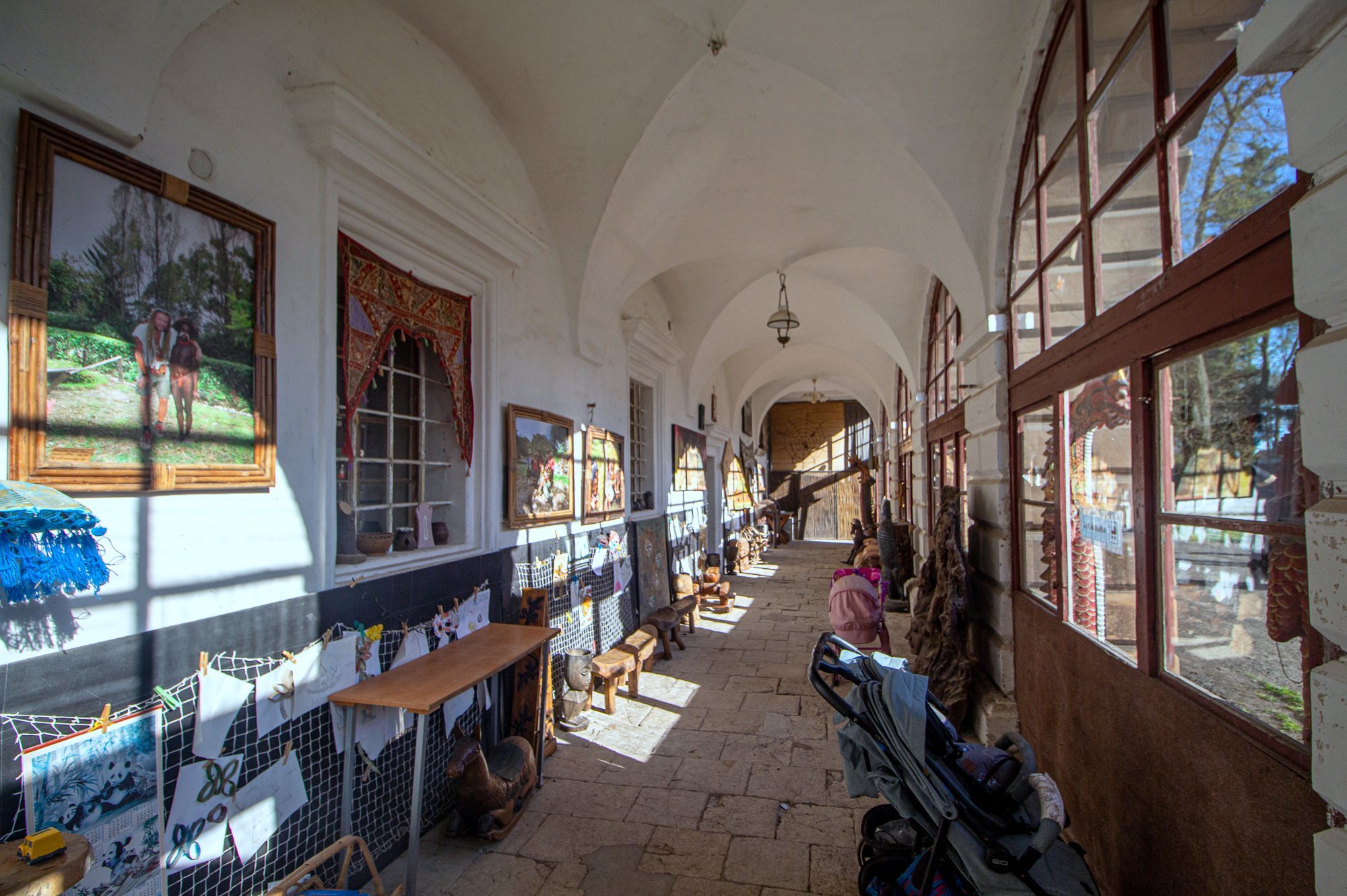
After the dissolution of the Czechoslovak People’s Army, the complex was offered for sale and acquired by the municipality of Horní Libchava. Oldřich Kilián purchased the deteriorated castle in 2010 and opened it to the public on 27 August 2011. Following initial repairs, he established an ethnographic exhibition in the building.
Local legends associate the park with a cruel and irreligious estate administrator who was carried away by the Devil. One version places the event at a hole in the park, where two black horses supposedly took him away. Another says that the Devil passed through the castle roof. According to the latter tradition, the opening repeatedly reappeared after being closed, was eventually covered with sheet metal, and remains free of snow in winter. Other stories connect the area with the knight of Klingenstein, former vineyards, and a mill whose wheel is said to continue turning.
Remains
Castle building
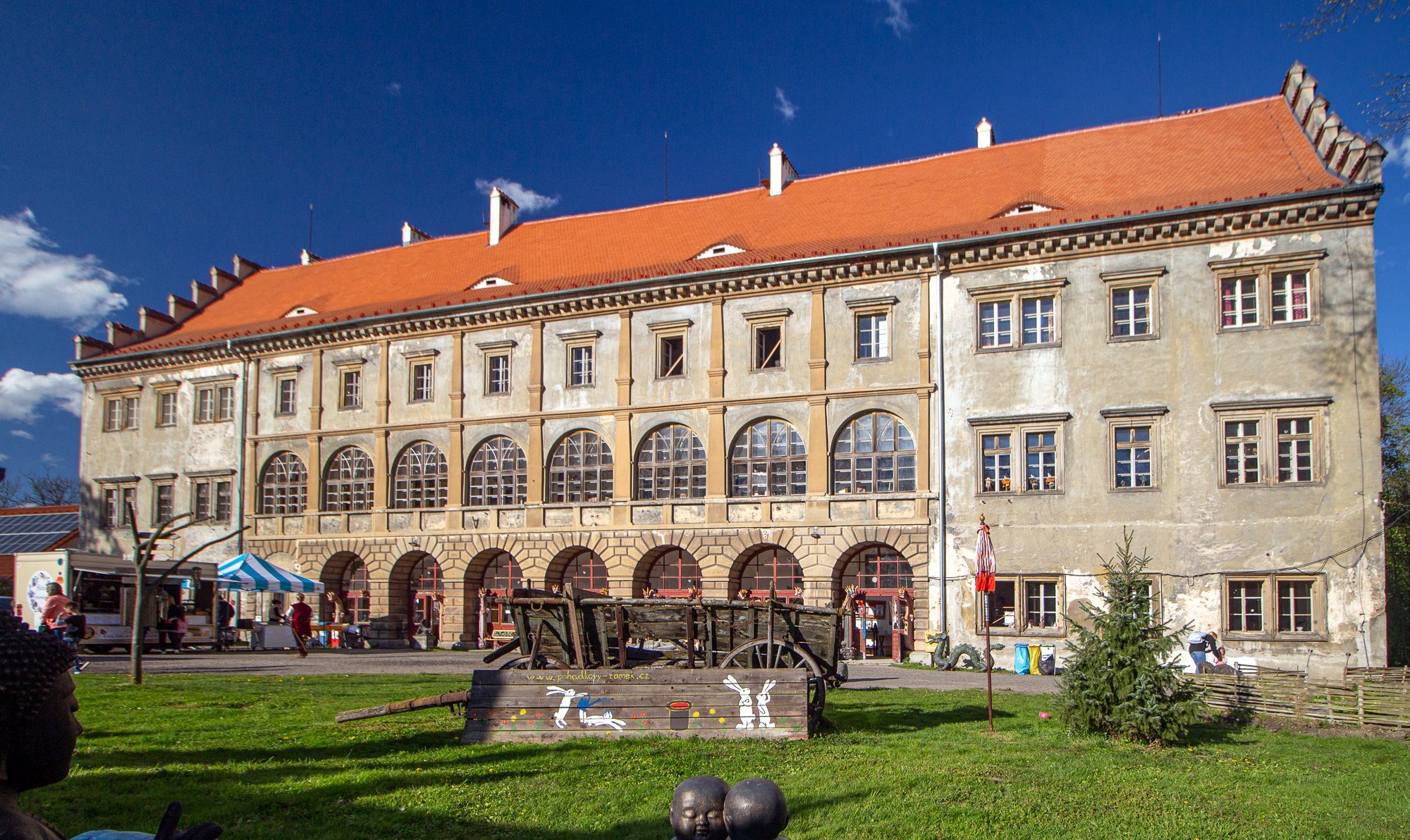
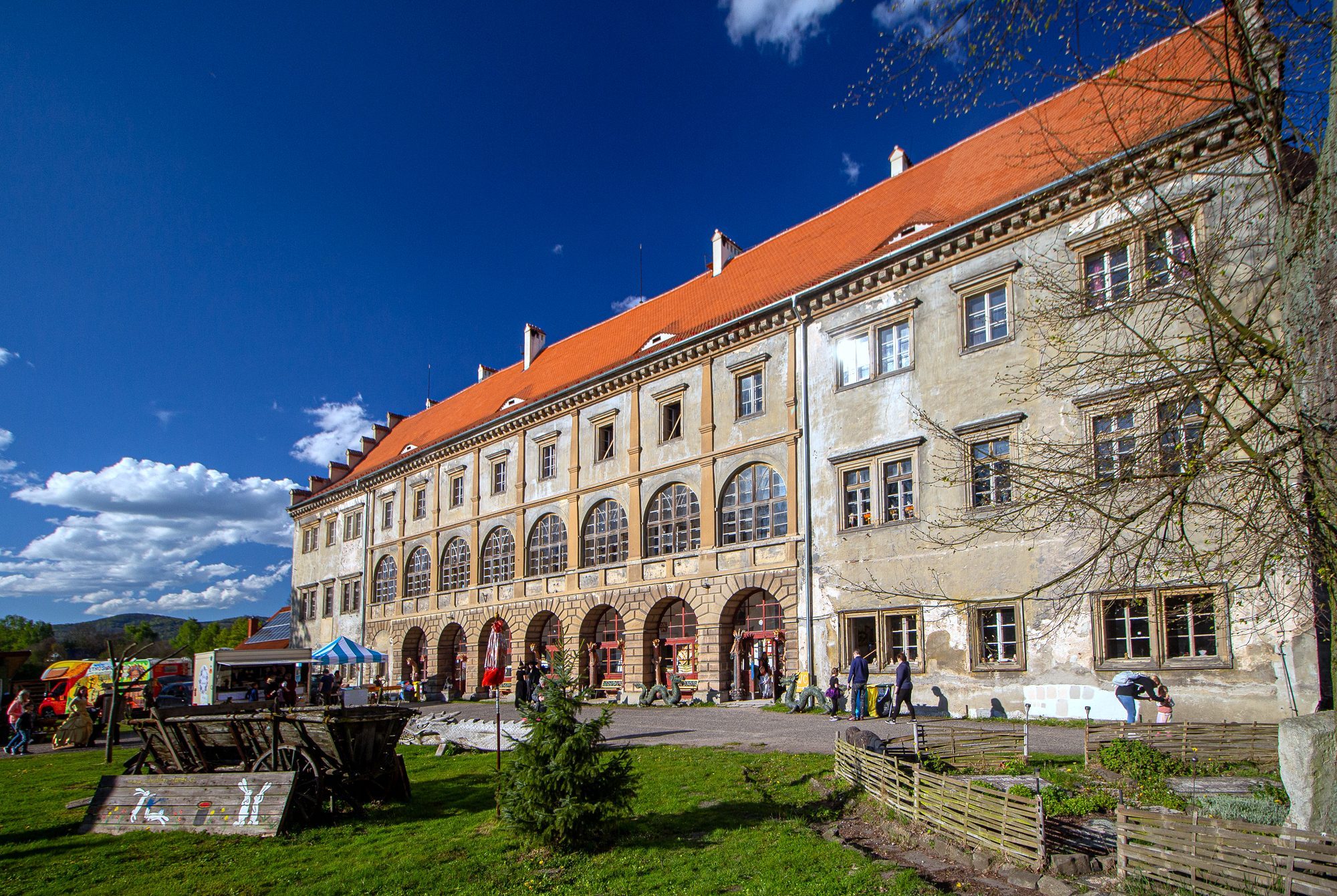
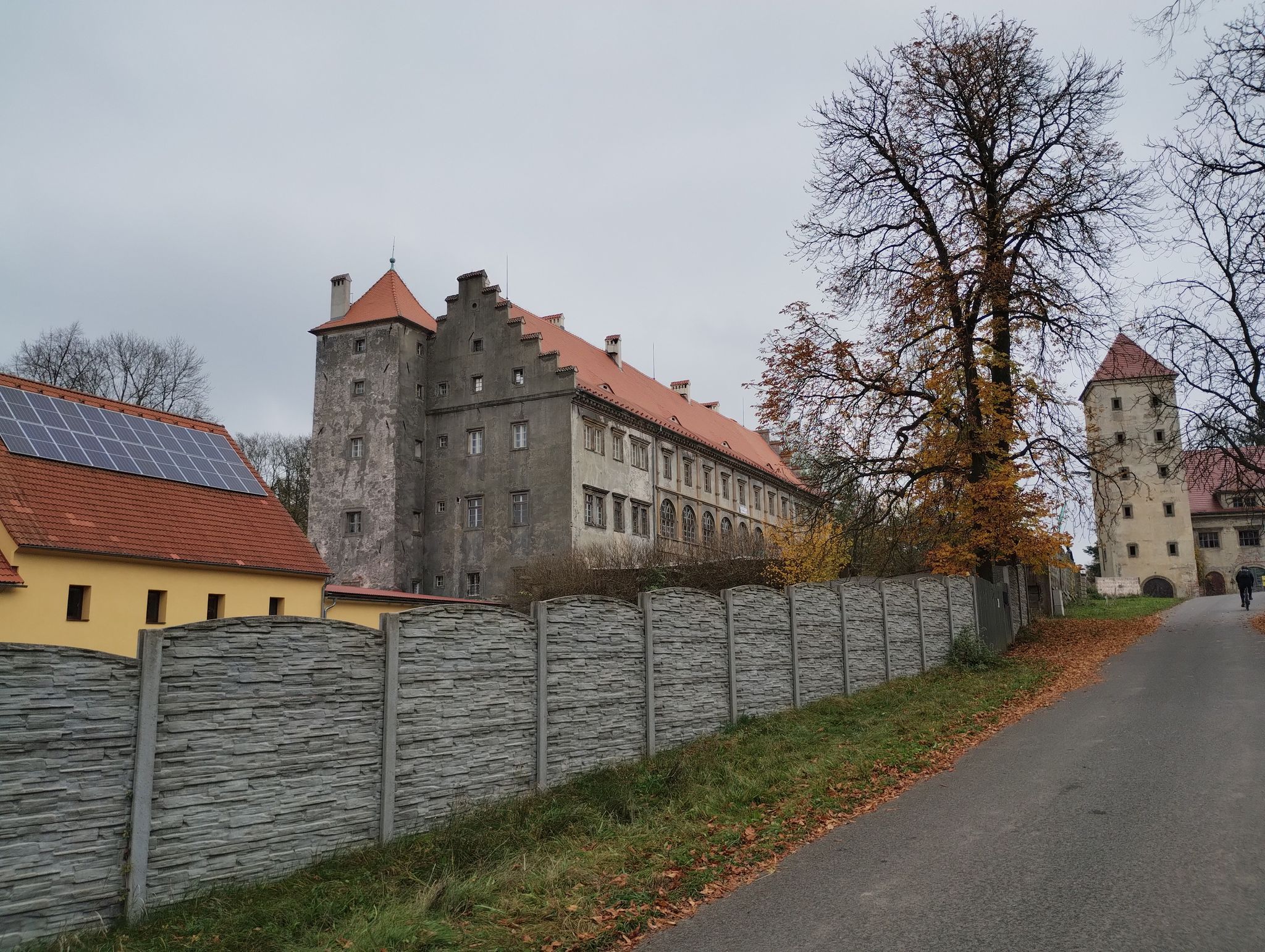
Castle Horní Libchava is a two-storey Renaissance structure built of stone and masonry. Its stepped gables rise in successive levels rather than in smooth triangular slopes. Two four-storey towers frame the building, and a basement extends beneath it. A coat of arms of the Order of Malta survives on one of the side walls. The castle was altered together with the adjoining farmyard in 1930 and 1931.
Estate buildings and park
The castle complex comprised the main residence, an inn, agricultural buildings, and a mill. The main castle was house no. 1, the inn was no. 2, and the agricultural buildings included houses nos. 4, 189, 190, and 191. Mill no. 3 belonged to the Böhm family.
Part of the original park later became overgrown with self-seeded trees. After 1980, the park was recorded as containing 15 conifers and 41 deciduous trees, including several kinds of spruce, arborvitae, beech, an American linden, and a weeping ash. A strangely shaped larch and a juniper were also noted near the castle. The juniper had a trunk circumference of 63 centimetres and was estimated to be about 70 to 80 years old. The park contains a deep hole associated with the Devil legends, reached traditionally by a sandy path through the grounds.
Interior and collections
The spacious first-floor vestibule displayed hunting trophies, including a great black-backed gull taken near Stružnice. During the Order of Malta’s ownership, the castle also contained the order’s picture gallery. These interior uses reflected the building’s roles as a residence, an archive repository, and part of a landed estate devoted to administration and recreation.