Old Jewish Cemetery in Česká Lípa: A Jewish Burial Ground in Northern Bohemia
Site at a Glance
- Popularity
- Very Low
- Country
- Czechia
- Primary era
- Early Modern
- Eras represented
- Early Modern, Modern
- Civilizations
- Holy Roman Empire, Kingdom of Bohemia
- Site type
- Burial
- Remains
- Necropolis
On this page10 sections
History
The Old Jewish Cemetery in Česká Lípa, Czechia, is a Jewish burial ground established beyond the town walls before 1575. A local tradition dates its foundation to 1479, but that date is undocumented. The cemetery is among the oldest preserved Jewish cemeteries in Northern Bohemia.
Origins and community
The earliest written confirmation of Jews in Česká Lípa dates to 1570. A surviving record from 1699 provides the earliest documentary evidence of the town’s Jewish quarter, synagogue, and cemetery. Jewish presence in the area extended back several generations before the Battle of White Mountain in 1620, a major Habsburg victory during the Bohemian Revolt.
A late-sixteenth-century gift of the cemetery plot is attributed to Jan of Wartenberg, a member of a Bohemian noble family. Townspeople challenged the gift in court, claiming the town owned land around the Brick Pond.
A 1724 list names 358 members of the Jewish community. About two-thirds belonged to established local families, while roughly one-third had arrived from elsewhere. Their places of origin included Boleslav, Úštěk, Libochovice, Radešín, Náchod, Postoloprt, Roudnice, Kolín, German lands, Austria, Moravia, and Poland. Two families came from Poland. Altschul was the community’s oldest and most widely represented family.
Expansion, violence, and continued use
The cemetery was enlarged in 1758 and remained in use until 1905, when its last burial took place. In December 1744, Prussian irregular light troops under Schimpsen attacked the town’s Jews. The violence lasted from about 10 a.m. until 4 p.m. Thirty people were killed and 40 injured, while cash and goods worth about 30,000 gulden were taken. Jewish residents fled to the woods, and some of the dead and wounded were found only weeks later. Plunder appears to have been the main motive; local residents may also have joined the looting. The community’s burial society marked the attack’s anniversary with a cemetery memorial.
Cholera and dysentery struck Česká Lípa in 1850. Cemetery registers suggest that this was probably the year with the most deaths, reflecting both the relatively large Jewish population and, especially, the epidemic diseases.
Closure and modern history
From about 1903 to 1905, a Jewish section operated in the municipal cemetery. In 1905 the community established a new Jewish cemetery on the town’s northeastern outskirts, beside the municipal cemetery. Its Moorish-style ceremonial building survived the war, but around 1983, during Czechoslovakia’s post-1968 period of political repression and Soviet-aligned rule known as normalization, the cemetery was dismantled, sold, and looted.
The Nazis severely damaged the old cemetery in 1938, forcibly removing some tombstones and using them to fill a branch of the Ploučnice River. Repairs and partial revitalization in the 1990s were completed in 1999. The cemetery is protected as a cultural monument of the Czech Republic.
Remains
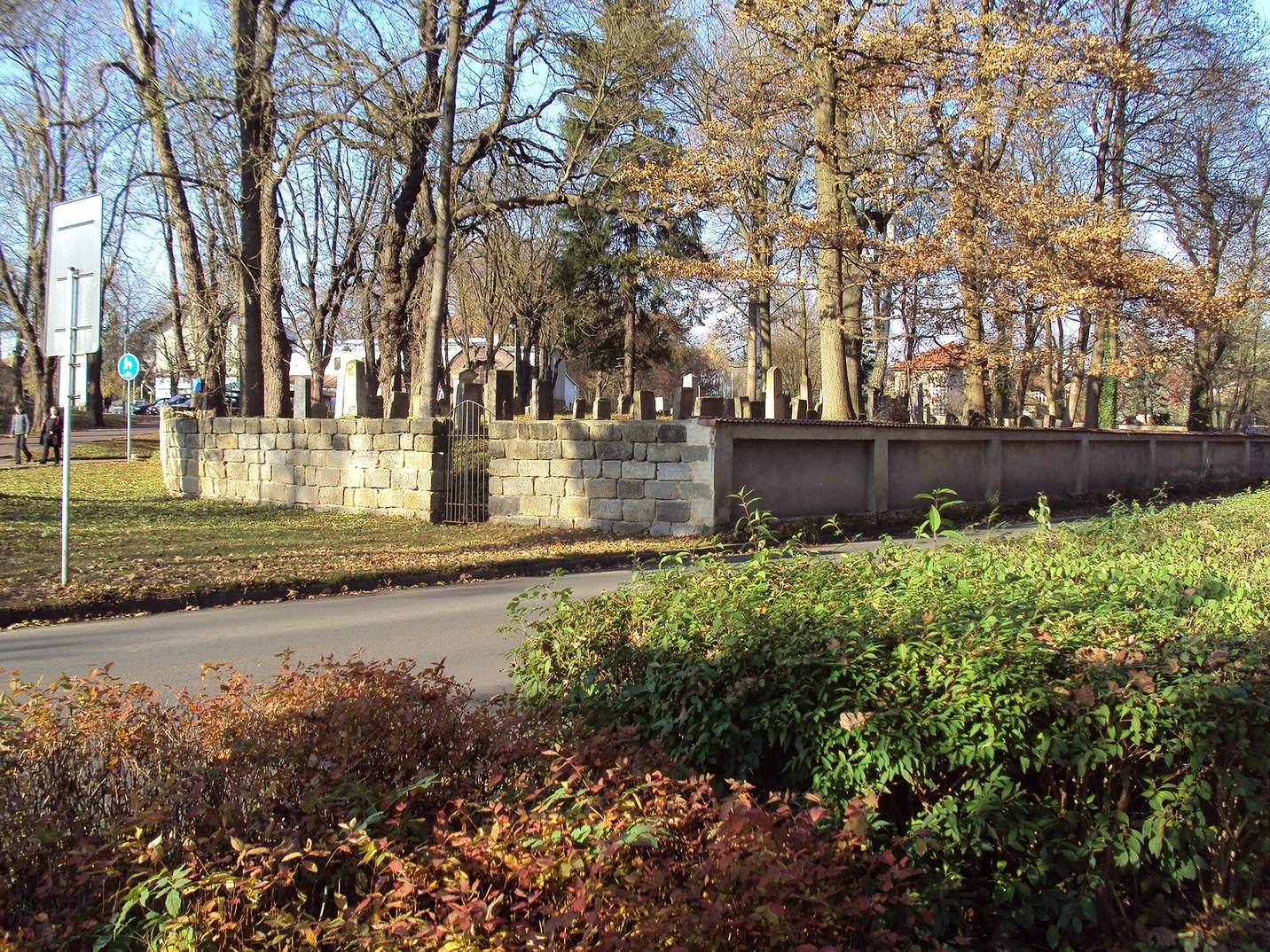
The 2,809-square-metre cemetery lies in the northwestern part of Česká Lípa, near the town park and between Roháče z Dubé and U Střelnice streets. A wall encloses the burial ground, which stands somewhat higher than the surrounding land. The small area has prompted the proposal that graves were layered over time. This remains unverified, since Jewish religious practice forbids disturbing graves.
Tombstones and commemorative features
Surviving tombstones
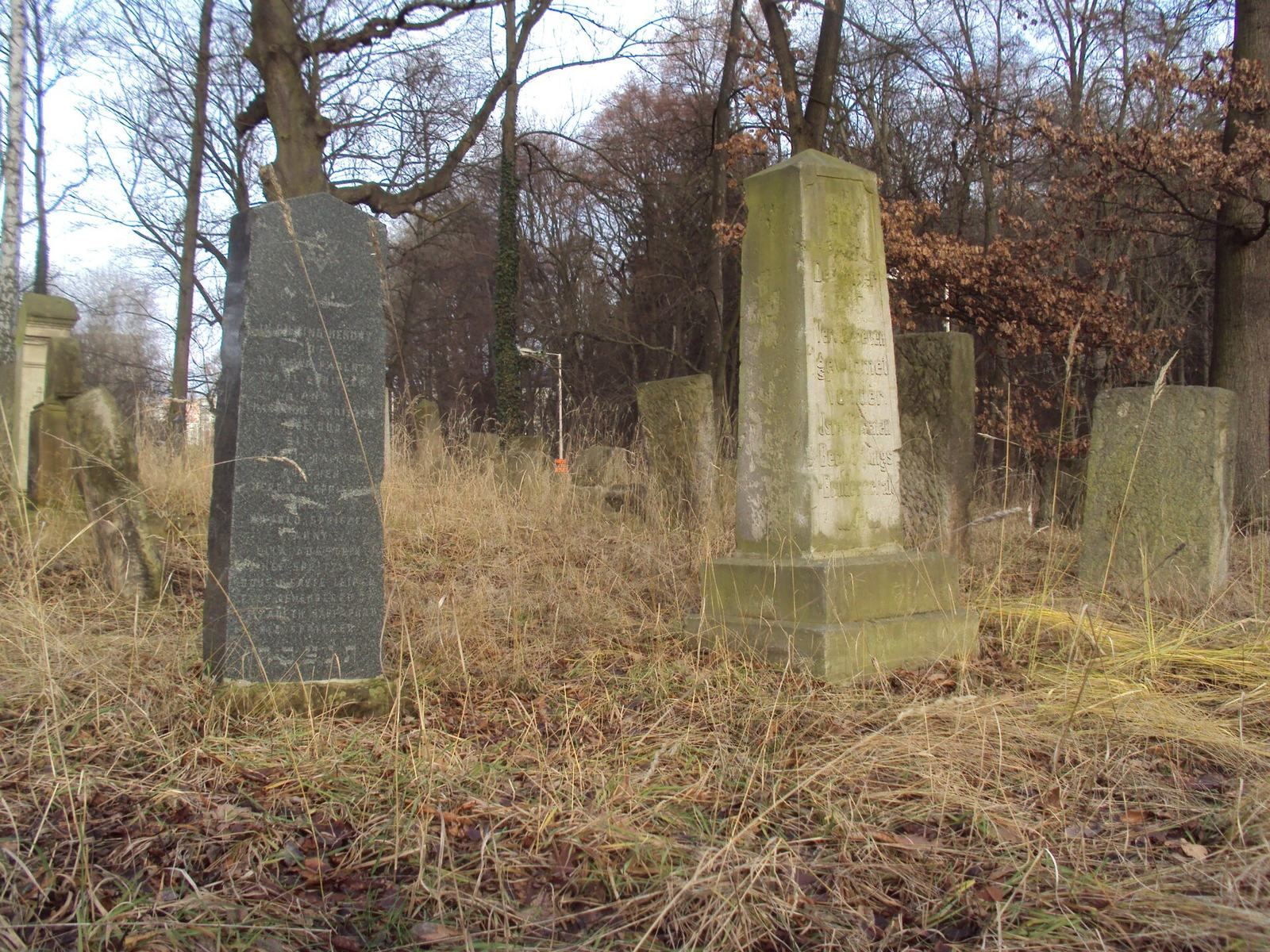
About 140 tombstones remain, most of them large upright stones dating from the seventeenth and eighteenth centuries. The stone generally identified as the oldest belongs to Avdiel Sobotka and is dated 1682. A cataloguer has proposed that a double tombstone bears the dates 1674 and 1675; if that reading is correct, it is earlier.
Memorial to the 1744 victims
A black granite tombstone shaped as a pyramid commemorates the community rabbi and 31 other victims of the 1744 attack. The memorial is badly damaged. Three other cemetery stones dated 1744 belong to people who died before the attack.
Epitaphs
Inscriptions include the family names Altschul, Gans, Schreiber, Schulhof, Koswein, and Lewoja. Many older epitaphs give only basic details, while a few longer texts are noted for their learning, literary language, and distinctive local expressions. An 1854 epitaph for Markus Altschul praises his integrity, devotion to God, and aid to the poor. It says he died while still “on the way” and would reap the fruits of his virtue among his ancestors.
Display and reassembled stones
About half the cemetery is arranged as a display of stone monuments. Some elements that originally belonged together, including a base and an upper obelisk, are now presented as separate graves. This arrangement has been interpreted as suggesting that the work proceeded without consultation with scholars of Hebrew language and literature.