Omori Castle: A Sengoku-Period Mountain Castle in Fukushima, Japan
Site at a Glance
- Rating
- 3.8
- Popularity
- Very Low
- Country
- Japan
- Primary era
- Early Modern
- Eras represented
- Medieval, Early Modern
- Civilizations
- Unclassified
- Site type
- Military
- Remains
- Castle
On this page14 sections
History
Omori Castle is a Sengoku-period mountain castle in Fukushima, Japan, built on a low hill and also known as Gagyū Castle. Its founder and construction date are unknown, but the site became an important stronghold during the fifteenth- and sixteenth-century era of rivalry among regional warlords. The castle controlled approaches through southern Shinobu District and later served the Date clan during its expansion in northern Japan.
Early local power and the Date clan
Medieval stone memorial stelae near the castle date from the Kamakura period through the early Muromachi period. Their presence indicates that the surrounding area was probably a base for powerful local landholders. The Nikaidō clan is said to have controlled the district during this earlier period.
Omori Castle enters clearer historical view during the Sengoku period, when Date Sanemoto, the third son of Date Tanemune, became its lord. During the Tenbun Conflict, an internal struggle within the Date clan, Sanemoto supported his father. Omori consequently became an important base for Tanemune’s faction. After the conflict ended in 1548, Sanemoto reconciled with his elder brother Harumune, retained the castle, and received authority over southern Shinobu District.
Date expansion and the shift to Fukushima
In 1584, Sanemoto handed Omori Castle to his eldest son, Date Shigezane, and retired to Hatchōme Castle. After Date Masamune captured Nihonmatsu Castle in 1586, he granted Nihonmatsu to Shigezane and assigned Omori to Katakura Kagetsuna. The castle then served as a relay base for Masamune’s advance into the Sendō region and for his conflicts with the Sōma clan. Its position contributed to Date control of southern Ōshū, the historical region corresponding broadly to northern Japan’s Tōhoku area.
Toyotomi Hideyoshi’s reorganization of Ōshū in 1591 removed Shinobu District from the Date domain and awarded it to Gamō Ujisato. Ujisato’s guest retainer, Kimura Yoshikiyo, became lord of Omori, but renovated Sugitsuma Castle and renamed it Fukushima Castle. He moved his residence there and abandoned Omori Castle. The present name of Fukushima is associated with this change.
Uesugi rule and abandonment
After Ujisato’s death and the transfer of the Gamō domain to Utsunomiya, Uesugi Kagekatsu became lord of Aizu and restored Omori Castle as a Uesugi holding. His retainer Kurita Kunitoki became lord of the castle, but he was killed after secretly siding with Tokugawa Ieyasu shortly before the Battle of Sekigahara. Imokawa Masachika then took control, and the castle passed to the Imokawa family.
Omori Castle was abandoned in the seventeenth century during the political crisis that followed the sudden death of Uesugi Tsunakatsu and the succession of Uesugi Tsunanori. The Uesugi domain was reduced to 150,000 koku, a measure of a domain’s productive capacity, while Shinobu District became tenryō, land administered directly by the shogunate. Omori Castle was abolished, and Fukushima Castle later became the seat of the Itakura domain.
Castle town and modern management
A castle town developed at the eastern foot of the hill and formed the basis of present-day Omori’s urban area. Areas around the present Shinobu Community Center preserve place-names associated with embankments and horse grounds and are thought to have been the samurai quarter. The area along the present Mizuhara prefectural road around Honchō is thought to have been the merchant quarter. Until the sixteenth century, the Ōshū Highway passed through Omori, which also connected with routes toward Yonezawa and northward. From the seventeenth century, the urban center and principal route shifted to Fukushima.
Since 1928, the summit area has been managed as Omori Castle Mountain Park. Park construction substantially changed the castle site. An archaeological investigation carried out in 1993 before construction of the observation tower recovered Seto ceramics attributed to the sixteenth century.
Remains
Hilltop layout and earthworks
Omori Castle occupies the tip of a low hill whose summit reaches 147 meters, around 60 meters above the surrounding land. Its principal arrangement comprised three relatively large enclosed areas, or baileys, set along a north-south axis. The main enclosure, known as the honmaru, occupied the highest point, with Kitadate to the north and Minamidate to the south. The castle was defended with earthen ramparts, banks formed mainly from packed soil, together with dry moats, ditches without standing water.
Main enclosure
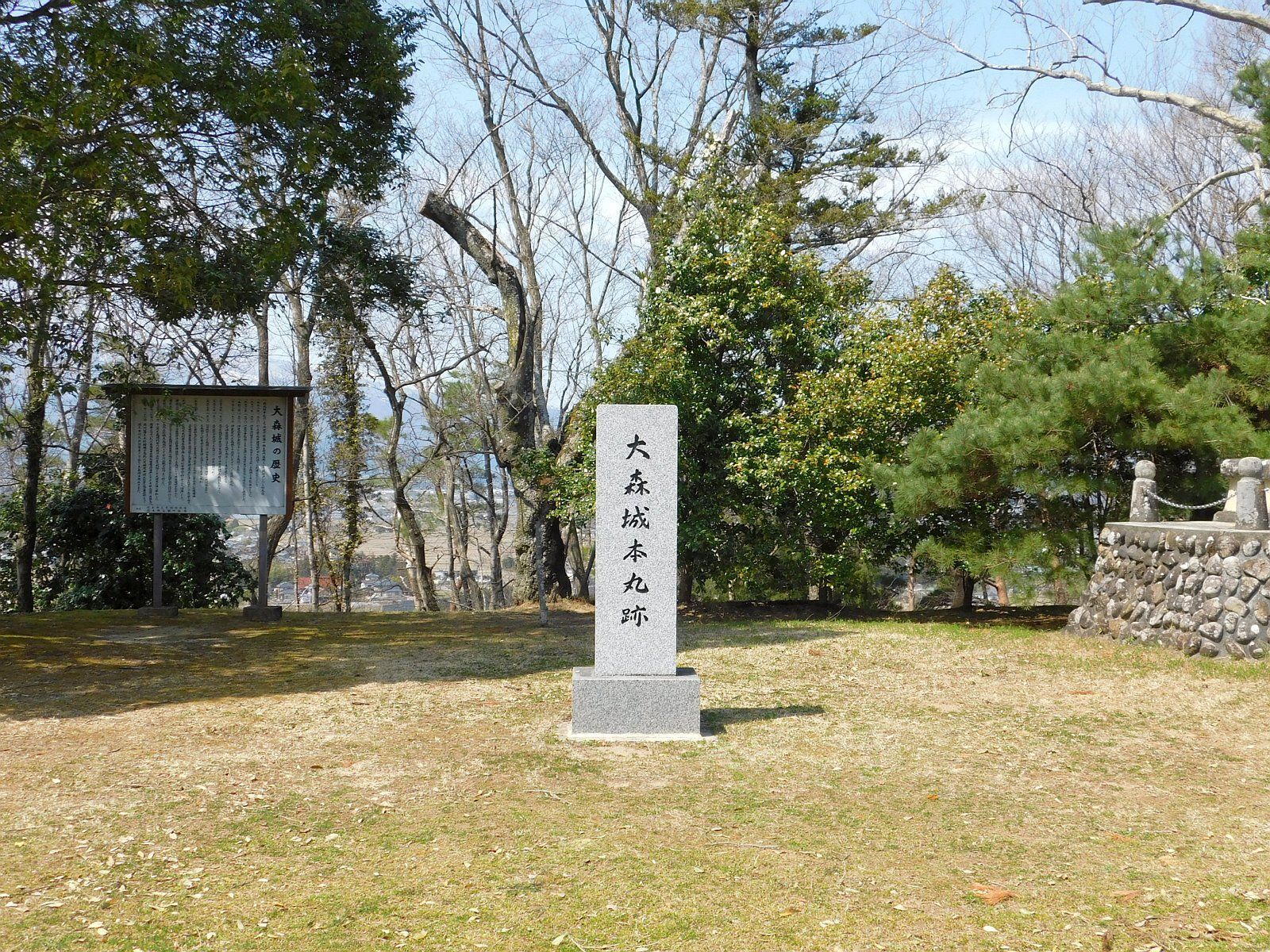
The main enclosure has a slight difference in height between its northern and southern halves. The higher northern part is interpreted as the location of the lord’s residence. A dry moat and earthen ramparts survive along the southern side. These remains form part of the surviving defensive structure, although park development has modified the wider arrangement of the summit.
Minamidate
Minamidate is now occupied by woodland and cultivated plots, while traces of its former fortifications remain. A complicated belt-shaped enclosure in the northeast suggests that an entrance once stood in this area. This narrow fortified terrace, called an obi-kuruwa, formed part of the castle’s defensive organization.
Kitadate
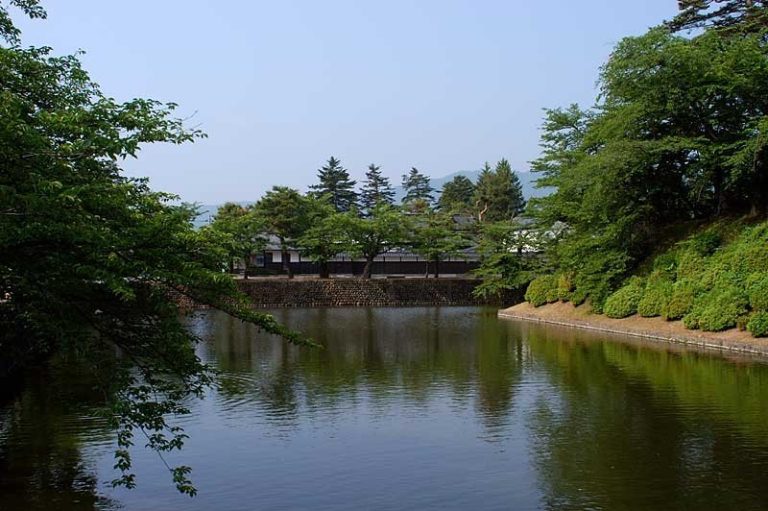
Kitadate lies between the main enclosure and the observation tower on a gently sloping area shaped by park development. A route rising from behind the Shinobu Community Center through Shiroyama Kannon Hall toward Kitadate is thought to have been the castle’s principal entrance route. A watercourse beside a residential road at the foot of Kitadate is considered a remnant of the castle’s wet moat.
Park structures and archaeological evidence
Modern towers and excavation area
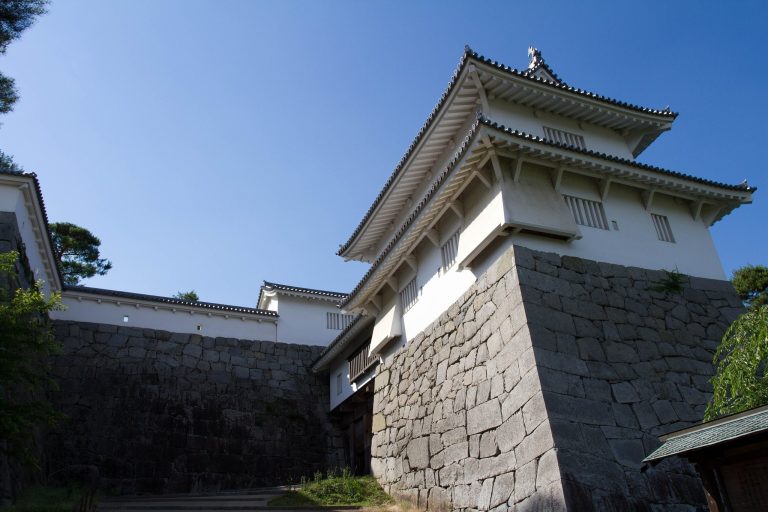
The site retains remains of baileys, earthen ramparts, and dry moats. A replica two-story turret stands on the former second bailey, while a tower-shaped observation platform occupies the northern end of the park. Excavation at the northern end of Kitadate in 1993, undertaken in connection with the observation platform, produced Seto ceramics dated to the sixteenth century.
Shiroyama Kannon Hall
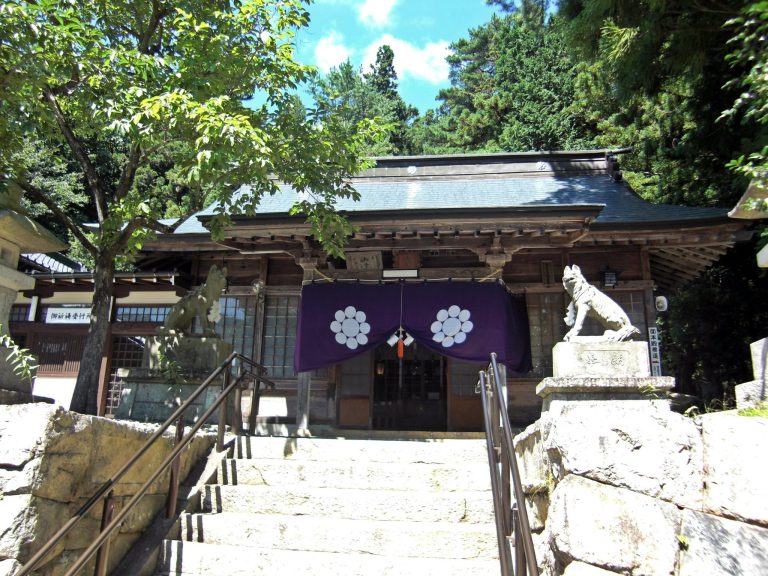
Shiroyama Kannon Hall stands at the eastern foot of the hill and contains the graves of four generations of the Imokawa family, including Imokawa Masachika, who became lord of Omori after Kurita Kunitoki.
Shiroyama Kofun
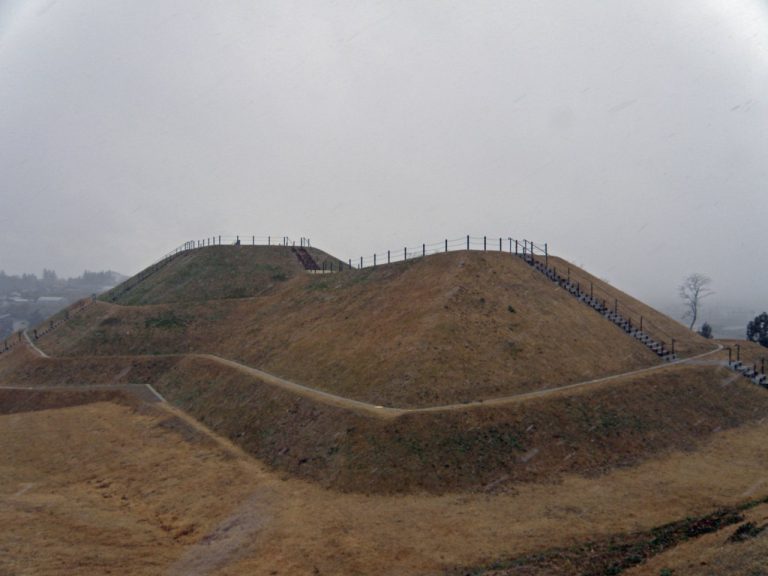
Shiroyama Kofun, an ancient Japanese burial mound east of the main enclosure, was moved from the foot of the hill and reconstructed in 1970. It forms a separate archaeological feature rather than part of Omori Castle itself.