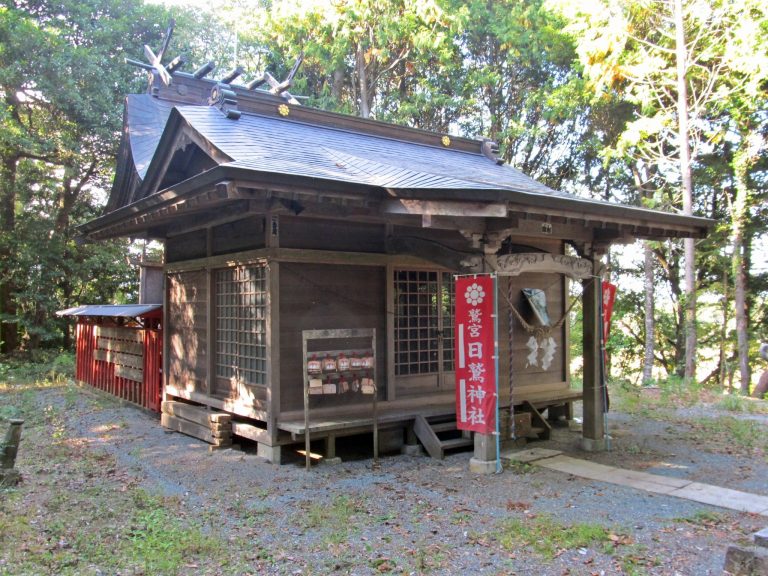
Yamatsumi Shrine: A Mountain-Deity Shrine in Fukushima, Japan


Site at a Glance
- Rating
- 4.3
- Popularity
- Low
- Country
- Japan
- Primary era
- Medieval
- Eras represented
- Medieval
- Civilizations
- Unclassified
- Site type
- Religious
- Remains
- Sanctuary
On this page9 sections
History
Foundation in the Later Heian Period
Yamatsumi Shrine, also known as Toratori Yamatsumi Shrine, is a Shinto shrine in Japan, located in Sasu in Iitate Village, Fukushima Prefecture. It was founded in 1051, during the later Heian period, and venerates Oyamatsumi no Kami, a Japanese mountain deity associated with mountains and their powers. The shrine’s protective associations extend to industry, safe travel, maritime safety, good catches, marriage, childbirth, sake brewing, and hunting.
The shrine’s origin tradition begins with Tachibana no Sumitora, a powerful bandit who controlled the surrounding area from a lookout on Mount Ryozen and plundered nearby villages. In 1051, Minamoto no Yoriyoshi, an eleventh-century military commander serving as governor of Mutsu and commander of its garrison, camped at Kakeda. After local inhabitants appealed for help, he ordered subordinate forces to suppress Sumitora.
The Defeat of Tachibana no Sumitora
Sumitora escaped to Watari and repeatedly returned to hide on Mount Ryozen. Yoriyoshi then received a dream oracle from the mountain deity, who instructed him to follow the tracks of a white wolf. Yoriyoshi ordered a subordinate to pursue the bandit, using two local villagers as guides. The pursuit led to a cave, where the subordinate killed the fleeing Sumitora by throwing a dagger that pierced his back and abdomen.
After Sumitora’s defeat, Yoriyoshi established a shrine on the mountain where the bandit had been killed. He honored the mountain deity as Toratori-yama no Kami in gratitude for the oracle. The mountain consequently became known as Mount Toratori, while the place-name Sasu is traditionally connected with the dagger’s stabbing of Sumitora.
Later Veneration and Wolf Traditions
When Kitabatake Akiie, a fourteenth-century military and court figure associated with Japan’s Nanboku-cho period, later built a castle on Mount Ryozen, he is said to have revered the shrine. This respect was linked to Yoriyoshi’s achievement and to victories attributed to the power of Toratori-yama no Kami.
Yamatsumi Shrine has a strong tradition of venerating wolves and white wolves as attendants of the mountain deity. It issues sacred guardian talismans called go-kenzoku, meaning spiritual retainers of a deity, for protection against fire and theft. Annual festivals take place on the seventeenth day of the third month and from the fifteenth to the seventeenth day of the tenth month according to the former calendar.
Fire and Reconstruction
On 1 April 2013, a fire destroyed the shrine buildings and the chief priest’s residence. The mountain sanctuary stood apart from the burned structures and survived. The worship hall was rebuilt in June 2015, and its reconstructed ceiling paintings were installed in October 2016.
Remains
Lower Shrine Precinct
The shrine precinct contains an office, stone statues of wolves and white wolves regarded as attendants of the mountain deity, and a statue of Yamato Takeru. The lower complex consists of a worship hall, an offering hall, and a main sanctuary. Its sanctuary is built in the Shinmei-zukuri style, a simple elevated form associated with ancient shrine architecture.
Mountain Sanctuary
A separate inner sanctuary stands about 650 metres uphill on Mount Toratori, to the right of the worship hall. Located at the mountaintop, it is treated by the shrine as its principal sanctuary. Its separation from the lower buildings allowed it to survive the fire of 2013.
Wolf Ceiling Paintings
The rebuilt worship hall has a ceiling decorated with paintings of wolves and white wolves associated with Yamatsumi Shrine. The ceiling contains 231 such paintings, and the reconstruction project restored a total of 242 wolf paintings. Students of Tokyo University of the Arts reconstructed the paintings before their installation in October 2016.