Odemori Castle: A Sengoku-Period Mountain Castle in Japan
Site at a Glance
- Rating
- 3
- Popularity
- Very Low
- Country
- Japan
- Primary era
- Medieval
- Eras represented
- Medieval
- Civilizations
- Unclassified
- Site type
- Military
- Remains
- Castle
On this page8 sections
History
Odemori Castle was a Sengoku-period mountain castle in Japan, located in the Shiomatsu area of present-day Nihonmatsu, Fukushima. Built during the latter sixteenth century, it served as a subsidiary stronghold of Obama Castle during an era of intense conflict among regional warlords. Its construction date is unknown. The castle’s principal lord was Ouchi Sadatsuna, while the Kikuchi family guarded the site.
Ouchi and Date Rivalry
During the latter sixteenth century, the Ouchi family controlled the Shiomatsu area east of the Abukuma River in northern Nakadori from Obama Castle. In 1585, Date Masamune, a prominent warlord who ruled territories in northeastern Japan, invaded Shiomatsu from the Kawamata area. His target was Ouchi Sadatsuna, who had broken with him, and his campaign included the siege of Odemori Castle.
On August 27, 1585, Masamune launched a general assault. He reportedly directed the attack from the front line and ordered the use of 8,000 firearms. Odemori Castle fell that day.
The Odemori Massacre
The castle’s fall became associated with the Odemori massacre. Kikuchi Akitsuna, the castle lord, other commanders and soldiers, and reportedly women and children inside the castle were killed. In a letter sent that day to his uncle Mogami Yoshiaki, the lord of Yamagata Castle, Masamune claimed that 500 people, including Kikuchi Akitsuna and relatives of Ouchi Sadatsuna, had died. He further stated that everyone inside, including dogs, had been slaughtered, giving a total of 1,000 victims. Other letters gave figures of 200 and 800.
Some defenders may have surrendered after internal defections, but the killing of people inside the castle became a lasting historical memory. The event deeply affected Ouchi Sadatsuna and his supporters, neighboring warlords, and local inhabitants. The Date-associated celebratory song Sansa Shigure is reportedly still not sung in the Adachi area, where Odemori Castle stood.
The 1588 Attack and Abandonment
After Obama Castle fell, Shiomatsu became part of Masamune’s territory. In 1588, Ishikawa Danjo, whom Masamune had ordered to defend Shiomatsu, accepted an invitation from Soma Yoshitane and rebelled against Masamune. On the 16th day of the intercalary fifth month, Masamune attacked Odemori Castle, where Ishikawa was based. Approximately 500 people were killed, and the castle fell.
Ouchi Sadatsuna had been pardoned in March of that year and became a retainer in the Date army, taking part in the campaign against Ishikawa. One interpretation holds that Masamune may have sought Sadatsuna’s allegiance after hearing rumors of Ishikawa’s rebellion. Odemori Castle disappears from the historical record after the 1588 attack and is thought to have been abandoned then. A later military chronicle instead describes the deaths as suicides, an account that may have originated outside the local area.
The castle is not a designated cultural property.
Remains
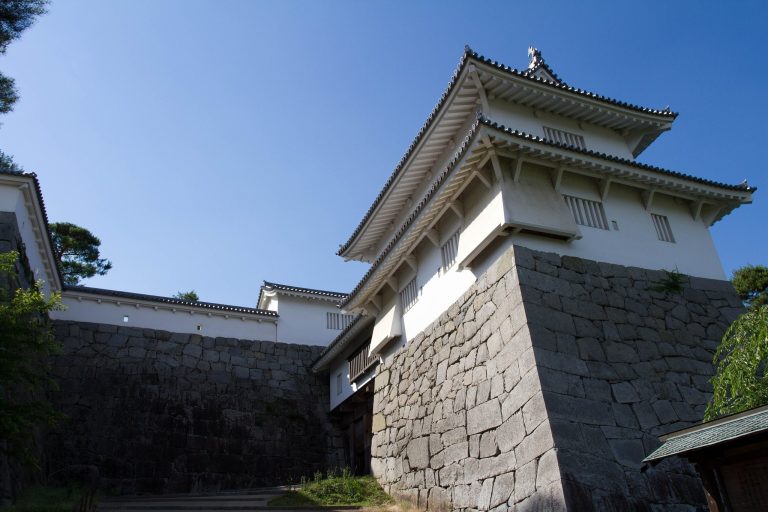
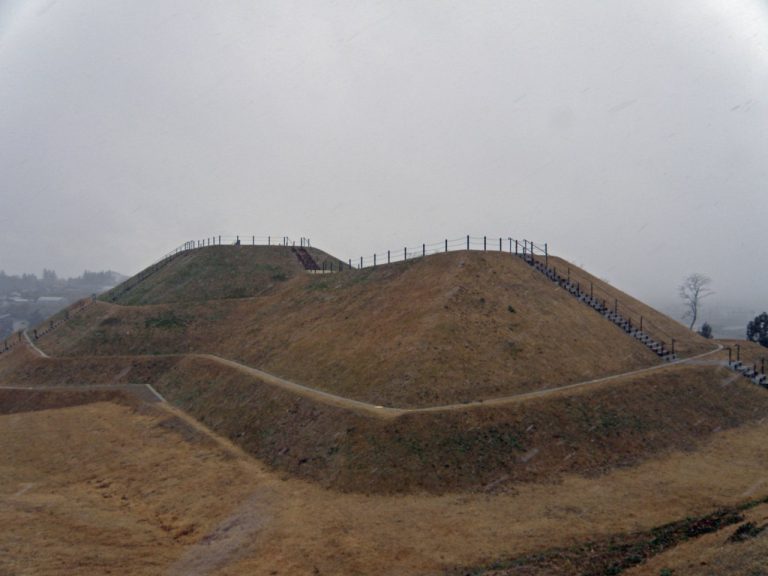
Odemori Castle was built as a mountain fortress, using elevated terrain as part of its defensive setting. Stone walls and kuruwa, enclosed level areas within a Japanese castle used for defense, residence, administration, or related functions, survive around the former castle site.
Castle Enclosures and Shrine Site
Stone Walls and Kuruwa
The surviving remains consist of stone walls and kuruwa enclosures distributed across the former castle site. Together, these features preserve parts of the castle’s fortified layout and show how its buildings and defensive spaces were arranged on the mountain terrain.
Atago Shrine
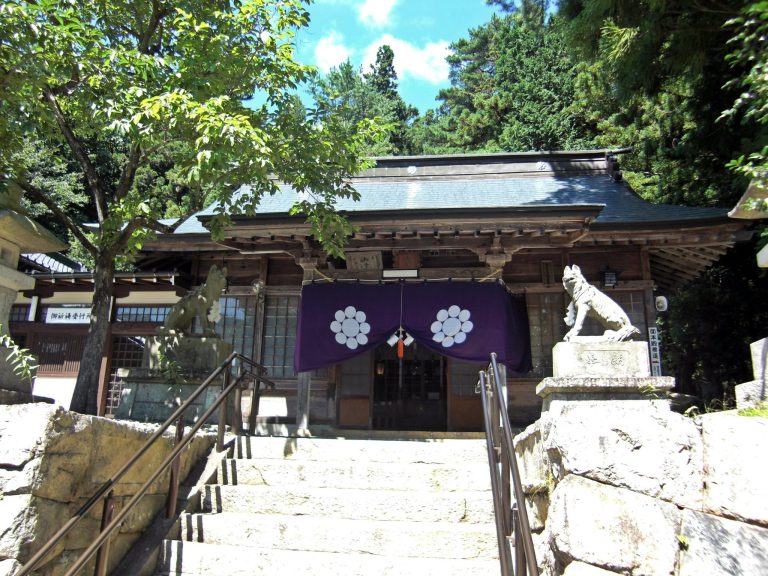
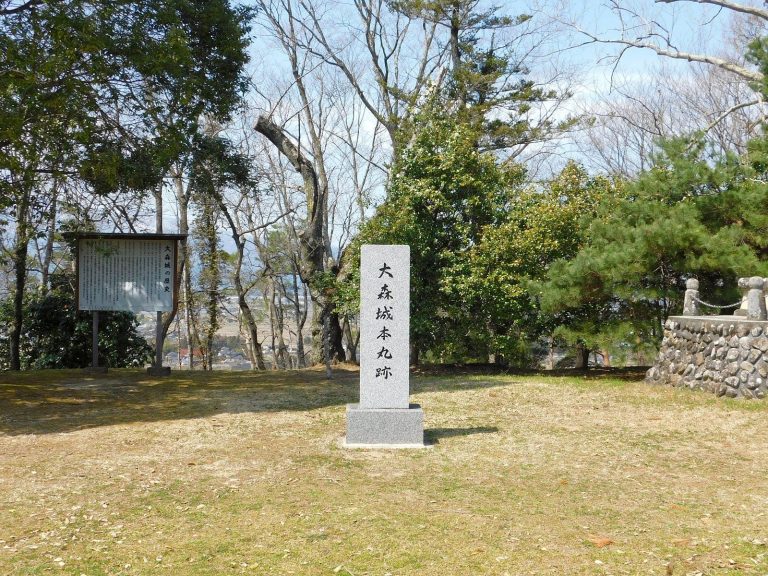
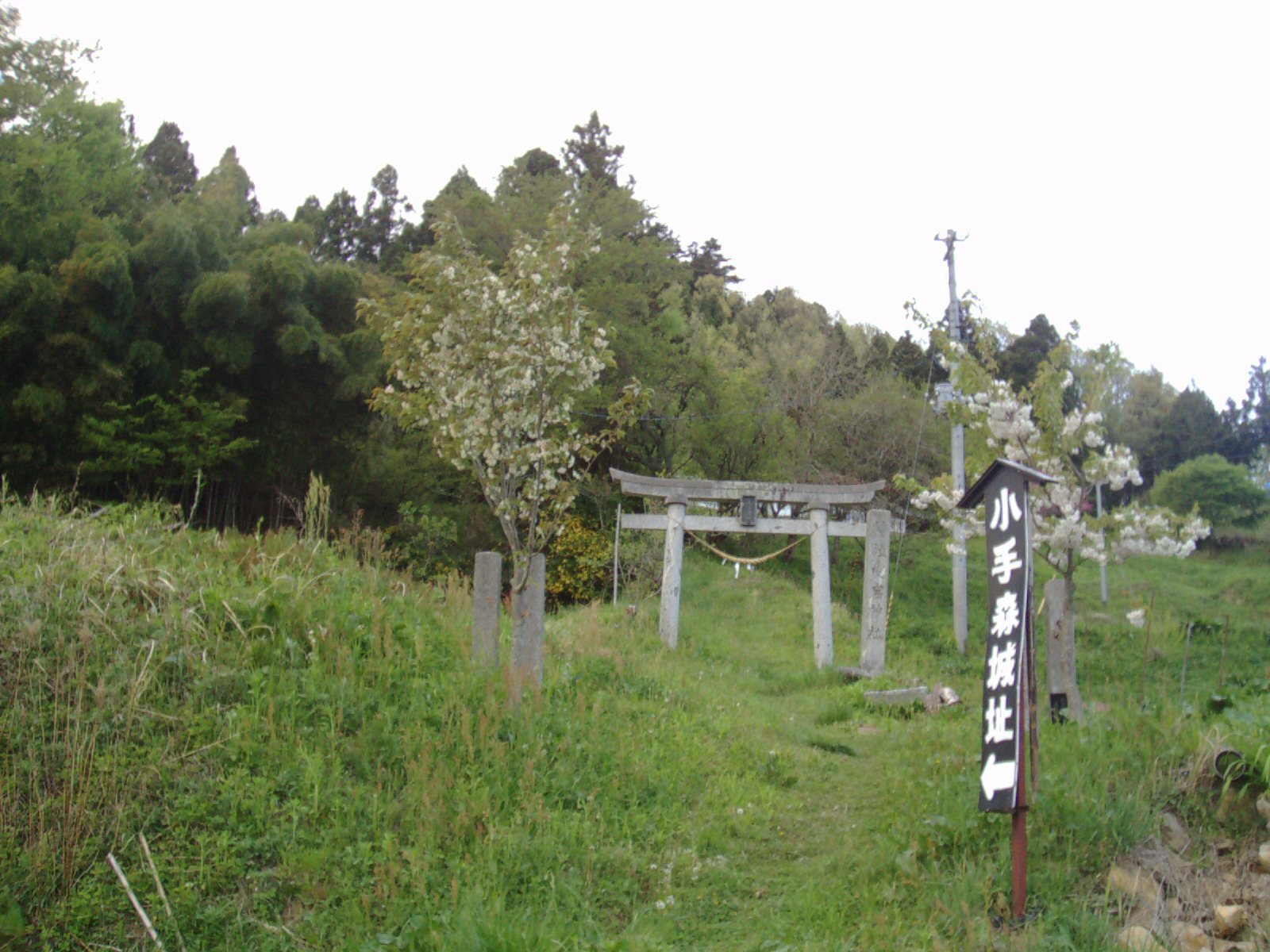
An Atago Shrine is now enshrined at the former main bailey. Atago worship is traditionally associated with protection against fire and with mountainous religious practice, giving the principal enclosure a later religious use.