Miharu Castle: Seat of Miharu Domain in Japan
Site at a Glance
- Country
- Japan
- Primary era
- Early Modern
- Eras represented
- Early Modern, Modern
- Civilizations
- Japanese, Tokugawa
- Site type
- Military
- Remains
- Castle
On this page8 sections
History
Miharu Castle was a hilltop castle on Shiroyama in Miharu, Japan, and served as the seat of Miharu Domain, the territory governed by a lord under the shogunate. Its construction date is unknown, but the earliest definite record places Tamura Yoshiaki’s move there from Moriyama Castle in the early sixteenth century, during the Sengoku period, an era of political fragmentation and frequent warfare.
The Tamura and regional conflict
The Tamura controlled Tamura District and faced pressure from neighboring clans, including the Ashina, Sōma, Satake, Iwaki, and Date. Their genealogy claimed descent from Sakanoue Tamuramaro, a prominent general of the Heian period (794–1185), though this lineage remains a clan tradition rather than an established fact.
In 1568, Ashina Moriuji invaded the Sendō region, and Tamura Takaaki resisted with support from the Date, his wife’s family. Takaaki allied with the Ashina in 1573 to counter Satake expansion. The following year, the Ashina and Satake joined forces with local opponents, including Nihonmatsu Yoshitsugu and Ōuchi Sadatsuna, placing the Tamura under pressure from several sides.
Tamura Kiyoaki maintained a marriage connection with the Sōma and strengthened ties to the Date by marrying his daughter Megohime to Date Masamune, son of Date Terumune. The Sōma and Date were themselves in conflict over Igu District. After Masamune became head of the Date clan in 1584, he expanded into the Sendō region. At the 1585 Battle of Hitotoribashi, Date and Tamura forces stopped a coalition led by the Satake and Ashina from taking control of the area.
Kiyoaki died in 1586 without a male heir, and his widow assumed lordship. More than 60 Tamura retainers pledged unity, but the household divided between supporters of an alliance with the Sōma and those who favored continued ties with the Date. In 1588, the Sōma faction tried to bring Sōma Yoshitane into Miharu Castle. Resistance from the Date-aligned faction, including Tamura Gassai, forced him to withdraw. That August, Masamune entered Miharu and stayed for about six weeks while settling Tamura affairs. The Sōma faction was removed, and Kiyoaki’s nephew Tamura Muneaki became lord. The Tamura then effectively became subordinate to the Date.
Changing lords and territorial rule
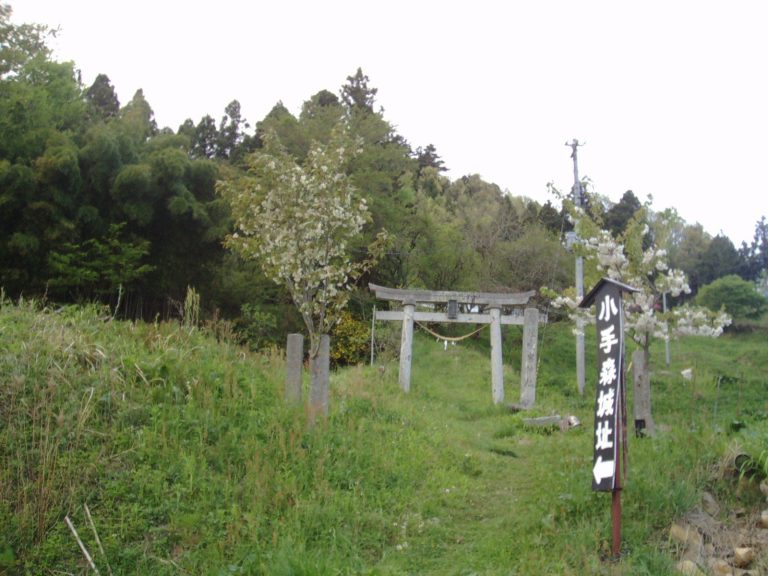
The Tamura did not join Toyotomi Hideyoshi’s 1590 Odawara Campaign, following Masamune’s instructions. Hideyoshi’s subsequent reorganization of the region dispossessed the clan. Tamura retainers entered the service of the Date or Gamō, or became farmers. Muneaki later wandered before entering the service of Katakura Shigenaga after Masamune’s death, with Megohime’s intervention.
After Hideyoshi’s reorganization, Miharu was first entrusted to Masamune, who placed Katakura Kagetsuna there. The district soon passed to the Gamō, and Tamaru Tomonao became castle lord. By 1595, Tomonao had been transferred to Moriyama, and Hideyoshi ordered Miharu Castle abolished. The Gamō later held the district; after Gamō Ujisato died in 1595, it passed to Uesugi Kagekatsu. Following the Uesugi defeat at Sekigahara, the Tokugawa shogunate transferred their territory to Yonezawa.
In 1609, Gamō Gōsei returned from Moriyama but fled after a power struggle with Oka Shigemasa of Tsugawa Castle. The young Gamō Tadachika was installed at Miharu, with his guardian Gamō Gōji acting as castellan. In 1614, Tadachika and Gōji moved to Tsugawa, and Gōsei was authorized to return. Gōsei died on the journey, and his sons Gōki and Gōsha took up residence in the castle. About two years later, they left after a dispute with Machino Yukikazu of Shirakawa Castle, and Gōji returned to Miharu.
Under the Katō, relatives or senior retainers served as castle lords, while the domain’s assessed holdings were around 50,000 koku, a measure of agricultural yield used to express a domain’s scale. In 1627, the shogunate established a 30,000-koku Miharu Domain for Katō Akitoshi, a younger son of Katō Yoshiaki. Akitoshi moved to Nihonmatsu the following year, and Matsushita Nagatsuna, formerly of Nihonmatsu, took over. Nagatsuna was dispossessed in 1644.
In 1645, Akita Toshisue was transferred from Shishido Domain in Hitachi Province to Miharu, where the domain’s assessed holdings were set at 55,000 koku. The Akita family ruled Miharu until the Meiji Restoration, the political transformation that established the new Meiji government.
War, dismantling, and later commemoration
During the Boshin War, a civil war between forces supporting the Tokugawa shogunate and the new government, Miharu Domain belonged to the Ōuetsu Reppan Dōmei, an alliance of northern domains opposing that government. After government forces captured nearby Tanagura Castle, efforts by Dankintai commander Misao Kanichirō and politician Kōno Hironaka helped bring about secret talks with Itagaki Taisuke and others. Miharu withdrew from the alliance and surrendered without fighting, avoiding the castle’s capture.
The abolition of the domains in 1871 ended the castle’s use. It passed to the Ministry of War, and its buildings and stone walls were dismantled and sold. In 1922, the summit, including the main enclosure, became a castle park, while roads cut through the site and altered its terrain. Miharu Castle is a Miharu Town historic site and was selected for the Continued Top 100 Japanese Castles in 2017.
Remains
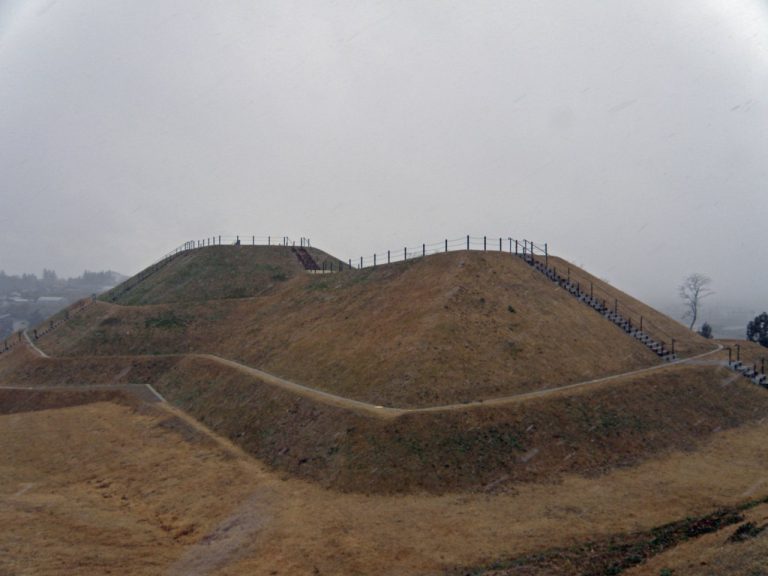
The castle occupied 407-metre Shiroyama in the Abukuma Mountains, near the centre of Miharu. Its position commanded the crossing of a north–south route between Shirakawa and Kōriyama and an east–west route linking Aizu-Wakamatsu with the Sōma territories on the eastern coast. The compact defenses occupied an L-shaped plateau about 80 metres up the hillside, with a ridge around the lower half of the hill and secondary enclosures, or distinct fortified areas, arranged around it. Earthen defenses and later stone walls formed the main elements of the fortification.
The summit and its enclosures
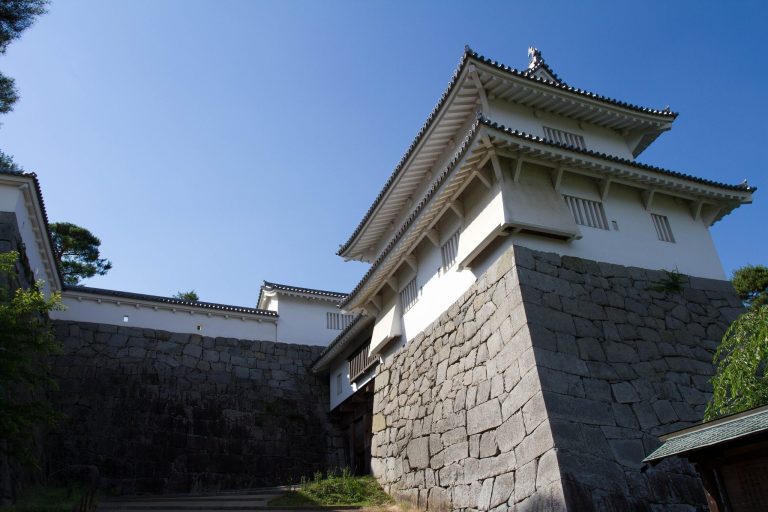
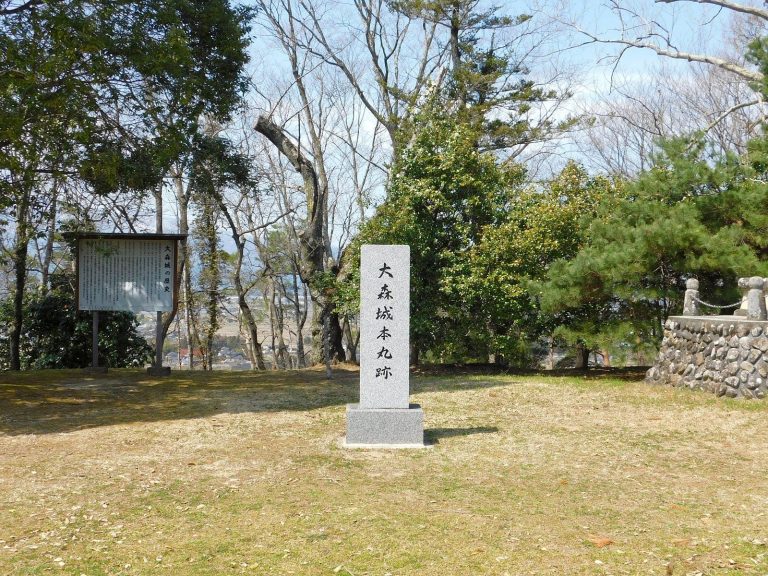
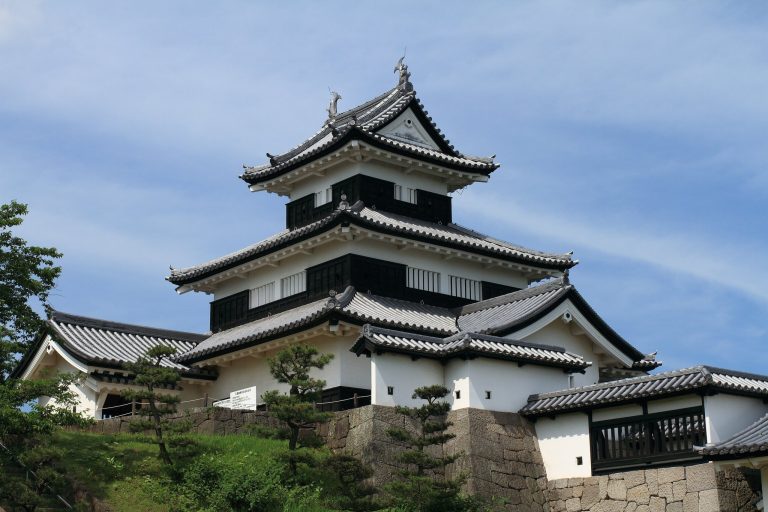
The main fortification originally centered on the summit enclosure. Its upper section held the lord’s residence, while a three-tier, three-storey turret stood in the lower part of the main enclosure. The East Enclosure lay to the southeast, and a separate enclosure lay northwest across a valley; both had some independence from the central fortification. In the late Gamō period, stone walls were added around the main fortification and East Enclosure. The northwestern area was then abandoned, followed later by the East Enclosure.
Later layout and residences
During the Matsushita period, a second enclosure was added at the western foot of the main enclosure, where a children’s park now stands, and a third was laid out at the eastern foot. Retainers’ residences occupied the hillside around the present uphill approach. Under the Akita, the lord’s residence moved from the summit to the foot of the hill, in the area now occupied by Miharu Elementary School.
Surviving features
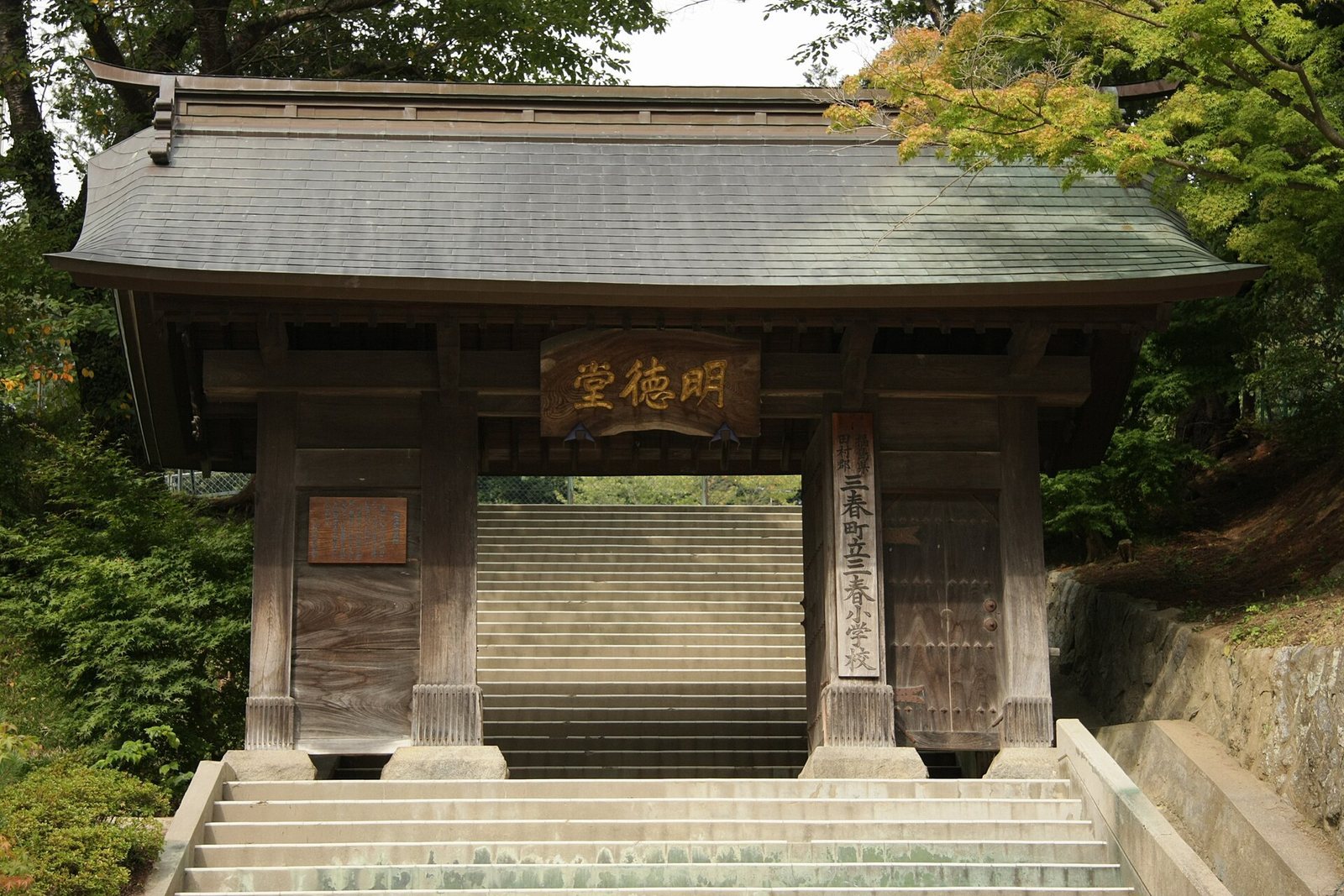
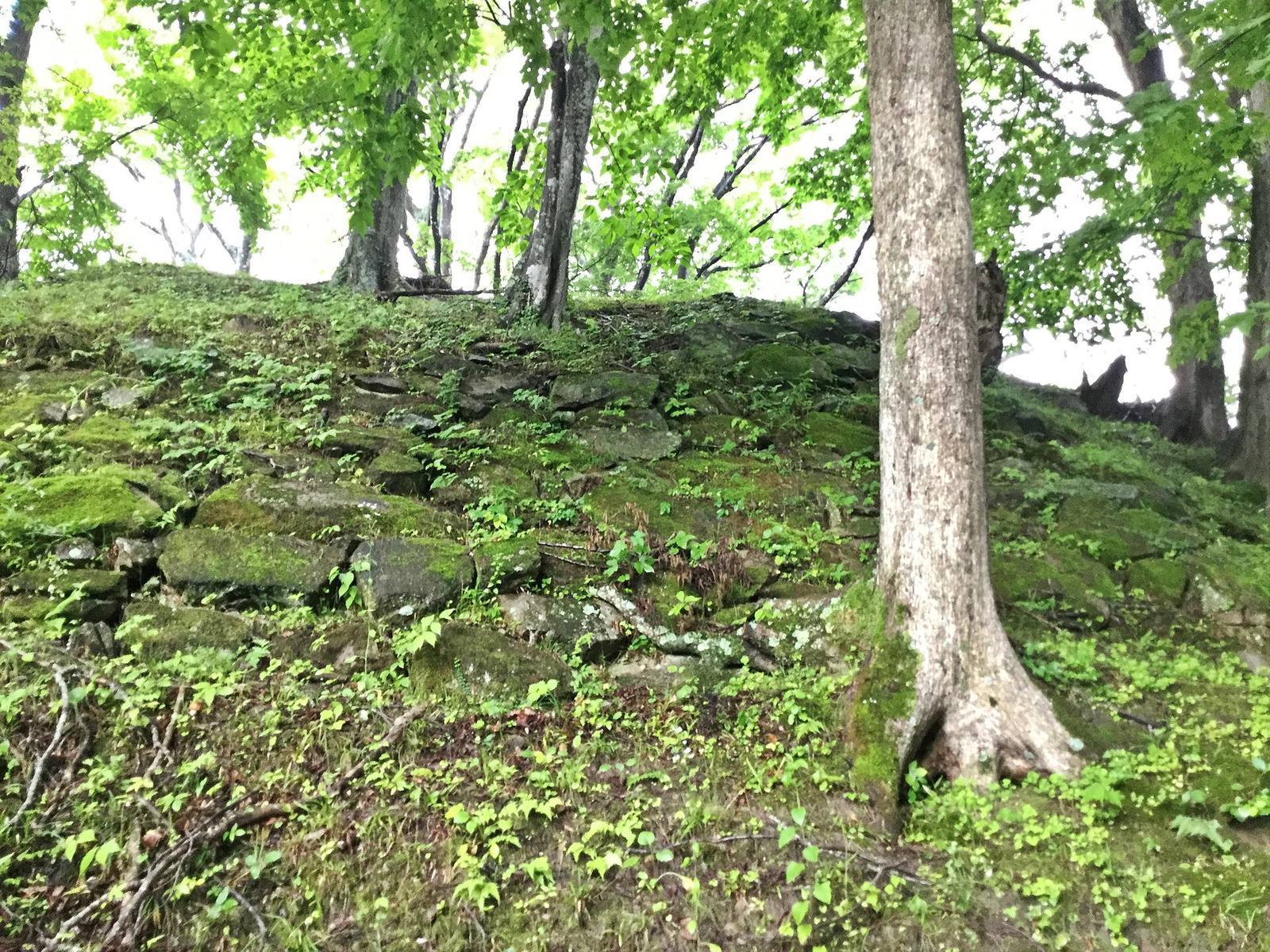
The outlines of the earthen ramparts largely remain. The former gate of Meitokudō, the domain school maintained for education, now stands at Miharu Elementary School. Cherry trees grow in the summit park, and hydrangeas have been planted near the second enclosure. A monument marking Megohime’s birthplace stands near the former second-enclosure area.