Shaftesbury Abbey: A Benedictine Nunnery and Pilgrimage Centre
Site at a Glance
- Rating
- 4.7
- Popularity
- Low
- Country
- United Kingdom
- Primary era
- Medieval
- External website
- Open
- Eras represented
- Medieval
- Civilizations
- Anglo-Saxon, Norman
- Site type
- Religious
- Remains
- Monastery
On this page14 sections
History
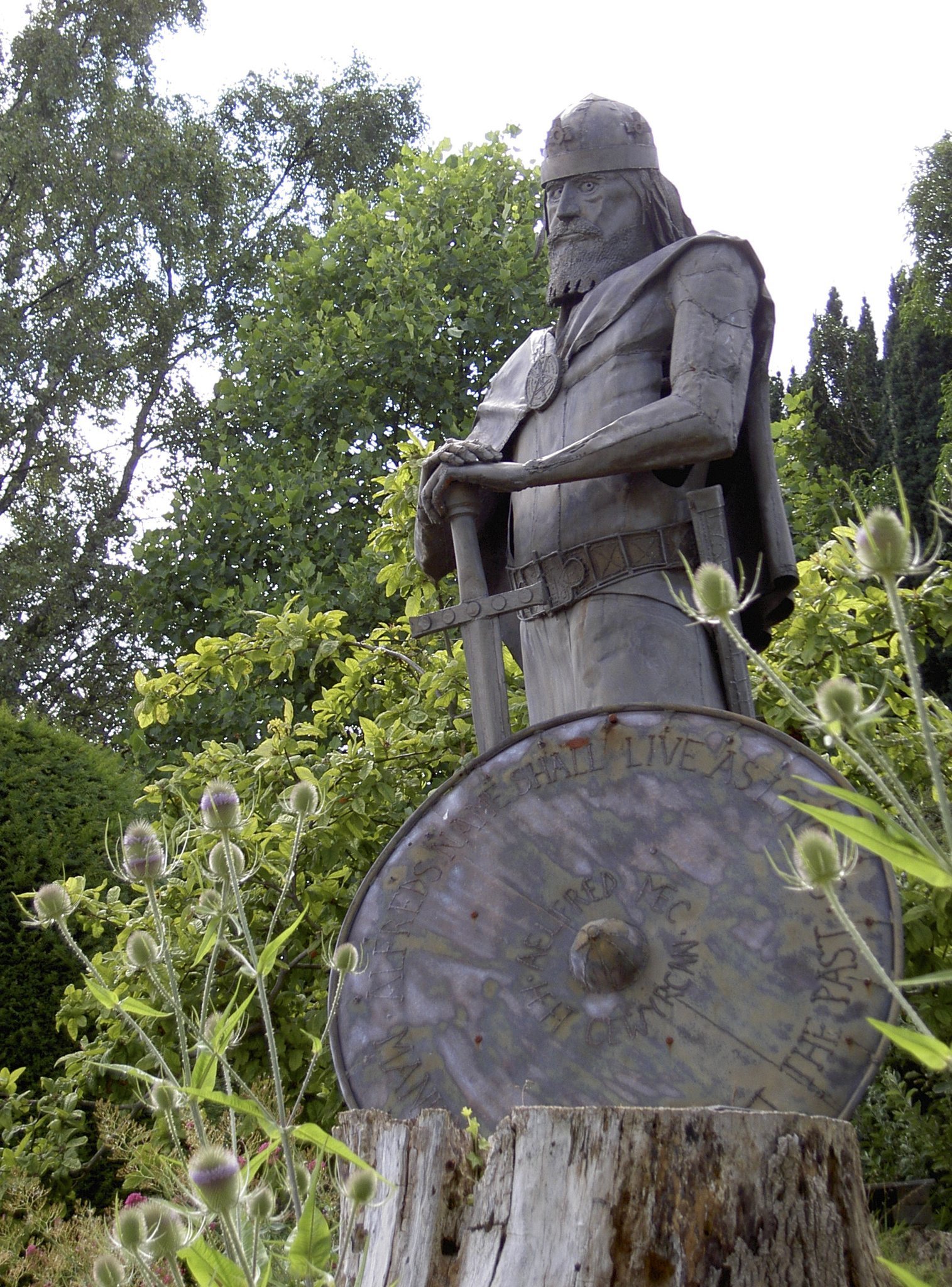
Shaftesbury Abbey in the United Kingdom was an Anglo-Saxon Benedictine nunnery for women, founded around 888 by Alfred the Great, the ninth-century king of Wessex, and his daughter Æthelgifu. Æthelgifu became its first abbess. The foundation helped restore female monastic life after Viking invasions had destroyed many English monasteries during the ninth century.
Foundation and early development
Ælfgifu, the wife of Alfred’s grandson King Edmund I, was buried at the abbey and soon venerated as a saint. The community came to regard her as its true founder. The nunnery grew into one of England’s wealthiest Benedictine communities, with estates extending from Bradford-on-Avon to Purbeck. Its possessions included a substantial estate near Bradford-on-Avon and a large grange, or monastic estate farm, at Place Farm, Tisbury, which administered the abbey’s Wiltshire lands.
The abbey became the central focus of Shaftesbury and an important pilgrimage destination. Its wealth was described as second only to that of Syon Abbey. The community’s religious importance increased sharply in 981, when the relics of King Edward the Martyr arrived from Wareham.
The cult of Edward the Martyr
On 13 February 981, a procession carrying Edward’s relics left Wareham. Seven days later it reached Shaftesbury, where St Dunstan and Ælfhere, Ealdorman of Mercia, a senior Anglo-Saxon official and territorial governor, supervised the ceremonial transfer. The nuns received the relics and buried them with royal honours north of the abbey church’s altar. A healing miracle was said to have taken place during the procession, while later reports of miracles at Edward’s tomb helped establish the abbey as a pilgrimage centre.
Edward the Martyr was an English king who had been murdered and later venerated as a saint. In 1001, his brother King Æthelred ordered the relics to be raised from the original tomb and placed in a more fitting location. On 20 June, the remains were transferred to a casket and placed with other holy relics. The abbey was then rededicated to the Mother of God and St Edward. Miracles attributed to Edward’s intercession included the healing of lepers and blind people.
King Cnut the Great died at Shaftesbury in 1035. He was buried at Winchester, although tradition held that his heart was buried at Shaftesbury.
Norman and medieval expansion
In 1074, the last Anglo-Saxon abbess, Leofgifu, was succeeded by Eulalia, described as the first Norman abbess. Norman style was the Romanesque architectural tradition introduced into England after the Norman Conquest. Extensive rebuilding and enlargement of the abbey began after Eulalia’s appointment.
The community maintained connections with leading religious and political figures. In 1093, shortly before becoming archbishop, Anselm of Canterbury wrote to Eulalia asking for the nuns’ prayers. A second letter, written ten years later, thanked them for their prayers during his exile and requested their continued intercession.
The abbey’s pilgrimage drew visitors even as Shaftesbury itself declined. The Domesday survey of 1086 recorded that the settlement had lost 80 of the 257 houses it possessed during the reign of Edward the Confessor. William of Malmesbury later described Shaftesbury as a village rather than a town. In 1218, the abbey’s community was limited to a maximum of 100 nuns.
In 1240, Cardinal Otto Candidus, a papal legate representing Pope Gregory IX, visited the abbey and confirmed a charter of 1191. This was the first charter entered in the Glastonbury chartulary, a medieval register of copied charters and legal documents. Henry III instructed his judges in 1252 to visit Shaftesbury and encourage its commerce. In 1275, Edward I granted the abbey twelve oak trees from the royal forest of Gillingham for building work.
Royal connections and dissolution
The abbey continued to receive notable royal guests. Elizabeth de Burgh, the wife of Robert the Bruce and Queen of Scots, spent part of her imprisonment there between about 1312 and March 1313. In 1340, the abbess’s steward swore in the town’s mayor. Henry VII stayed at the abbey in 1491, and Catherine of Aragon lodged there in 1501 while travelling to marry Prince Arthur.
The abbey’s wealth made it a particularly valuable target during the Dissolution of the Monasteries, the sixteenth-century suppression of England’s monasteries and nunneries under Henry VIII. In 1539, the last abbess, Elizabeth Zouche, signed the deed of surrender. The abbey was dissolved and demolished, while its lands and other possessions were sold. Its destruction contributed to a temporary decline in Shaftesbury.
Thomas Arundell, 1st Baron Arundell of Wardour, acquired the abbey and much of Shaftesbury in 1540. After his later forfeiture, the property passed to Pembroke, then to Anthony Ashley-Cooper, 7th Earl of Shaftesbury, and eventually to the Grosvenor family.
Rediscovery and interpretation
The relics of Edward the Martyr were hidden in 1539 to prevent their desecration. Wilson-Claridge rediscovered them during archaeological excavations in 1931. Their identity was investigated and confirmed, while further examination in 1970 supported the conclusion that the remains had suffered the death traditionally attributed to Edward. The relics were later transferred to the Russian Orthodox Church Outside Russia and placed in a church at Brookwood Cemetery, Woking, Surrey.
In 1981, the procession that had transferred Edward’s relics was re-enacted to mark its thousandth anniversary. The abbey is now presented through a museum and archaeological site interpreting the Benedictine convent and its inhabitants. Thomas Hardy described the ruins as the former chief glory of south Wessex, setting them alongside the town’s lost churches, shrines, chantries, hospitals, and freestone houses.
Remains
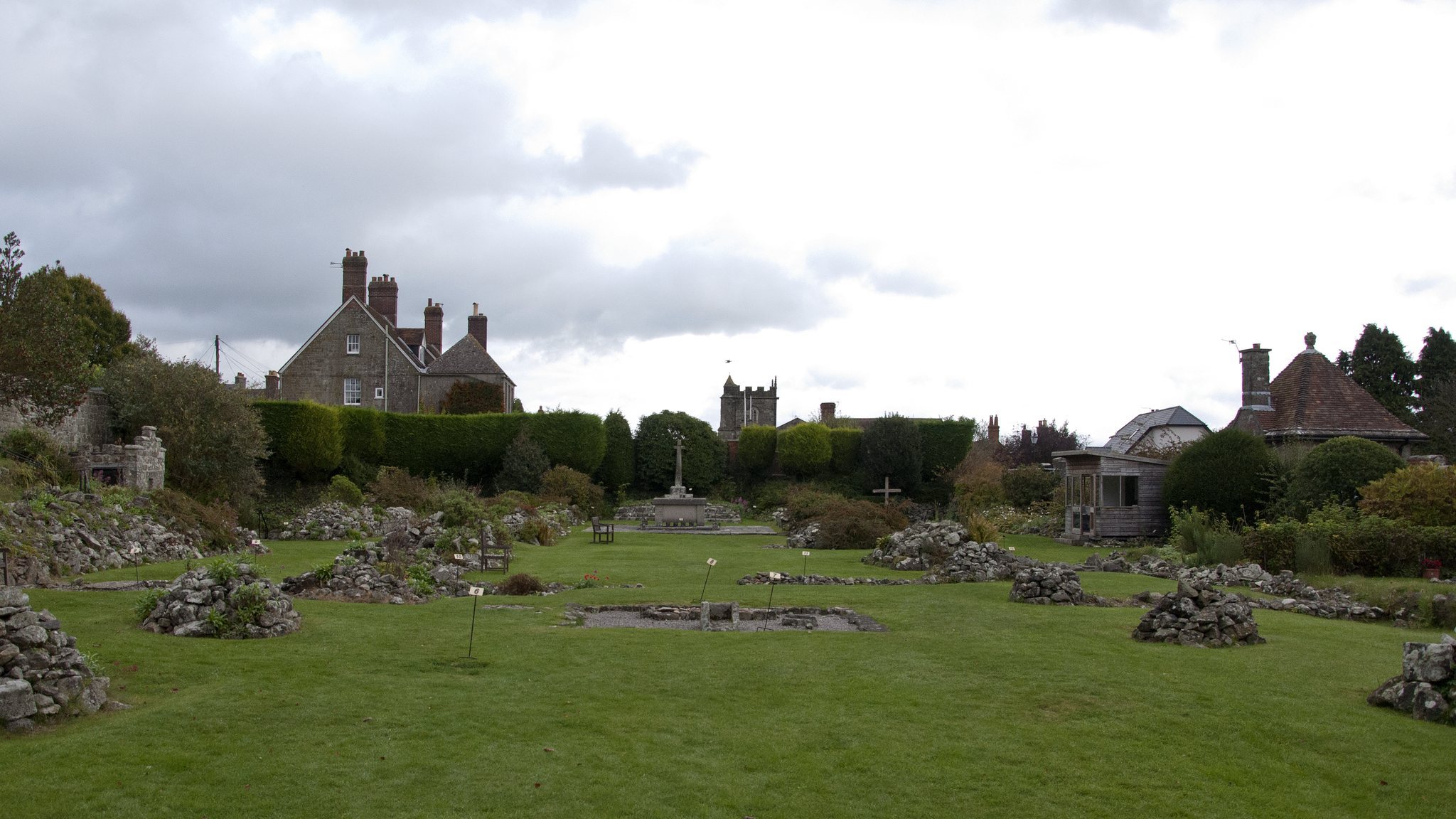
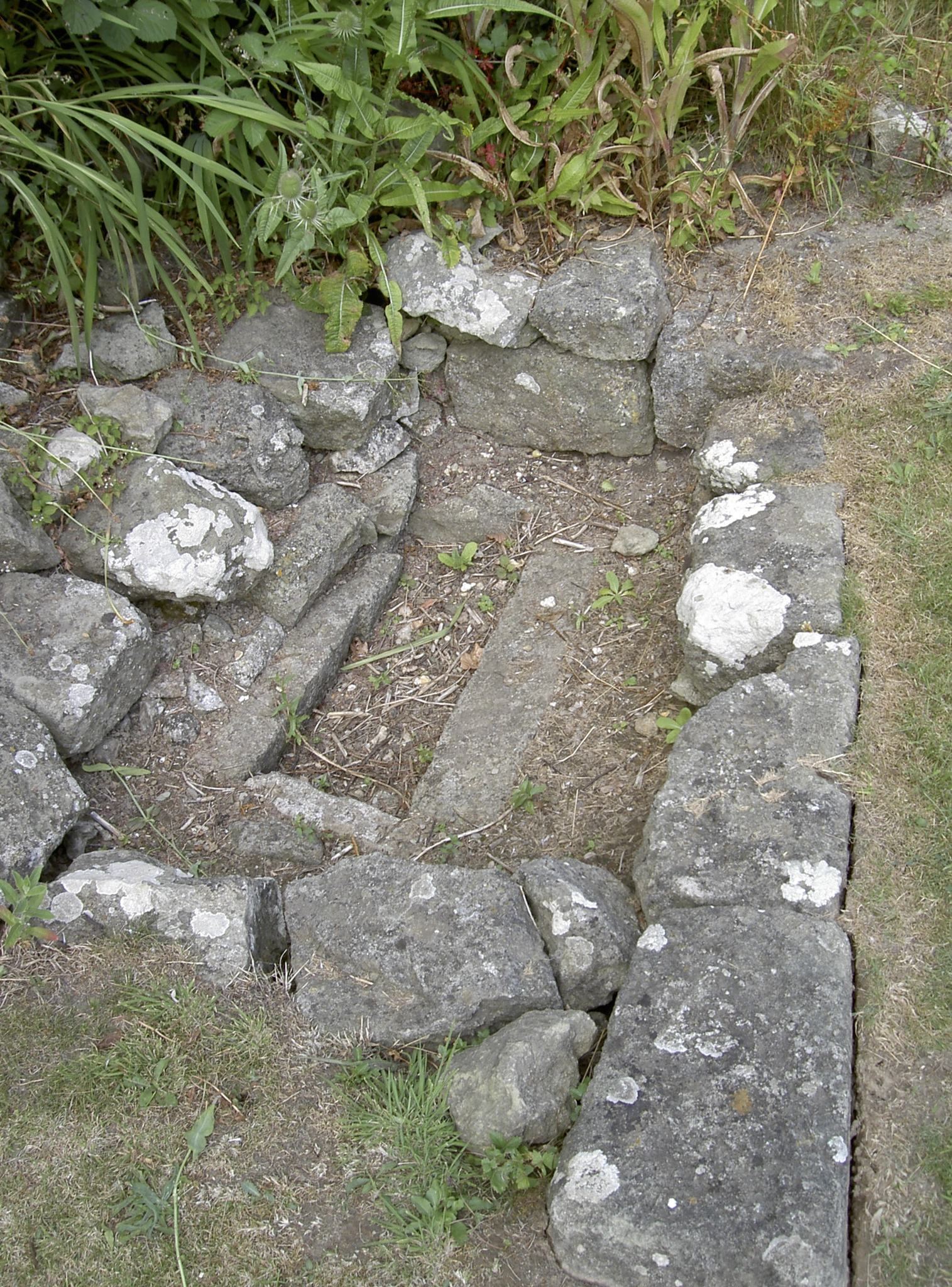
The surviving site consists of the ruins of the former abbey, together with excavated stonework, a medieval-style garden, and an orchard. The abbey church was described as magnificent and apsidal, meaning that it ended in a rounded or semicircular apse. The original protective wall survives in part as the present fortification of Shaftesbury’s Gold Hill.
Abbey structures and archaeological material
Abbey church
The former abbey church was a large apsidal building associated with the community’s principal religious ceremonies and the burial of Edward the Martyr. Edward’s relics were originally placed on the north side of the altar before their later rediscovery and investigation. The surviving site preserves the ruins of the abbey, while the church’s described form provides evidence of the scale and character of the lost complex.
Protective wall
Part of the abbey’s original protective wall survives as the fortification of Shaftesbury’s Gold Hill. This surviving section represents the boundary that once helped enclose the monastic site.
Museum collections
The abbey museum contains stonework excavated from the ruins, including Anglo-Saxon carvings and medieval floor tiles. These objects provide physical evidence for the site’s early medieval and medieval phases and help interpret the buildings and community that occupied the complex.
Gardens and associated estate remains
Medieval-style garden and orchard
The abbey site includes a medieval-style garden and orchard. These elements form part of the present interpretation of the former nunnery and its occupied grounds.
Bradford-on-Avon tithe barn
A large tithe barn survives near Bradford-on-Avon on land associated with the abbey’s former estate. A tithe barn was used to store agricultural dues paid to the church. The building represents the agricultural resources that supported Shaftesbury Abbey beyond its principal site.