Forte de Santo Antônio da Barra: A Portuguese Coastal Fort in Salvador
Site at a Glance
- Rating
- 4.8
- Popularity
- Very Low
- Country
- Brazil
- Primary era
- Early Modern
- External website
- Open
- Eras represented
- Early Modern, Modern
- Civilizations
- Portuguese
- Site type
- Military
- Remains
- Fort
On this page8 sections
History
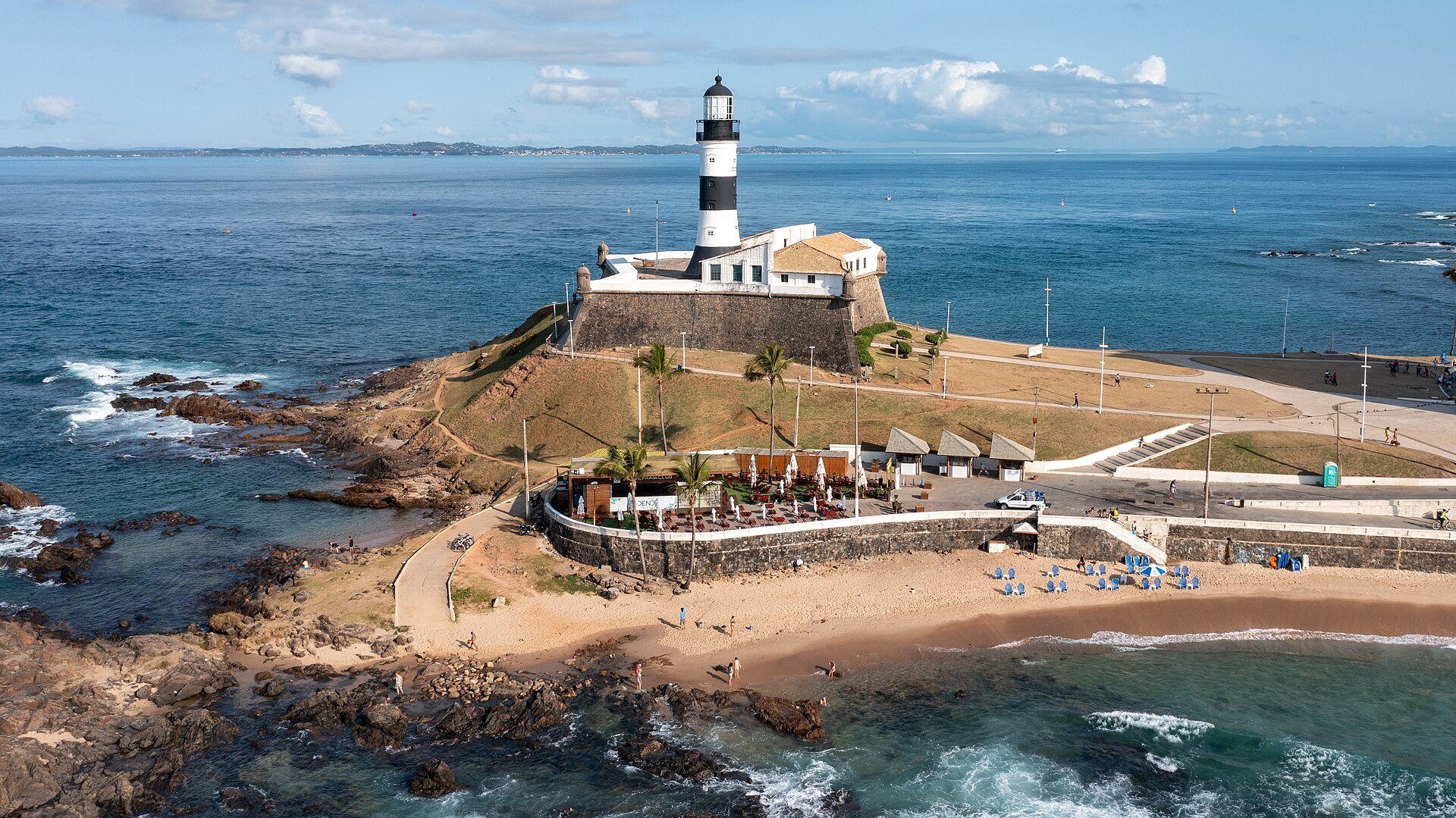
Forte de Santo Antônio da Barra is a fort in Salvador, Brazil, built by the Portuguese to guard the entrance to the Bay of All Saints during the Portuguese imperial period. The fort is dated to 1702, when the site was redesigned as a star-shaped polygon, a plan using projecting angles and recessed sections to improve defensive coverage.
Early Portuguese fortifications
The first Portuguese fortification in Bahia was probably erected around 1501 at the same location. Its foundation stone was placed at Ponta do Padrão, an area now occupied by Largo do Farol da Barra, the public square in front of the fort.
In 1549, King John III of Portugal established the Governorate General of Brazil, an administration led by a governor-general, the senior official responsible for governing the Portuguese colonies in South America. During the tenure of Governor-General Manoel Teles Barreto, from 1583 to 1587, a more substantial fortification was built on the site. Governor-General Francisco de Souza, who served from 1591 to 1602, strengthened it with stone and mortar. Its design resembled that of the sixteenth-century Small Fort of Our Lady of Monserrate.
Reconstruction and changing administration
In 1621, the Governorate General of Brazil was divided into two states, and the fort’s site became part of the northern State of Maranhão. Later, Governor-General João de Lencastre, who served from 1694 to 1702, commissioned the military engineer José Paes Esteves to change the plan and transform the fortification into a star-shaped polygon. This work established the fort in the form associated with its 1702 date.
A lighthouse was installed at the fort during the same period. The original tower was replaced in 1839, and the new lighthouse was dedicated by Dom Pedro II of Brazil, the country’s second and last emperor, who ruled from 1840 to 1889.
Protection and continued interpretation
The fort and lighthouse were listed as historic structures in 1938. They are protected by Brazil’s National Institute of Historic and Artistic Heritage, and the fort now houses the Nautical Museum of Bahia.
Remains
Fortification and lighthouse
Fortification
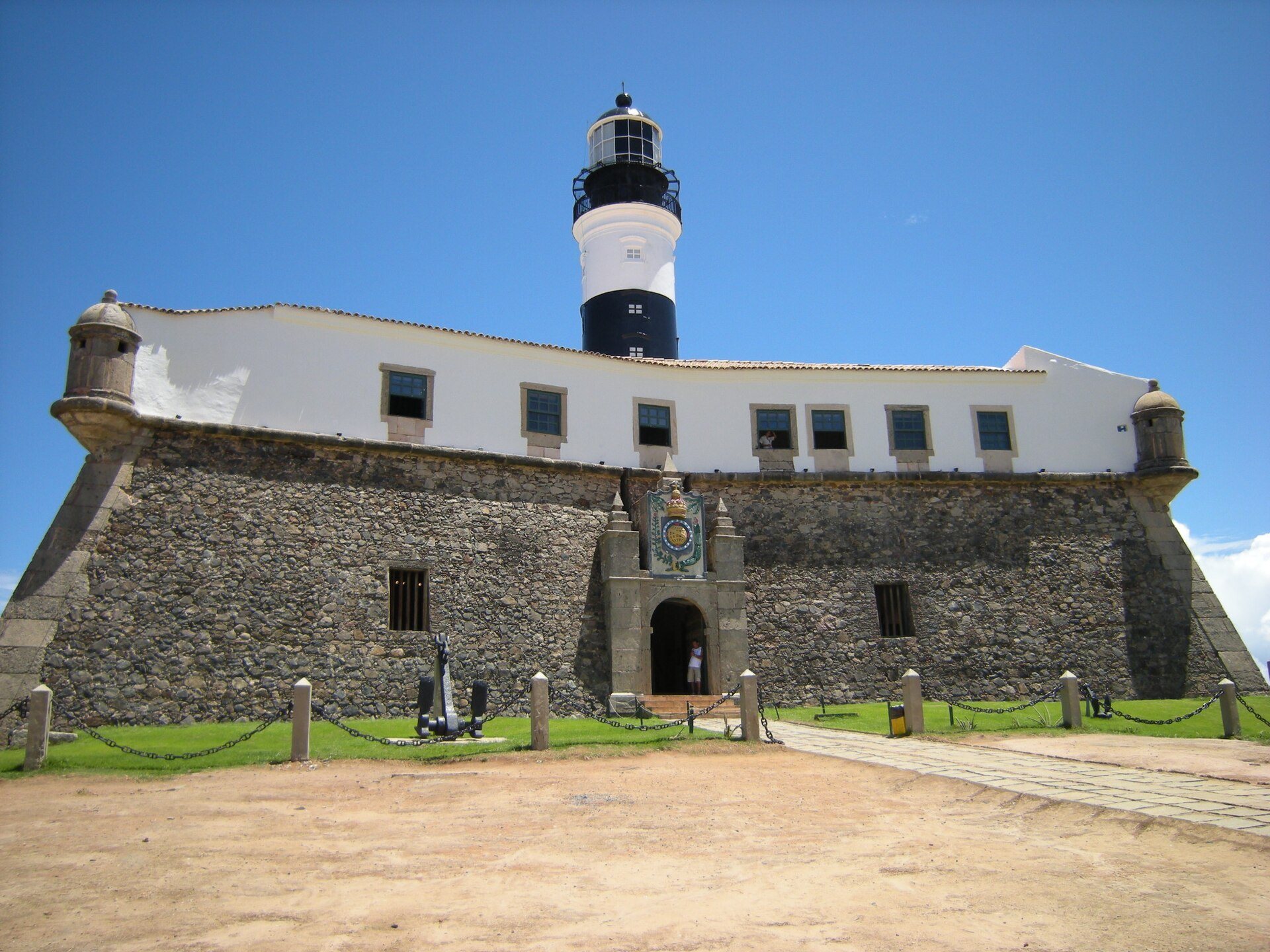
The fort occupies the area of the earlier Portuguese defense at the entrance to the Bay of All Saints. The place where the original foundation stone was set at Ponta do Padrão is now Largo do Farol da Barra, directly in front of the fort. The earlier substantial structure was probably octagonal and made from rammed earth, a method in which damp earth is compressed into solid walls within temporary formwork. It was later reinforced with stone and mortar before the site was given its star-shaped polygonal plan. The fort contains the Nautical Museum of Bahia.
Barra Lighthouse
The Barra Lighthouse, also called the Santo Antônio Lighthouse, stands at the center of the fort. The present tower was built in England in 1839. It is a tapered masonry structure 22 metres high, painted in black-and-white bands, and represents the surviving lighthouse phase that followed the replacement of the original tower.