Žireč: A Chateau Complex and Former Jesuit Residence in Czechia
Site at a Glance
- Rating
- 4.8
- Popularity
- Very Low
- Country
- Czechia
- Primary era
- Early Modern
- External website
- Open
- Eras represented
- Medieval, Early Modern
- Civilizations
- Habsburg, Holy Roman Empire, Kingdom of Bohemia
- Site type
- Domestic
- Remains
- Castle
On this page13 sections
History
Žireč is a historic chateau complex in Czechia that developed from a medieval fortress into a Jesuit residence during the seventeenth century. The settlement is first mentioned in writing in 1318, while its fortress was first recorded in 1482. Positioned above the right bank of the Elbe, the site became the administrative centre of an expanding estate and later served several religious, residential, and social-care functions.
Medieval and early modern lordship
The owners of Žireč were originally vassals of Trutnov Castle. In 1482, Jan Kordula of Sloupno acquired the fortress from Žibřid Kordula of Sloupno. Jan Litoborský of Chlum bought the estate in 1501 and lived at the fortress with his brother Arnošt until 1506, when he sold Žireč and Podstrání to Jindřich Berka of Dubá. Jindřich assigned his wife Helena of Šumburk a dowry of 500 kop of Bohemian groschen, a historical Central European unit of account, secured on the two villages, and sold Žireč itself to Burian Labuť of Švamberk in 1512.
Burian died in 1513, and Kryštof of Švamberk inherited the property. On 14 December 1514, King Vladislav Jagiellon released the Žireč estate from its vassal obligations. The estate was later divided among several holders, including Jan Burian, Zikmund, and Achilles Anděl of Ronovec, Jiří Berka of Dubá, and Natanael Černín of Černín. Jiří of Gersdorf gradually reunited the divided holdings between 1526 and 1534, acquiring Žireč, Zaloňov, Hřibojedy, and part of Dubenec.
The Zilvár family and confiscation
Adam Zilvár of Pilníkov purchased these holdings in 1539 for 2,500 kop of Bohemian groschen. He later assigned Žireč to his younger son Kryštof, but after Adam’s death his elder son Jan disposed of the entire property. Karel Zilvár, Adam’s third son, subsequently received Žireč as his share.
Karel died on 2 October 1580. Under his will of 14 September 1577, his widow Magdaléna of Valdštejn received the Dubenec estate and the right to live at the Žireč fortress for one year. The remaining property went to Karel’s uncle Adam Zilvár. Part of the fortress collapsed into the Elbe in 1581, and Adam and his wife Anna of Gryspach had it rebuilt. Adam died in 1597. His widow and children erected his tombstone in the local church, but Jesuits later removed and destroyed it because he was a Protestant.
Adam’s younger son Jan Zilvár inherited Žireč and enlarged the estate through the inheritance of Smidary and Domoslavice in 1610 and the purchase of Kašov in 1615. After participating in the Estates Revolt, the Bohemian uprising against Habsburg rule that began in 1618 and was defeated in 1620, Jan fled the country and forfeited his property.
Jesuit administration and rebuilding
Marie Magdalena Trčková of Lípa bought the estate on 8 July 1622. Less than two years later, she acquired Choustníkovo Hradiště and joined the two estates. The union lasted until the Royal Chamber, the Habsburg institution responsible for royal finances and property, confiscated them in 1634. In 1635, King Ferdinand III gave Žireč and Žacléř to the Jesuits of Vienna.
The fortress suffered damage during the Thirty Years’ War, the European conflict of 1618–1648 that caused widespread military and material destruction in the Bohemian lands. After 1652, the Jesuits built a new residence on the fortress site and administered both the Žireč and Žacléř estates from there. They expanded the Žireč estate to nineteen villages and obtained town status for Žireč from Emperor Leopold I.
Under the influence of the nearby Špork family at Kuks, the Jesuits placed numerous small religious buildings and statues in the surrounding area. Josef Pacák of Žireč, a pupil of the Bohemian Baroque sculptor Matyáš Bernard Braun, participated in their creation. The Church of Saint Anne was built beside the Jesuit residence between 1668 and 1698.
State administration and private ownership
After the Jesuit order was suppressed in 1773, the state administered the Žireč and Žacléř estates and used their income to finance the Czech study fund. A public auction in 1825 sold the Žireč domain to Martin Wagner, whose holdings also included Jirny, Smidary, and Horní Debrné with nine villages. The chateau burned in the same year, and its upper floor had to be demolished. During most of the nineteenth century, the complex served as a private residence. Wagner’s son sold the large estate in 1888 to Josef Ettrich, a factory owner from Jaroměř.
Religious and social care uses
The Sisters of the Blessed Sacrament began using the chateau in the 1930s. During the second half of the twentieth century, the Trutnov District National Committee, a local state administrative body used in communist Czechoslovakia, administered the complex and operated a home for the elderly there.
At the beginning of the twenty-first century, the Regional Charity of Červený Kostelec renovated the complex and established the Saint Joseph Home for people with multiple sclerosis. Žireč chateau is protected as a cultural monument.
Remains
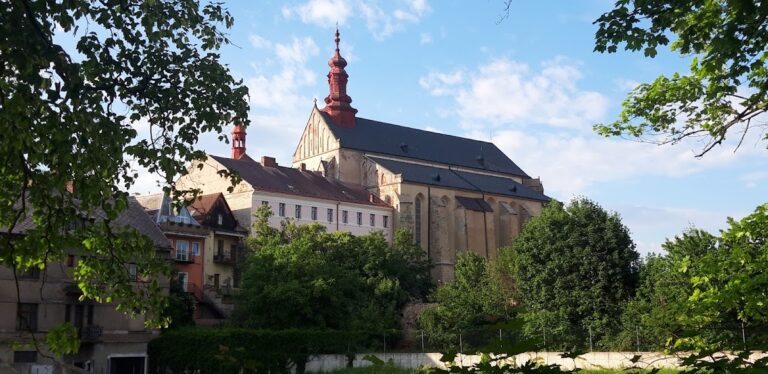
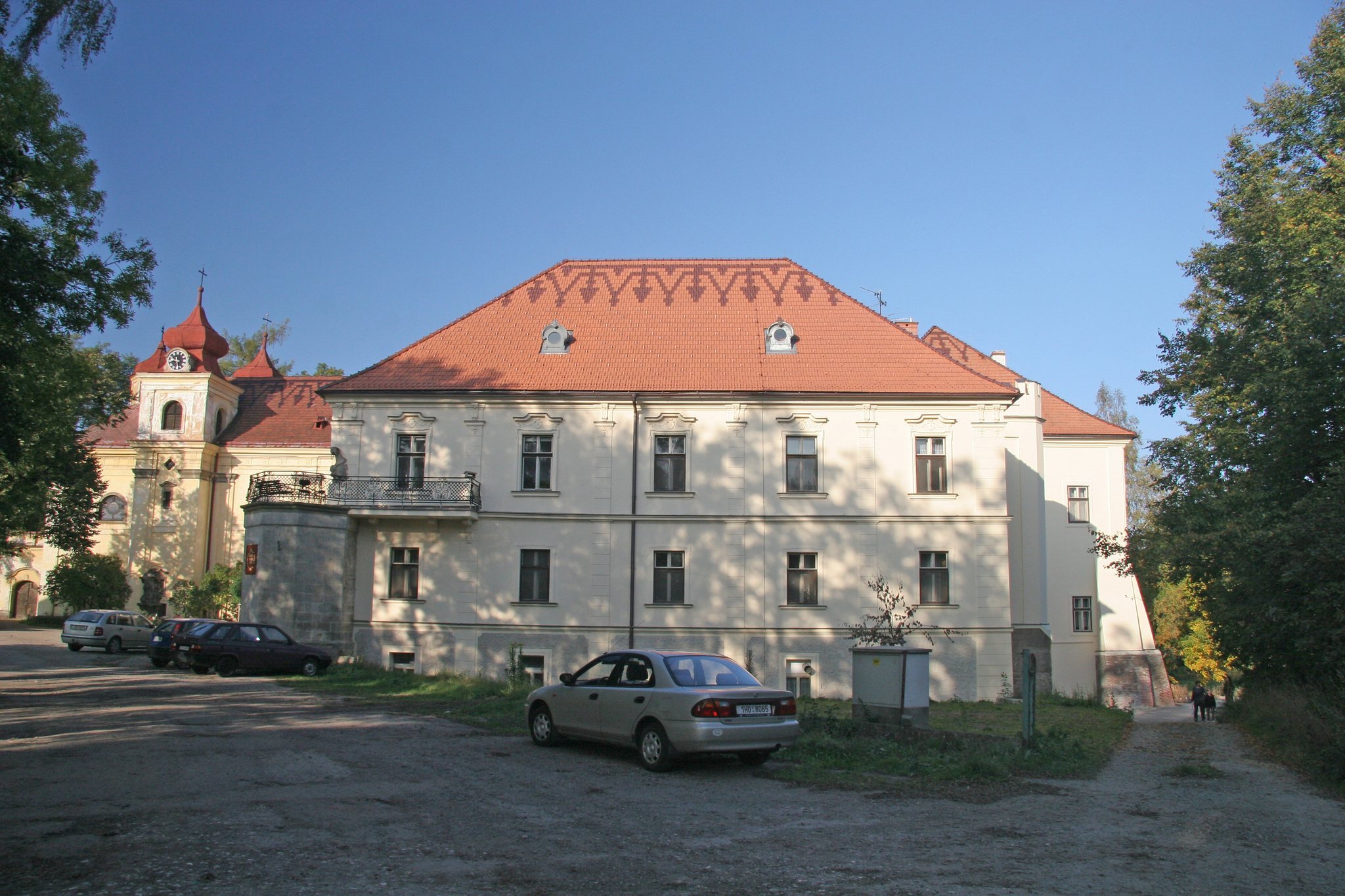
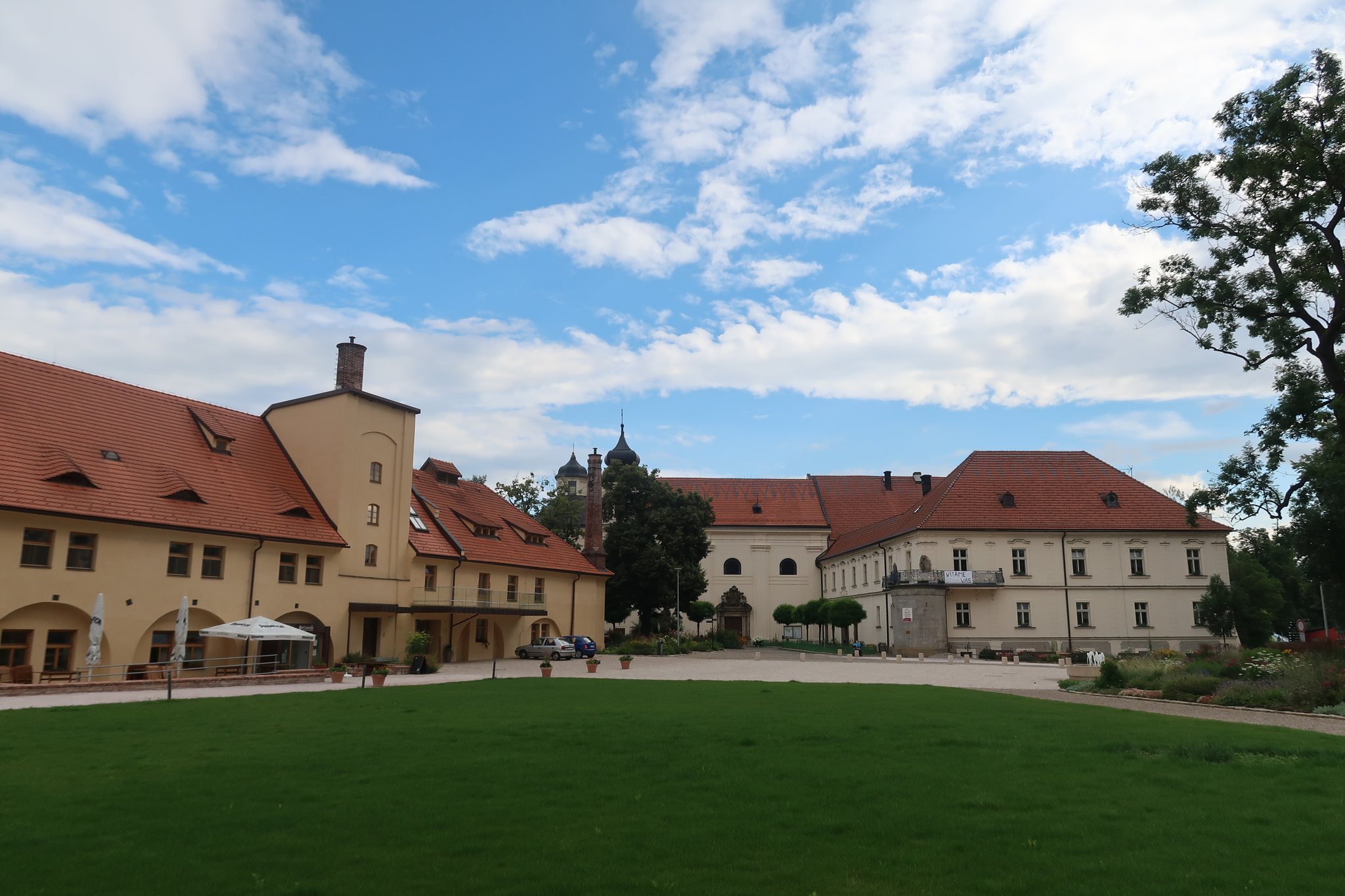
Žireč chateau stands at the edge of a steep slope above the right bank of the Elbe. Its core is a four-winged chateau joined to the Church of Saint Anne. The seventeenth-century Jesuit rebuilding added an upper floor and a tower to the earlier fortress, while further buildings enclosed a central rectangular courtyard. The complex also contains a former brewery, an orangery used for cultivating plants in colder seasons, and an English park with small structures and a granary.
Chateau and church
Main chateau
The main chateau preserves the expanded fortress plan created during the Jesuit period. Its buildings form a central rectangular courtyard, and the added tower belongs to the rebuilding after the fortress had been damaged during the Thirty Years’ War. The second floor of the main building once contained a school and apartments for teachers and the parish priest. It was removed after the fire of 1825, leaving the complex with the altered form produced by that destruction.
Church of Saint Anne
The Church of Saint Anne was constructed immediately beside the Jesuit residence between 1668 and 1698. Its position forms part of the principal built group and reflects the religious function of the complex during Jesuit administration.
Courtyards, gardens, and park buildings
Courtyards and horticultural grounds
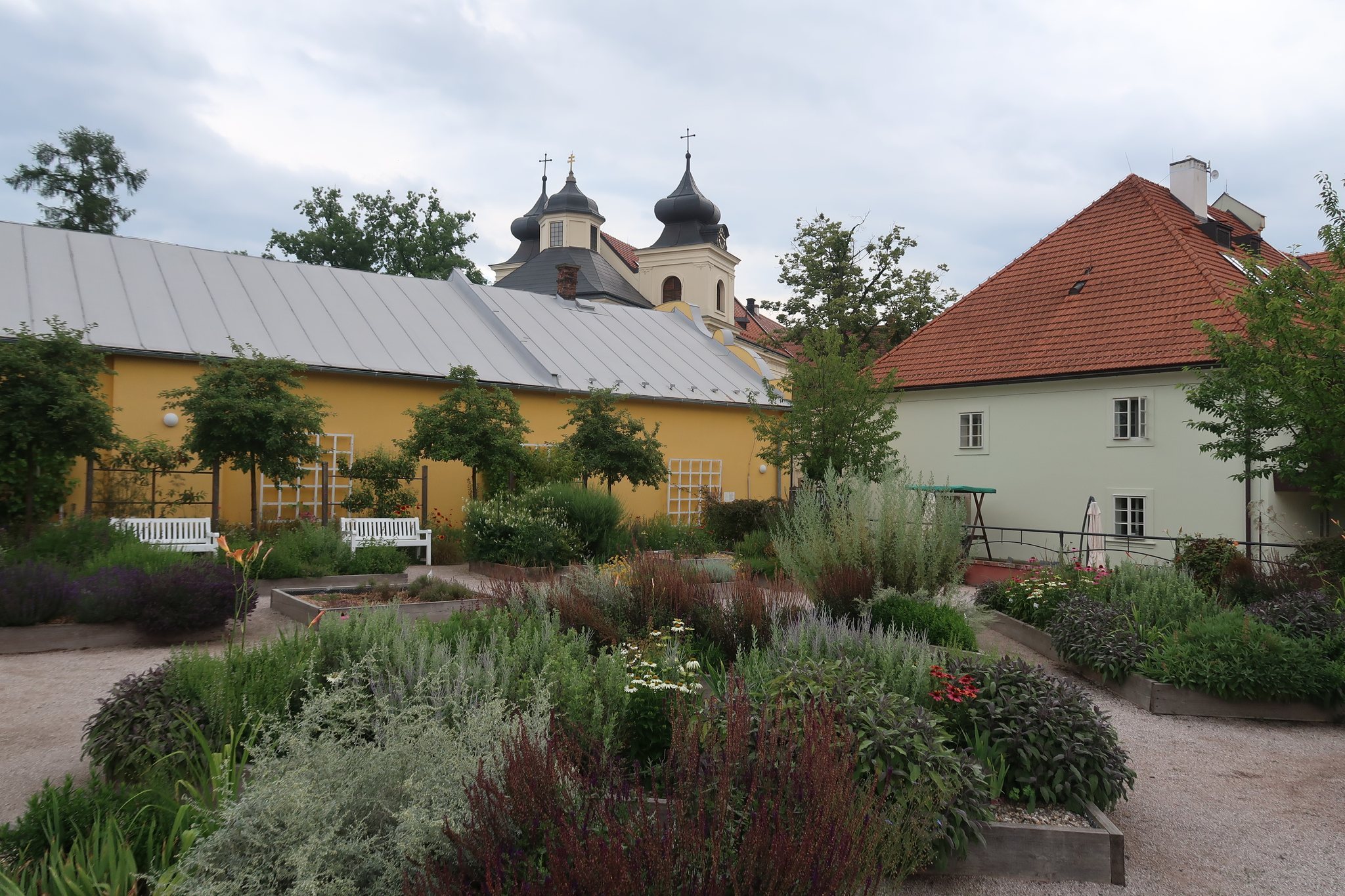
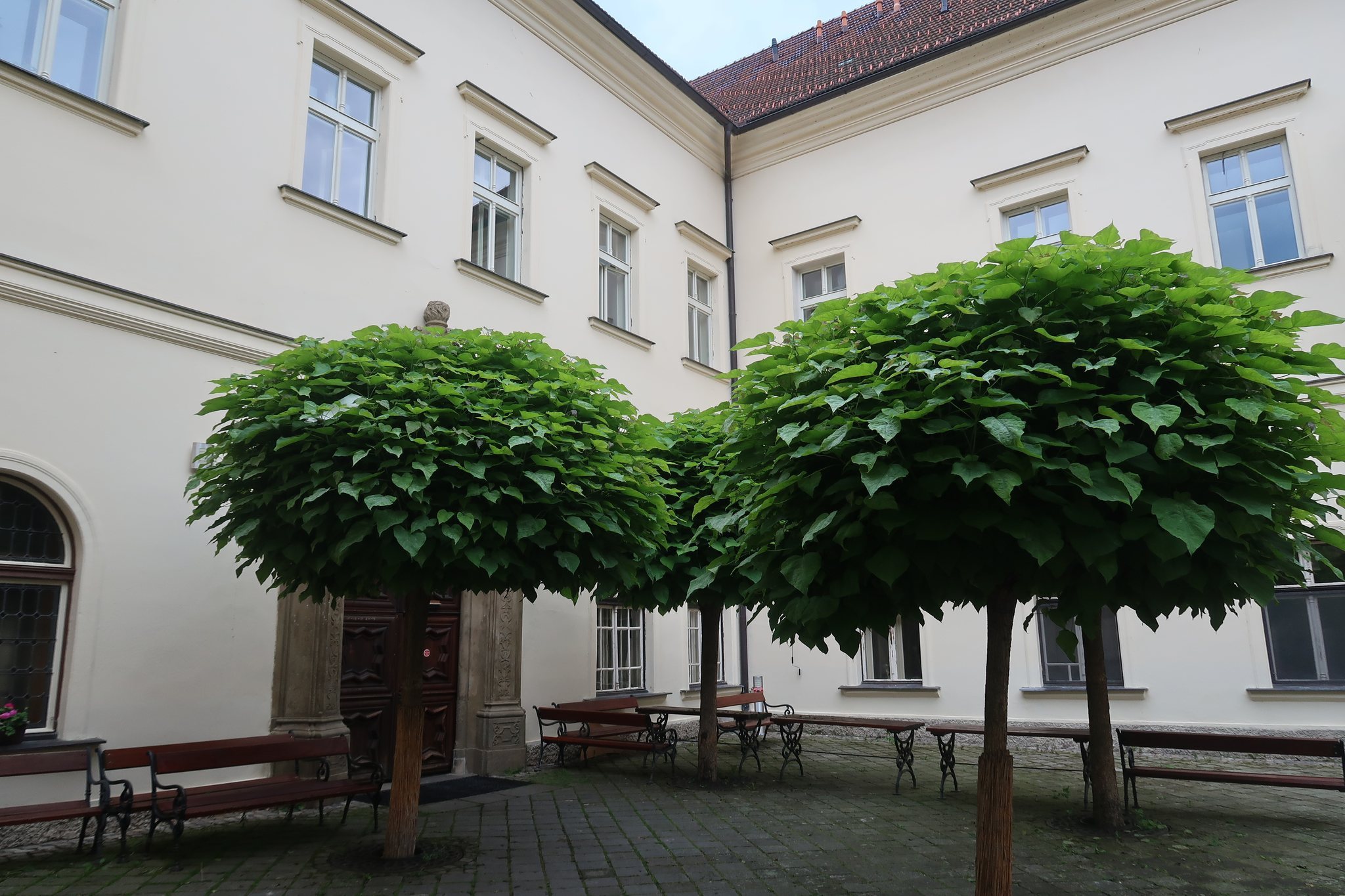
The grounds include a ceremonial courtyard with a statue of Saint John of Nepomuk, a separate chateau courtyard, horticultural grounds, and a herb garden. Together these areas form the open spaces associated with the residence and its later uses.
Park structures
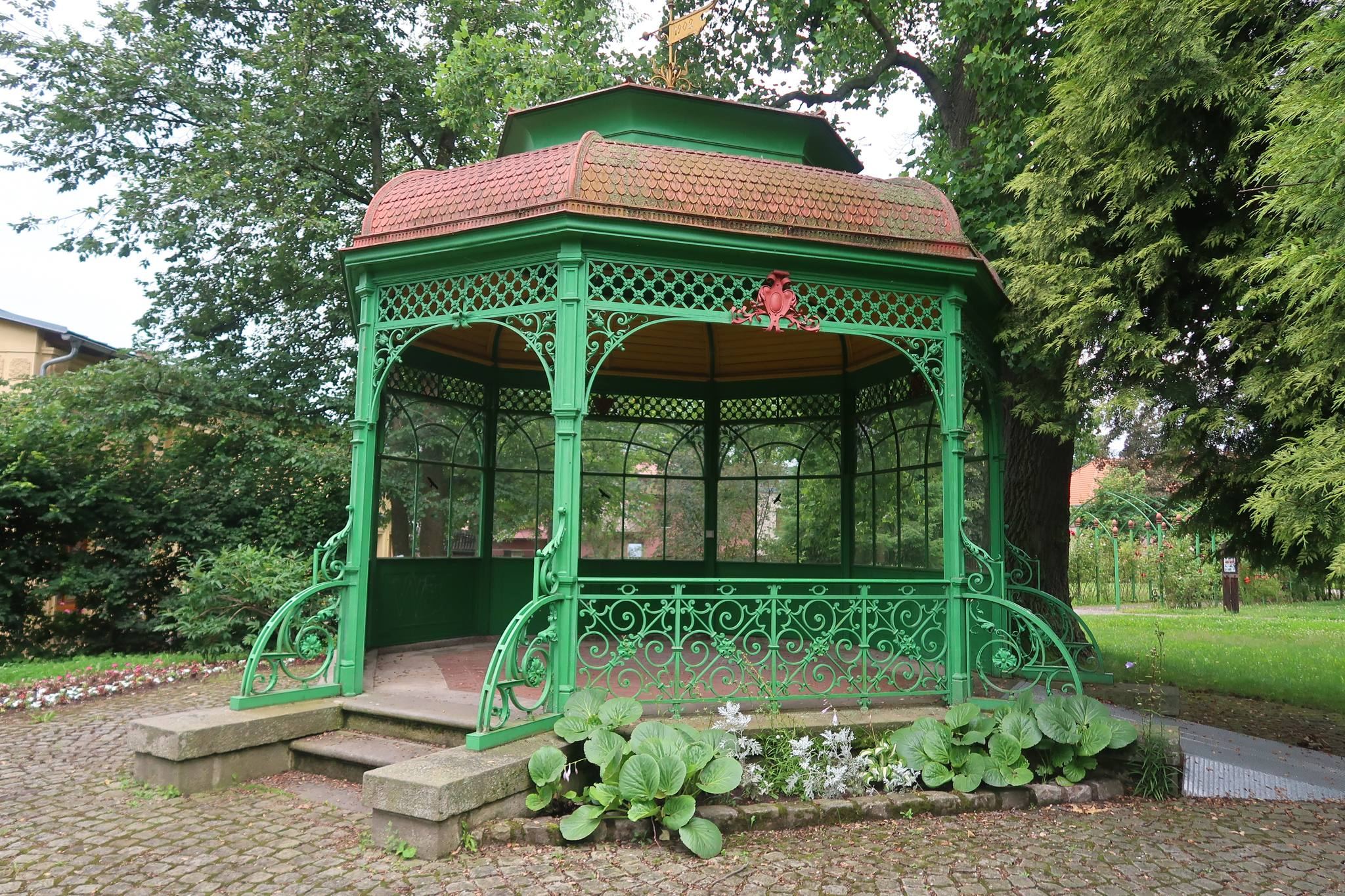
The chateau park contains an iron gazebo, small structures, and a granary. The former brewery and the orangery, designated as house no. 2, are also part of the wider complex. Religious buildings and statues associated with the Jesuit period survive in the surrounding grounds, including works in which Josef Pacák participated.