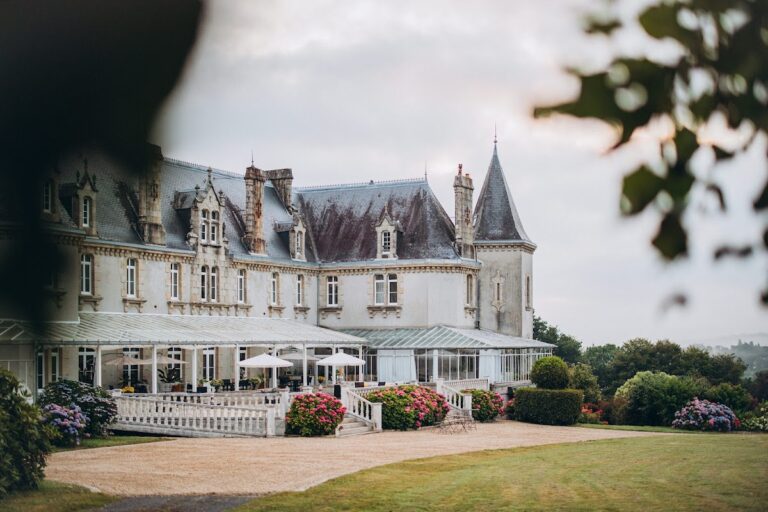
Abbaye Notre-Dame de Langonnet: A Cistercian Abbey in Brittany
Site at a Glance
- Rating
- 4.5
- Popularity
- Low
- Country
- France
- Primary era
- Early Modern
- External website
- Open
- Eras represented
- Medieval, Early Modern, Modern
- Civilizations
- French
- Site type
- Religious
- Remains
- Monastery
On this page12 sections
History
Abbaye Notre-Dame de Langonnet is a Cistercian abbey in France, near Langonnet in Brittany, founded on 20 June 1136 by Conan III, sovereign duke of Brittany, and his mother, Ermengarde of Anjou. Twelve monks from Aumône Abbey settled there that year, bringing Langonnet into the Cîteaux filiation, the institutional network of monasteries descended from Cîteaux Abbey. The community belonged initially to the Diocese of Quimper, now the Diocese of Vannes.
Early Cistercian foundation
The site may already have been occupied from the fifth century by Breton immigrants from across the Channel, possibly followers of Saint Conogan. The Cistercians developed the marshy and peaty ground through drainage and cultivation. Raoul, bishop of Cornouaille from 1130 to 1158, was buried at Langonnet.
The abbey acquired extensive possessions during the Middle Ages. A confession of 1550 lists 82 villages, manors, noble farms, mills, and forests, including 63 holdings in Langonnet, 14 in Gourin, and 5 in Le Faouët. Among its possessions were the Conveau wood and manor in Gourin.
Langonnet also directed the foundation of other Cistercian communities. In 1170, Duke Conan IV granted the monks villages near the forest of Carnoët for a new foundation. Maurice Duault de Croixanvec, then abbot of Langonnet, established Notre-Dame de Carnoët near the Laïta in 1177 and remained its abbot until his death in 1191. The daughter house later became known as Saint-Maurice de Carnoët. In 1255, Lanvaux Abbey, founded from Bégard, was placed under Langonnet’s authority.
War, destruction, and rebuilding
The War of the Breton Succession caused extensive damage to the abbey. The Cistercian General Chapter exempted Langonnet from taxes and arrears in 1387 because of its devastation, and in 1442 the Chapter of Cîteaux noted that repairs had still not been completed. Abbots Vincent and Henri de Kergoët undertook a rebuilding campaign between 1470 and 1518.
Further upheaval came during the Wars of the League, a series of late sixteenth-century conflicts in which Catholic factions and royal authority fought for control of France. Monks were expelled in 1595, and soldiers serving the League leader Guy Éder de La Fontenelle turned the church into a stable. When the community returned in 1598, the abbey was in ruins and neighboring lords had taken most of its lands.
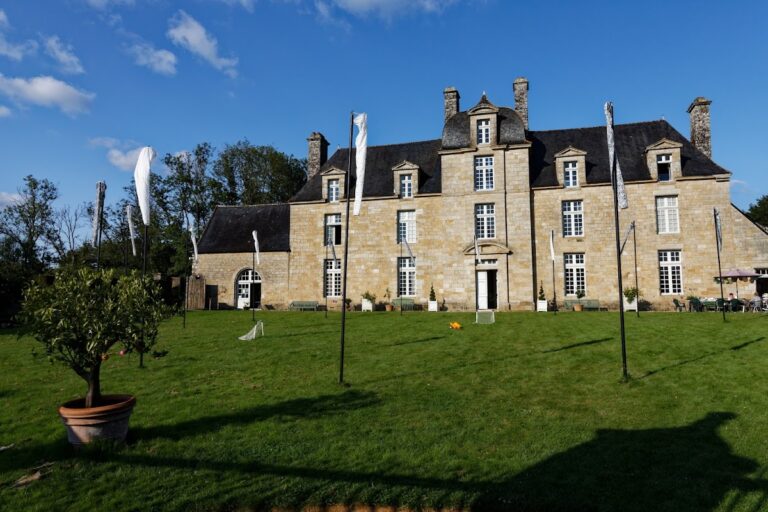
Large-scale reconstruction followed between 1650 and 1780. Most of the principal quadrangular building was erected under the commendatory abbot Claude de Marbœuf. A commendatory abbot held the office and revenues of an abbey without necessarily living there or directly governing its community. An inscription gives the date 1688. The church, built under François Chevreul, was dedicated in 1789.
Revolutionary upheaval and nineteenth-century reuse
The monks were expelled again at the end of 1790 during the French Revolution, and the abbey was offered for sale as national property. No buyer was found, and the buildings were rented to the Bréban family, who sheltered priests who refused the revolutionary religious settlement. The abbey later became a refuge for the Chouans, royalist insurgents who opposed the revolutionary government in western France. Republican troops from Le Faouët expelled them, vandalized the premises, and occupied the site as a position for watching the surrounding area. On 13 February 1801, more than 50 armed men attacked gendarmes from Le Faouët inside the abbey.
By the early nineteenth century, the complex had badly deteriorated, with collapsed roofs and decayed roof structures. Napoleon I established Brittany’s first public stud farm there by decree of 10 June 1806. It operated at Langonnet from 1807 until its transfer to Hennebont in 1856 and 1857. The establishment began with 40 stallions and 10 brood mares and later held 70 stallions.
Religious and missionary centre
After the stud farm moved, the abbey returned to the Missionaries of the Holy Spirit and resumed a religious function. Achille du Clésieux created a model farm that became an agricultural colony for children. By 1880, the Brothers of the Holy Spirit and the Sacred Heart of Mary directed a secondary school, a scholasticate, and a Brothers’ novitiate for candidates to missionary work.
As Saint-Maurice de Carnoët fell into ruin, five centimetres of the right humerus attributed to Saint Maurice were transferred to Langonnet on 7 and 8 August 1880. The ceremony drew the bishops of Quimper and Vannes, 150 priests, and 20,000 worshippers. Its fiftieth anniversary was celebrated at Langonnet in August 1930.
By 1930, Langonnet had become a centre of Spiritan activity, particularly in connection with missions in Africa. The abbey housed elderly missionaries and trained children in an apostolic school. In 1950, Sam Poupon founded the abbey circle Korollerien an Ellé, which helped revive Breton dance. The abbey now belongs to the Congregation of the Holy Spirit, also called the Spiritans, a Catholic missionary congregation active in overseas missions, including Africa. It serves as a residence for elderly Spiritan missionaries and contains an African art museum, a collection assembled by former missionaries in Africa, and a missionary activity centre. The abbey was designated a historic monument by decree on 25 September 1928.
Remains
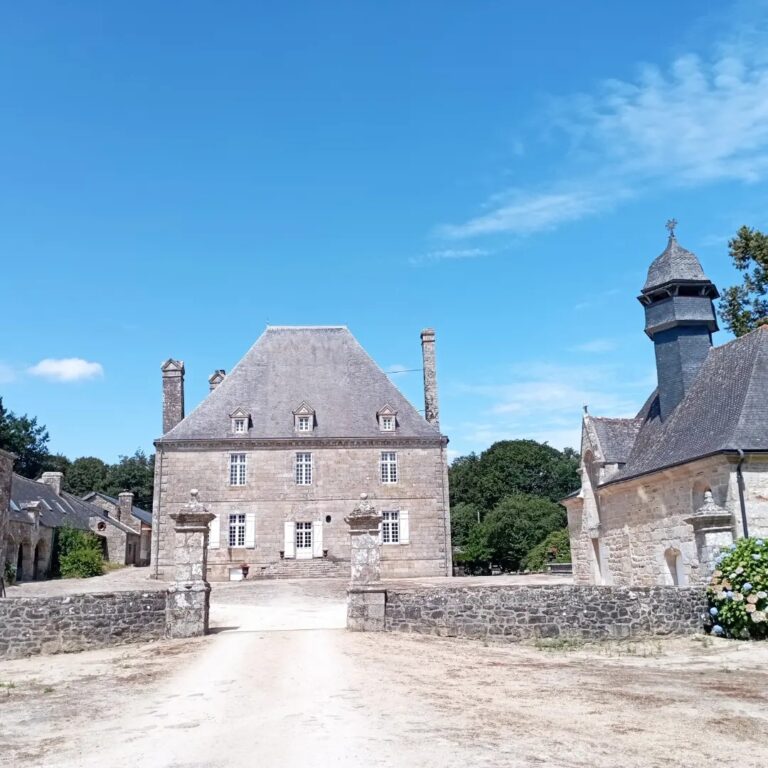
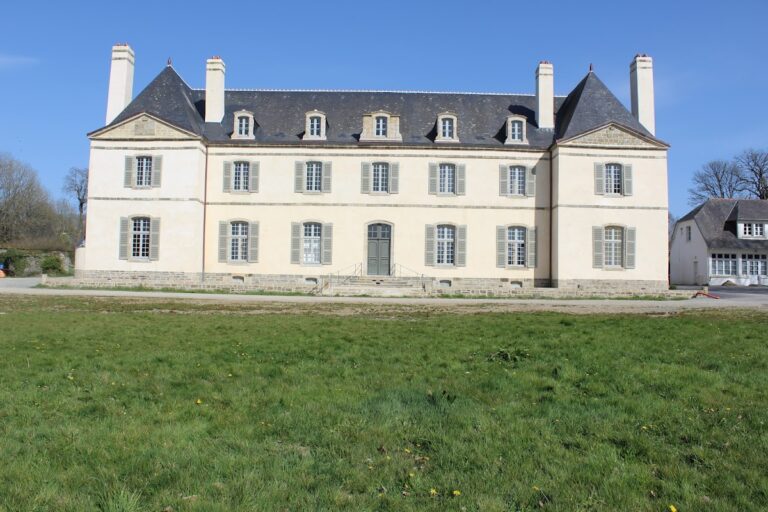
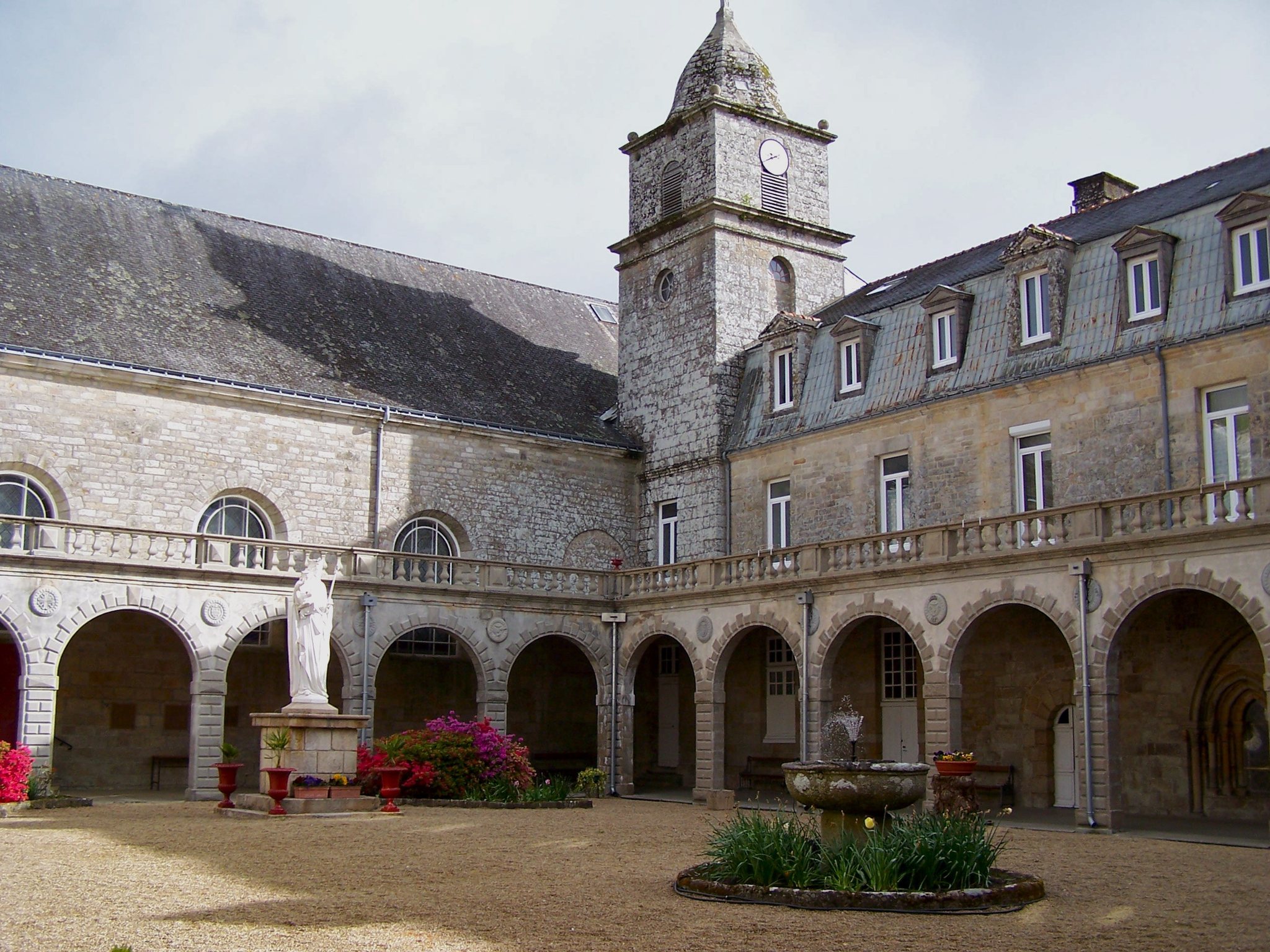
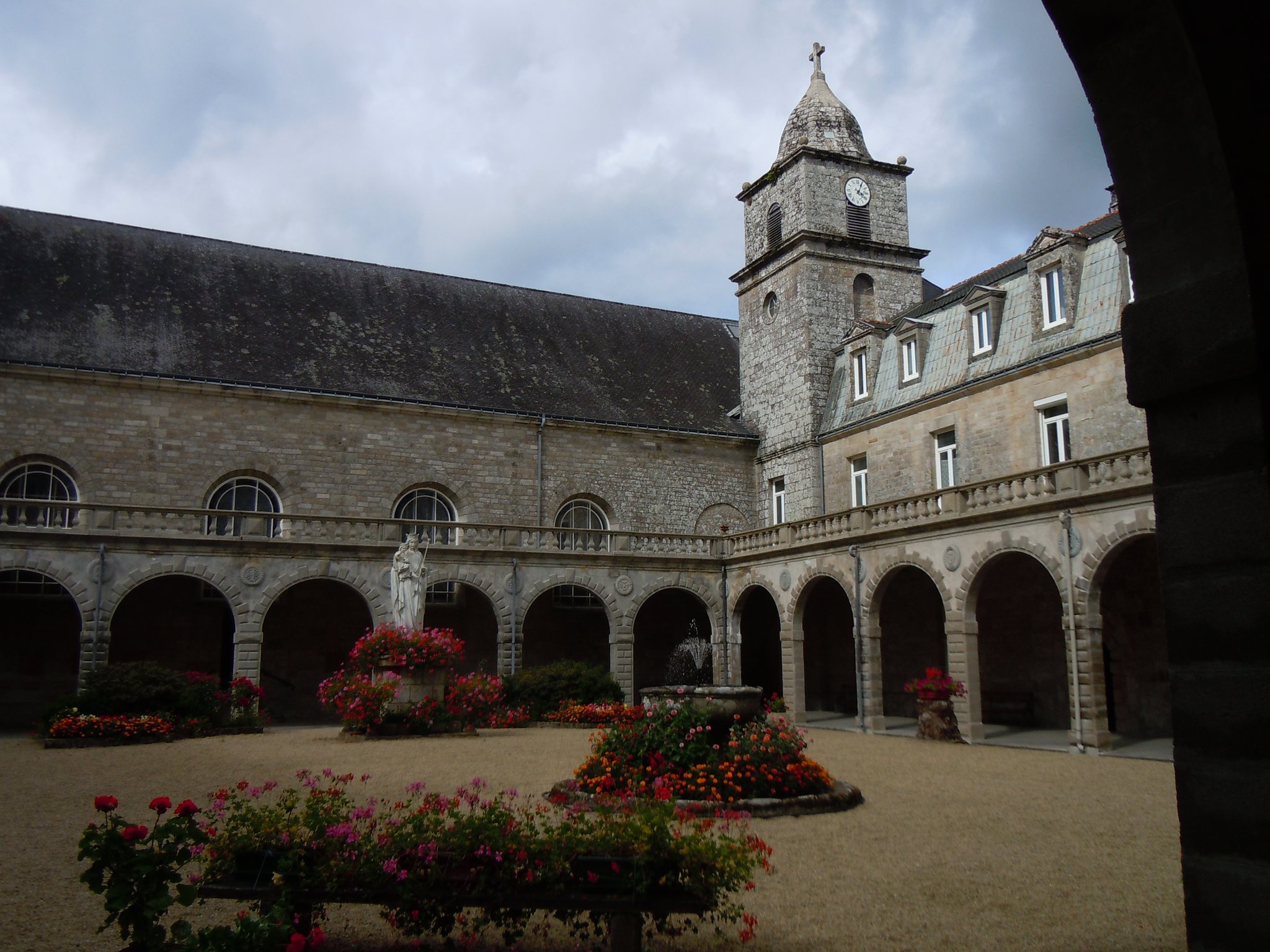
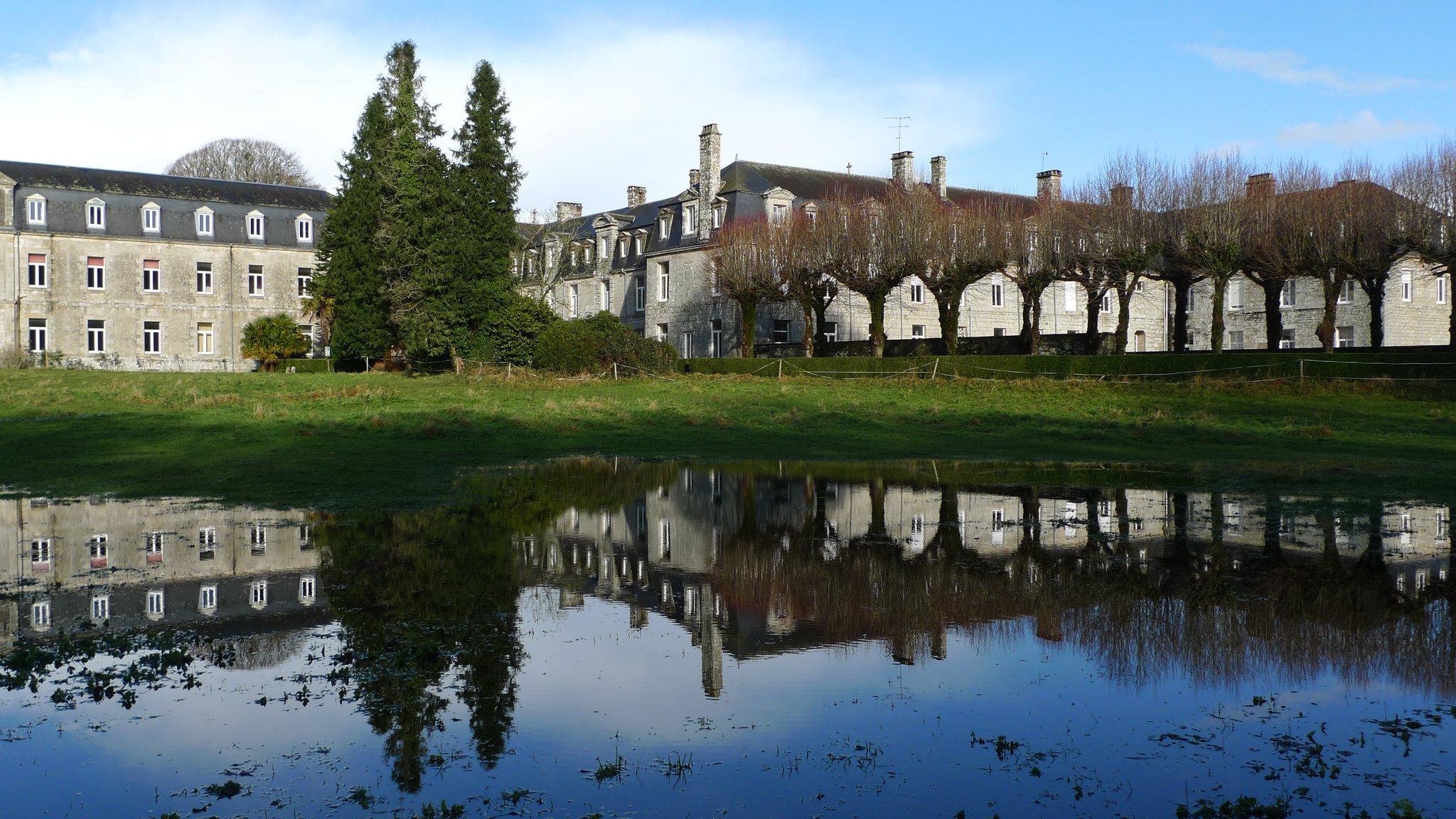
The abbey stands southeast of the village of Langonnet, near the road to Plouray, on the banks of the Ellé and close to a Roman road. Its surviving complex includes a chapter house, cloister, main residence, guest quarters, chapel, school, and workshops. The buildings represent successive phases from the seventeenth-century abbatial residence to the cloister built between 1930 and 1936. The modern complex forms a large quadrangle, with the church occupying one side. Its grounds also included courtyards, a walled park, and meadows watered by the Ellé.
Medieval monastic buildings
Chapter house
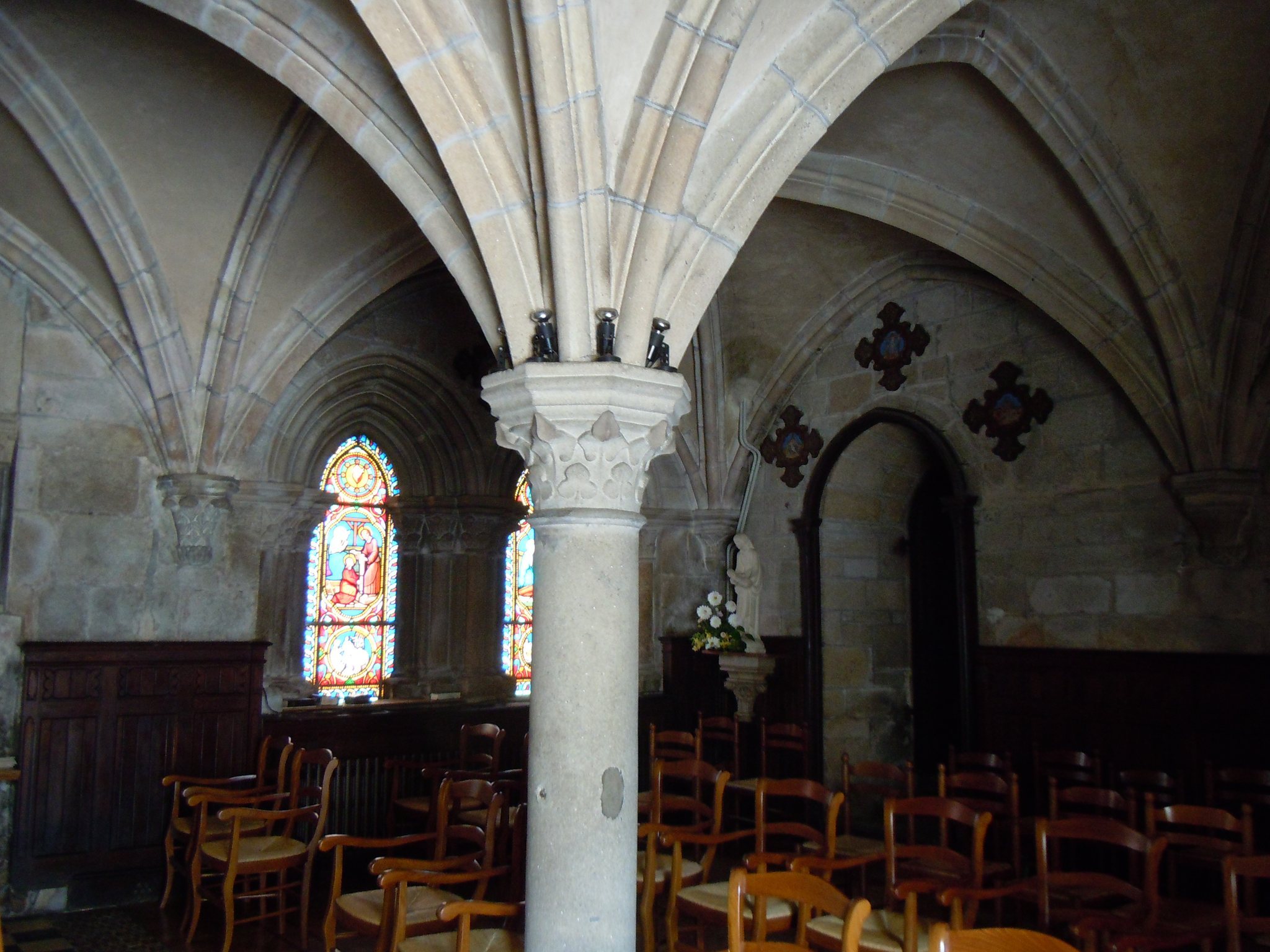
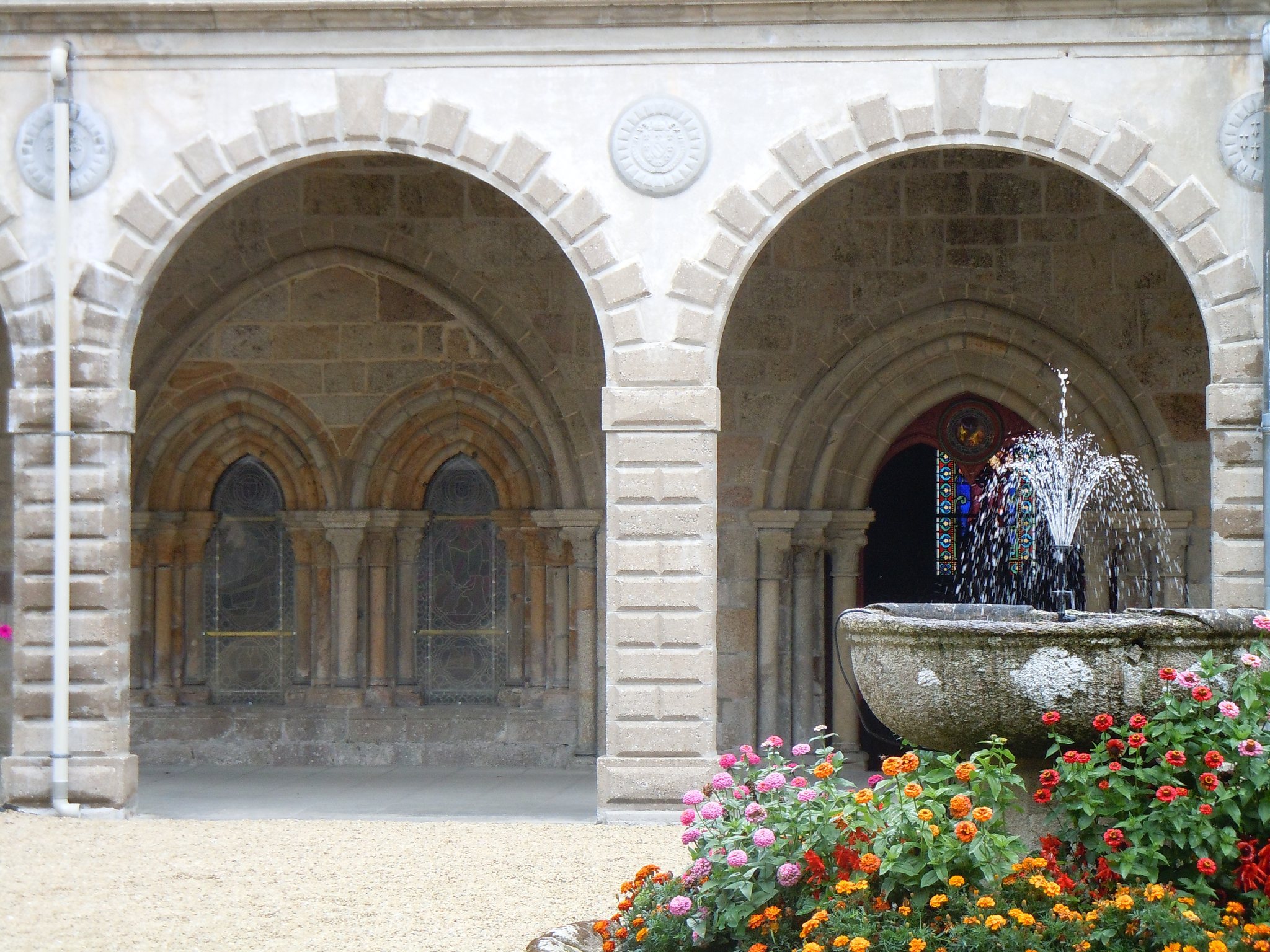
The chapter house is the only surviving part of the medieval abbey. Dating from the thirteenth century, it opens towards the cloister through a pointed-arched doorway flanked by two pairs of twin lancet-arched bays. The openings contain recessed mouldings, rounded torus forms, columns with bases and foliate capitals, and surrounding pointed arcades. Inside, two naves are divided into three bays, with stone ribbed vaults resting on columns decorated with foliate capitals. The room has since been converted into a chapel.
Monks’ penitentiary
Beside the chapter house is another room from the same period. It has a stone pointed vault and is traditionally identified as the monks’ penitentiary.
Modern-period complex
Main residence and church
The main building belongs to the modern period and forms the large quadrangle. Much of it was constructed during the rebuilding carried out between 1650 and 1780, including the seventeenth-century abbatial residence. The church was the latest major element of that eighteenth-century campaign and was dedicated in 1789. During the stud-farm period, the upper part of the chapel was converted into a hayloft.
Later chapel and missionary collections
The present chapel dates from the second half of the nineteenth century. The complex also contains the museum of African art and its associated collection of objects gathered by former missionaries in Africa. A twentieth-century cloister, constructed between 1930 and 1936, forms part of the later architectural development of the abbey.