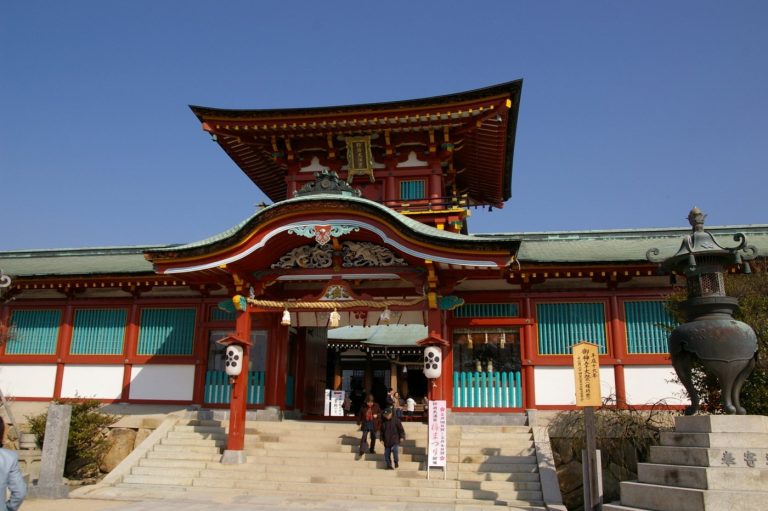
Shiratori Kofun: A Keyhole-Shaped Burial Mound in Japan
Site at a Glance
- Rating
- 3.8
- Popularity
- Very Low
- Country
- Japan
- Primary era
- Classical
- External website
- Open
- Eras represented
- Classical
- Civilizations
- Yamato
- Site type
- Burial
- Remains
- Burial Mound
On this page7 sections
History
Shiratori Kofun is a large keyhole-shaped burial mound in Hirao, Japan, built during the first half of the fifth century in the middle Kofun period. Kofun were monumental burial mounds constructed mainly between the third and seventh centuries for members of Japan’s political elite. Shiratori Kofun is interpreted as the tomb of a powerful leader from the western Seto Inland Sea region, possibly a chief of the Kumage area and a member of the Suo provincial-chieftain lineage, an inherited elite family associated with administering the ancient province of Suo. It is the largest kofun in Yamaguchi Prefecture and in the western Setouchi region, which includes Yamaguchi and Hiroshima prefectures.
A Regional Line of Chiefs
The tomb formed part of a sequence of elite burial monuments in the region. Yanai Chausuyama Kofun in Yanai is regarded as the burial place of an earlier chief. Atada Kofun and Kamihanayama Kofun in Hirao are regarded as later burials of chiefs. The individual interred at Shiratori Kofun remains unknown, so its association with the Suo provincial-chieftain lineage is an interpretation rather than an established identification.
Shrine Use and Modern Investigation
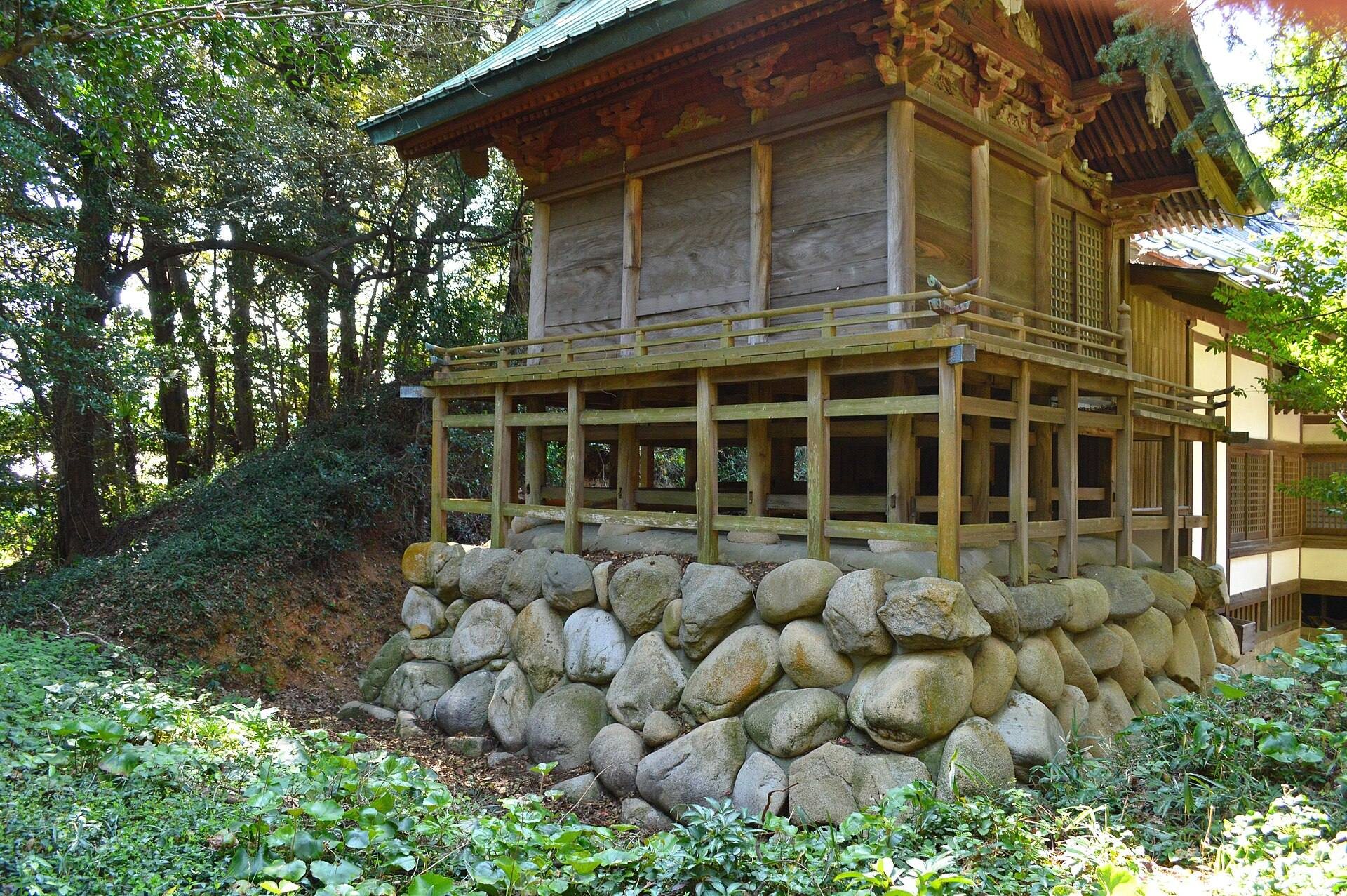
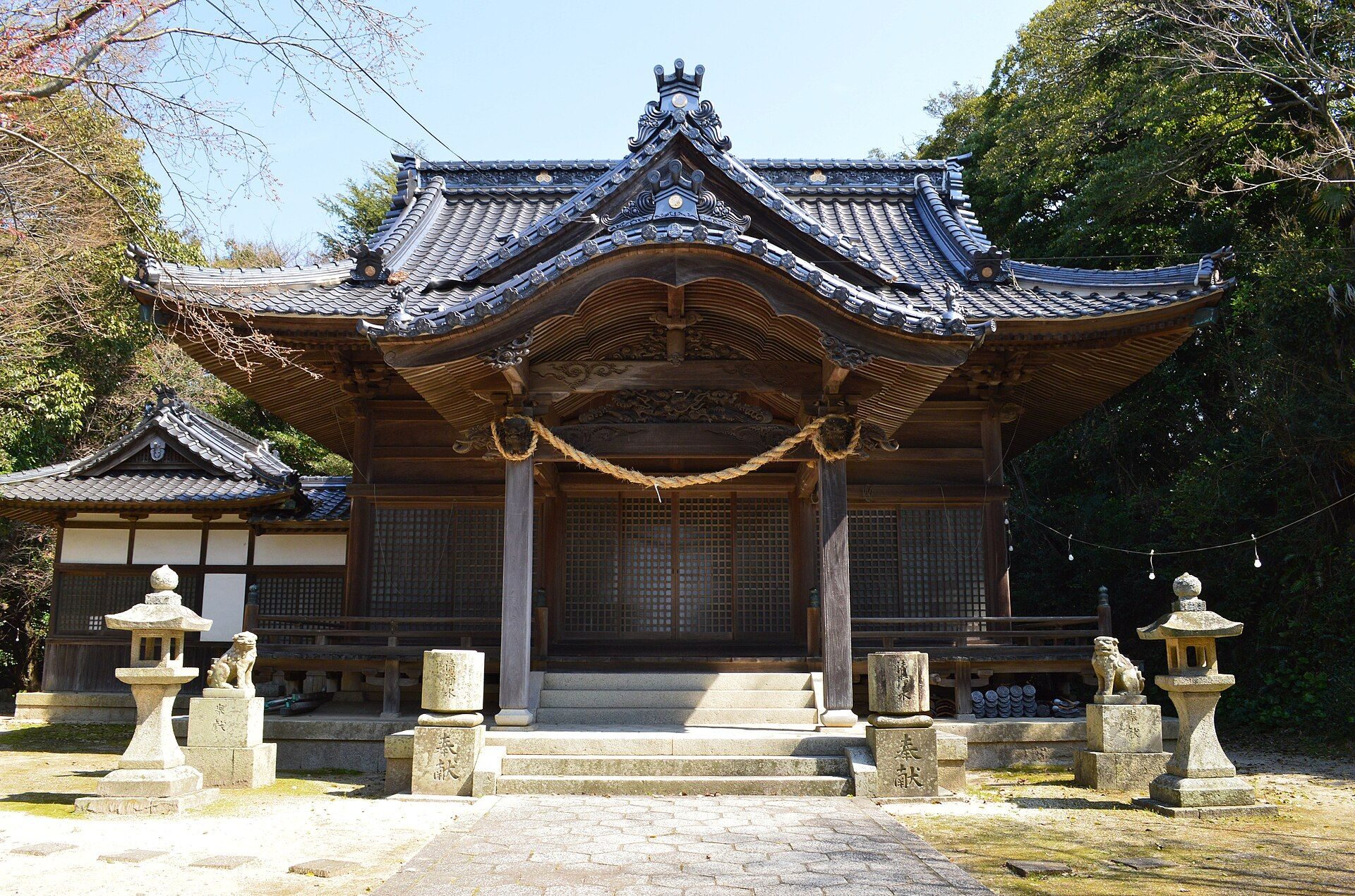
The central part of the mound’s rear section was cut into when the White Bird Shrine was built there. The shrine is a Shinto institution dedicated to the veneration of deities or sacred figures. During an eighteenth-century rebuilding of the shrine, the site was excavated, and many objects were said to have been recovered from a stone container inside the burial chamber. These objects became shrine treasures and were passed down to the present.
Hirotsu Fumi surveyed the mound in 1913 and identified it as a keyhole-shaped tomb. Hiroshima University carried out a measurement survey in 1973 while preparing the history of Hirao Town, confirming the mound’s scale. The tomb area, including its subsidiary mound and surrounding moat, became a Yamaguchi Prefectural Historic Site in 1971. The excavated objects received designation as Yamaguchi Prefectural Tangible Cultural Properties in 1981.
Remains
Main Mound and Moat
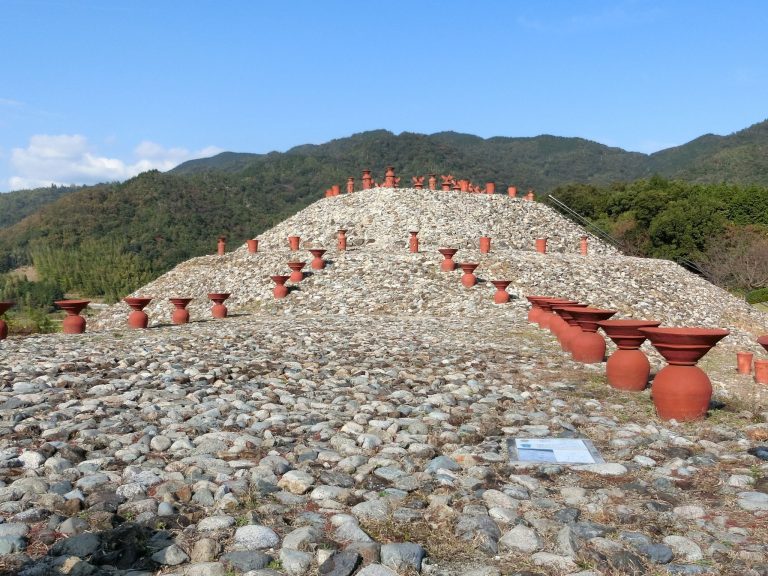
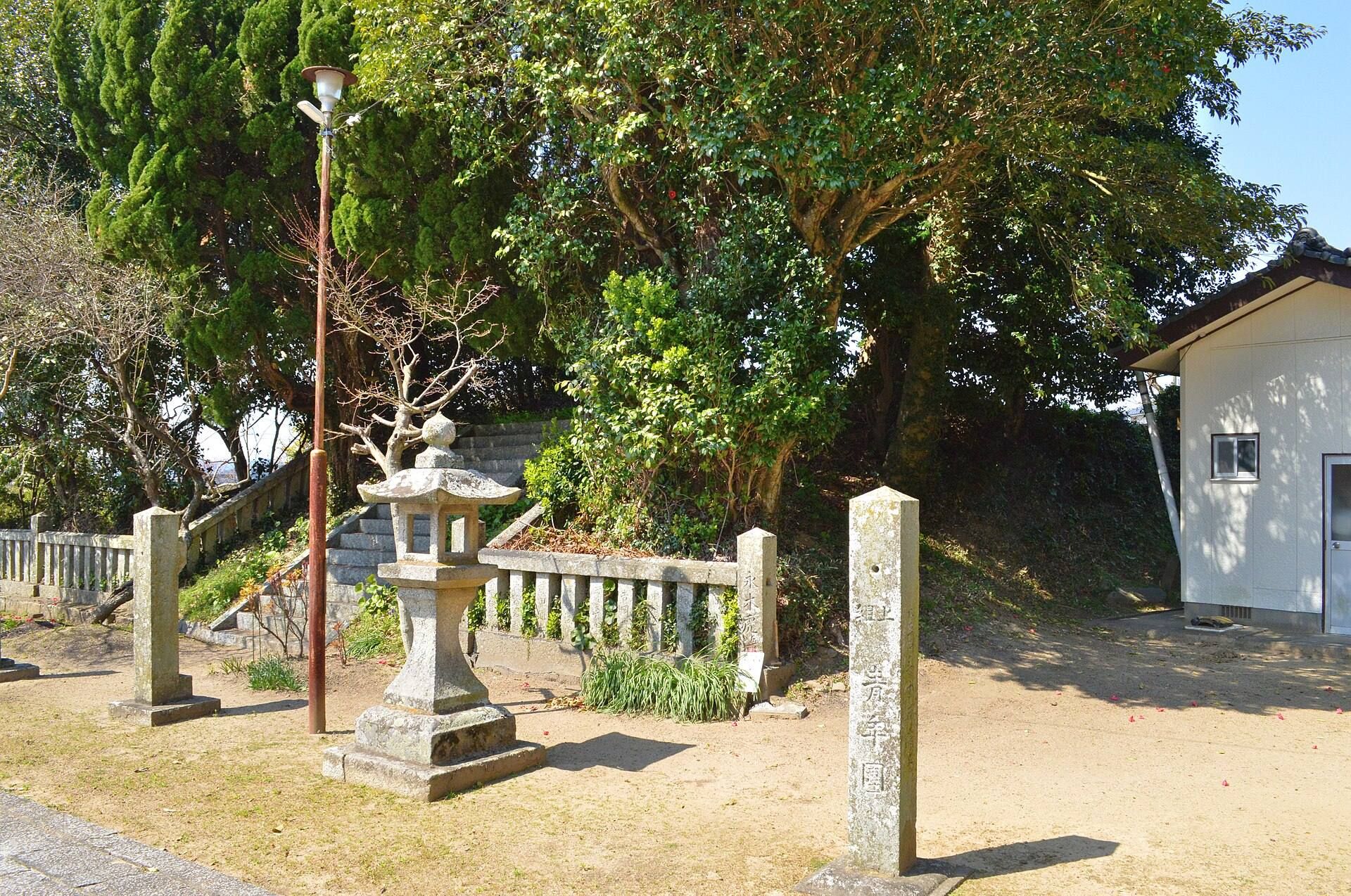
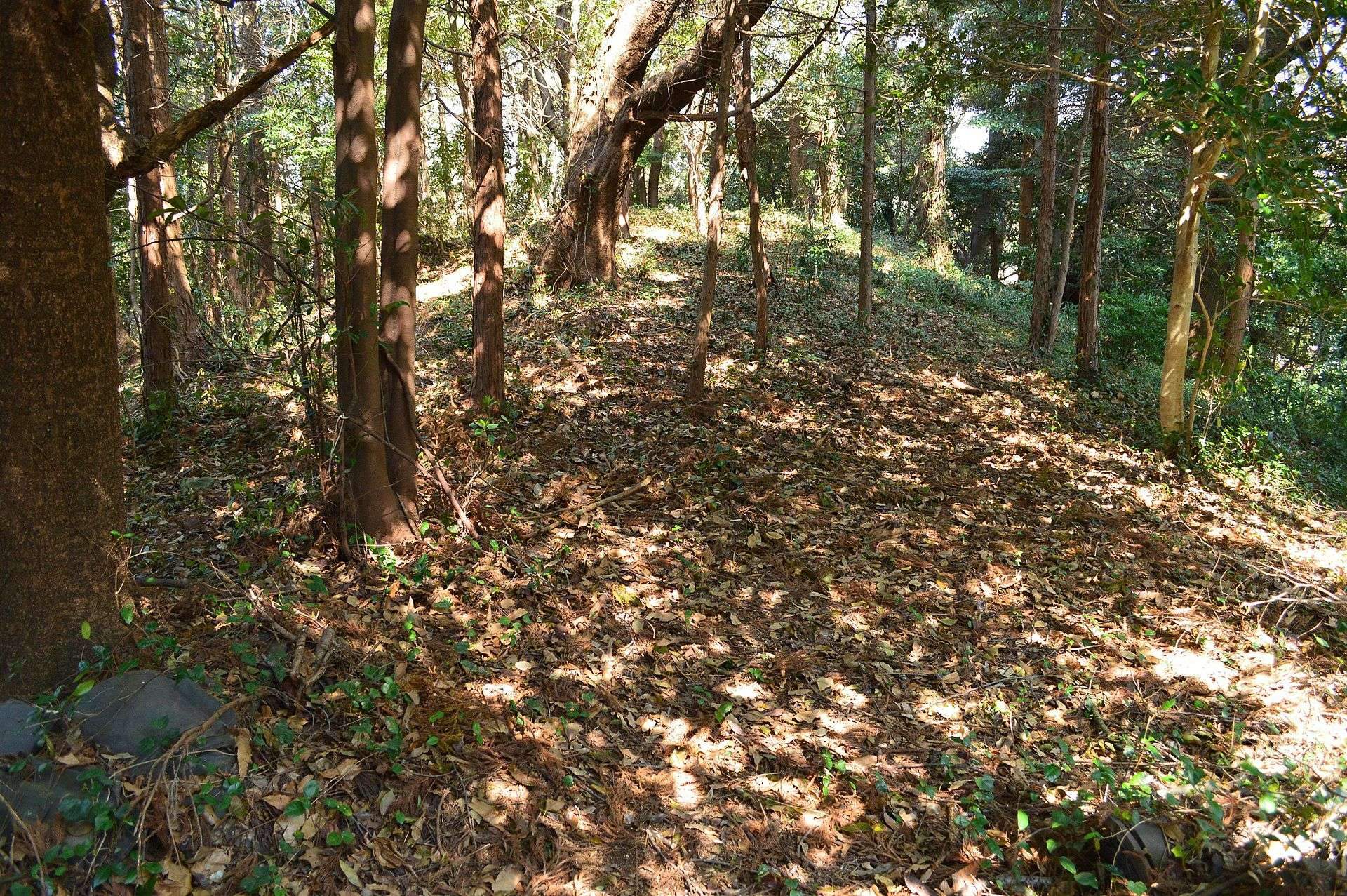
Shiratori Kofun stands at the tip of a low hill on the western shore of the Murotsu Peninsula in southeastern Yamaguchi Prefecture. Its keyhole-shaped mound combines a rectangular projecting front section with a circular rear section. The entire mound measures approximately 120 meters in length, while the rear circular section rises about 11 meters high. It has three levels and is oriented with the projecting front section toward the north-northwest.
Stone revetment covers the mound surface, where fragments of cylindrical and figurative haniwa have been found. Haniwa are clay objects placed on or around burial mounds. Cylindrical examples commonly formed rows or boundaries, while figurative examples could represent people, animals, buildings, armor, and other subjects. A moat surrounds the mound. It is approximately 20 meters wide, with a recorded width of about 20.8 meters and a depth of about 2.1 meters.
Subsidiary Mound
A roughly rectangular mound lies about 18 meters southwest of the rear circular section. It measures approximately 24 meters along its long axis and 13 to 14 meters along its short axis, and stands about 2.3 meters high. Its interior has not been investigated. It is interpreted as a subsidiary mound, although another interpretation identifies it as part of the embankment surrounding the main mound.
Burial Chamber and Grave Goods
The burial facility was a vertical stone chamber that may have contained a stone coffin of box-coffin form. The chamber was associated with a bronze mirror, comma-shaped bronze objects, an iron axe, an iron sword, tubular beads, and other grave goods. These objects became treasures of the White Bird Shrine after their recovery in connection with the burial chamber.