Rmanj Monastery: A Serbian Orthodox Monastery in Bosnia and Herzegovina
Site at a Glance
- Rating
- 4.9
- Popularity
- Low
- Country
- Bosnia and Herzegovina
- Primary era
- Early Modern
- Eras represented
- Medieval, Early Modern
- Civilizations
- Ottoman
- Site type
- Religious
- Remains
- Monastery
On this page9 sections
History
Rmanj Monastery is a Serbian Orthodox monastery in Bosnia and Herzegovina, located at Martin Brod near the confluence of the Unac and Una rivers. Dedicated to Saint Nicholas, it belongs to the Eparchy of Bihać and Petrovac, an administrative diocese of the Serbian Orthodox Church. Its foundation is uncertain, although the original monastery is generally placed in the late fifteenth or early sixteenth century. Architectural comparisons have also suggested a possible fourteenth-century date.
Foundation and Early Records
Traditions differ about the monastery’s founder. One attributes its establishment in 1443 to Katarina Branković, daughter of Serbian Despot Đurađ Branković and wife of Count Ulrich II of Celje. The Serbian Orthodox jurisdiction listing names Stefan Dragutin as founder. The locality of Rmanj appears in charters and letters from 1448, 1451, and 1478, probably in connection with Rmanj Fortress. The earliest written reference specifically connected with the monastery dates from 1498, when the vojvodas Petar and Vukodrag Petrašanin paid for an icon of the Virgin and Christ to be painted for it. A further reference from the late fifteenth century appears in the Kruševo memorial book.
Ottoman Period and Ecclesiastical Importance
After the Ottoman conquest, the monastery was temporarily abandoned in 1578. It was later renewed by Telli Hasan Pasha, a beylerbey, or senior Ottoman provincial governor, as the seat of his brother Gavrilo Predojević, an Orthodox monk. During the second half of the sixteenth century and the first half of the seventeenth, Rmanj served for approximately 110 years as the seat of the Metropolitanate of Dabro-Bosnia. This Orthodox ecclesiastical jurisdiction was administered by a metropolitan residing at the monastery, and ten metropolitans held office there during this period.
Rmanj remained a center of religious writing and worship. In 1621, the Explanatory Gospel was written there, while the church was roofed during the tenure of the hieromonk and abbot Sava. Under the later abbot Mihailo, the church received a paved floor in 1632 and 1633. Troparia and kontakia, short liturgical hymns used in Orthodox worship, were also written at the monastery in 1633.
Destruction and Rebuilding in the Eighteenth Century
Ottoman forces damaged or destroyed the monastery in 1638 and 1661, and it was burned again in 1663. The brotherhood repeatedly left for Habsburg territory. Monks associated with Rmanj founded Lepavina Monastery and restored Marča Monastery there. Rmanj was rebuilt in the mid-eighteenth century with the sultan’s permission and guarantees for its security. A 1732 firman, an official decree issued by an Ottoman ruler or authority, protected the monastery’s property and rights from unauthorized encroachment.
The monastery remained active in Bosnian Krajina through most of the eighteenth century. Its late-century brotherhood included about ten monks and was led successively by the abbots Teofil Borovina, who died in 1780, Nil Bubalović, who held office from 1780, and Vasilije Crnobrnja. Crnobrnja was ordained in 1773 and later died at Srb in 1811. In a letter of 20 December 1780, the monks appealed to Bishop Petar Petrović of Gornji Karlovac for the return of imperial privileges that had been entrusted by Borovina to Bishop Danilo Jakšić and seen in Karlovac.
Attacks destroyed the residential quarters in 1785, although the church survived. During the Austro-Turkish War of 1787 to 1791, a conflict between the Habsburg and Ottoman empires, the monastery was devastated in 1788 and the monks dispersed. The last abbot, Vasilije Crnobrnja, took refuge in Srb, and Rmanj had no monks during the first half of the nineteenth century.
Restoration and Twentieth-Century Destruction
Gavro Vučković, a merchant from Bosansko Grahovo, led a restoration effort with financial support from numerous donors. He obtained permission from the Ottoman sultan to repair the monastery in 1863, and the buildings were made suitable for monastic life before the Dormition feast of 1865. The Dormition commemorates the death, or falling asleep, of the Virgin Mary. After the 1875 uprising, the Kulenović beg family, a Bosnian Muslim feudal family, again devastated Rmanj. The monastery was burned on 15 August 1875. The restored complex was consecrated on 6 August 1883 by Metropolitan Sava Kosanović.
In 1905, Rmanj belonged to the Banja Luka and Bihać Eparchy and the Petrovac Deanery. It remained active until 1941, when the Ustaše killed the Orthodox priest and protopresbyter Milan Popović. During the Second World War, a Yugoslav Partisan field hospital operated at the monastery. The German Luftwaffe bombed it in April 1944, destroying the monastery to its foundations and permanently eliminating many frescoes.
Reconstruction and National Protection
Reconstruction began in 1974 through the efforts of the Dalmatian Bishop Stefan Boca. The church was completed during the 1980s, and the foundation of the monks’ residence was consecrated in 1993. The residence could not be occupied until 2006 because of the wars in the former Yugoslavia. During Operation Storm in August 1995, the brotherhood left Rmanj; the complex was shelled, badly damaged, mined, and desecrated by Croatian forces in autumn that year. The monks returned in 1998, after which restoration and repairs resumed. British explosives specialists serving with SFOR, the NATO-led Stabilization Force in Bosnia and Herzegovina, cleared the church of mines.
In 2007, the Serbian Orthodox Monastery of Rmanj was placed on the List of National Monuments of Bosnia and Herzegovina as a Category I cultural and historical property. The protected property includes the historic building, surviving architectural remains, the remains of the original ensemble, and fragments of the original frescoes.
Remains
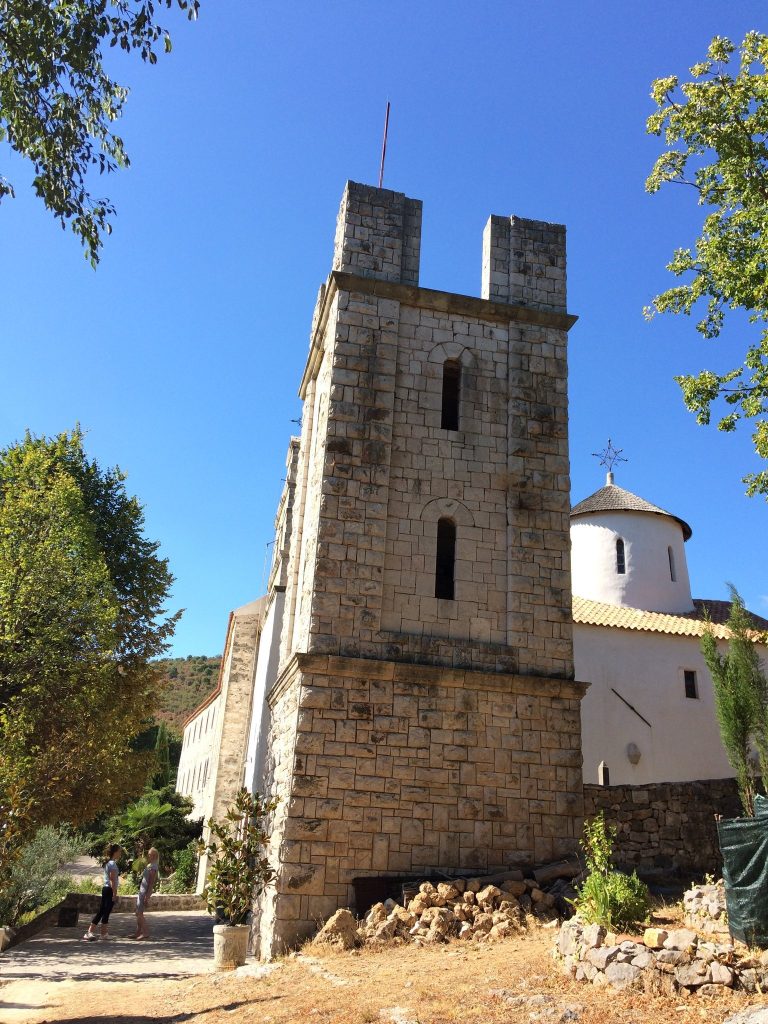
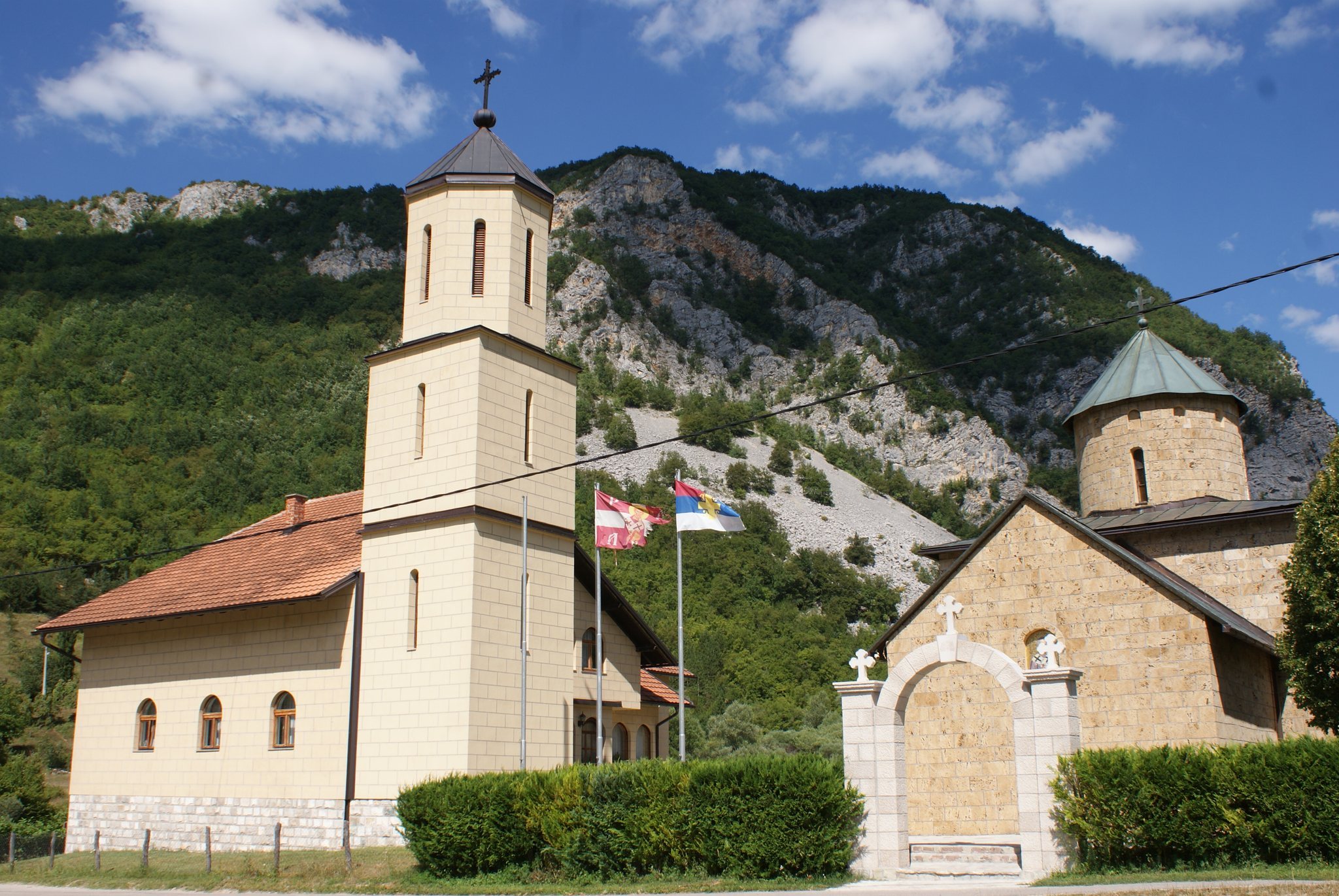
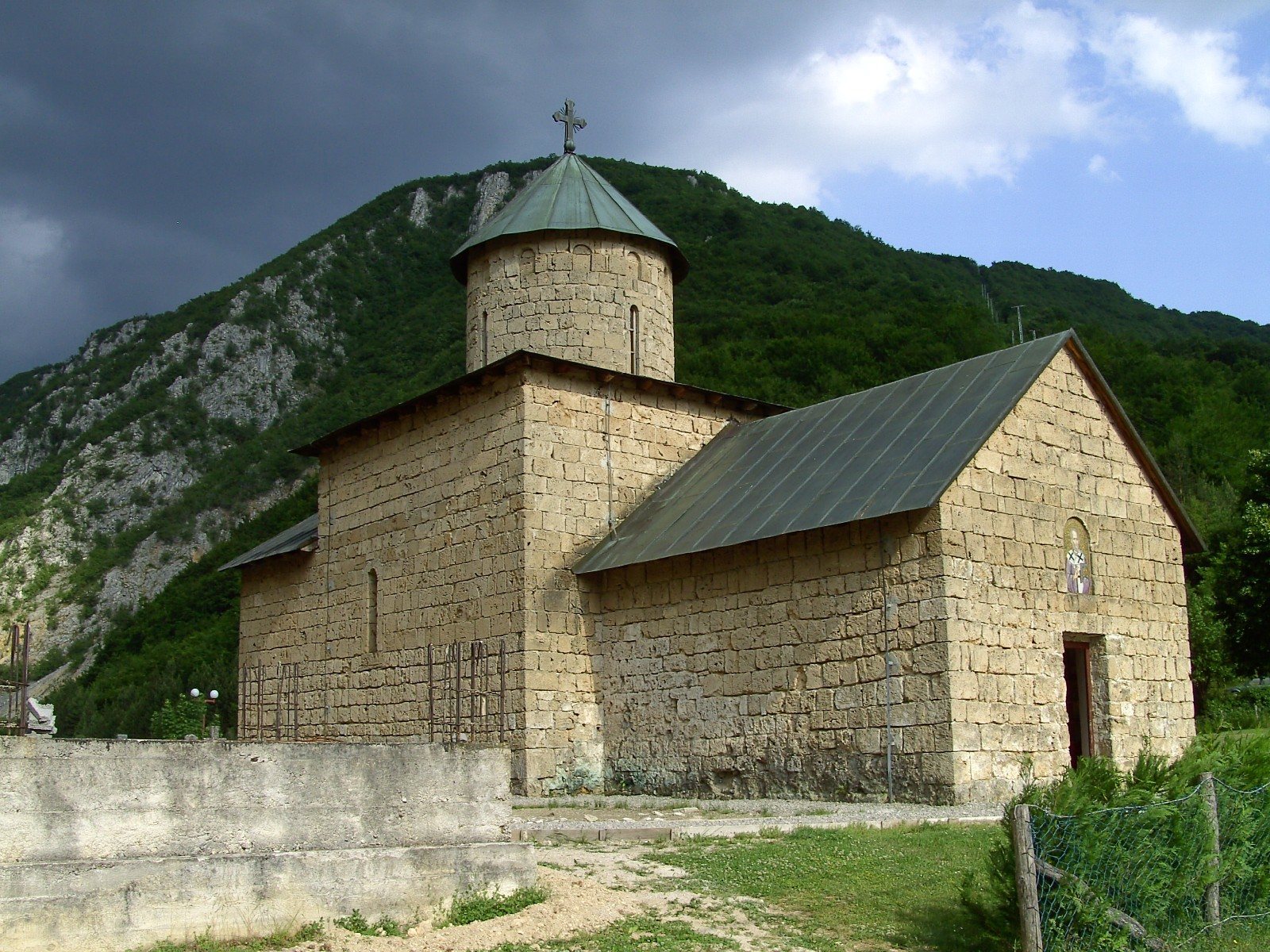
Rmanj Monastery stands in Martin Brod on the left bank of the Unac, close to its confluence with the Una. The surviving and reconstructed complex centers on the church and includes the monks’ residence and other architectural remains associated with the monastery’s long history.
Monastery Church
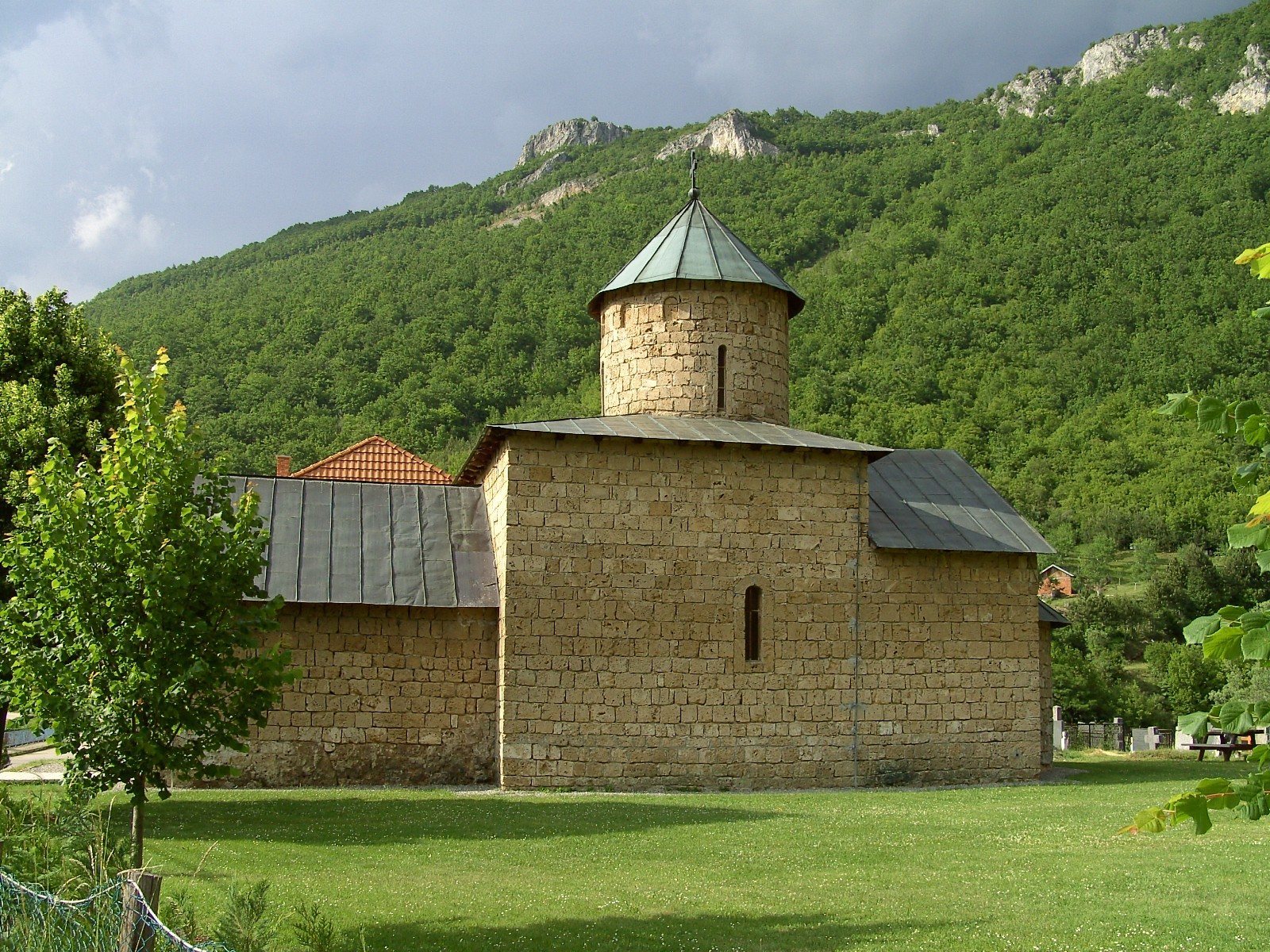
The church’s form has been compared with the churches of the monasteries of Rmanj, Krupa, and Krka. These buildings share a layout with four columns in the nave, two further columns in the narthex, an entrance or vestibule area, and a dome, while the walls are organized without pilasters. The comparable structures may date from the fourteenth century, a feature that has contributed to discussion of Rmanj’s early date.
Above the church entrance was an approximately one-metre-high image of Saint Nicholas, the monastery’s patron, painted on an iron plate. The church walls were whitewashed with lime. The Second World War bombing reduced the building to its foundations and destroyed many frescoes. Later reconstruction restored the church, while fragments of original fresco painting survive as part of the protected property.
Monastic Buildings and Associated Structures
The monks’ residence stood near the church and was reconstructed after the destruction of the twentieth century. Its foundation was consecrated in 1993, and the completed residence was occupied in the 2000s. The complex also retains or reconstructs architectural remains that formed part of the monastery’s historic ensemble.
Several structures associated with the monastery were recorded in the nineteenth century. In 1894, a round stone-built tower bearing the monastery’s name survived several hundred metres from the church. A wooden bell tower stood west of the church, with a shingle-roofed square space between the bell tower and the church. A monastery house a few steps from the church served as the residence of the parish priest of the Rmanj parish.