Sokolac Fortress: A Medieval Royal Fortress near Bihać

Site at a Glance
- Rating
- 4.6
- Popularity
- Low
- Country
- Bosnia and Herzegovina
- Primary era
- Medieval
- Eras represented
- Medieval, Early Modern
- Civilizations
- Kingdom of Bosnia, Ottoman
- Site type
- Military
- Remains
- Fortified Town
On this page7 sections
History
Sokolac Fortress is a medieval fortified town near Bihać in Bosnia and Herzegovina, associated with the year 1380 and built during the medieval period. Its importance grew from its position in the defense of Bihać, and medieval documents refer to it by the names Sokol, Zokol, and Sokolatz.
A royal town in the late Middle Ages
The oldest known document mentioning Sokol is a charter from 1395, which identifies it as a royal town. The settlement became involved in struggles over the royal throne and the Bosnian crown between Sigismund of Luxembourg and Ladislaus of Naples, rival kings whose conflict affected the medieval Kingdom of Hungary. Afterward, successive kings granted the town to nobles and later bought it back from them.
Petar Keglević, captain of Bihać, became Sokolac’s most notable commander. Because the fortress helped defend Bihać, King Ferdinand ordered that the town be transferred to Keglević from the lords who held it by royal authorization. Before the Ottoman conquest, Sokolac took part in several battles connected with the Ottoman Empire’s expansion westward.
Ottoman administration and abandonment
The Ottoman army captured Sokolac in 1592. During Ottoman rule, the fortress belonged to the Bihać Sanjak, an administrative district, until 1711. It later came under the Bihać Captaincy, a frontier administration for fortified settlements in the Bihać area, and was managed by a deputy official.
Although Sokolac remained part of this frontier system, the nearby fortress of Ripač, built on an island in the Una south of Sokolac, was more important during the Ottoman period and held a larger garrison. An inventory from 1833 listed two small cannons at Sokolac, while another undated inventory recorded twelve soldiers. The fortress was abandoned after 1878.
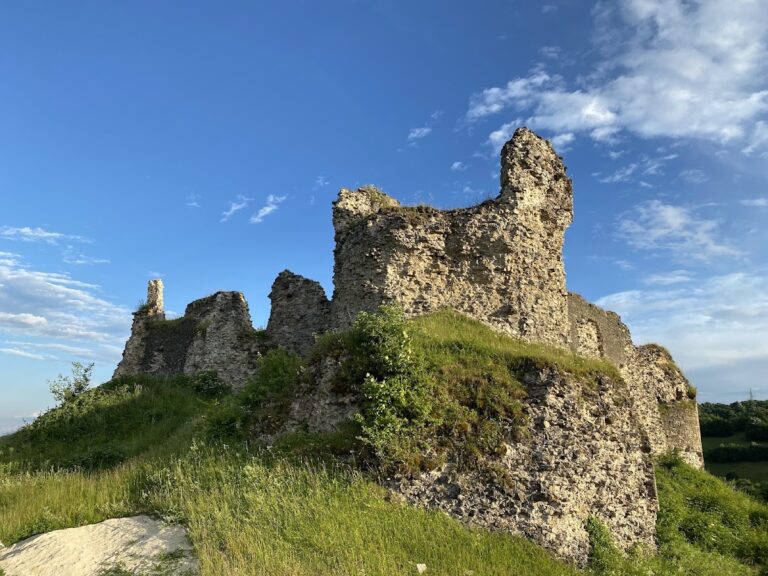
Sokolac Fortress was declared a national monument in 2008. A condition assessment carried out in 2010 described the remains as poor, making the surviving walls and towers especially important for understanding the site’s medieval and Ottoman history.
Remains
Hilltop setting and fortifications
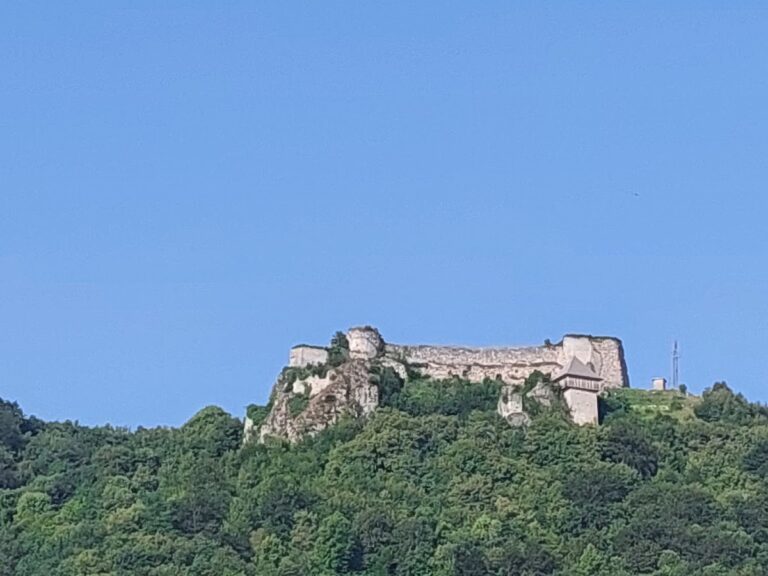
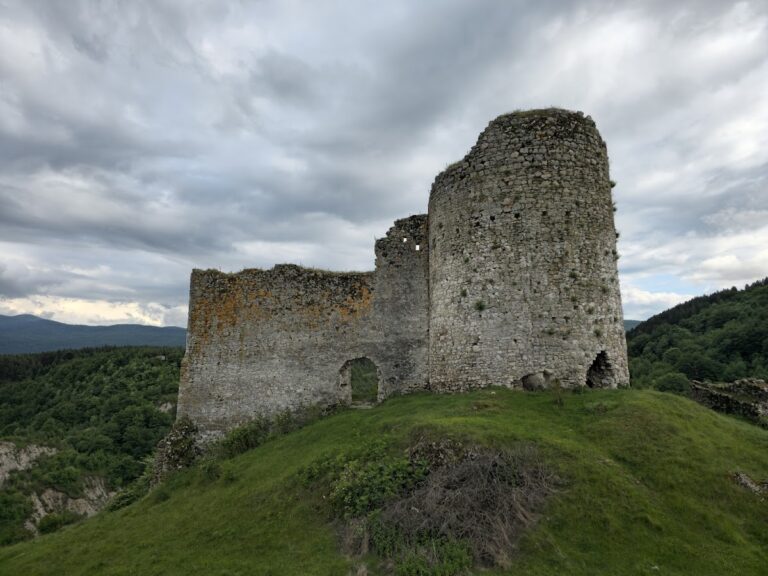
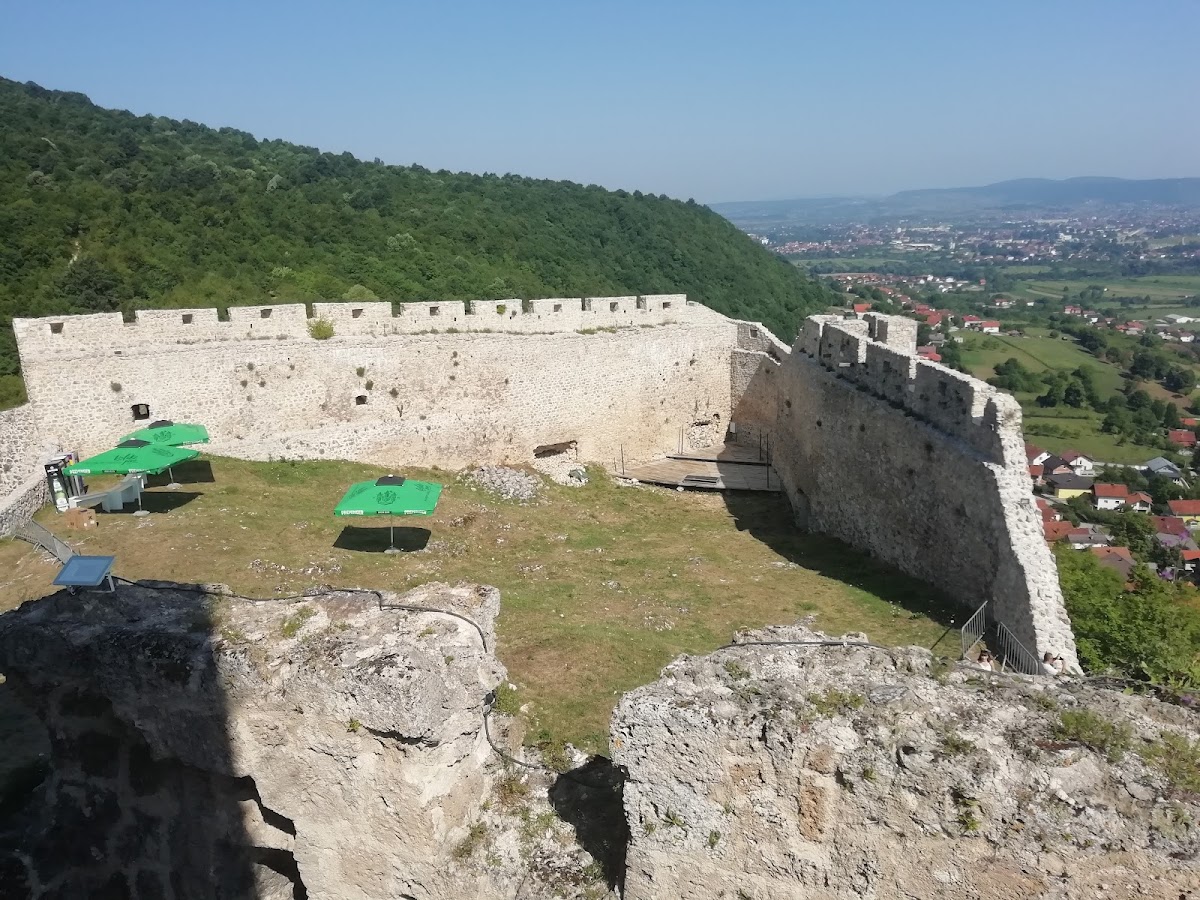
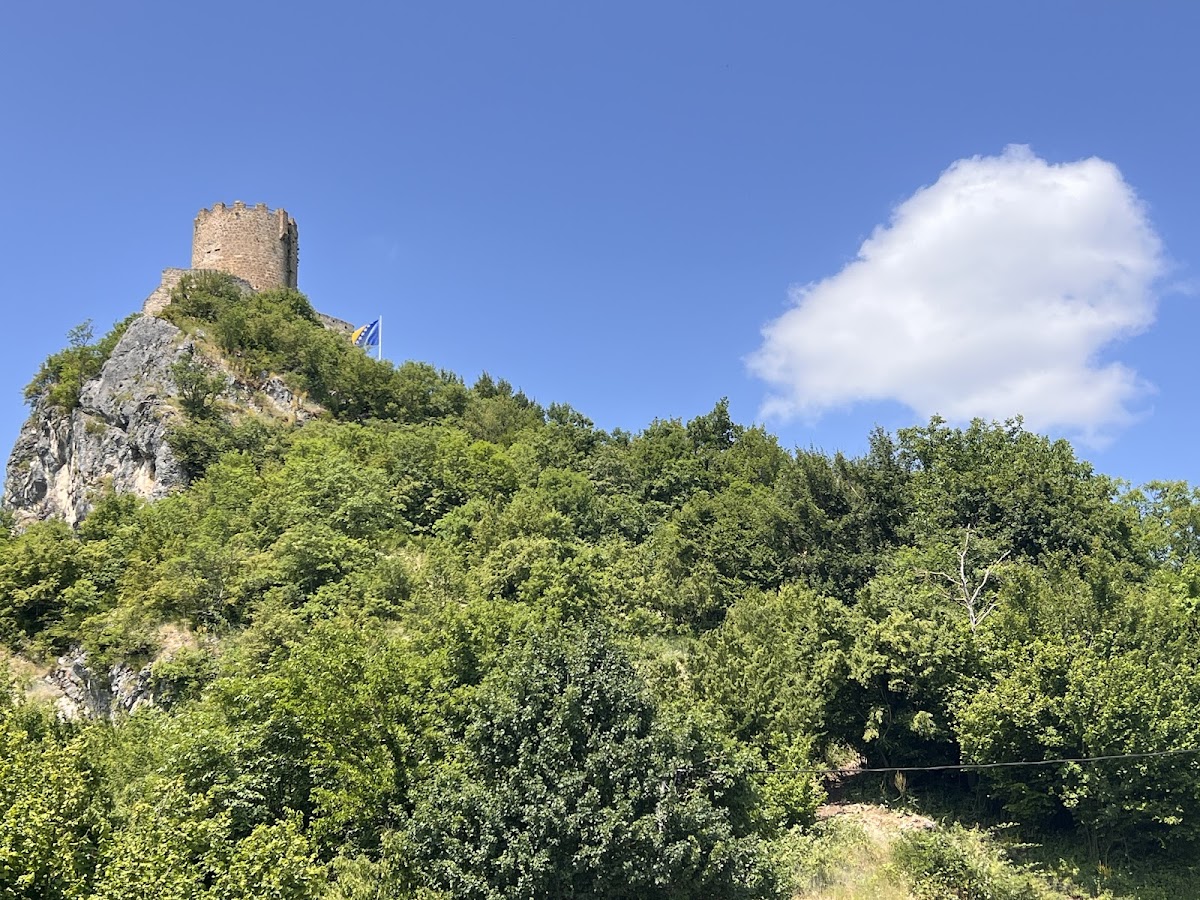
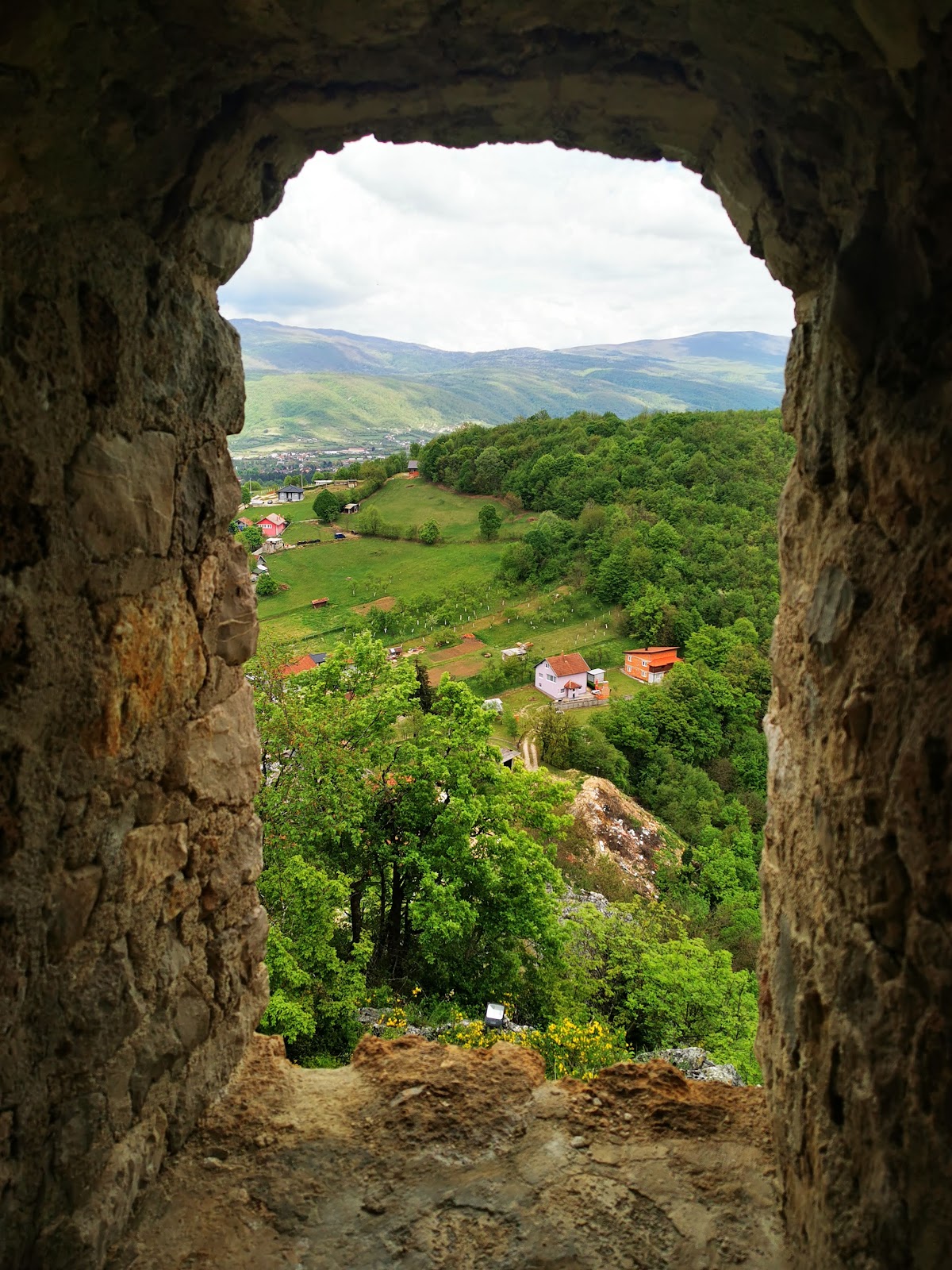
The fortress stands on a hill east of Debeljača Hill, on the left bank of the Una upstream from Bihać. Golubić Field, the river, and the main road lie below the hill. The present stronghold has a triangular plan and preserves elements from both its medieval and Ottoman fortifications. Its main enclosure measures as much as 175 metres in length and 120 metres in width.
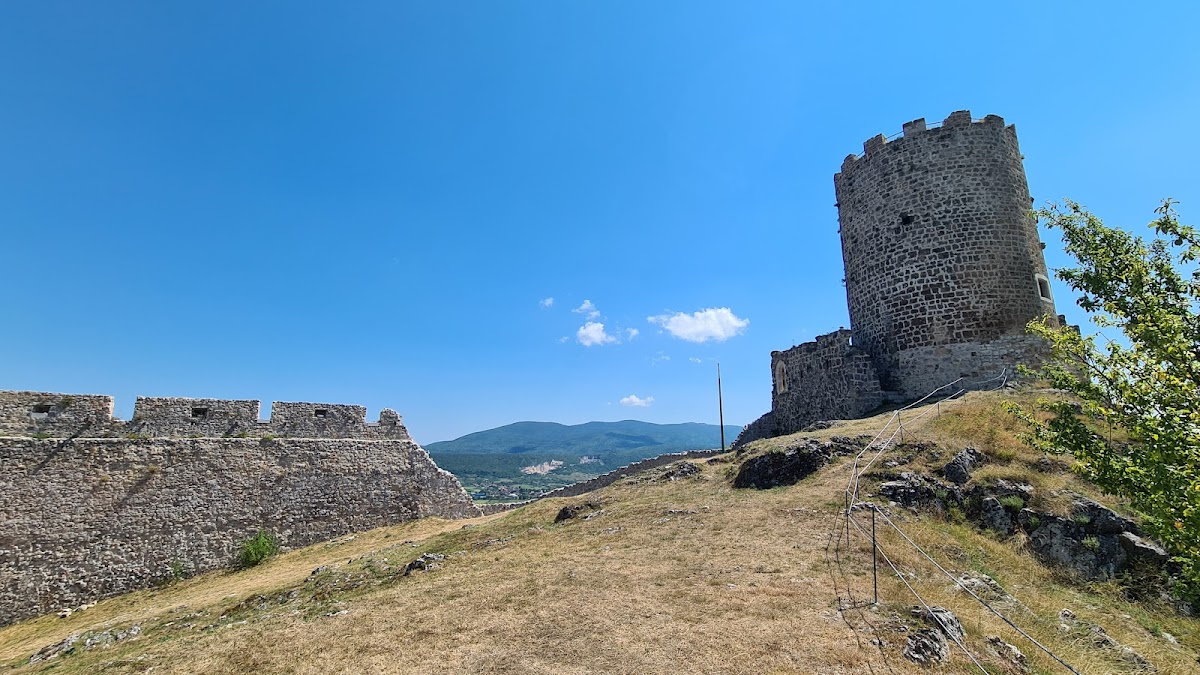
The ramparts retain closely spaced parapets, each pierced by a small central gun embrasure, an opening through which firearms or cannons could be fired. Consoles and holes beneath the parapets show that the walls also carried a wooden patrol gallery. Houses built against the ramparts survive as remains within the extensive interior.
Gate tower and main tower
Access through the fortification was marked by a three-storey Gate Tower, whose upper section retains machicolations, projecting openings through which defenders could attack below. At the highest point of the enclosure stands the Main Tower, enclosed on all four sides by a small inner yard with an irregularly square plan.
The Main Tower is 10 metres in diameter and 16 metres high. Its entrance is on the second floor, connected to the inner enclosure by a wooden staircase. Inside, the rooms have pointed vaults, fireplaces, and quadrangular windows with stone benches. Consoles set into the walls supported shelves. Gun embrasures and a protective parapet occupy the top of the tower, while its original pointed wooden roof has disappeared.
A staircase from the first floor descends to a cramped ground level containing a small room. Excavations inside the inner enclosure also revealed a cistern, which formed part of the fortress’s water arrangements.
Prehistoric hillfort
The hill was occupied by a prehistoric hillfort during the Bronze Age. That earlier enclosure measured approximately 670 by 170 metres, and excavations recovered pottery dating to the tenth or ninth century BC. Its occupation belongs to the same period as the pile dwellings at nearby Ripač, when the Una region was inhabited by the Japodi, an ancient Illyrian people.