Keynsham Abbey: An Augustinian Monastery in England
Site at a Glance
- Rating
- 5
- Popularity
- Very Low
- Country
- United Kingdom
- Primary era
- Medieval
- Eras represented
- Medieval
- Civilizations
- English
- Site type
- Religious
- Remains
- Monastery
On this page11 sections
History
Keynsham Abbey was an Augustinian monastery in Keynsham, United Kingdom, founded around 1166 by William, Earl of Gloucester. It was established in the medieval period as a house of canons regular, religious clergy who lived in a community while carrying out clerical duties. A religious settlement had already existed at Keynsham during the ninth and tenth centuries, and the new abbey was associated with the Order of Saint Victor, an influential Augustinian reform tradition. Its formal name was the House of the Canons of Saint Austin and Saint Victor.
Foundation and endowment
William founded the abbey in the year of his son Robert’s death, traditionally fulfilling Robert’s dying request. The foundation received the entire manor and hundred of Keynsham. A medieval manor was an estate governed through a lord’s authority, while a hundred was an administrative subdivision of a county. The grant covered about 24,520 acres, or 9,920 hectares, and included the parishes of Brislington, Burnett, Chelwood, Compton Dando, Farmborough, Keynsham, Marksbury, Nempnett Thrubwell, Pensford, Priston, Publow, Queen Charlton, Saltford, Stanton Drew, Stanton Prior, and Whitchurch.
The endowment also included numerous parish properties. These included the church of St. Mary and St. Peter and St. Paul, together with chapels at Brislington, Charlton, Felton or Whitchurch, Publow, and Pensford. The superior of the community was an abbot, reflecting the institutional status of the house and the scale of its foundation.
Royal connections and administration
King Edward I stayed at the abbey in 1276 while travelling from Bath to Bristol. A township later developed around the religious house. In 1307, Edward II granted Keynsham a weekly Tuesday market and an annual fair held on the festival of the Assumption. Edward IV confirmed these privileges in 1461. The abbey also acquired substantial property in Ireland.
The community faced repeated criticism over its administration and discipline. An episcopal visitation in 1350 admonished the canons for failing to secure the outer gate, exposing church ornaments and the house’s treasures to theft. They were also criticised for inadequate household accounts, irregular attendance at prayers, hunting with dogs, and dining outside the precinct. A further visitation in 1353 found continuing problems with unguarded doors and poor accounting. Up to two-thirds of the canons were missing communal meals and engaging in gaming. Similar complaints were recorded in 1450.
The abbey’s arms displayed six golden clarions, or trumpets, on a red field. This design derived from the arms of the de Clare earls of Gloucester.
Dissolution and dismantling
Henry VIII’s Act of Supremacy in 1534 transferred supreme authority over the English Church to the English monarch. The last abbot, John Staunton, the prior William Herne, the subprior John Arnold, and twelve other canons subscribed to the act and pledged loyalty to Henry as head of the church.
Richard Layton visited Keynsham Abbey in August 1535 during Henry VIII’s survey of ecclesiastical finances and records. On 28 January 1539, John Tregonwell and William Petre arrived as royal visitors. The abbot and ten canons surrendered the house and received pensions or annuities. The abbey was disestablished during the Dissolution of the Monasteries, the sixteenth-century suppression of England’s monastic houses, in 1539.
The surrender began about four centuries of dismantling and removal. Within two years, the conventual church was being taken apart and sold. Richard Walker received £12 for melting down lead from the church, cloister, and steeple, while Frances Edwards bought the church’s seven bells and various attached buildings. The whole site eventually passed to Thomas Bridges, who dismantled the remaining structures and built a family house there. In 1559, Bridges left additional abbey stone for repairs to the bridge and causeway over the nearby River Avon.
Later destruction and archaeological investigation
The Bridges family house was demolished in 1776. From 1865 until around the turn of the twentieth century, Victorian builders and excavators removed more stone. In some places, the search for reusable material reached bedrock, while other areas retained isolated stretches of unsuitable stone or remains buried beneath discarded deposits.
In the 1960s, archaeologists excavated the site before construction of the A4 Keynsham bypass. The planned road was intended to pass directly through the abbey grounds and would have destroyed surviving portions. Among the finds was a fipple flute, an early recorder-type instrument.
Keynsham Abbey was associated with the burials of Jasper Tudor, Duke of Bedford, who died at Thornbury Castle on 21 December 1495, William Fitz Robert, 2nd Earl of Gloucester, and his son Robert Fitzwilliam. Lady Agnes Cheyne had bequeathed Jasper Tudor a burial place at Keynsham in 1494. Jasper was a Welsh nobleman and Lancastrian supporter, as well as the uncle of Henry VII. The surviving remains are designated both a Grade I listed building and a Scheduled Ancient Monument.
Remains
Setting and archaeological survival
The abbey stood south of the River Avon at its confluence with the River Chew, in the area now known as the Keynsham Hams. The site occupies an alluvial flood plain of open fields, pastures, and meadows divided by hedgerows and ditches. It lay near the former Roman road that later became the Bath Road between London, Bath, and Bristol. Evidence of prehistoric habitation and a fourth-century Roman settlement, possibly called Trajectus, also survives in the area. That settlement was abandoned after the Roman legions withdrew from Britain.
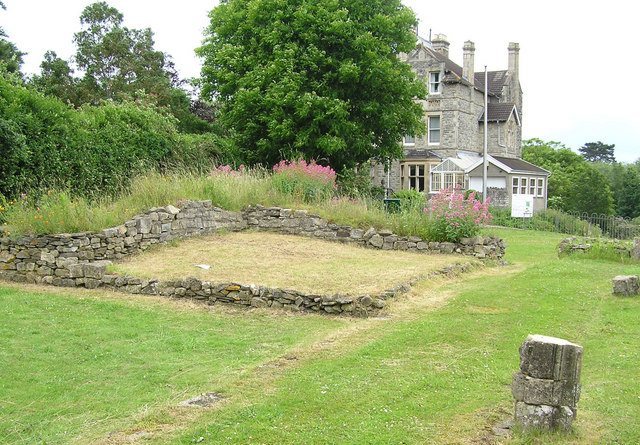
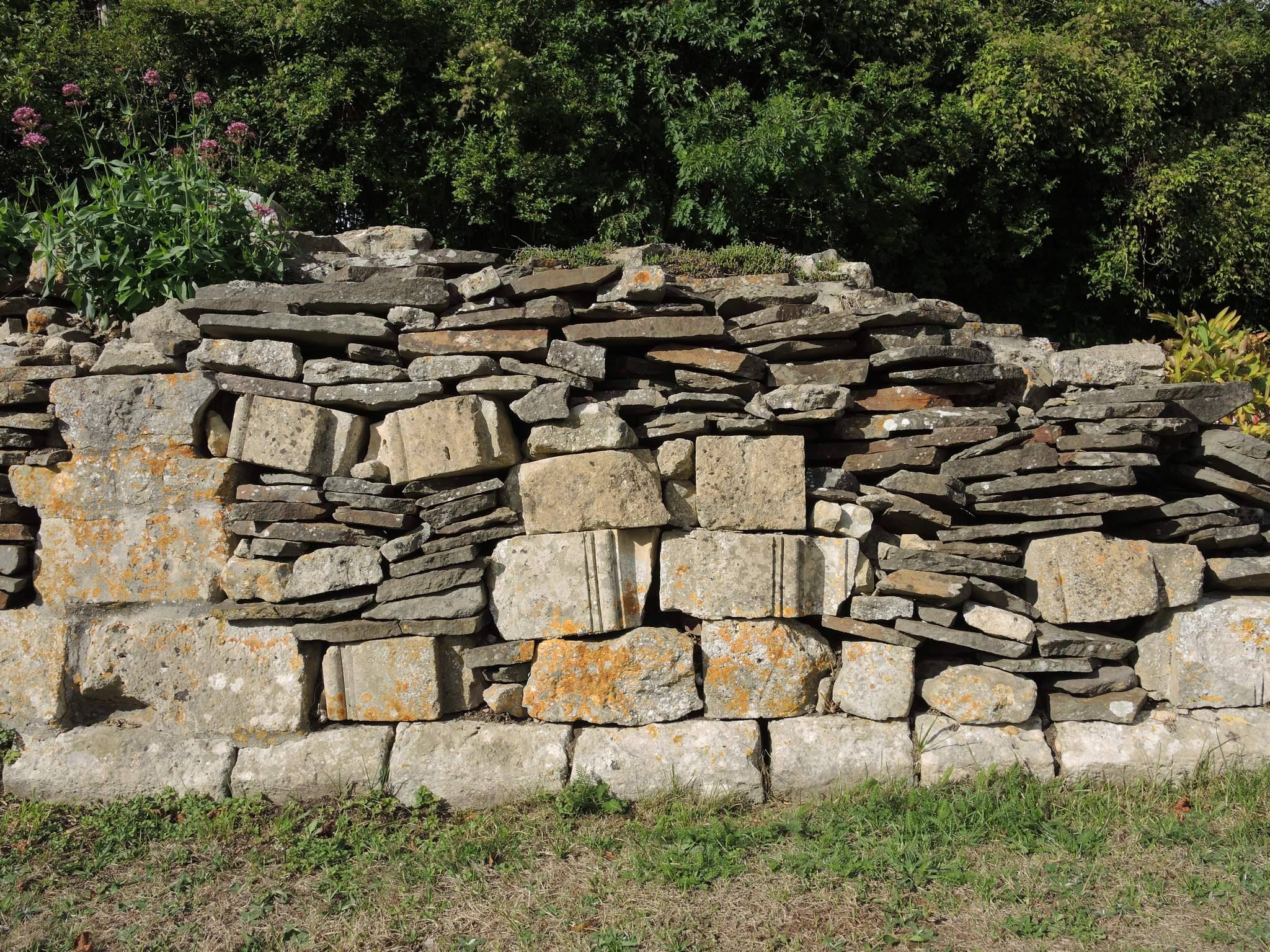
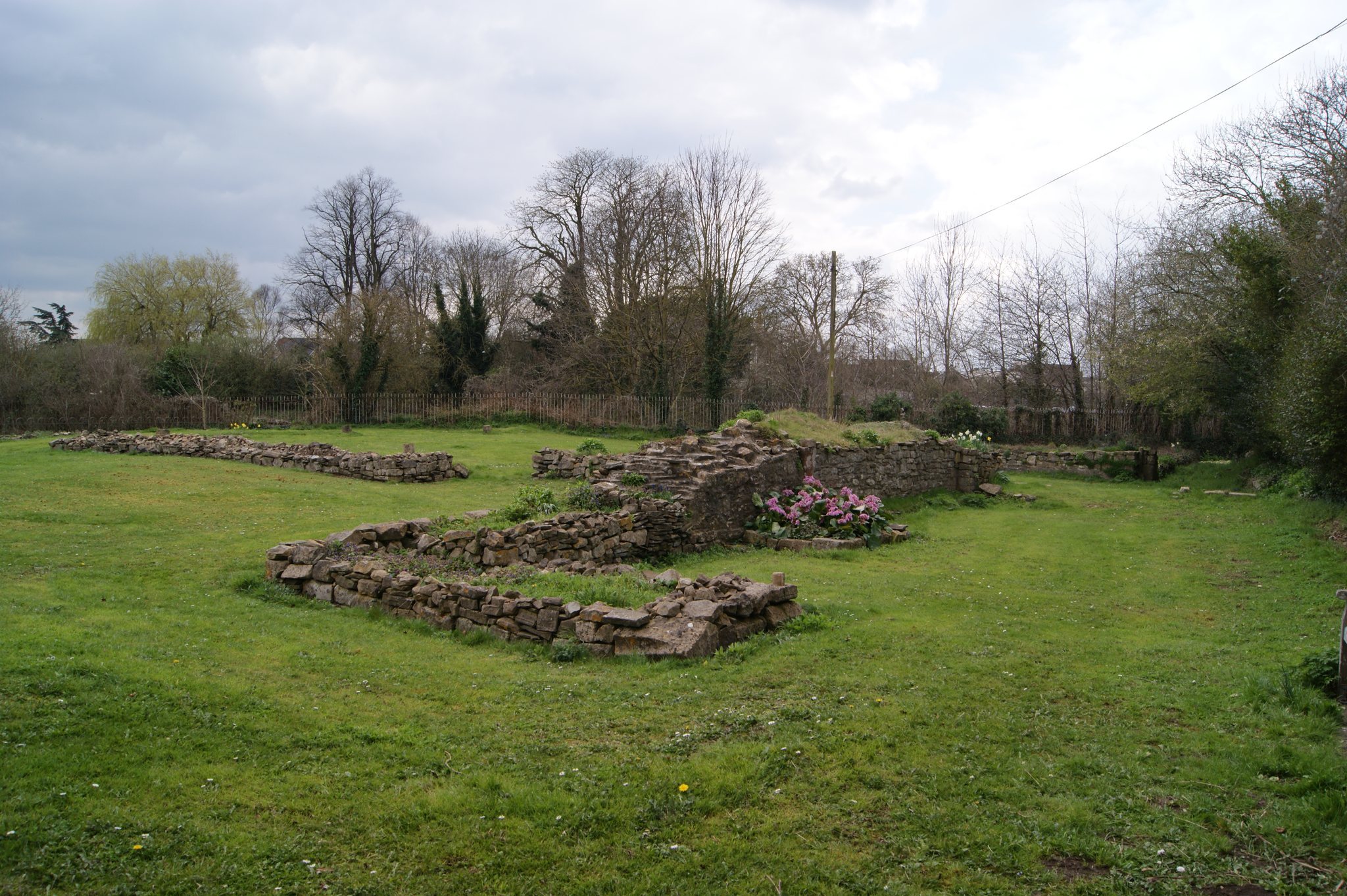
The ruins are visible in Keynsham’s Memorial Park near the A4 and Keynsham railway station. Centuries of dismantling, quarrying, and reuse reduced the abbey to isolated stretches of unsuitable stone and buried remains. Excavation for reusable material reached bedrock in some areas, while the twentieth-century archaeological work recovered objects that added evidence for activity at the site, including the fipple flute found before the bypass plans.
Monastic buildings
Conventual church
The conventual church was the principal church of the monastic community. It formed part of a larger abbey complex that also included a cloister, steeple, outer gate, and attached buildings. The church had seven bells. After the Dissolution, its structure was dismantled and sold, and its lead was melted down for reuse. The bells and attached buildings were also sold, contributing to the removal of the church from the medieval site.
Cloister and steeple
The cloister and steeple were dismantled alongside the church after the abbey surrendered in 1539. Lead was recovered from both structures, while later building activity removed further stone. The surviving physical evidence therefore consists of isolated stretches of masonry and buried material within the excavated area, together with the archaeological traces of the wider complex.
Outer gate and attached buildings
The outer gate controlled access to the monastic precinct and was among the features criticised during the fourteenth-century visitations because it was not kept secure. Other buildings were attached to the church and wider complex. Their materials were progressively removed after the Dissolution, and some were incorporated into later construction, including the Bridges family house and repairs to the bridge and causeway over the River Avon.