Capuchin Monastery in New Town: A Former Religious Complex in Prague
Site at a Glance
- Rating
- 4.9
- Popularity
- Very Low
- Country
- Czechia
- Primary era
- Early Modern
- External website
- Open
- Eras represented
- Early Modern, Modern
- Civilizations
- Austrian Empire, Habsburg, Holy Roman Empire, Kingdom of Bohemia
- Site type
- Religious
- Remains
- Monastery
On this page13 sections
History
The Capuchin monastery in New Town is a former religious complex in Prague, Czechia, founded in 1630 beside the Church of Saint Joseph during the Baroque period. Its development was shaped by the Capuchin reform branch of the Franciscan order, whose members traditionally emphasized poverty, simplicity, and preaching.
Capuchin Foundation
Capuchins arrived in the Bohemian lands in 1599 under Saint Lawrence of Brindisi, a Capuchin friar and preacher invited by Prague Archbishop Zbyněk Berka of Dubá and Lipá. Their first Prague monastery was founded at Hradčany in 1600. In New Town, they initially settled in a house on the site in 1630 and 1631, while the convent was formally established in 1633.
Emperor Ferdinand II, the Habsburg ruler of the period, supported the undertaking. The principal benefactor was Gerhard, Baron of Questenberg, who made a major contribution in 1636. Construction of the monastery building began in 1638, while the associated Church of Saint Joseph was built between 1636 and 1653.
Construction and Consecration
The work faced repeated difficulties during the Thirty Years’ War, the major European conflict of 1618 to 1648. The complex was designed by the builder Melchior Meer with the assistance of Gione Decapaoli. The monastery and church were consecrated together in 1653 by Prague Archbishop Cardinal Arnošt Vojtěch of Harrach.
A major fire damaged the monastery in 1689, after which the building was restored. The complex continued to serve the Capuchin community until the reforms of Emperor Joseph II, a Habsburg ruler who dissolved many religious houses in the late eighteenth century. The monastery was dissolved in 1782, and its church became a subsidiary church of the Parish of Saint Peter at Poříčí.
Barracks and Nineteenth-Century Capuchin Return
The former monastery was acquired by the military, and Josefská Barracks were established there in 1799. During the barracks period, in 1834, the Czech playwright Josef Kajetán Tyl wrote the text of the musical play Fidlovačka aneb Žádný hněv a žádná rvačka, including the words of the future Czech national anthem, Kde domov můj. The barracks were renamed Jiří of Poděbrady Barracks in 1919.
After 1830, the Capuchins sought to regain the Church of Saint Joseph and succeeded in 1832. In 1861, they adapted the older hospice beside the church for their needs and planned a new monastery, although that project was not completed.
Twentieth-Century Changes and Capuchin Renewal
After the Second World War, the Capuchins were expelled again, and the former hospice became a municipal music school. After 1950, the Church of Saint Joseph again became part of the Parish of Saint Peter at Poříčí. The barracks were abolished in 1993. Apart from its facade, the former barracks building was demolished, and the Palladium multifunctional complex was built on the site, opening in 2007.
The Capuchins returned to the church in 1992. A new small monastery was later built on the parcel behind it and was consecrated in 2008 by Bishop Jiří Paďour. This later building continues the Capuchin presence beside the surviving church.
Remains
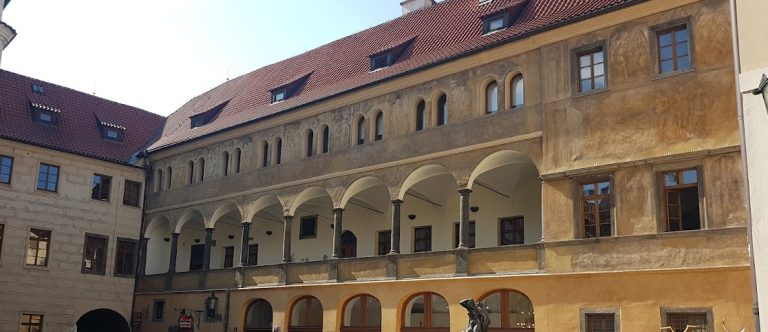
The former complex stood on Na Poříčí Street in Prague’s New Town and was organized around a cloister, a covered walkway enclosing a courtyard. Its construction followed a Venetian model used by many monasteries of the period. The original monastery was largely demolished after 1993, while the facade, the Church of Saint Joseph, and a later small monastery remain associated with the site.
Former Monastery Complex
Monastic Layout and Facilities
The monastery contained friars’ dormitories and cells, a novitiate for members in training, an infirmary, an oratory, and a library with a scriptorium, the room used for copying manuscripts. A heated room, toilets, washrooms with a hot-water boiler, and a refectory, or communal dining hall, served the community’s daily needs. The service areas included a black kitchen, a food-preparation room, a pantry, a store for valuable goods, workshops, and a brewery.
Cloister and Boundary Features
The cloister surrounded an enclosed courtyard and included a circular fountain known as a lavatorium. The former eastern boundary wall featured a stylized horse’s head created by P. Roučka. The surviving facade preserves part of the appearance of the former monastery, while the wider site is now largely occupied by the Palladium multifunctional complex.
Church and Associated Buildings
Church of Saint Joseph
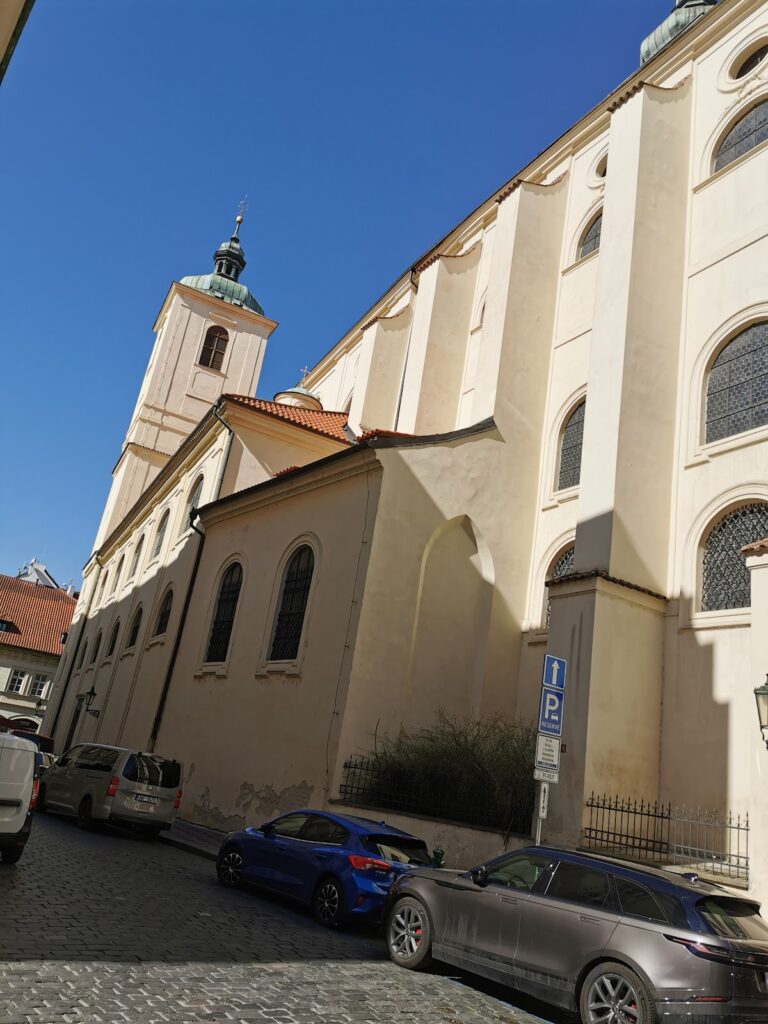
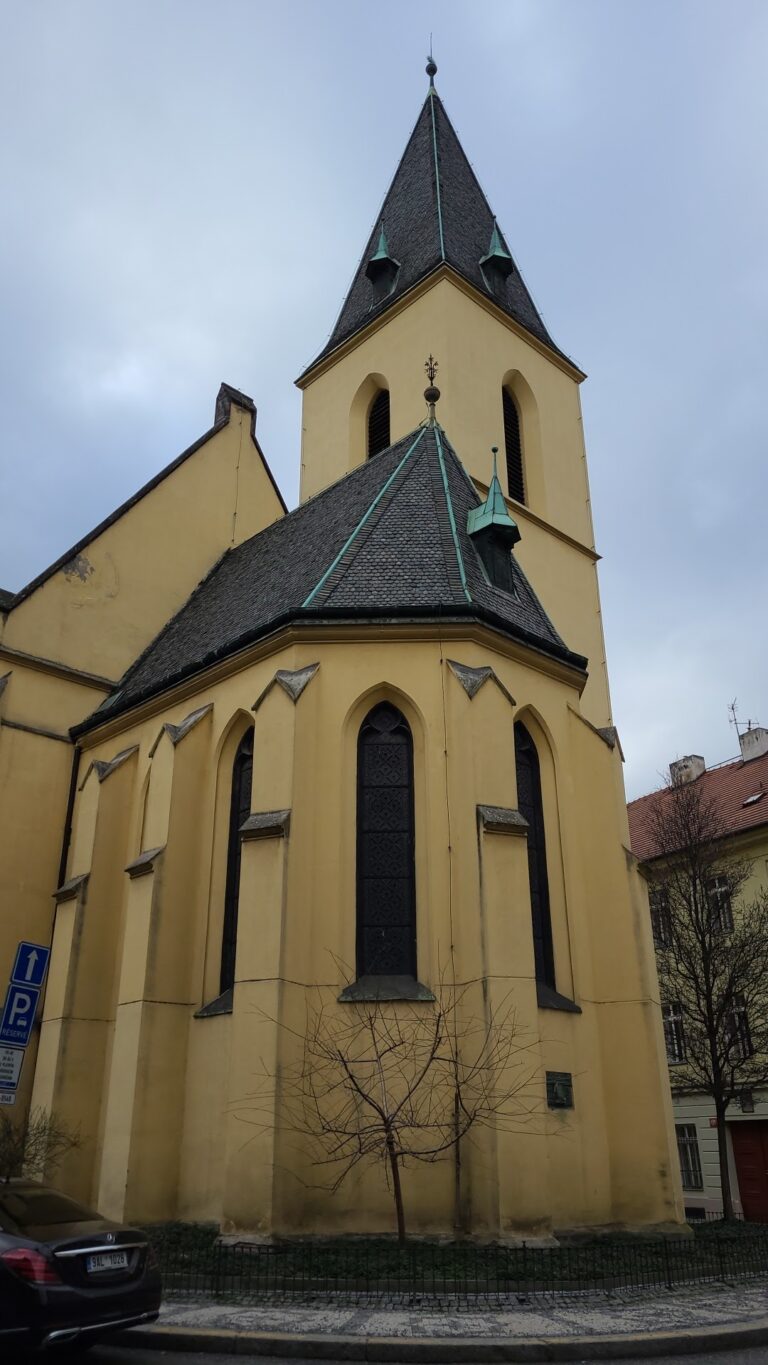
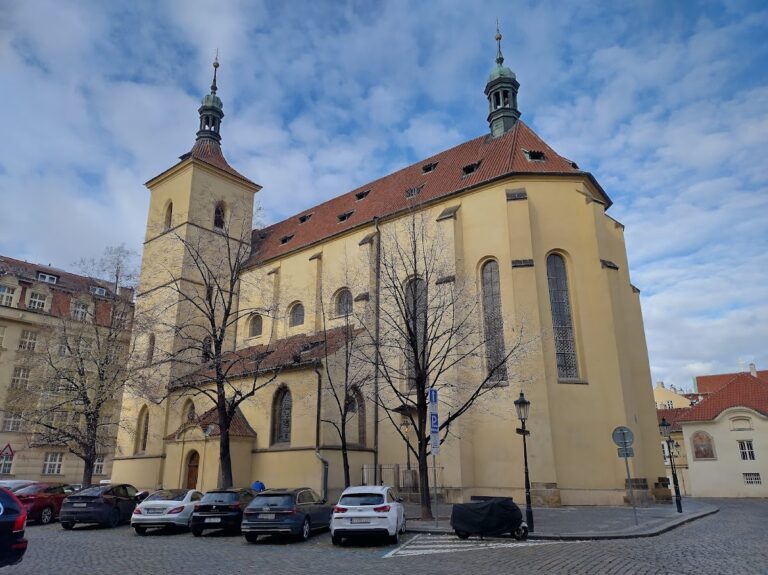
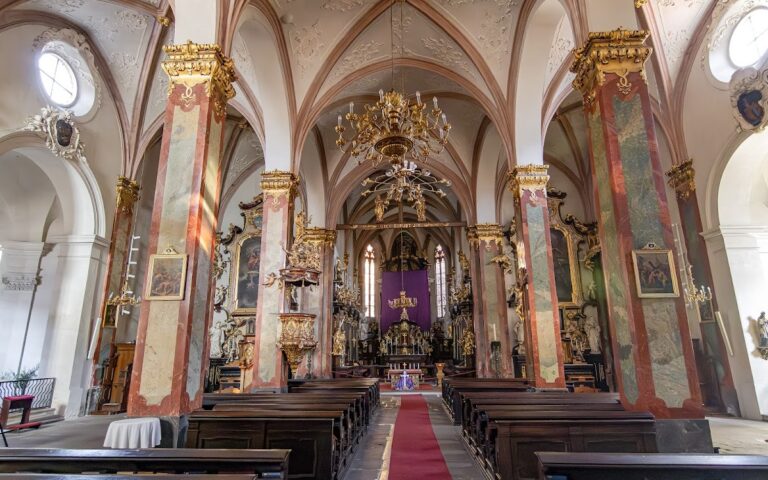
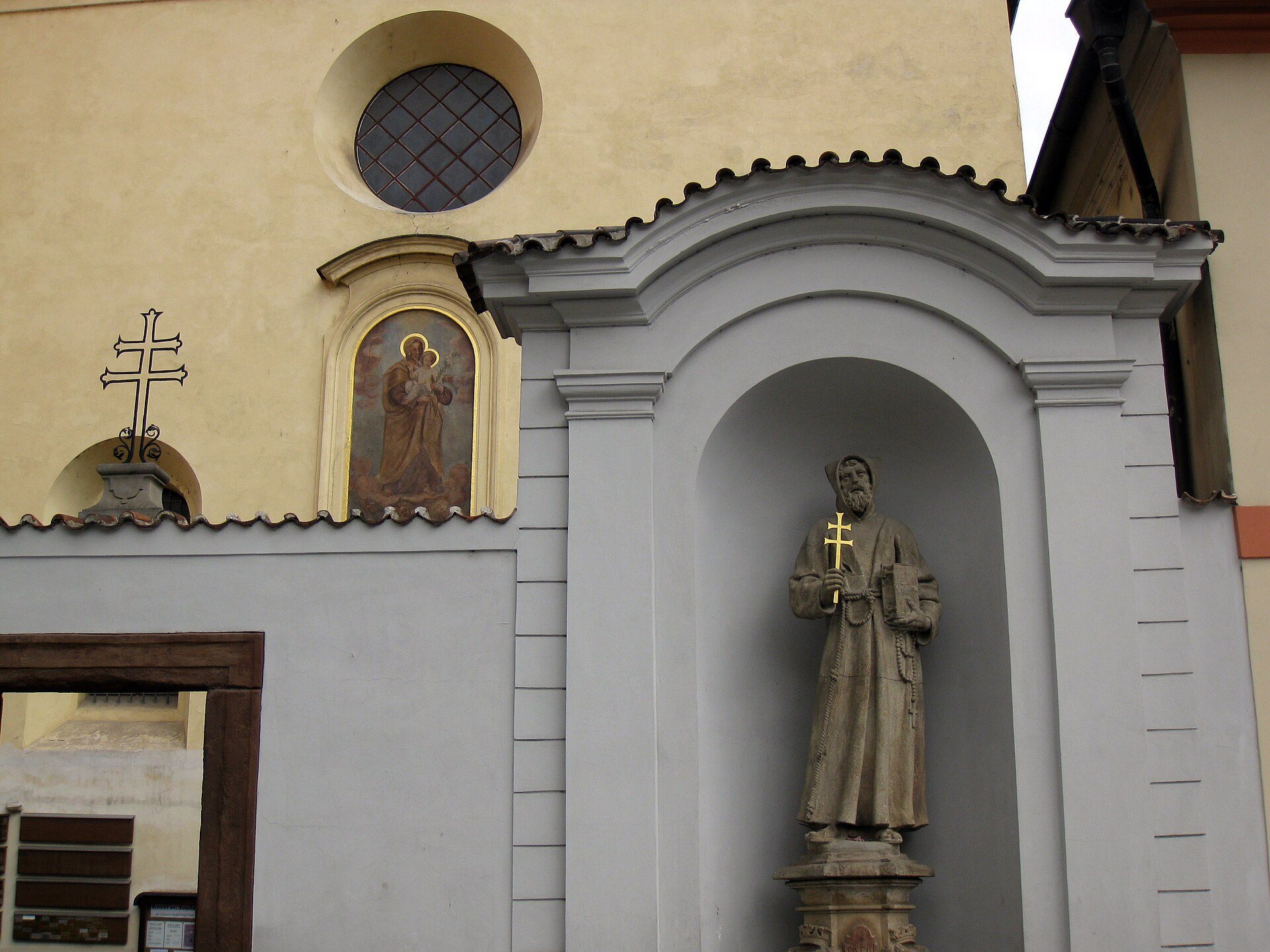
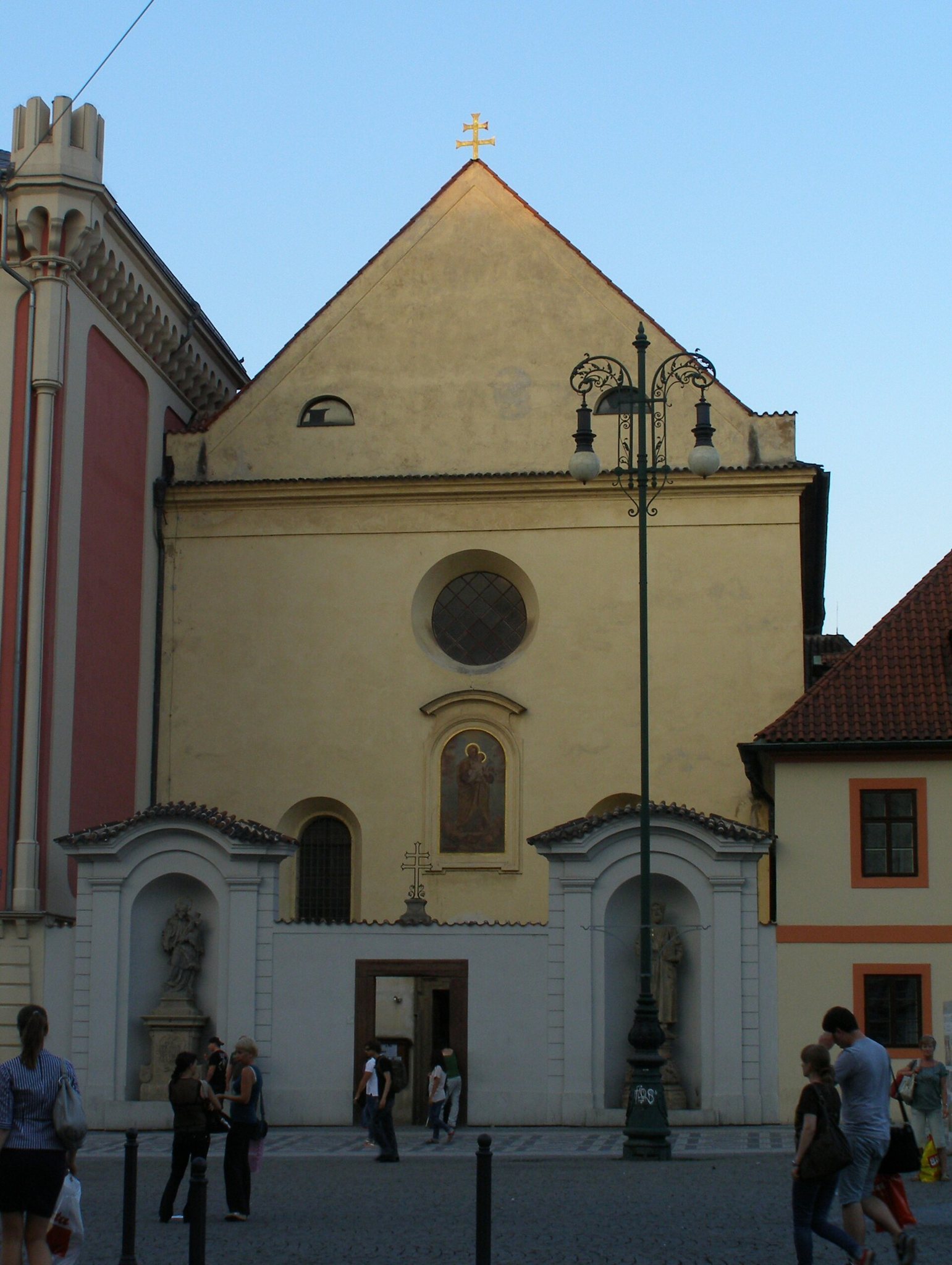
The Baroque Church of Saint Joseph remains beside the former monastery site. Its construction belongs to the seventeenth-century foundation of the complex, and the church continues to represent the central surviving part of the former Capuchin establishment.
Former Hospice
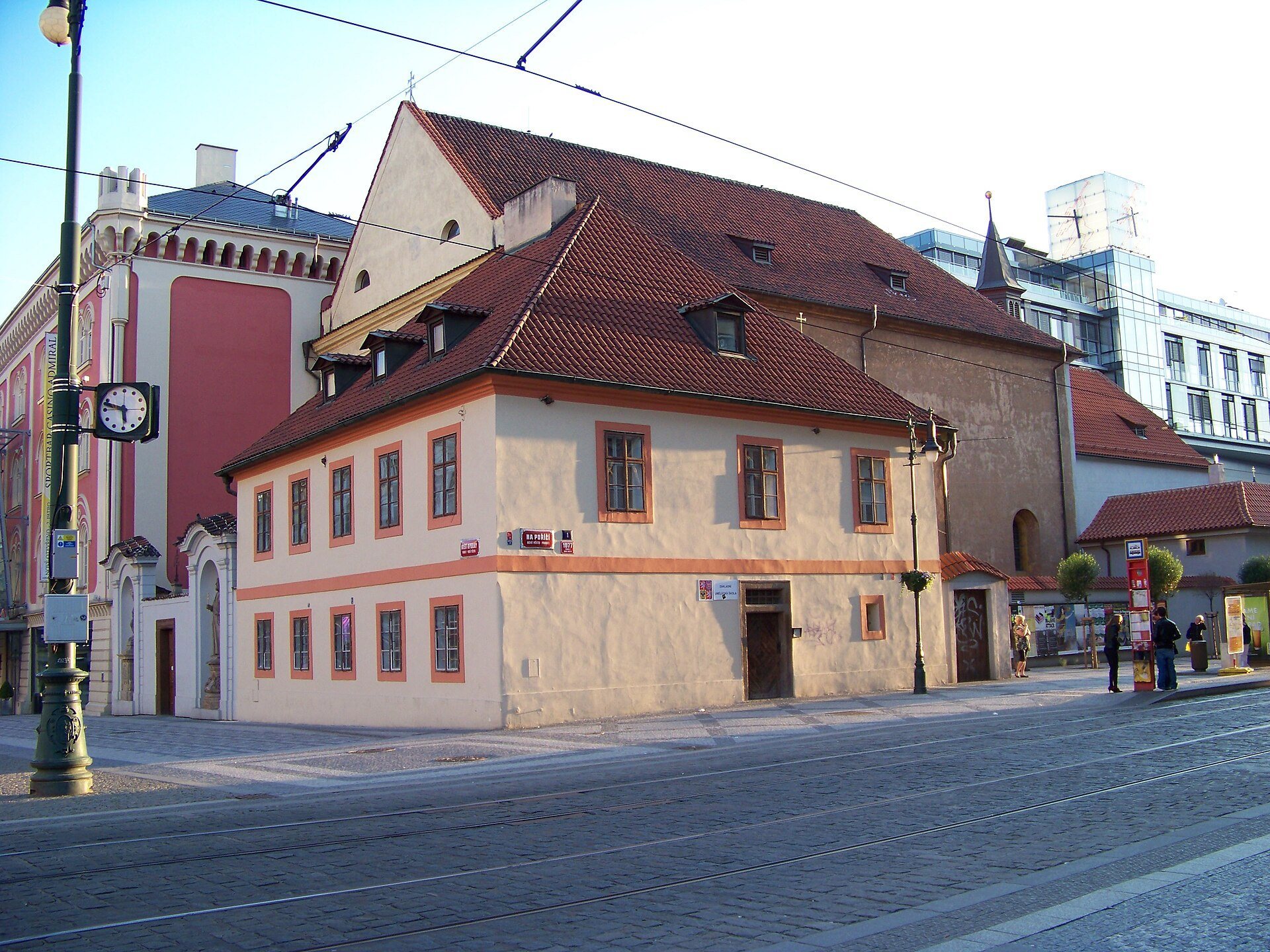
An older hospice stood to the right of the church. It was rebuilt in a Classical-Baroque style in 1861 for Capuchin use and later housed the municipal music school. The building therefore preserves a separate phase of the site’s religious and civic history.
Later Capuchin Monastery
After the Capuchins returned in 1992, a new small monastery was constructed on the parcel behind the Church of Saint Joseph. Consecrated in 2008, it provides the later architectural expression of the community’s continuing presence beside the historic church.