Hōenzaka Site: A Kofun-Period Royal Warehouse Complex
Site at a Glance
- Rating
- 3.8
- Popularity
- Very Low
- Country
- Japan
- Primary era
- Classical
- External website
- Open
- Eras represented
- Classical
- Civilizations
- Yamato
- Site type
- Economic
- Remains
- Warehouse
On this page5 sections
History
Hōenzaka Site is a fifth-century royal warehouse complex in Osaka, Japan, built during the Kofun period, an era from approximately the third to sixth centuries associated with large burial mounds and the rise of powerful political authorities. Located at the northern end of the Uemachi Plateau, it occupies the northwestern part of the Naniwa Palace Site, where about 200 building remains from before the palace have been identified. The complex has the largest known total floor area for a Kofun-period warehouse group and is interpreted as a storehouse district under direct royal control.
Construction and royal administration
The warehouses were probably built during the first half of the fifth century, specifically in the second quarter and during the TK216–ON46 phase of Sue ware. Sue ware was a high-fired ceramic tradition whose changing forms help archaeologists establish dates for Kofun-period contexts. The complex may have belonged to the Naniwa miyake, a royal estate or storehouse institution, although this identification remains theoretical.
Its creation has been linked to the construction of the Naniwa canal, an artificial waterway, and the establishment of Naniwa Port to the north. It is also associated with the tradition that Emperor Nintoku built the Takatsu Palace and excavated the canal. The complex is thought to have been established under the person buried in Daisenryo Kofun and abandoned under the person buried in Oka Misanzai Kofun. In interpretations of the Wa Five Kings, rulers of ancient Wa known from Chinese dynastic records, these figures are respectively identified with Chin and Bu.
Abandonment and rediscovery
The warehouse complex was abandoned during the latter half of the fifth century, in the third or fourth quarter and during the TK23 phase of Sue ware. This chronology was revised after the dating of early Sue ware was reassessed. Hōenzaka represents an early stage in Naniwa’s development. Building continued in the area from the middle Kofun period through the period of the Naniwa palaces, while Naniwa contracted after the warehouses were abandoned before beginning to expand again around the sixth century.
Excavations began in 1987 on the former site of Osaka Municipal Central Gymnasium and revealed the remains. On January 29, 2001, the Hōenzaka area was added to the existing national historic site designation for the Naniwa Palace Site. The combined designation is known as “Naniwa Palace Site with Hōenzaka Site.”
Remains
The warehouse complex
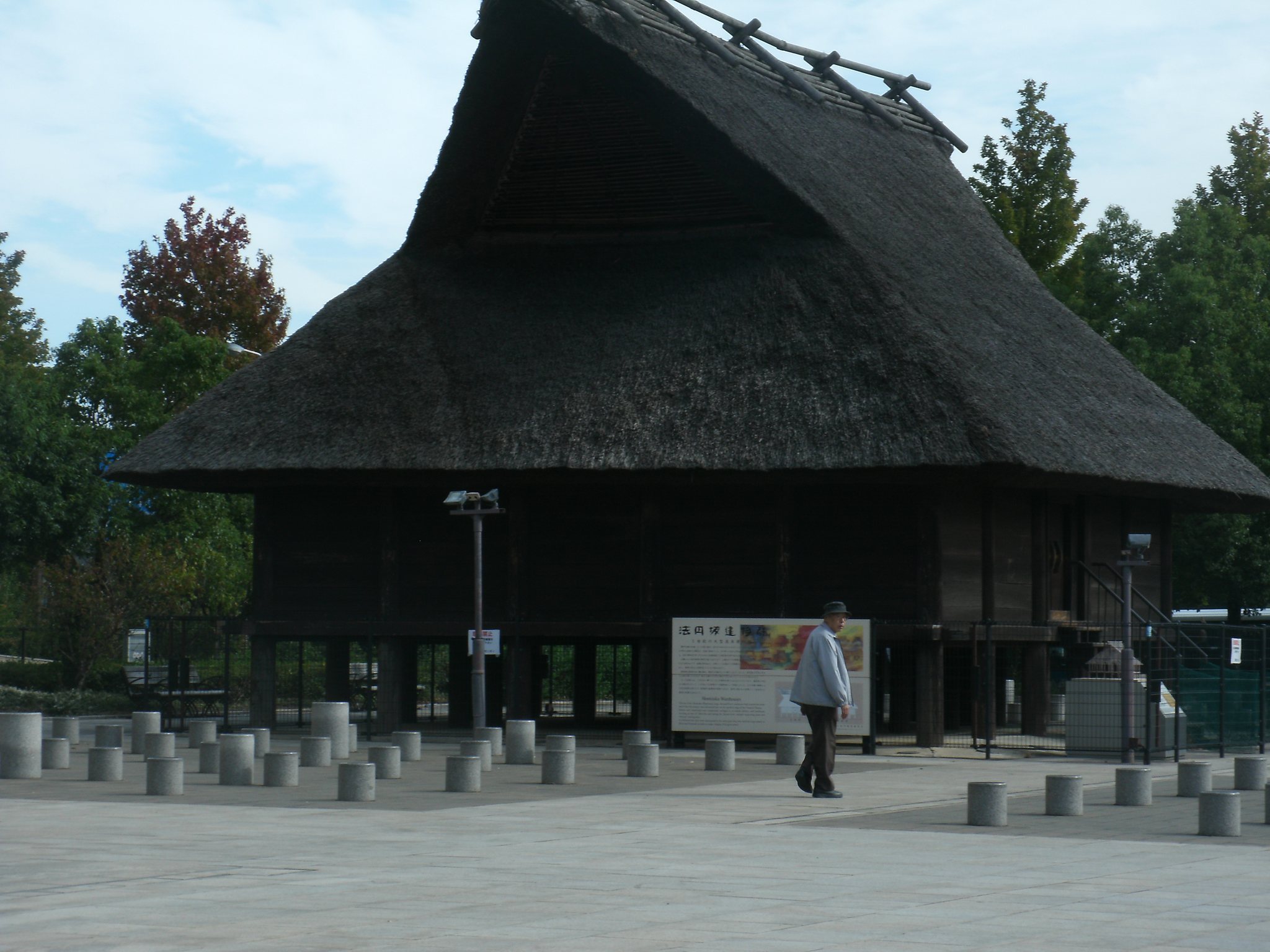
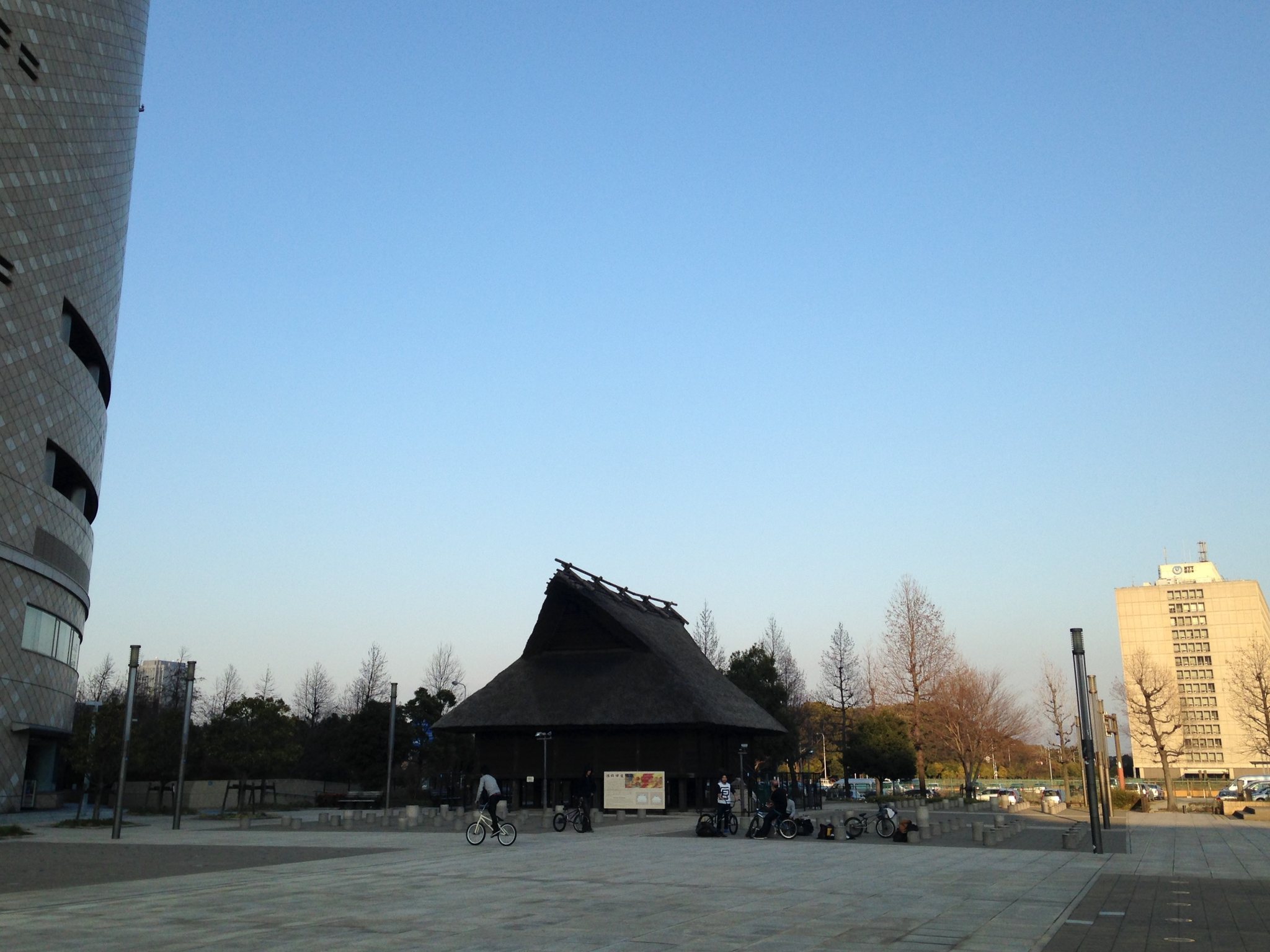
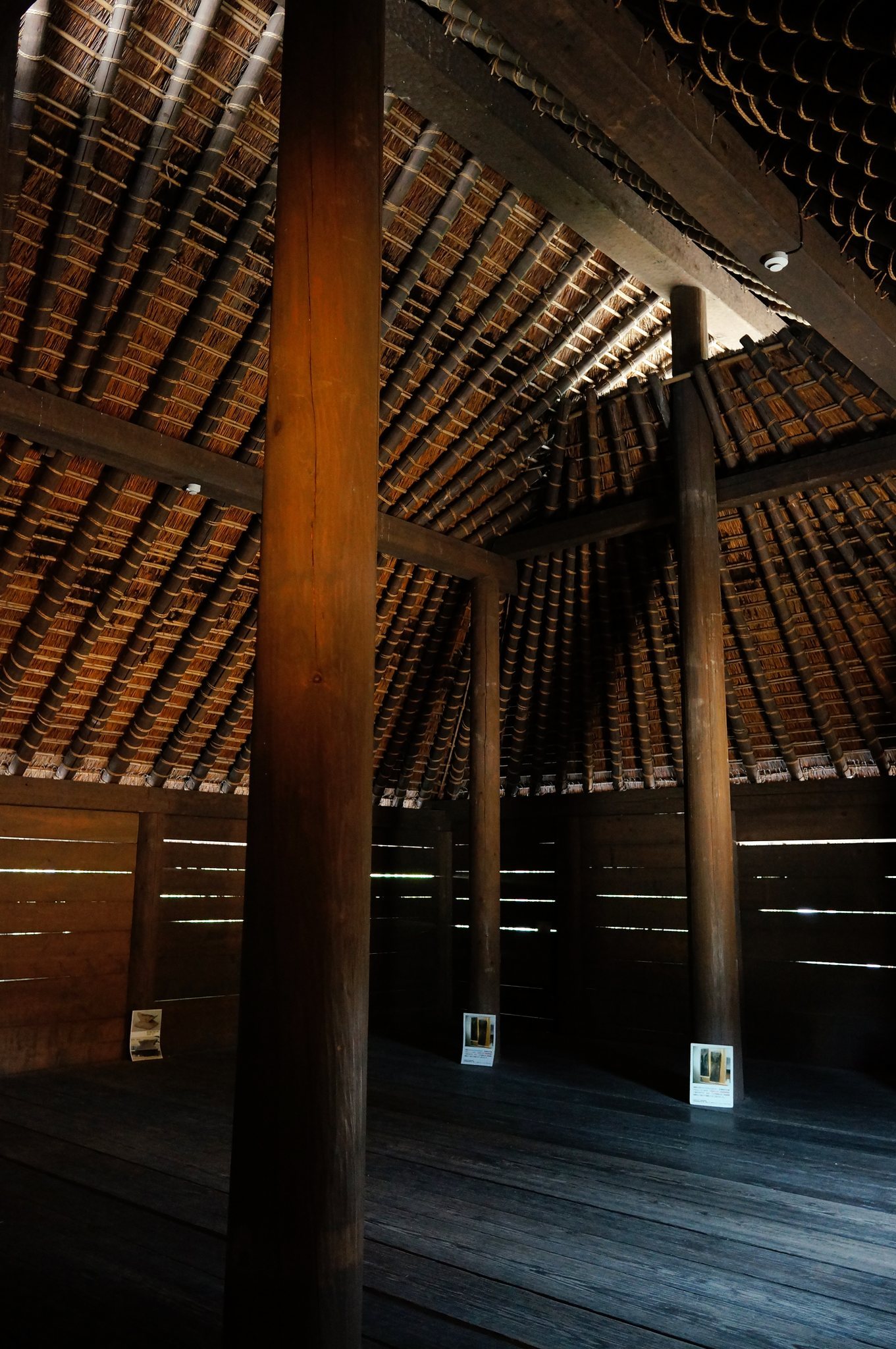
The remains consist of 16 large raised-floor warehouses, buildings elevated on posts to protect stored goods from dampness and flooding. Six warehouses formed an eastern group and ten formed a western group. Their arrangement follows a precise true east–west alignment, an arrangement described as unparalleled among Kofun-period buildings. Each warehouse had a standardized plan of approximately 10 metres from east to west and 9 metres from north to south. One building has been conjecturally reconstructed. The Hōenzaka remains now lie within the grounds of the Osaka Museum of History and the NHK Osaka Broadcasting Station, forming part of the wider archaeological area beneath and around the Naniwa Palace Site.