Yanaidanu-no-Oyama Kofun: An Early Kofun-Period Burial Mound in Japan
Site at a Glance
- Rating
- 3.8
- Popularity
- Very Low
- Country
- Japan
- Primary era
- Classical
- External website
- Open
- Eras represented
- Classical
- Civilizations
- Yamato
- Site type
- Burial
- Remains
- Burial Mound
On this page8 sections
History
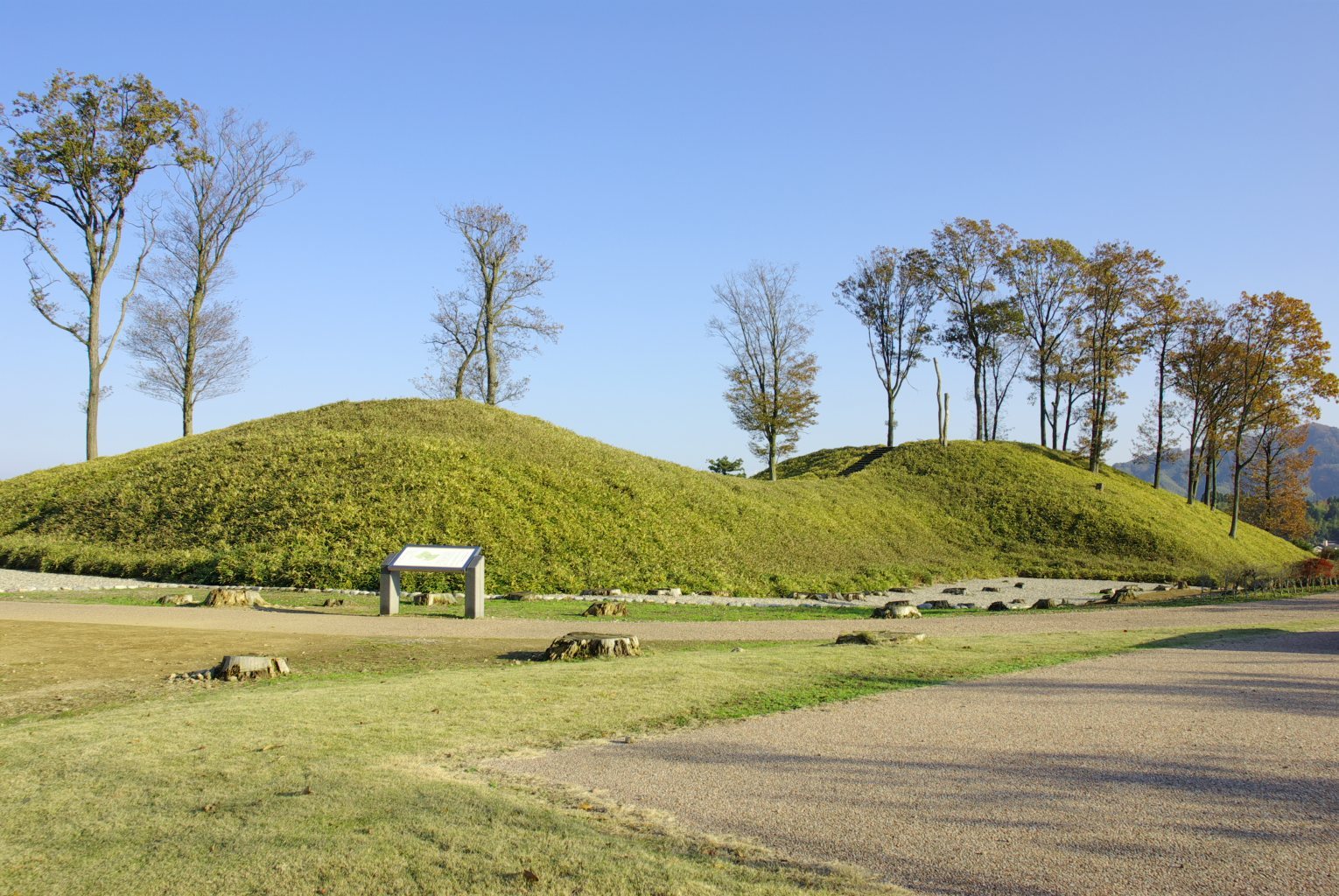
Yanaidanu-no-Oyama Kofun is a monumental Japanese burial mound in Himi, Japan, built during the first half of the Kofun period, probably from the end of the third century to the beginning of the fourth century. The Kofun period was an era from the third to the seventh century named after the large burial mounds constructed across the Japanese archipelago. The site is the largest kofun in Toyama Prefecture, the largest known two-conjoined-rectangle mound on the Sea of Japan coast, and one of the ten largest examples in Japan.
Before and During the Kofun Period
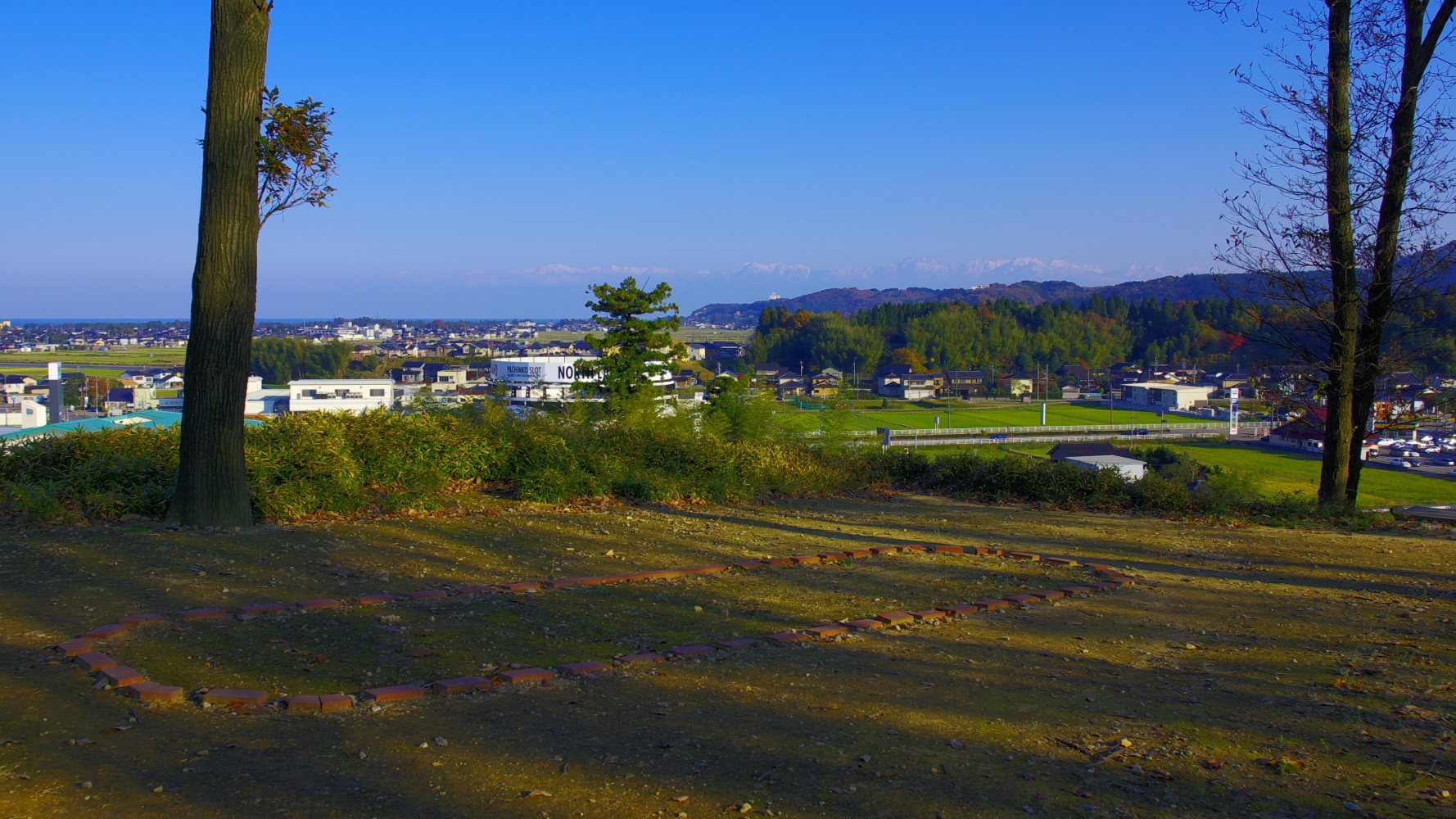
The mound stands beside the former Junicho Lagoon, close to Toyama Bay and the Futagami Hills. Its location has prompted the interpretation that the buried leader may have controlled maritime traffic centered on Toyama Bay. This remains a possibility rather than an established conclusion. Before the mound was built, the area is thought to have contained a settlement of the Yayoi period, the era that preceded the Kofun period and was associated with settled agriculture, metalworking, and distinctive pottery traditions. Yayoi pottery fragments recovered beneath or around the mound provide material evidence of this earlier activity.
Discovery and Preservation
Yanaidanu-no-Oyama Kofun was discovered on June 24, 1998, during a field survey undertaken for the compilation of the history of Himi City. Excavations followed in fiscal years 1998 and 1999. A third excavation, together with radar and electrical surveys, took place in fiscal year 2000, and the investigations were reported in 2000 and 2001.
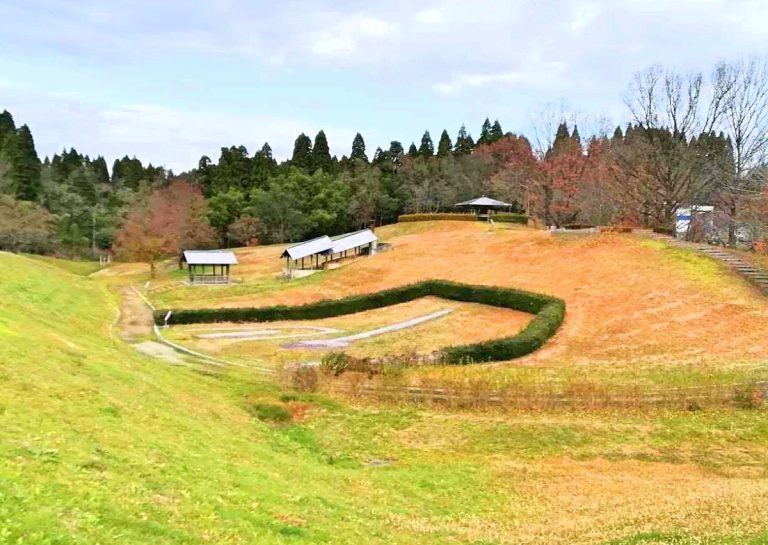
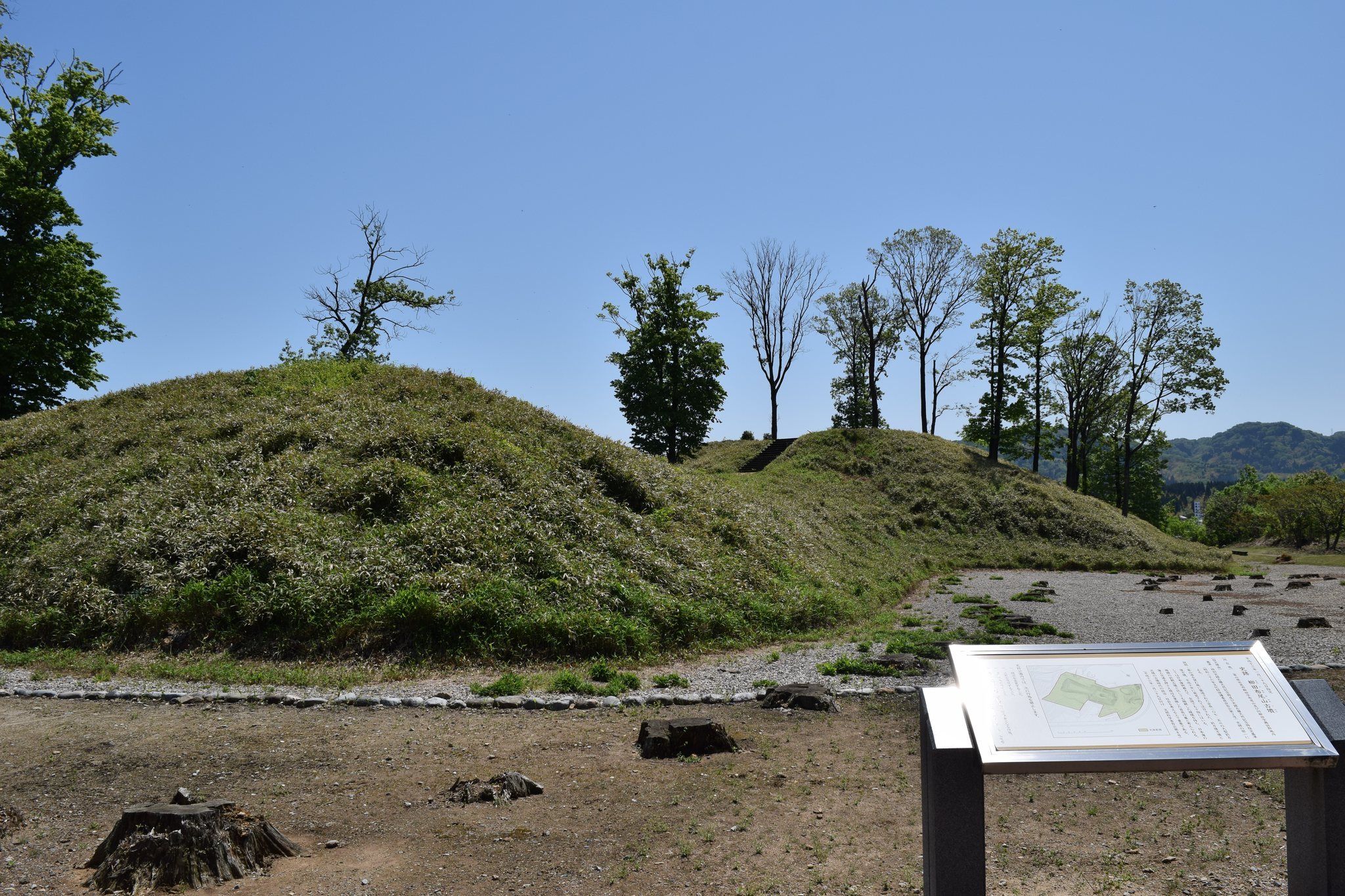
The site became a National Historic Site on January 29, 2001. This Japanese legal heritage designation protects places considered important to the nation’s history. The land entered public ownership during fiscal years 2001 and 2002, followed by site improvements in fiscal years 2003 to 2005. Yanaidanu-no-Oyama Kofun Park opened in April 2006, and the mound is now preserved within an archaeological park.
Remains
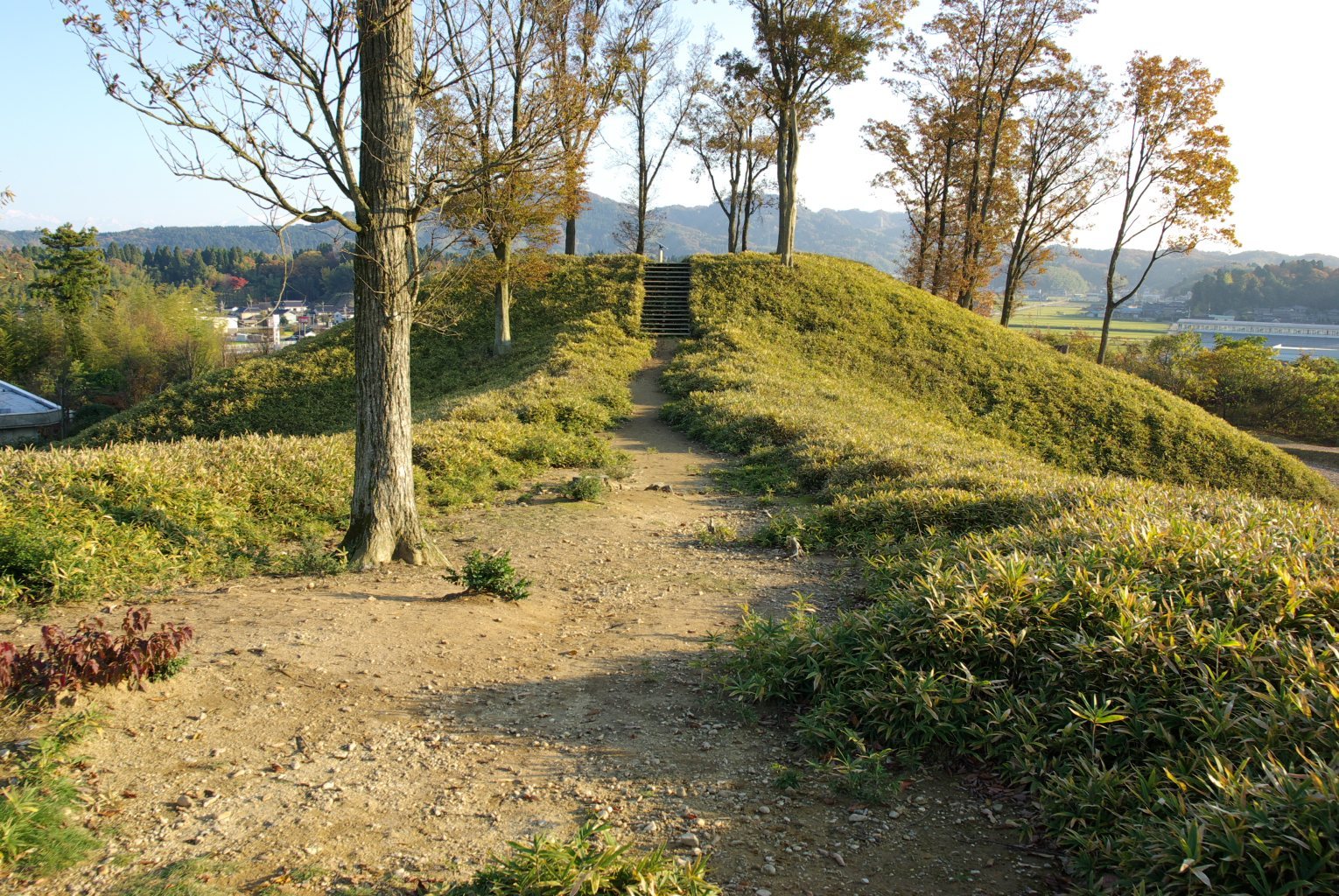
Yanaidanu-no-Oyama Kofun occupies the end of a hill about 25 meters above sea level in northwestern Toyama Prefecture. It lies near the eastern base of the Noto Peninsula, facing the former Junicho Lagoon and approximately two kilometers from the shore of Toyama Bay. The mound is a two-conjoined-rectangle burial mound, a form consisting of a larger rear rectangular section joined to a front rectangular section. Its overall length is 107.5 meters.
Mound Layout and Construction
Main Mound
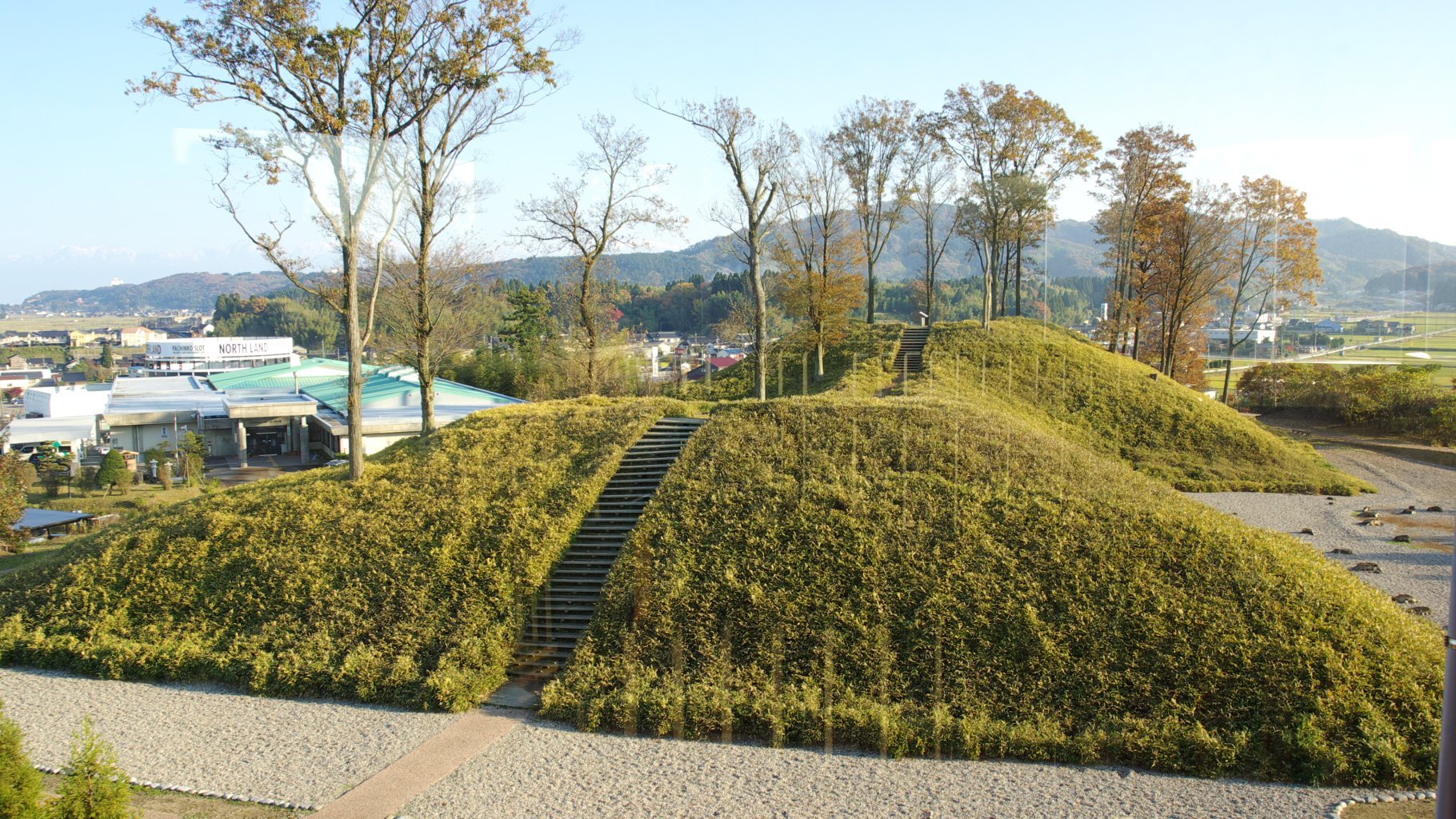
The front section points north-northwest, with its side facing Toyama Bay, while the main axis is directed toward the Futagami Hills. The rear section measures about 54 meters in length, 53 meters in width, and 10 meters in height. The front section is approximately 53.5 meters long, 49 meters wide, and 6 meters high. The mound has two levels overall, and both sections may have been formed with two stages separated by narrow terraces.
Construction began by cutting the natural hillside into shape and then adding earth. This added embankment makes up about 60 percent of the mound’s total volume. An irregular moat surrounded the base of the front section. It is approximately 5 to 18 meters wide and 1.2 to 2.3 meters deep. At the eastern corner of the front section, a causeway was estimated to have been about 2.5 meters wide and 5 meters long.
Kofun No. 2
Kofun No. 2 lies east of the rear section of the main mound. It is a circular mound about 25 meters in diameter, enclosed by a moat approximately 5 meters wide and 1.6 meters deep. Its burial facility and construction date remain unknown because the mound has not been excavated. The relationship between its moat and the rear section of Yanaidanu-no-Oyama Kofun has raised the possibility that Kofun No. 2 predates the main mound.
Burial Facility and Earlier Deposits
A clay-lined burial facility was built in the center of the rear section, parallel to the mound’s main axis. It was robbed in antiquity, and most of the facility has been lost, leaving its original details uncertain. Yayoi pottery fragments found beneath or around the kofun belong to the earlier activity that preceded construction of the burial mound and place the site within a longer sequence of occupation.