Monastery of San Isidoro del Campo: A Medieval Monastic Foundation in Spain
Site at a Glance
- Rating
- 4.6
- Popularity
- Medium
- Country
- Spain
- Primary era
- Medieval
- External website
- Open
- Eras represented
- Medieval, Early Modern
- Civilizations
- Crown of Castile, Spanish
- Site type
- Religious
- Remains
- Monastery
On this page16 sections
History
The Monastery of San Isidoro del Campo is a medieval Christian monastery in Santiponce, Spain, founded around 1301 by the Castilian nobleman Alonso Pérez de Guzmán, known as Guzmán el Bueno, and his wife, María Alonso Coronel. Built in Gothic and Mudéjar forms, with later Baroque additions, it was established during the reign of Ferdinand IV of Castile as a family pantheon and an expression of the founders’ religious devotion.
Foundation and Cistercian Rule
The monastery occupies the site of a Mozarabic hermitage associated by tradition with the burial of Isidore of Seville, a seventh-century archbishop, scholar, and Christian writer. His remains were transferred to the Basilica of San Isidoro in León in 1063. The new foundation retained his name and devotional association while becoming the burial place of the Guzmán family.
Cistercian monks occupied San Isidoro del Campo until 1431. The monastery was affiliated with San Pedro de Gumiel and with the principal abbey of Morimond. It was regarded as the southernmost Cistercian monastery in western Europe. In 1431, Cistercian observance was replaced by that of Hieronymite hermits, and in 1568 the monastery was occupied by monks of the Order of Saint Jerome.
Reformation and the Bear Bible
During the sixteenth century, San Isidoro del Campo became one of the earliest centers of Reformation activity in Spain. Prohibited books were read and translated there despite the Inquisition, the institution that investigated and prosecuted suspected religious dissent. Some monks connected with the movement were executed in autos-da-fé, public ceremonies at which sentences against accused heretics were formally announced and sometimes carried out, while others escaped to other parts of Europe.
Casiodoro de Reina, a monk associated with the monastery, produced the first complete Spanish Bible in 1569. Known as the Bear Bible, the translation was later revised, notably in 1602 by Cipriano de Valera, another member of the community. Reina and Valera’s work remained influential among Spanish-speaking Protestant churches.
Secularization and Conservation
The monastery lost its religious status during the confiscation carried out under Juan Álvarez Mendizábal in the 1830s. The Hieronymites returned between 1956 and 1978, when the complex again served a religious purpose.
A major restoration phase began in 2002. It recovered much of the medieval monastic fabric and made the principal areas accessible while drawing attention to the importance of the Bear Bible in the history of the Spanish language and Protestantism in Spain. The monastery was declared a Historic-Artistic Monument by royal order on 10 April 1872 and is recognized as a Property of Cultural Interest. The designation includes its architecture and movable contents, some of which have separately entered the process for cultural-property designation.
Remains
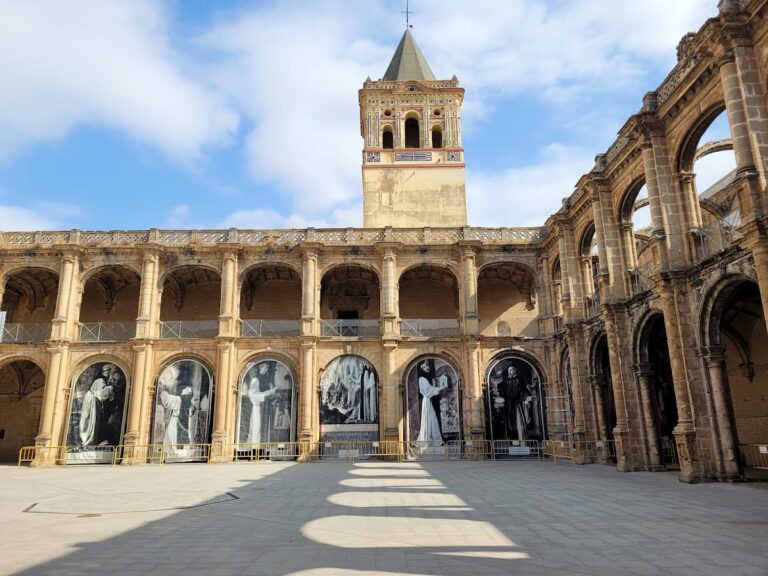
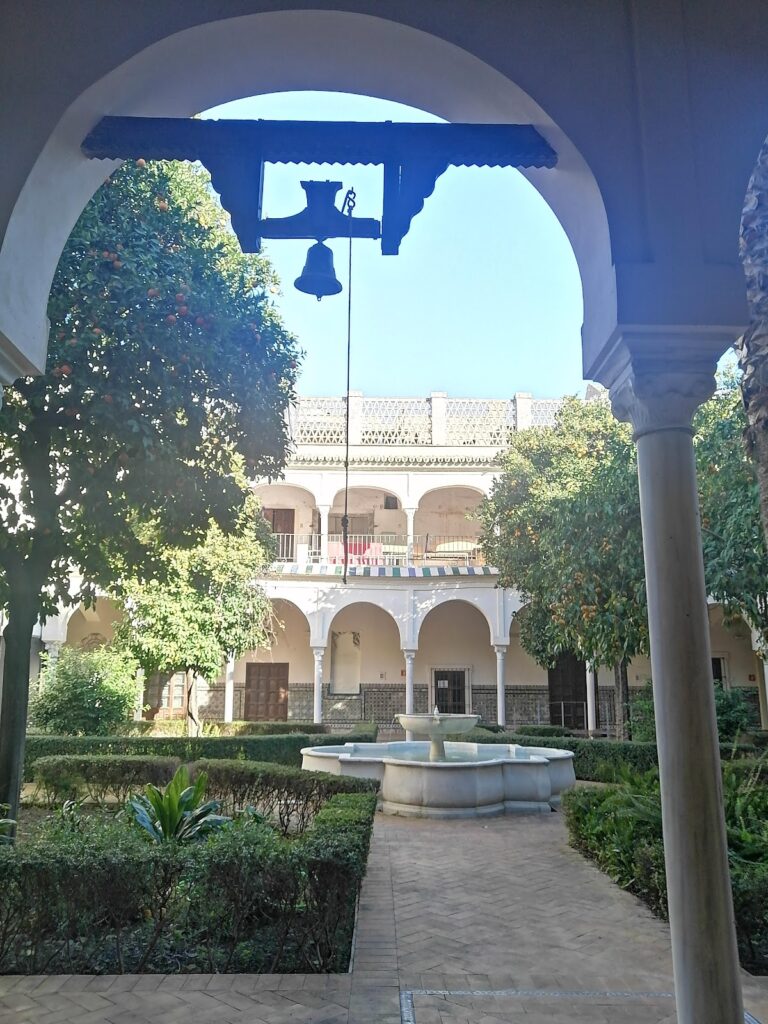
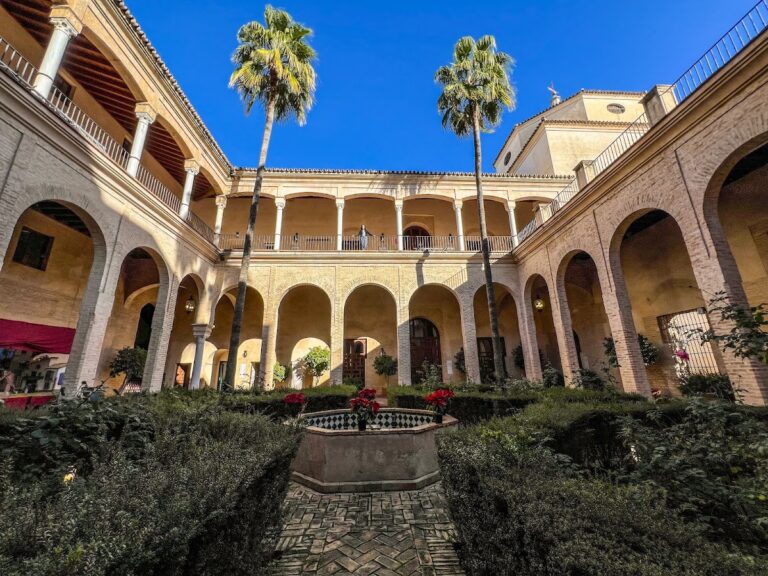
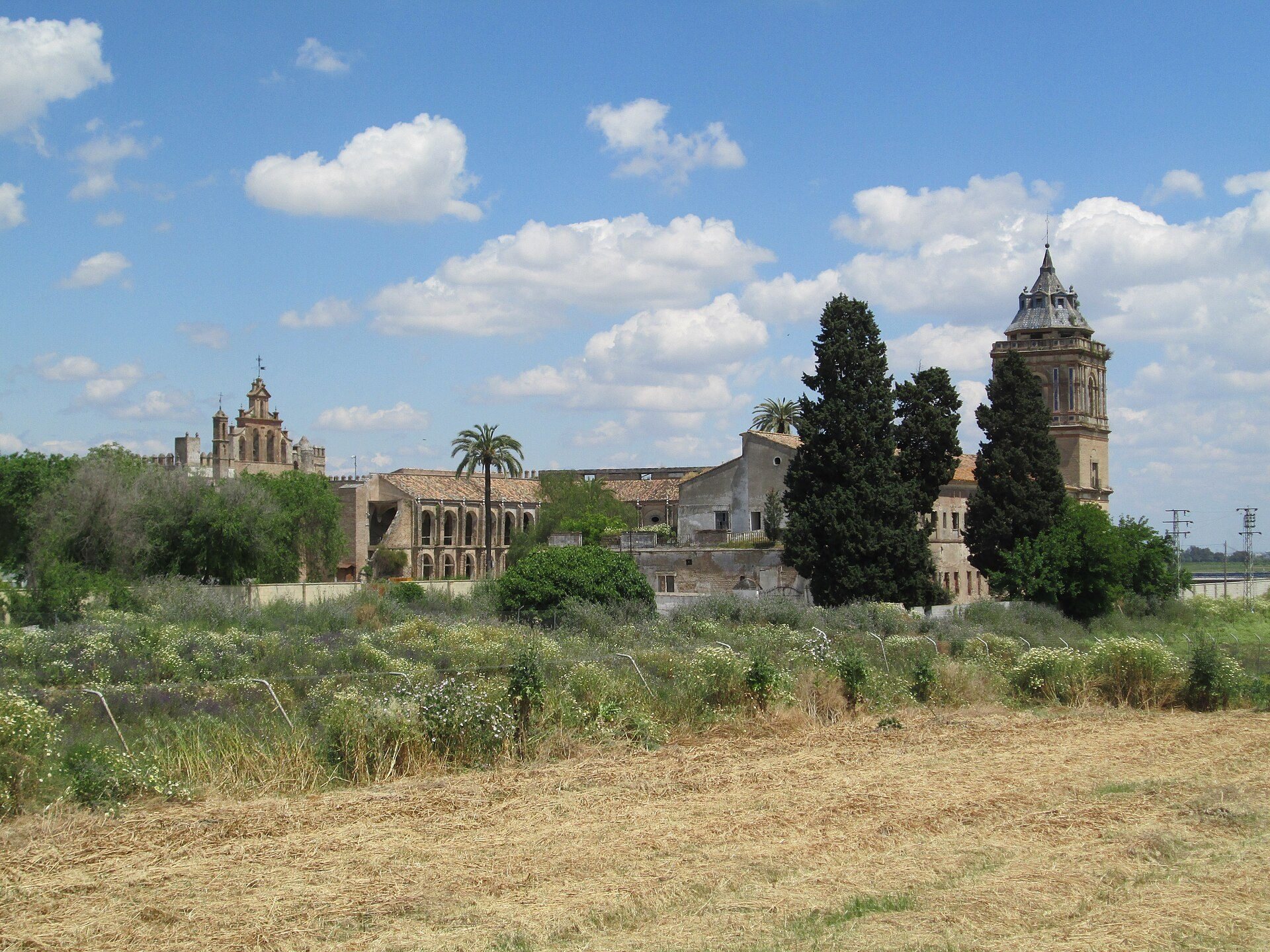
The monastery stands near the ruins of the Roman city of Italica. Its surviving complex combines pointed-arch and rib-vaulted Gothic construction with Mudéjar ornament and later Baroque alterations. The principal spaces are arranged around two cloisters and include twin church naves, a chapter house, a sacristy, a refectory, and service ranges whose condition varies considerably.
Churches and Religious Art
Twin Churches
The church consists of two adjoining Gothic naves, known as the twin churches. The first was built for the founders, while their son Juan Alonso later commissioned the second. The younger church contains the tomb of Alonso Pérez de Guzmán and the tomb of Urraca Osorio, a late medieval Castilian noblewoman.
Principal Altarpiece
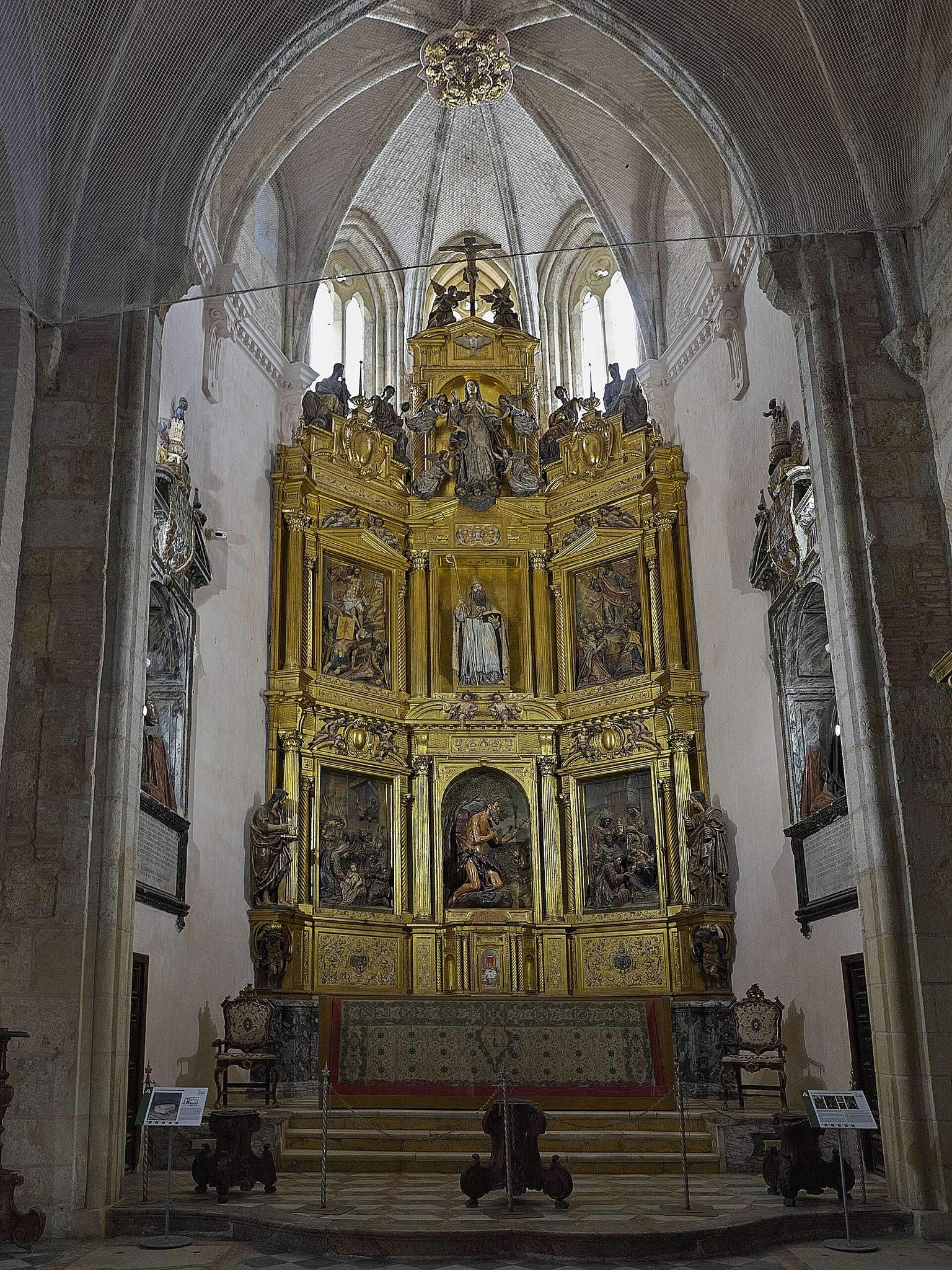
The principal church contains a major early seventeenth-century altarpiece by Juan Martínez Montañés. Its two tiers are divided into three vertical sections and center on a statue of Saint Jerome in penitence. Reliefs of the Adoration of the Shepherds and the Epiphany occupy the side sections. Figures of Saints John accompany the altarpiece, together with kneeling statues of Alonso Pérez de Guzmán and María Alonso Coronel. These donor figures are among the rare secular works within Martínez Montañés’s predominantly sacred output.
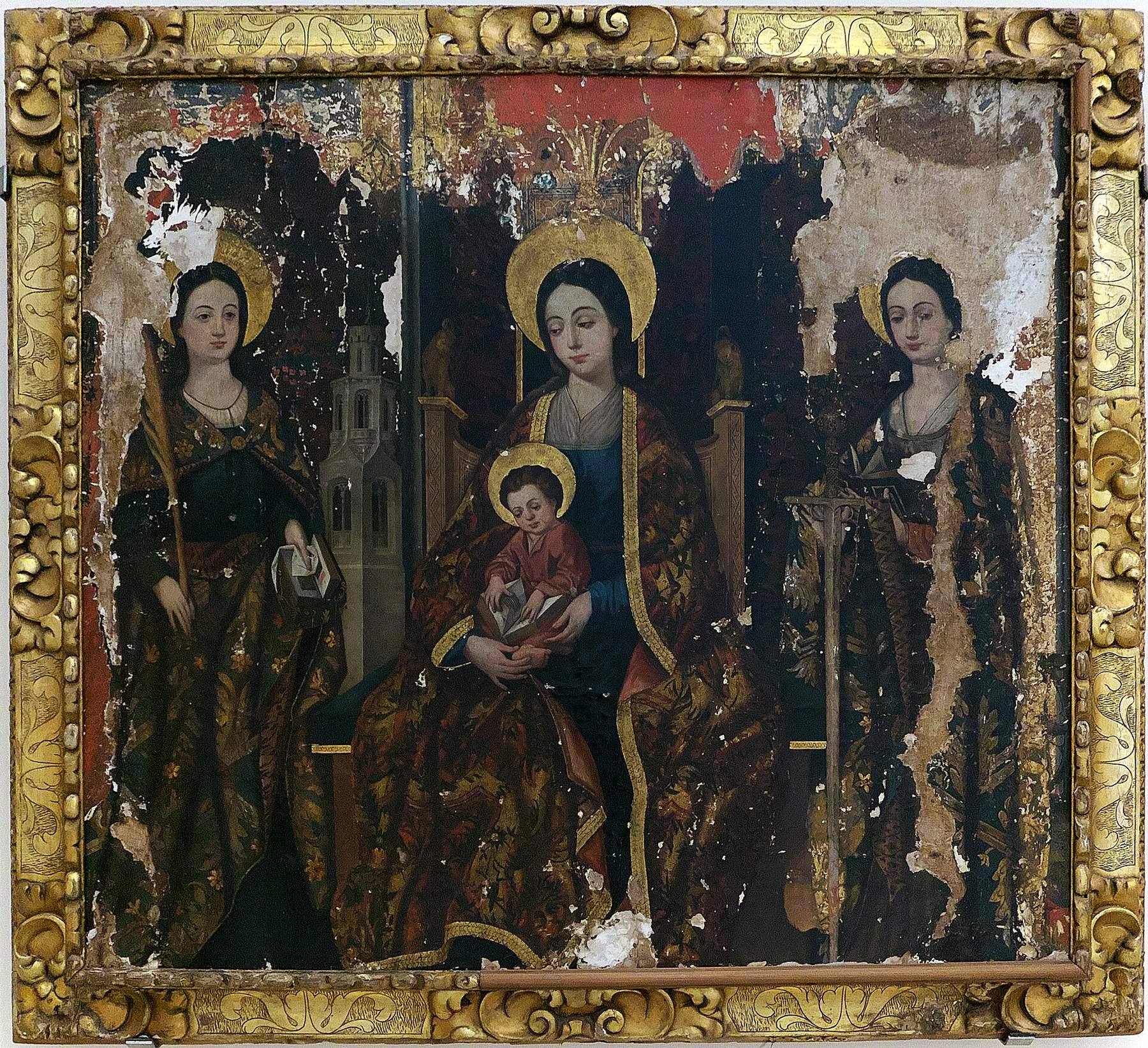
Other works attributed to Martínez Montañés include Saint Joachim and Saint Anne, the Virgin and Child in the Chapel of the Reserved Sacrament, and a Crucified Christ. Together with the tombs and altarpiece, these works preserve the monastery’s close connection with both its founders and the Hieronymite period.
Cloisters
Cloister of the Evangelists
The Cloister of the Evangelists contains fifteenth-century frescoes attributed either to Diego López, described as chief painter of the Alcázar of Seville, or to Pedro de Toledo. The paintings suffered severe damage during the Revolution of 1868 and were extensively rehabilitated in the late twentieth century.
Cloister of the Dead
The rectangular Cloister of the Dead has a double gallery whose pointed arches are framed by alfiz mouldings and supported by octagonal pillars. Its decoration combines Mudéjar ornament and interlacing patterns with the remains of an Annunciation attributed to Juan Sánchez in the Hispano-Flemish style. A grisaille image of Saint Michael also survives. The cloister is regarded as a major example of Mudéjar art.
Monastic Interior
Sacristy
The sacristy was substantially remodeled in the early seventeenth century after the earlier monastic community had departed. It was enlarged upward by taking in space from the former dormitory and chapter house and now occupies slightly more than two medieval vaulted bays. The rectangular room is articulated by simple pilasters decorated with cherub heads. Proto-Baroque windows replaced earlier narrow Mudéjar openings with interior polylobed arches, one of which remains visible beneath the white plaster. Grotesques and gilded lines complete the decoration.
Storage cupboards stand beneath arcosolia, arched recesses used here for architectural display. Their painted altarpieces were converted into Rococo niche-retables in the eighteenth century. The principal works in the room include the altarpiece of the Virgin of Antigua, attributed to Cristóbal de Mayorga, and paintings of Christ Bound to the Column and the Entombment of Christ by a follower of Juan de Roelas. Alfonso Rojo made the cupboards.
Chapter House
The chapter house underwent major structural and decorative changes. Its second floor, which had formerly contained the common Cistercian dormitory, was removed. The room was then decorated with scenes from the life of Saint Jerome, including The Imposition of the Cardinal’s Hat, The Departure for the Holy Land, Saint Jerome Dictating to the Monks, The Appearance of the Lion, and The Theft of the Donkeys.
These paintings are framed by Gothic architectural forms with pinnacles and cresting. Idealized landscapes appear behind them, alongside panels influenced by Mudéjar design. During the first third of the seventeenth century, a lightweight encamonada vault, constructed over a supporting framework, was installed over the room and concealed the original rib vault. The chapter house also received Classicist decoration with allegories of Justice, Charity, and Concord, paintings of the Apostles and Evangelists, and The Flagellation of Christ. Some of these works included copies of paintings made by Navarrete the Mute for El Escorial.
Refectory
The refectory occupies the western wing of the cloister. Its rectangular interior is covered by four-part rib vaults supported on corbel brackets. The fourteenth-century structure follows a Gothic architecture of Burgos-derived character, while its exterior windows end in polylobed arches associated with Almohad tradition.
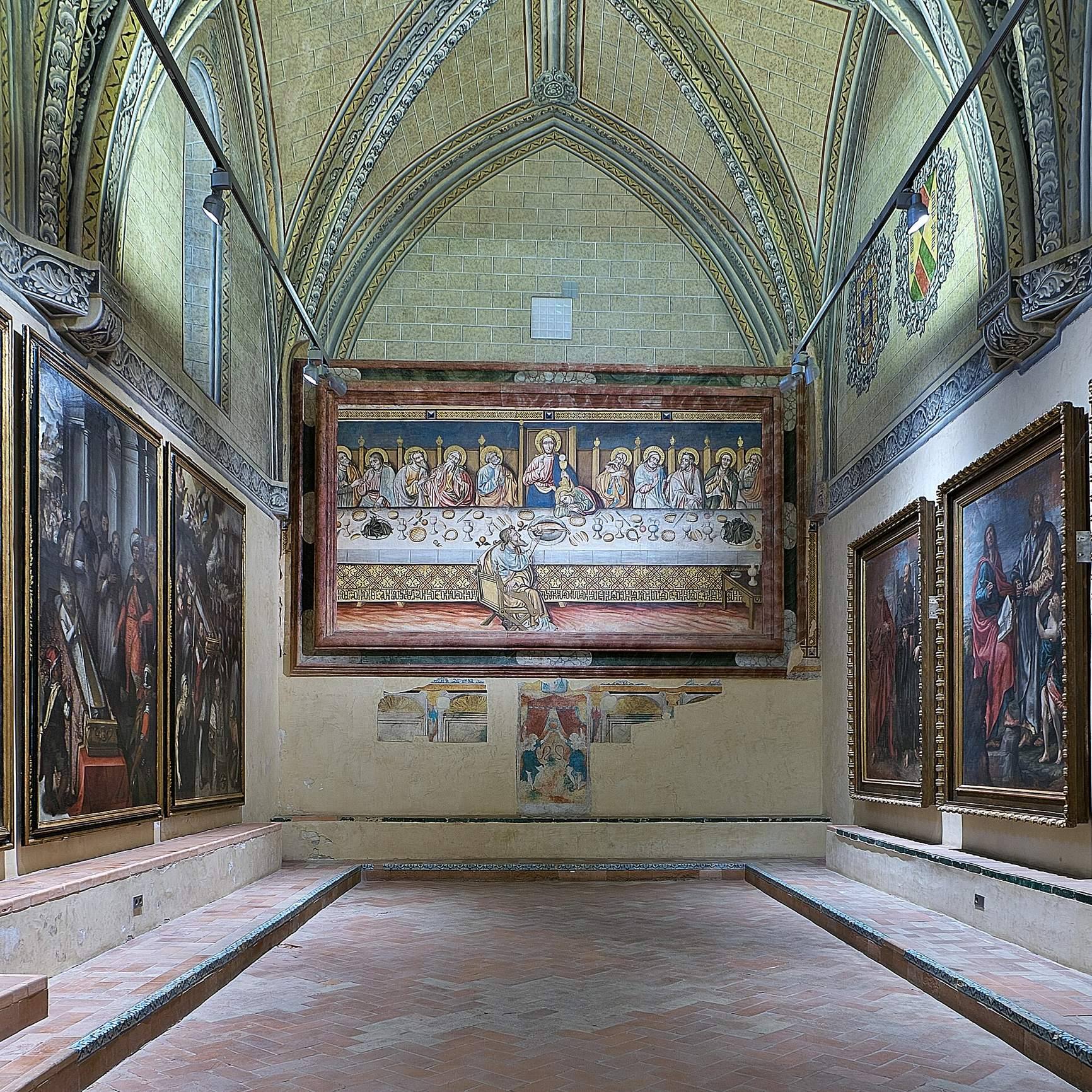
In the late fifteenth century, the Hieronymites added an extensive decorative and iconographic program. A monumental Last Supper dominates the room. This painting belongs to a cycle described as unique in Spain and once attributed to Florentine artists; it is now associated with Italianate miniaturists active at Seville Cathedral. Painted heraldic decoration, simulated ashlar blocks, moulded strips, a foliage frieze, imitation mouldings, and borders emphasize the room’s actual architectural forms. Restoration also revealed three superimposed painted decorations on the seating, dating from the sixteenth, seventeenth, and eighteenth centuries.
Service Buildings and Condition
The Baroque tower has deteriorated. The oil mill has progressively collapsing roofs because of the ruin and failure of the pillars supporting its intermediate arcade. Roof collapses have also affected the granary and warehouse ranges, while the southern cloister wing has experienced a partial collapse of its roof structure. The medieval spaces recovered during the 2002 restoration include the twin church naves, chapter house, sacristy, and Cloister of the Dead.