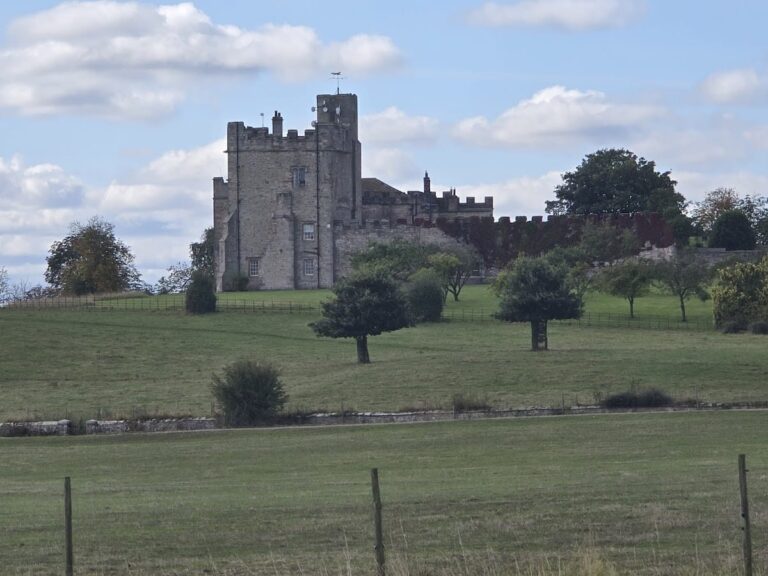
Mount Grace Priory: A Medieval Carthusian Monastery in North Yorkshire
Site at a Glance
- Rating
- 4.6
- Popularity
- Medium
- Country
- United Kingdom
- Primary era
- Medieval
- External website
- Open
- Eras represented
- Medieval, Early Modern, Modern
- Civilizations
- British, English
- Site type
- Religious
- Remains
- Monastery
On this page10 sections
History
Mount Grace Priory is a medieval Carthusian monastery in the United Kingdom, founded in 1398 at East Harlsey in North Yorkshire by Thomas Holland, 1st Duke of Surrey. It was the last monastery founded in Yorkshire and one of the few religious houses established in Britain between the Black Death of 1349–1350 and the Reformation. Dedicated originally to the Blessed Virgin and Saint Nicholas, it was later known as the House of the Assumption of the Most Blessed Virgin in Mount Grace.
Foundation and Early Royal Connections
The priory was created by a medieval charter made between 18 February and 20 April 1398. It provided for a prior and twenty-three monks and required prayers and masses for Richard II, the queen, members of the royal family, Thomas Holland and his heirs, John and Eleanor Ingelby, Thomas de Ingelby and his wife Katherine, and other benefactors. The prior of Grande Chartreuse allowed Holland to nominate Robert Tredwye as the first rector, although the charter described him as the first prior.
Richard II granted the monks a charter of liberties and franchises in March 1399, including the right to mine lead. In May that year he assigned Mount Grace the alien priories of Hinckley, Carisbrooke, and Wareham, together with lands belonging to the Priory of Saint Mary of Lire at Evreux in Normandy. These grants were made for the duration of the war between England and France. An alien priory was a dependent religious house connected to a monastery outside England, and such properties could provide income to another religious institution.
Richard II was deposed in 1399, and at New Year in 1400 Thomas Holland joined an unsuccessful attempt to assassinate the newly crowned Henry IV. Holland and his fellow conspirators were captured and executed. His body was later recovered and reburied at Mount Grace in 1412, within the charterhouse he had founded. The priory consequently lost both its founder and the income Holland and Richard II had granted, and it depended on royal financial support for more than a decade.
Carthusian Incorporation and Expansion
In 1410 Mount Grace was formally incorporated into the Carthusian Order, a Catholic order whose monks combined communal worship with highly solitary lives in individual cells. Nicholas Love became its first prior and fourth rector. He strengthened the house’s relationship with the Lancastrian administration by presenting his Mirror of the Blessed Life of Jesus Christ to Thomas Arundel, Archbishop of Canterbury and chancellor of Henry IV. The work supported Arundel’s opposition to Wycliffism, a reform movement condemned by the medieval English Church. Love also granted Arundel confraternity in Mount Grace’s spiritual benefits in return for material assistance.
After Wareham Priory was lost soon after Henry IV’s accession, the king granted Mount Grace £100 each year from the Exchequer until it acquired lands worth £1,000. The grant also included a barrel of better red wine from Gascony, to be delivered at Hull each Martinmas. In 1412 Henry V confirmed Hinckley Priory to support five monks praying for himself and Thomas Beaufort, Earl of Dorset. In 1421 he granted Mount Grace four further alien priories, at Long Bennington, Minting, Hagh or Hough-on-the-Hill in Lincolnshire, and Field Dalling in Norfolk.
Five cells were added in 1417 by the dukes of Exeter, who were relatives of Thomas Holland. Competing claims to the estate prevented further building, so the priory petitioned Parliament in 1439 for confirmation of its title. Henry VI confirmed that title in 1440. Further income followed during the fifteenth century. Sir James and Lady Elizabeth Strangways of Harlsey Castle granted the advowson of Beighton church in Derbyshire in 1456. In 1462 the king granted Mount Grace the manor of Atherstone in Warwickshire for the relief of the poor, and in 1471 he granted the manor of the alien priory of Begare in Yorkshire in return for three daily masses for the king and his family. The Begare grant was transferred to Eton College in 1472.
Devotional Writing and Dissolution
Mount Grace became a centre for the production and preservation of contemplative and devotional writings. Its monks included John Norton and Richard Methley. Methley was known for his Latin translations of The Cloud of Unknowing and the anonymous English translation of Marguerite Porete’s Mirror of Simple Souls. The only surviving manuscript of The Book of Margery Kempe also belonged to the Mount Grace Charterhouse.
In 1508 the prior leased the chapel of East Harlsey and the manor of Bordelby to the prior of Guisborough for fifty years at an annual rent of £8. Sir Thomas Strangways’s will of 1522 referred to a Lady Chapel at Mount Grace and gave instructions for the priest who celebrated masses there.
Some of the monks attempted to avoid the oath of supremacy in 1534 and were imprisoned. The oath recognized Henry VIII rather than the pope as supreme head of the Church of England. Mount Grace closed in 1539 during Henry VIII’s dissolution of the monasteries, when the last prior, John Wilson, surrendered its keys to the king’s representatives. The property then passed into private ownership.
At the Dissolution, Mount Grace was valued at £382 5s. 11½d. gross and £323 2s. 10½d. net. The valuation included £104 6s. 8d. from spiritual revenues in Lincolnshire, £164 from lands outside Yorkshire, and the remainder from Yorkshire lands. In December 1539 the brothers received pensions totalling £195. The prior received £60 and the house and chapel called the Mount, each of eight priests received £7, and eighteen other brothers received smaller sums.
Post-Dissolution Ownership
After the Dissolution, the ruined priory guesthouse was incorporated into a seventeenth-century manor built by Thomas Lascelles. The property later became associated with the Arts and Crafts movement, a design movement that emphasized traditional craftsmanship, materials, and historic forms. Under the ownership of the ironmaster Sir Isaac Lowthian Bell, the house was decorated in that style. Mount Grace is now owned by the National Trust and cared for by English Heritage.
Remains
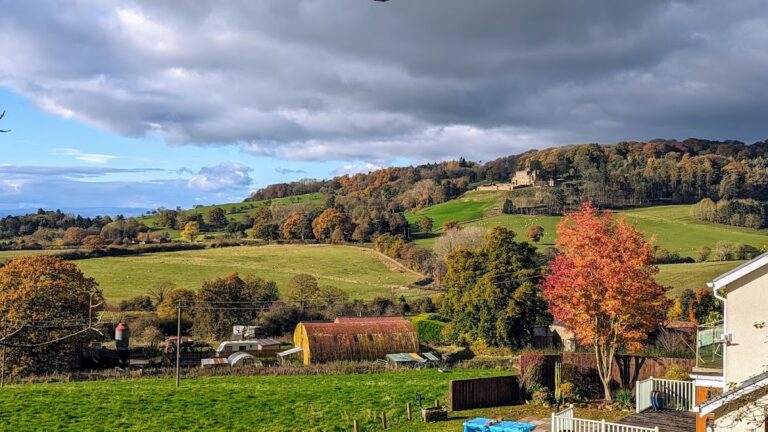
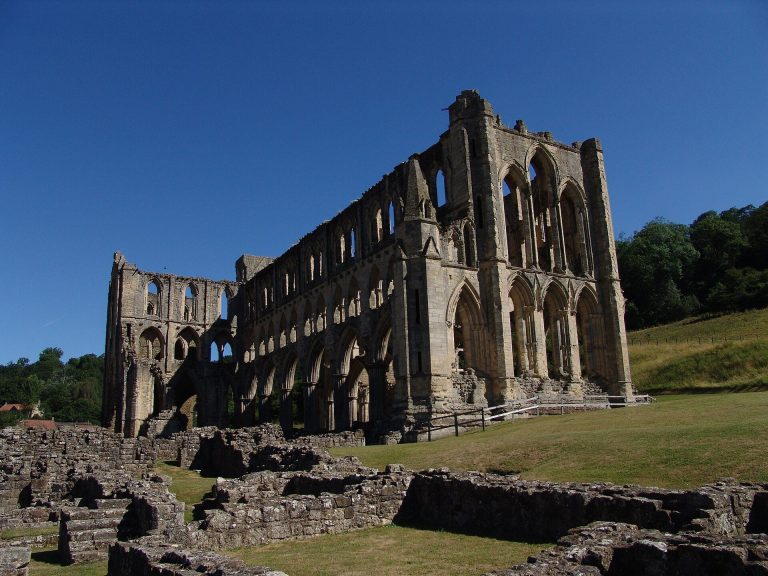
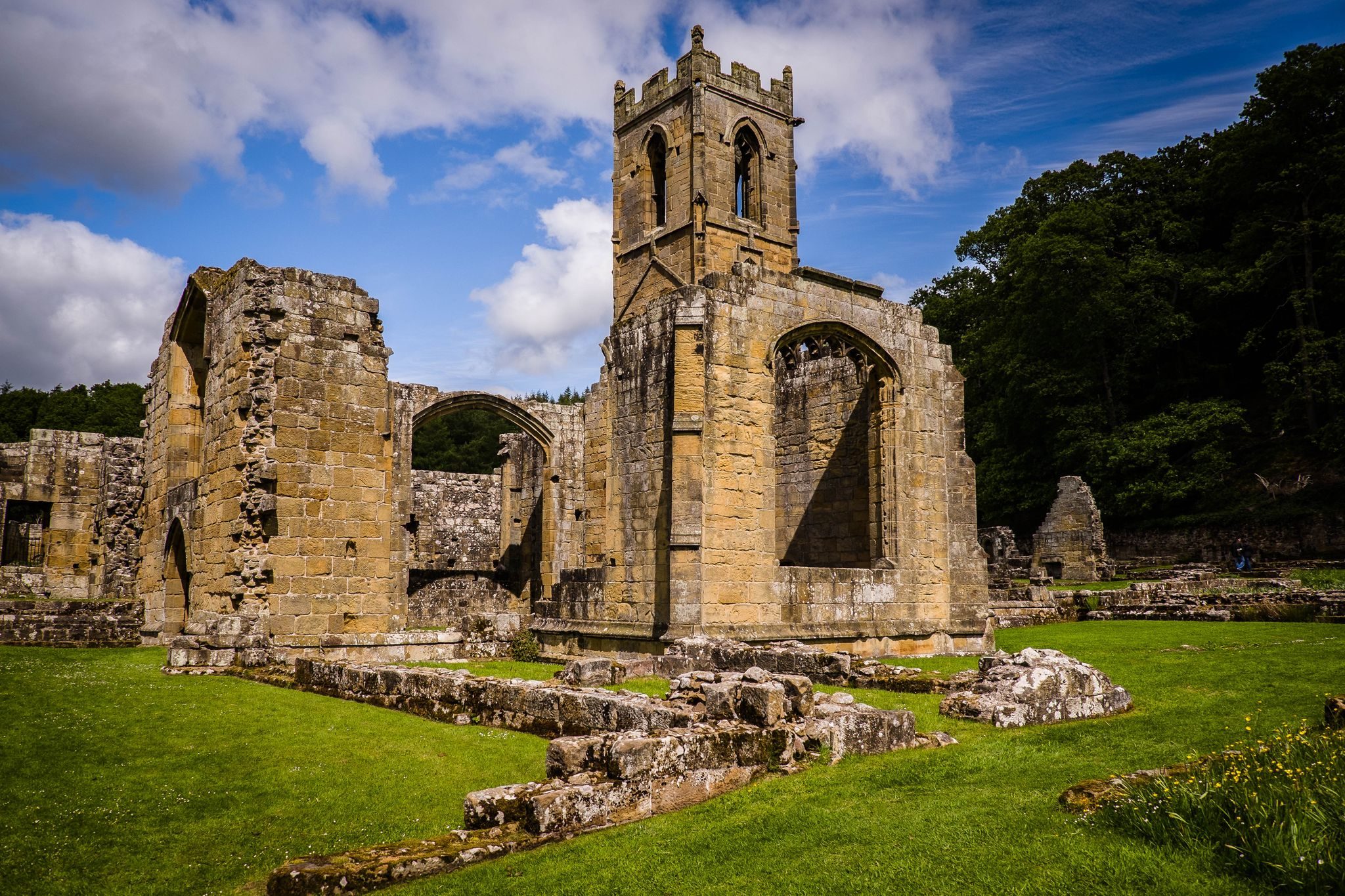
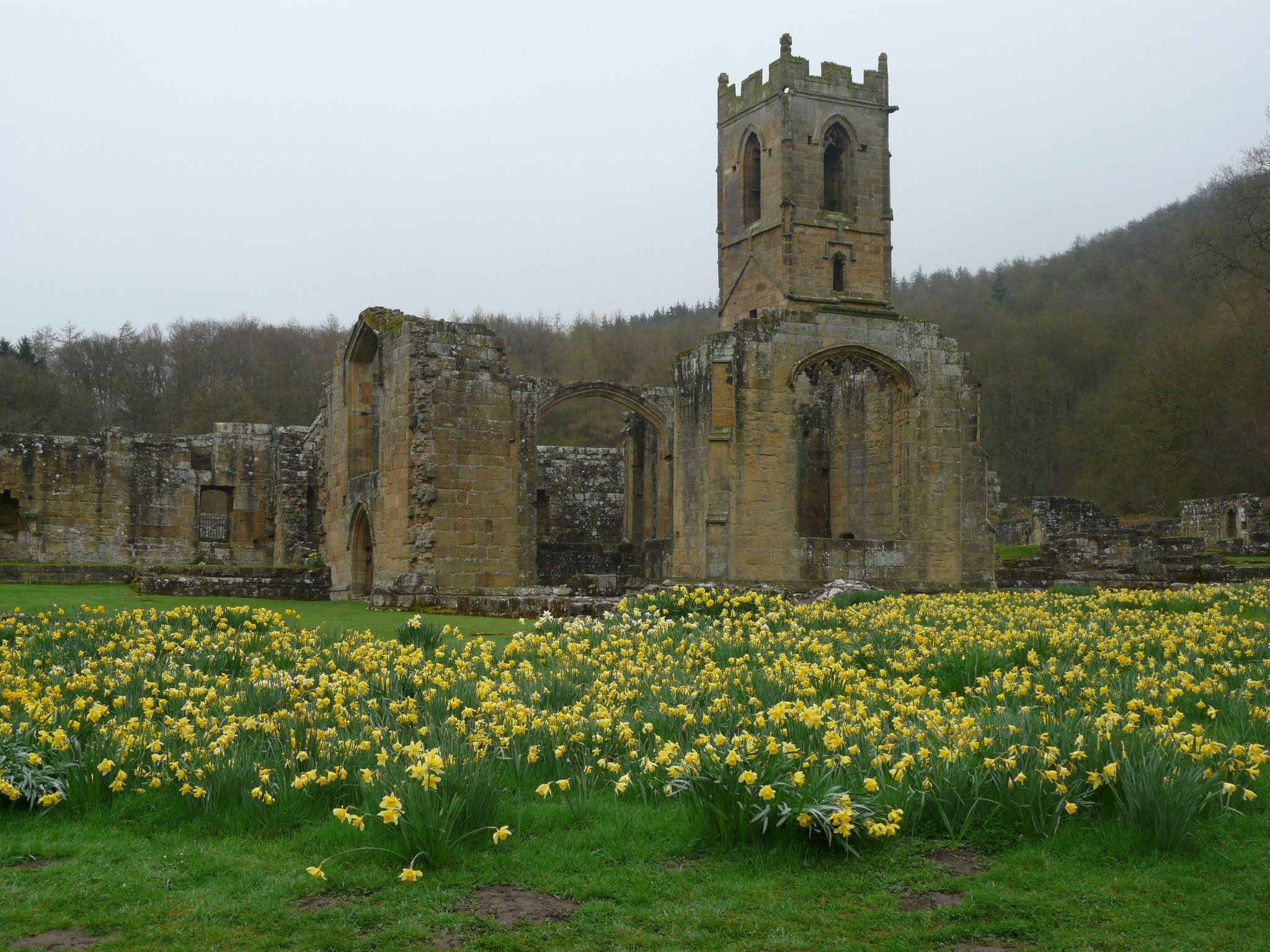
The ruins stand in woodland within the North York Moors National Park at East Harlsey, near Ingelby. The surviving complex includes the church, two cloisters, the inner court, individual cells, and earthworks. The remains are described as the best-preserved and most accessible remains of England’s medieval Carthusian houses, allowing the organization of a small Carthusian monastery to be examined across the site.
Monastic Layout
Church and Cloisters
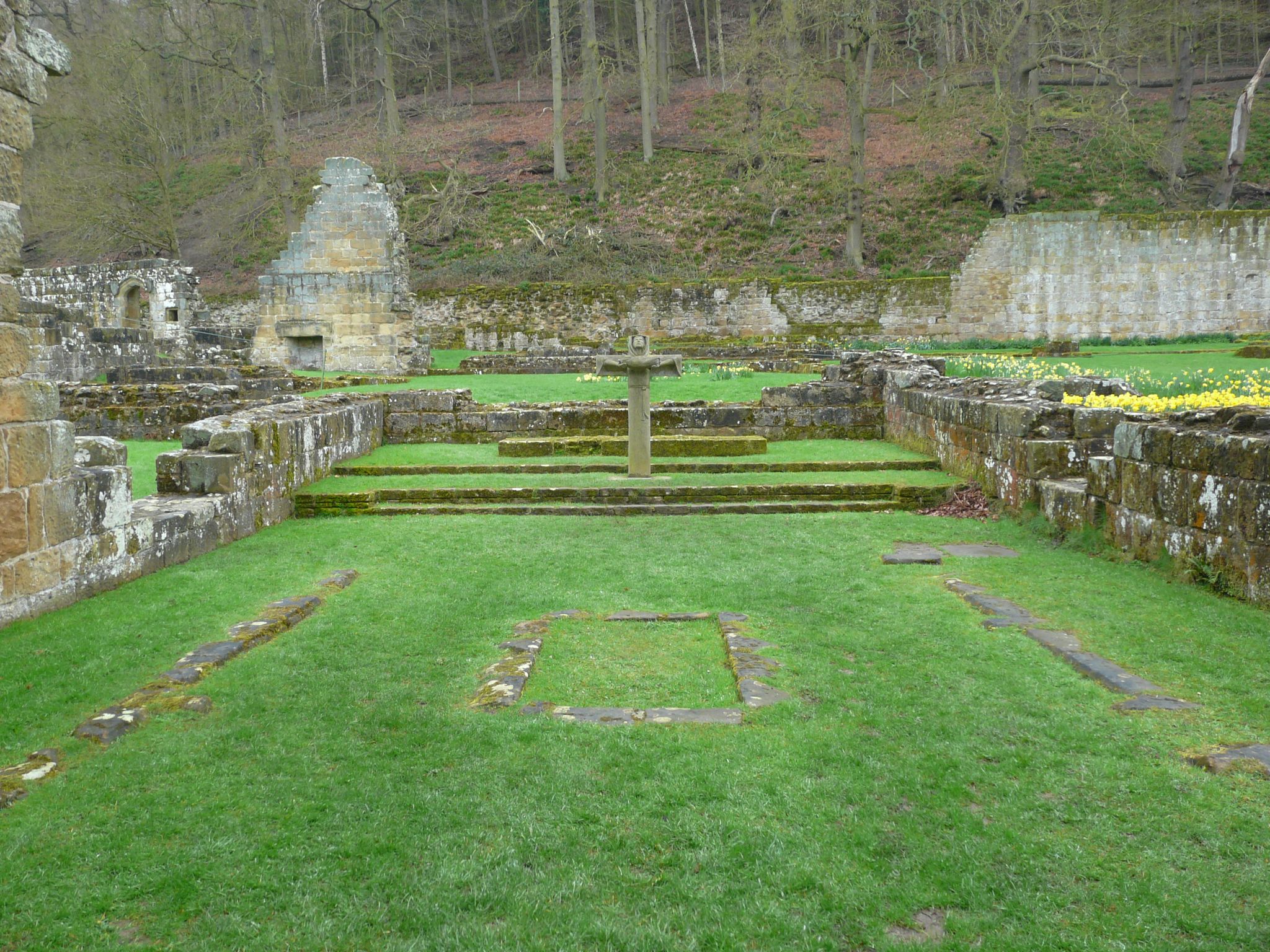
The monastery was arranged around a small Carthusian church and two cloisters. The Great Cloister north of the church contained seventeen individual cells for choir monks. A smaller cloister to the south contained six cells for lay brothers. Together with the inner court, chapter house, and accommodation for the prior and lay brothers, these buildings formed the main religious and residential areas of the priory. The surviving ruins make this arrangement visible in the ground plan.
Individual Cells and Drainage
Carthusian cells were more like small houses than communal monastic rooms, reflecting the order’s combination of shared worship and solitary living. One cell at Mount Grace has been reconstructed and includes a reconstructed latrine. Drainage ditches associated with the priory’s sewage system can also be examined, providing part of the surviving evidence for how the individual residences were arranged and serviced.
Guesthouse and Later Houses
A guesthouse stood west of the cloisters. Its ruins were incorporated into Mount Grace House, a rare seventeenth-century manor associated with the Commonwealth period. A larger house dating from 1900–1901 is also associated with the property and is described as an important Arts and Crafts building. The Prior’s Lodge is used as a holiday cottage, while a museum on the site presents the history of the priory.