Apuolė Hillfort: A Curonian Stronghold in Lithuania
Site at a Glance
- Rating
- 4.7
- Popularity
- Low
- Country
- Lithuania
- Primary era
- Medieval
- External website
- Open
- Eras represented
- Classical, Medieval
- Civilizations
- Unclassified
- Site type
- Military
- Remains
- Fort
On this page7 sections
History
Apuolė Hillfort is a Curonian fortified settlement in Lithuania, built by the Curonians, a Baltic people of the eastern Baltic region, during the first century AD. It is the earliest settlement in the territory of modern Lithuania mentioned in written historical sources. Its fortifications were strengthened in four stages between the fourth and thirteenth centuries, reflecting the long development of the stronghold and settlement.
Curonian stronghold and Scandinavian conflicts
Apuolė is described in the ninth-century Life of Saint Ansgar by Rimbert, a Christian cleric whose work records Scandinavian missions and conflicts in the eastern Baltic. In 853 and 854, the Curonians rebelled against Swedish tribute. Danish forces attacked Apuolė but were defeated and carried away substantial war loot.
King Olof of Sweden then led an expedition into Curonian territory. After capturing and burning Grobiņa, his army besieged Apuolė for eight days. Rimbert gives the Swedish force as 7,000 men and the Curonian defenders as 15,000, although the latter figure is considered greatly exaggerated because the hillfort could not have accommodated so many people. The Curonians eventually offered a large silver ransom, pledged loyalty to Sweden, and supplied 30 hostages to guarantee further payments.
Medieval decline and later investigation
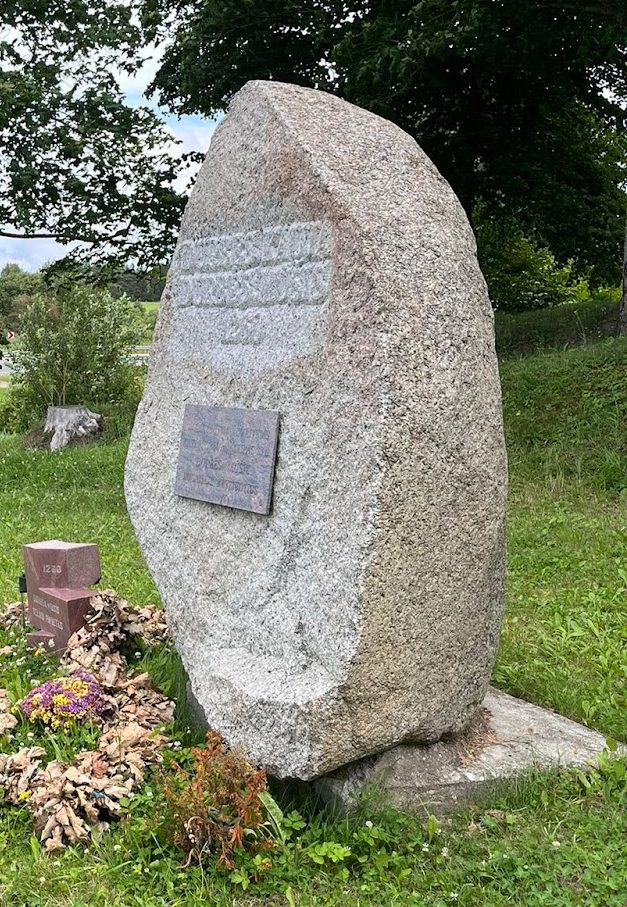
In 1253, the settlement appeared under the names Appule and Ampule in an agreement dividing territory between the Bishop of Riga and the Livonian Order. The order was a Catholic military institution that controlled territory in the eastern Baltic during the Middle Ages. The area was described as uncultivated land, suggesting that the castle had probably been destroyed and its inhabitants had moved to safer locations.
Apuolė was mentioned again in the seventeenth century, while historians and archaeologists began to take an active interest in the hillfort by the late eighteenth century. Eduards Volters and J. Deringas identified the site in 1887 with the Curonian fortress called Apulia in historical records. Volters investigated it from 1928 to 1930. Birger Nerman, Fransis Balodis, and Valdis Ginteris worked there in 1931, followed by Vladas Nagevičius in 1931 and 1932. Archaeologists from the Scientific and Methodological Council for the Protection of Cultural Monuments investigated the site in 1986, with further drilling and aerial photography carried out in 1996.
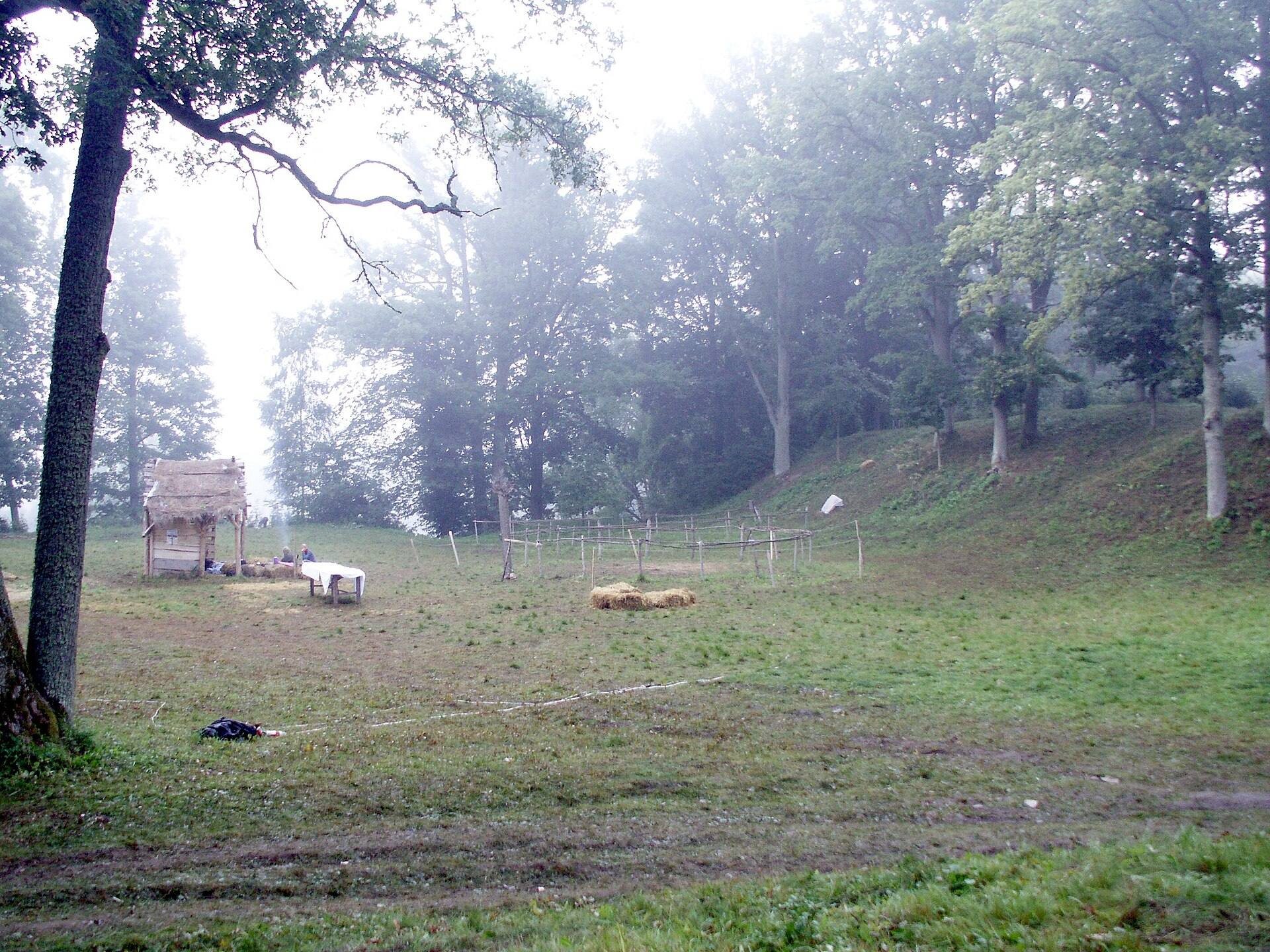
Apuolė Hillfort and its settlement are protected as a cultural monument of the Republic of Lithuania, within a protected area of 318,028 square metres. Since 2004, the hillfort has also hosted the annual “Apuolė 854” festival, named for the ninth-century conflict associated with the site.
Remains
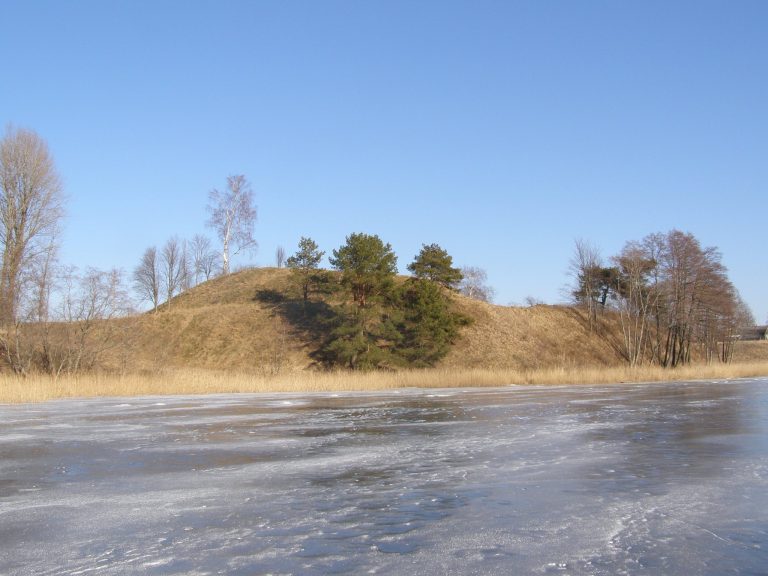
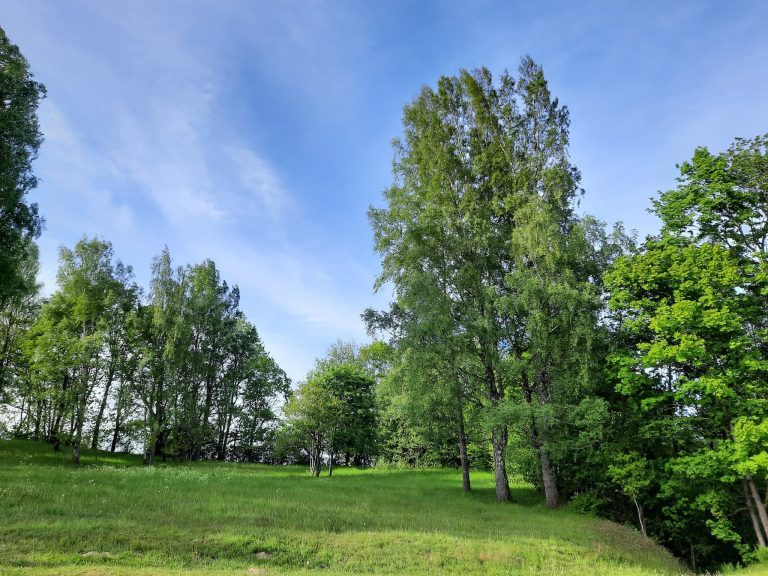
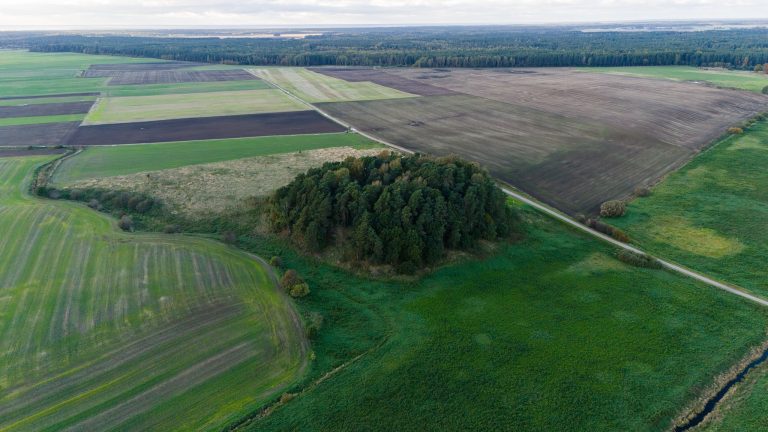
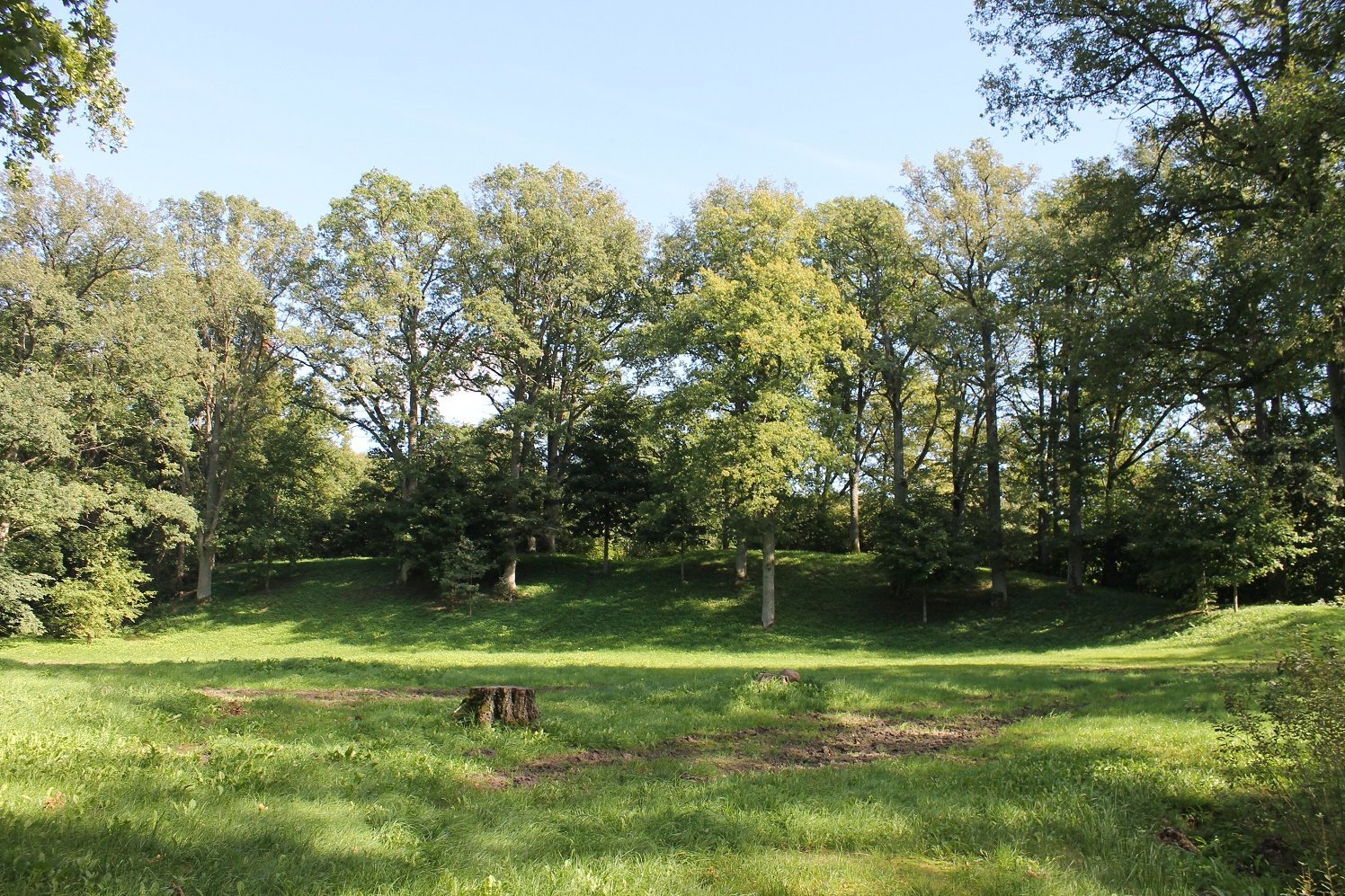
The hillfort occupies an elevation roughly 10 metres high at the confluence of the Luoba River and the Brukis Stream. Its plateau was approximately 80 metres in diameter, and the hillfort area covers about 6,400 square metres. Earth ramparts and an outer defensive earthwork, or outwork, organized the stronghold, while a settlement extended southeast across approximately 12 hectares.
Hillfort defenses
The eastern rampart extends for 75 metres and rises 7.5 metres high. A surviving rampart along the southern and partly western sides measures 80 metres in length and 2 metres in height. An eastern outwork measures about 90 by 30 metres, with surviving sections of a rampart and ditch at its eastern end. The northern and western edges of the plateau have collapsed.
Excavations covering 1,561 square metres included sections through the major and minor ramparts and areas on both the eastern and western sides of the plateau. They uncovered wooden remains of a gate and a building connected with the fortifications. The defenses were reinforced in four stages between the fourth and thirteenth centuries. Finds from the plateau include a wooden well, hand-built and wheel-thrown pottery, mostly Scandinavian-type iron arrowheads, clay loom weights, iron tools, and bronze ornaments.
Settlement and archaeological layers
The settlement southeast of the hillfort had a cultural layer, an archaeological deposit containing traces of past human activity, up to 80 centimetres thick. In 1986, a severely damaged layer 20 to 30 centimetres thick was identified in a meadow northeast of the hillfort. Similar remains were found on the left bank of the Brukis, southwest of the stronghold, in a valley between higher ground.
Drilling in 1996 showed that ploughing had almost completely destroyed the settlement’s cultural layer across many areas southwest, south, and southeast of the hillfort. In lower ground south of the site, surviving layers reached 35 centimetres. Aerial photographs taken in May 1996 clearly showed the settlement boundaries and the areas where cultural deposits survived.
A depression in the northern part of the plateau formed when a storm uprooted an oak. It damaged the plateau and exposed a cultural layer about 15 centimetres thick containing abundant charred grains. The hillfort is generally well maintained, although this depression has affected the appearance of the plateau and its archaeological deposits.
Cemetery
A cemetery lies about 300 metres northeast of the hillfort on the right bank of the Luoba. Birger Nerman excavated 63.3 square metres there in 1931, uncovering eight cremation graves dating from the tenth to the twelfth centuries. A cremation grave contains human remains burned before burial. The graves contained fragments of neck-rings and bracelets, horseshoe brooches, pins, and beads. Isolated finds from the second to fourth centuries were also recovered.
Eight graves dating from the sixteenth and seventeenth centuries were found in the major rampart. Cemetery finds are held by the Vytautas the Great War Museum in Kaunas, the Stockholm History Museum, and the National Museum of Lithuania.