Židlochovice Castle: A Moravian Noble Residence and State Estate
Site at a Glance
- Rating
- 4.6
- Popularity
- Low
- Country
- Czechia
- Primary era
- Early Modern
- Eras represented
- Early Modern, Modern
- Civilizations
- Austrian Empire, Habsburg, Holy Roman Empire
- Site type
- Domestic
- Remains
- Castle
On this page11 sections
History
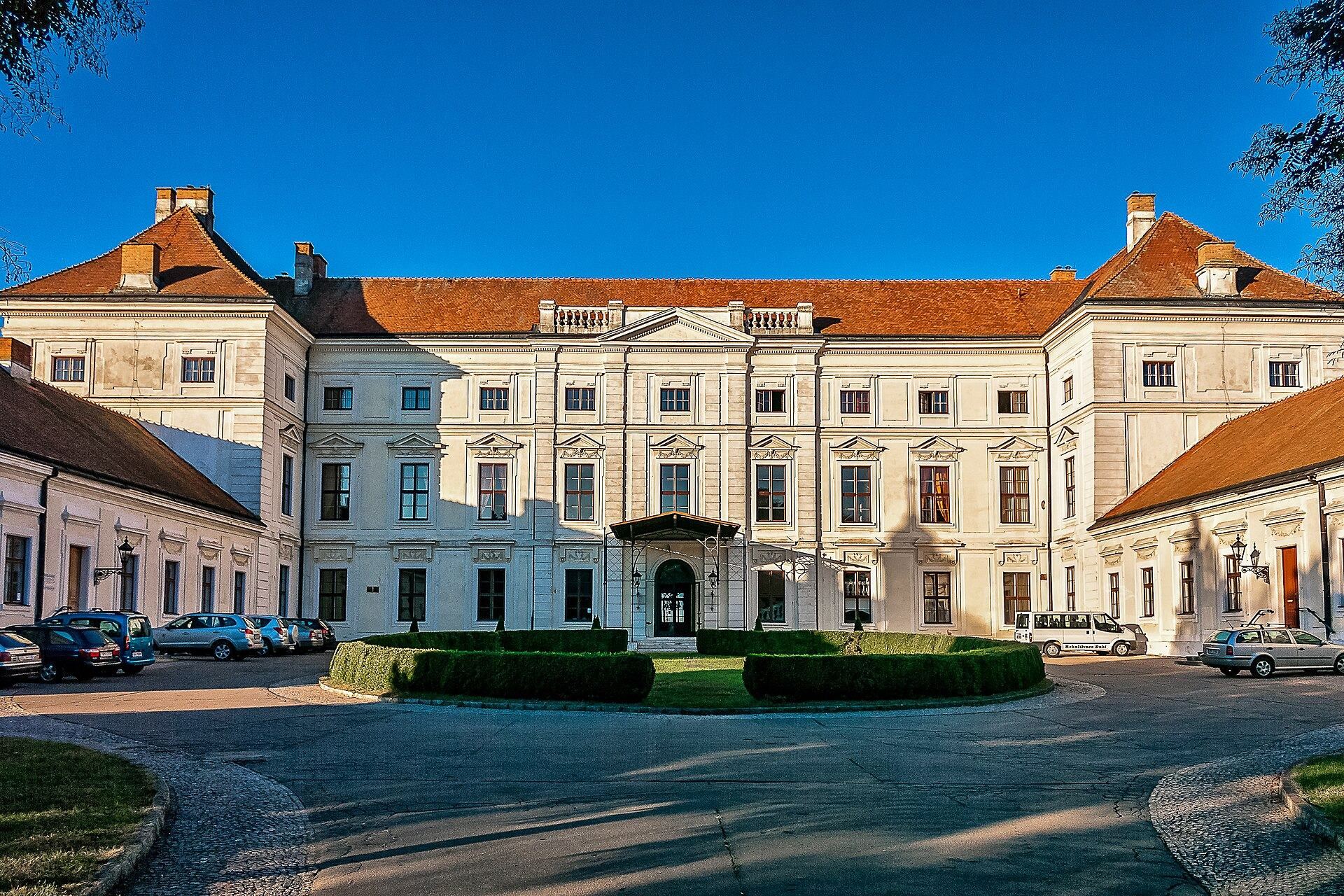
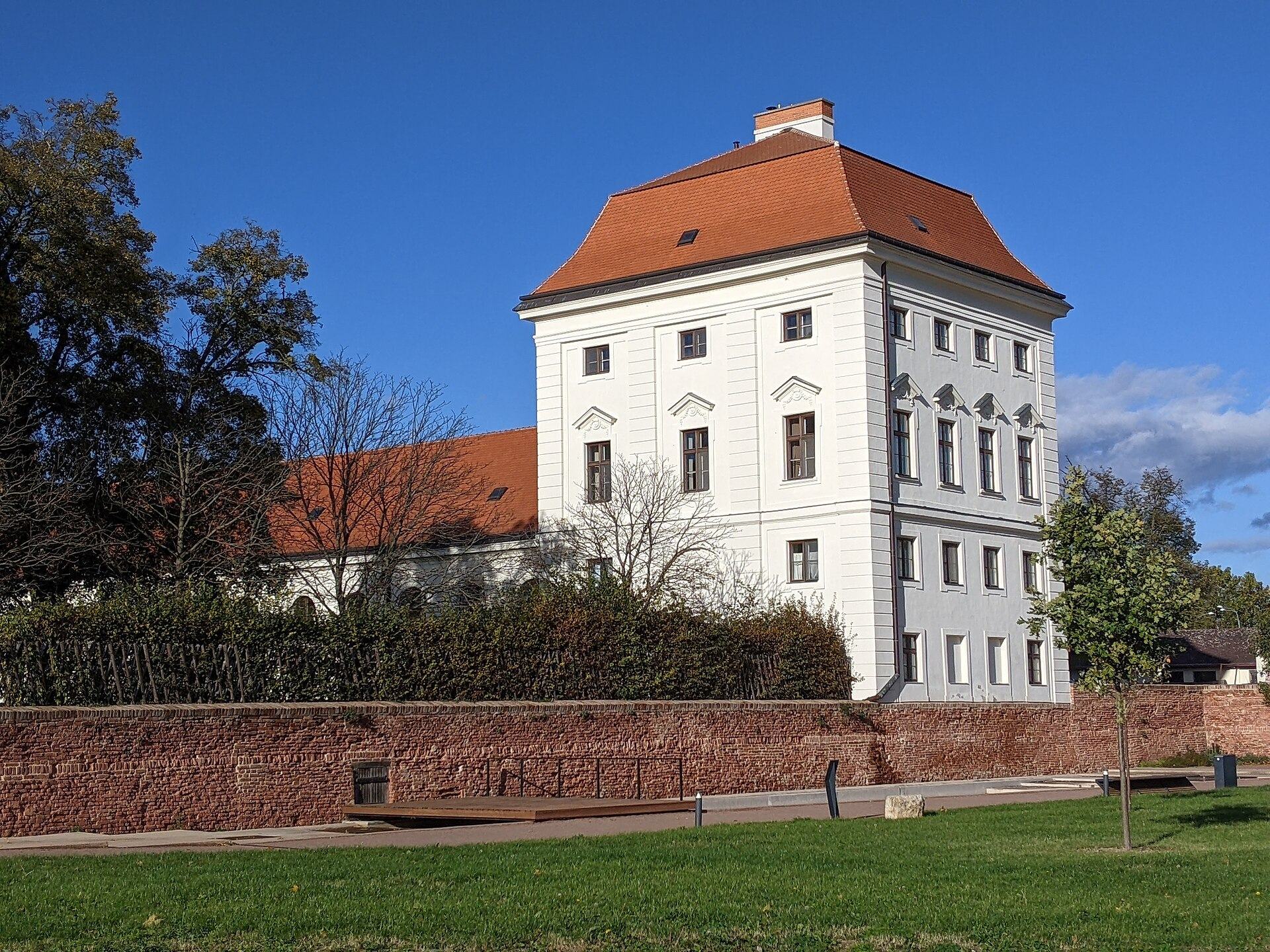
Židlochovice Castle is a historic castle in Czechia, in the town of Židlochovice. It developed from a water fortress known before 1349 into a Renaissance chateau with a chapel in the 1570s, a Baroque residence rebuilt between 1720 and 1729, and an Empire-style castle whose general appearance was established in 1844–1845.
Medieval fortress and noble ownership
The original water fortress was a fortified residence protected by water-related defenses. In 1353, the fortress and village passed to John Henry, a Luxembourg member who held the office of margrave of Moravia, and after his death to Margrave Jobst. From 1407, the property changed hands among several noble families, including the Waldsteins and Pernsteins.
Renaissance and Baroque transformations
In 1567, Židlochovice came into the possession of the House of Žerotín. Fridrich of Žerotín ordered the fortress converted into a Renaissance chateau with a chapel during the 1570s. Adam the Younger of Waldstein bought the castle and estate in 1616. At the end of the seventeenth century, Count Philipp Ludwig Wenzel of Sinzendorf acquired the property and commissioned a Baroque rebuilding between 1720 and 1729. The Viennese builder Ludwig Kaltner carried out the work.
Dietrichstein and Habsburg ownership
Jan Leopold of Dietrichstein purchased the castle and estate in 1743, and the Dietrichsteins retained them until 1819. They then sold the property to the Habsburg-Lorraine imperial family, specifically the descendants of Leopold II. Structural changes began in 1822, when the fortification walls, earthworks, and drawbridges were removed. Further work in 1844–1845 introduced the restrained classical vocabulary of the Empire style and gave the castle its present general form.
The castle remained connected with the Habsburg family until its nationalization by Czechoslovakia in 1919. Maria Christina of Spain, who later became queen consort of Spain, was born there in 1858. Her father, Archduke Charles Ferdinand of Austria-Teschen, died at the castle in 1874. Archduke Frederick was its last private owner.
State administration and the interwar period
In 1919, Archduke Frederick’s property was placed under compulsory administration, and Jaroslav Franz became administrator of the Židlochovice estate. The estate then covered 6,676.53 hectares and included seven districts, 21 farmsteads, a sugar refinery, and a mill. Under the Czechoslovak state-property law of 12 August 1921, it passed to the General Directorate of State Forests and Estates in Prague. The administration of the state forests and estates was based at the castle. By 1937, the Židlochovice administration managed 6,454 hectares, including 2,484 hectares of forest and 3,574 hectares of fields and meadows.
The state sugar refinery and 2,700 hectares of the estate were leased to the Joint-Stock Company for the Sugar Industry in 1923. Other farms and facilities were leased for fixed periods. From 1925, the Žabčice farm served as a school and experimental property of the Agricultural University in Brno, becoming an independent state enterprise in 1928.
Between the two world wars, Židlochovice Castle served as the summer residence of President Tomáš Garrigue Masaryk during his stays in Moravia. A commemorative plaque at the entrance to the park recalls these visits.
Hunting and diplomatic encounters
The estate’s hunting tradition began in 1819, when Albert Casimir of Saxe-Teschen established a pheasantry, a managed preserve for breeding and keeping pheasants. Archdukes Albert and Frederick later expanded the hunting grounds and stocked them with game. After the land reform, the forestry administration maintained the grounds as a setting for important hunts, while the castle served as an unofficial presidential base during Masaryk’s summer stays.
During the interwar period, the hunting grounds received diplomatic guests, especially representatives of the Little Entente, an alliance of Czechoslovakia, Romania, and Yugoslavia formed to preserve the post-World War I settlement in Central and Southeastern Europe. On 5 September 1936, a preparatory hunt involving a Yugoslav delegation led by Prime Minister Milan Stojadinovic produced 630 head of game. King Carol II of Romania and his son Michael attended representative hunts at Židlochovice in 1936 and 1937 as part of diplomatic contacts between Czechoslovakia and Romania.
Postwar state use
From 1945 to 1948, the castle housed the Supreme Administration of the Czechoslovak State Estates. In 1948, this institution became the Directorate of State Estates and Fishponds. Between 1948 and 1951, the Židlochovice state farm operated from the complex and was regarded as a model enterprise, receiving the Order of Labour.
In the present period, the castle has hosted political meetings and has also been used as a hotel and for weddings. It is associated with the filming of an episode of the television series Četnické humoresky. Židlochovice Castle is protected as a cultural monument of the Czech Republic, is state-owned, and is administered by the State Forests of the Czech Republic. The adjacent forestry administration houses the directorate of the Židlochovice Forest Enterprise.
Remains
Castle complex
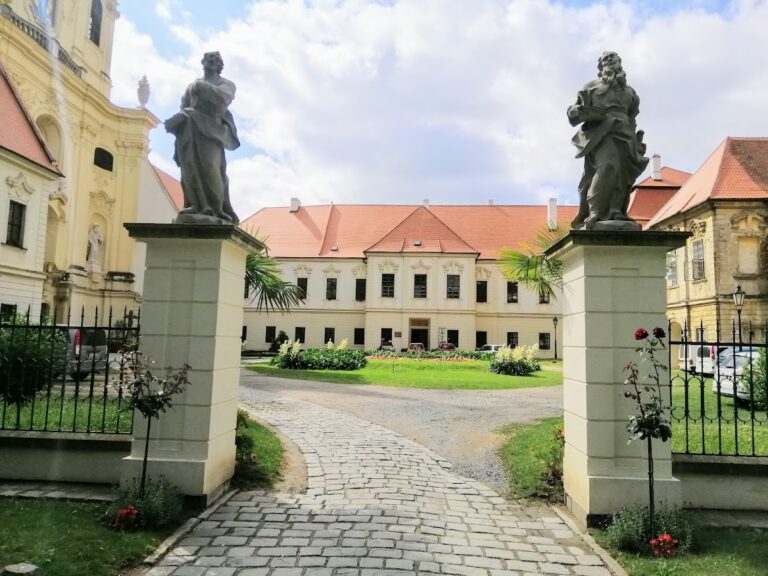
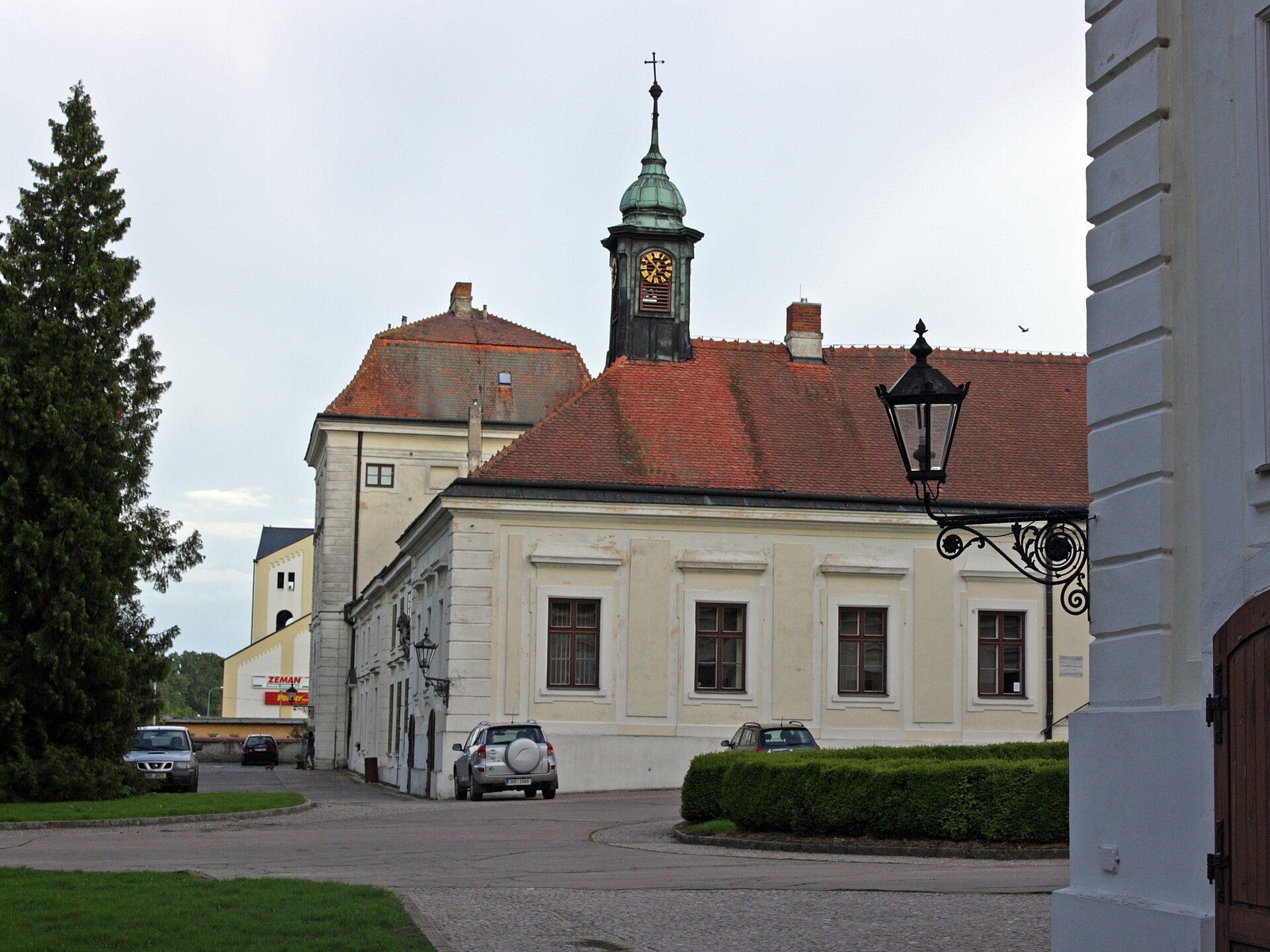
The castle stands in the southwestern part of Židlochovice and combines Baroque and Empire elements. Its present form reflects the earlier sequence of transformations from water fortress to Renaissance chateau and then to Baroque residence. The defensive walls, earthworks, and drawbridges were removed during the changes begun in 1822. The right wing contains the bell turret of the chapel, and the principal facade faces the adjoining grounds.
Chapel of the Holy Cross
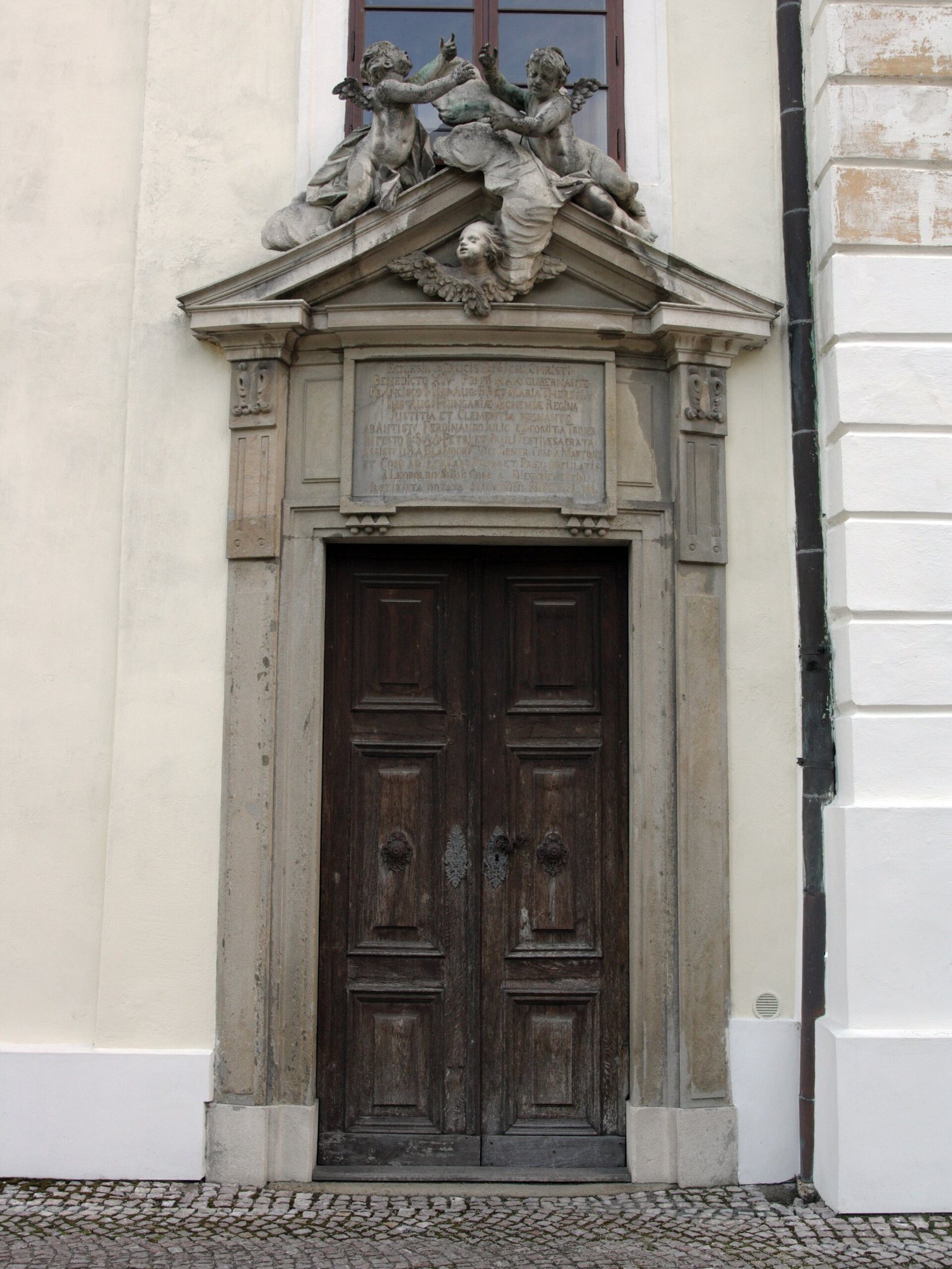
The Chapel of the Holy Cross formed part of the original castle and was repaired by Jan Leopold of Dietrichstein in the mid-eighteenth century. Its portal and interior design are attributed to František A. Grimm, while the portal sculptures of putti and its dedicatory inscription were carved by the Brno stonemason Joachim Günther. Jan Stern provided the plastic stucco decoration, and the walls and pilasters imitate marble. A circular vault allegory shows Faith holding a cross amid angels carrying the instruments of Christ’s Passion.
A vault painting signed by the Austrian painter Franz Lefler dates from the mid-nineteenth century. On the front wall, the dead Christ lies on a cloth before the tomb after being removed from the cross. An angel mourns him, while two other angels occupy the side niches with a spear and a sponge on a staff. The side altars are dedicated to the Virgin Mary of St Thomas and Saint Francis Xavier. The chapel also contains a Carrara-marble statue of Saint Susanna, shown as a crowned female saint with a scepter at her feet.
Park and hunting landscape
The castle park covers 23 hectares and is laid out as an English-style landscape park. It contains 25 species of coniferous trees and more than 80 species of deciduous trees. Ernst August Charbonier prepared its plan around 1708, and the gardener Josef Hatzl carried out the planting before the grounds were reshaped into their present English style. Among the exotic trees is a North American Osage orange about 20 metres high with six trunks, regarded as the largest specimen in South Moravia. A commemorative lime tree was planted in the western part of the park in 1930 in honor of President Masaryk. A bench bears a plaque with a poem by Petr Bezruč about the castle, while another plaque near the park entrance recalls Masaryk’s stays.
The adjoining hunting area covered 16,522 hectares and included the Jalovisko preserve, known as the Great Pheasantry, the Měnín Forest, the Prince’s Forest, the Dlouhá léč–Bedřich area, and the Velký Dvůr floodplain. In 1936, its managed stock included 10,800 pheasants, 3,900 partridges, 3,050 hares, 4,040 rabbits, and 1,260 other game animals, together with additional game species. Police patrols protected the game from poaching.