Vranová Lhota Castle: A Fortress and Later Chateau in Czechia
Site at a Glance
- Rating
- 4.2
- Popularity
- Very Low
- Country
- Czechia
- Primary era
- Early Modern
- External website
- Open
- Eras represented
- Medieval, Early Modern
- Civilizations
- Habsburg, Holy Roman Empire, Margraviate of Moravia
- Site type
- Domestic
- Remains
- Castle
On this page7 sections
History
Medieval fortress
Vranová Lhota Castle is a fortress and later chateau in Czechia that emerged after the nearby Vraní hora Castle was destroyed in 1389 during a military campaign led by Jobst of Luxembourg, the Moravian margrave and Luxembourg ruler. Jobst confiscated the estate, but financial difficulties led to the new fortress being repeatedly held in pledge, meaning that creditors controlled it until their claims were settled.
The first written mention of the fortress dates from 1406, when the Lords of Vildenberk held it in pledge. King Sigismund of Luxembourg, later Holy Roman Emperor, also pledged the fortress in 1425. By 1497, Vranová Lhota was described as deserted and had probably been destroyed during the Hussite Wars, the religious and political conflicts that affected the Bohemian lands during the fifteenth century. That year, King Vladislaus II of Bohemia confirmed Sigismund’s pledge documents for the Vranov estate to George of Lhota.
Reconstruction and Renaissance rebuilding
The identity of the person who restored and enlarged the fortress is uncertain. The work was probably undertaken by the Lhotští of Ptení, a noble family that held Vranová Lhota from 1507 to 1516. The basic chronology places a reconstruction around 1509. An architectural survey from the 1980s, however, interpreted the surviving structure as a late-fifteenth-century early Gothic building that was later remodelled in an early Renaissance style and enlarged during the Baroque period.
The fortress underwent another rebuilding at the end of the sixteenth century, probably under Dětřich Lhotský of Ptení or Jan Kobylka of Kobylí. In the seventeenth century, it belonged to the Drahanovští of Pěnčín. In 1698, Jan Adam I of Liechtenstein had the Renaissance fortress converted into a small chateau.
Agricultural and municipal uses
In 1714, the Libštejnský family of Kolovraty incorporated Vranová Lhota into the Biskupice estate. After this change, the residence served the operations of an agricultural court rather than functioning as an independent aristocratic residence. From 1874, it remained part of the Biskupice estate under the ownership of the Thurn-Taxis family.
After the Second World War, the property was confiscated. The municipality used it for cultural activities, and it was later used by the local collective agricultural cooperative. After the Velvet Revolution, the municipality sold the chateau to the company Tramaz. The building entered the register of cultural monuments on 30 November 1990 and has been legally protected as a cultural monument since that year.
Recent ownership and reconstruction
Ivana Přibylová purchased the property in December 1999 and has gradually reconstructed it with the aid of grants. The community MNOHO SVĚTŮ from Jilemnice took part in repairs in 2016 and 2017. Ivana Přibylová is the current owner.
Remains
Fortress structure
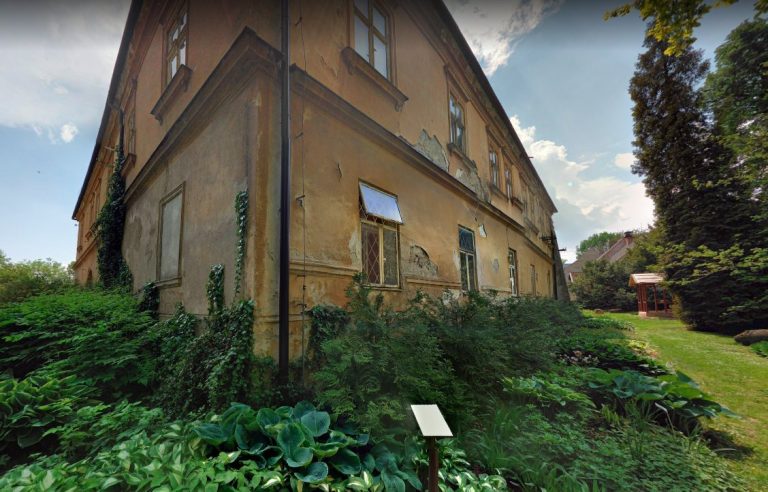
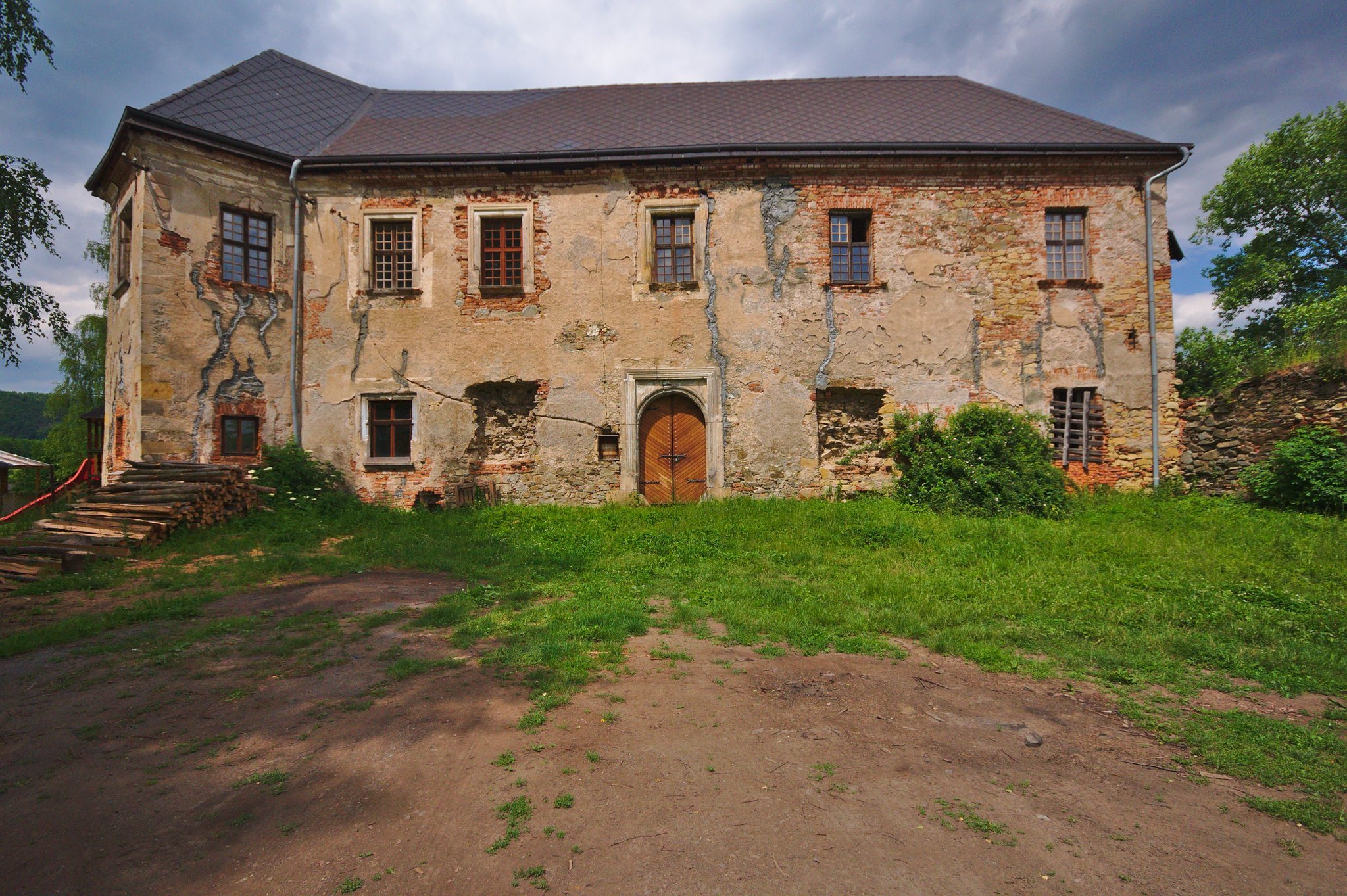
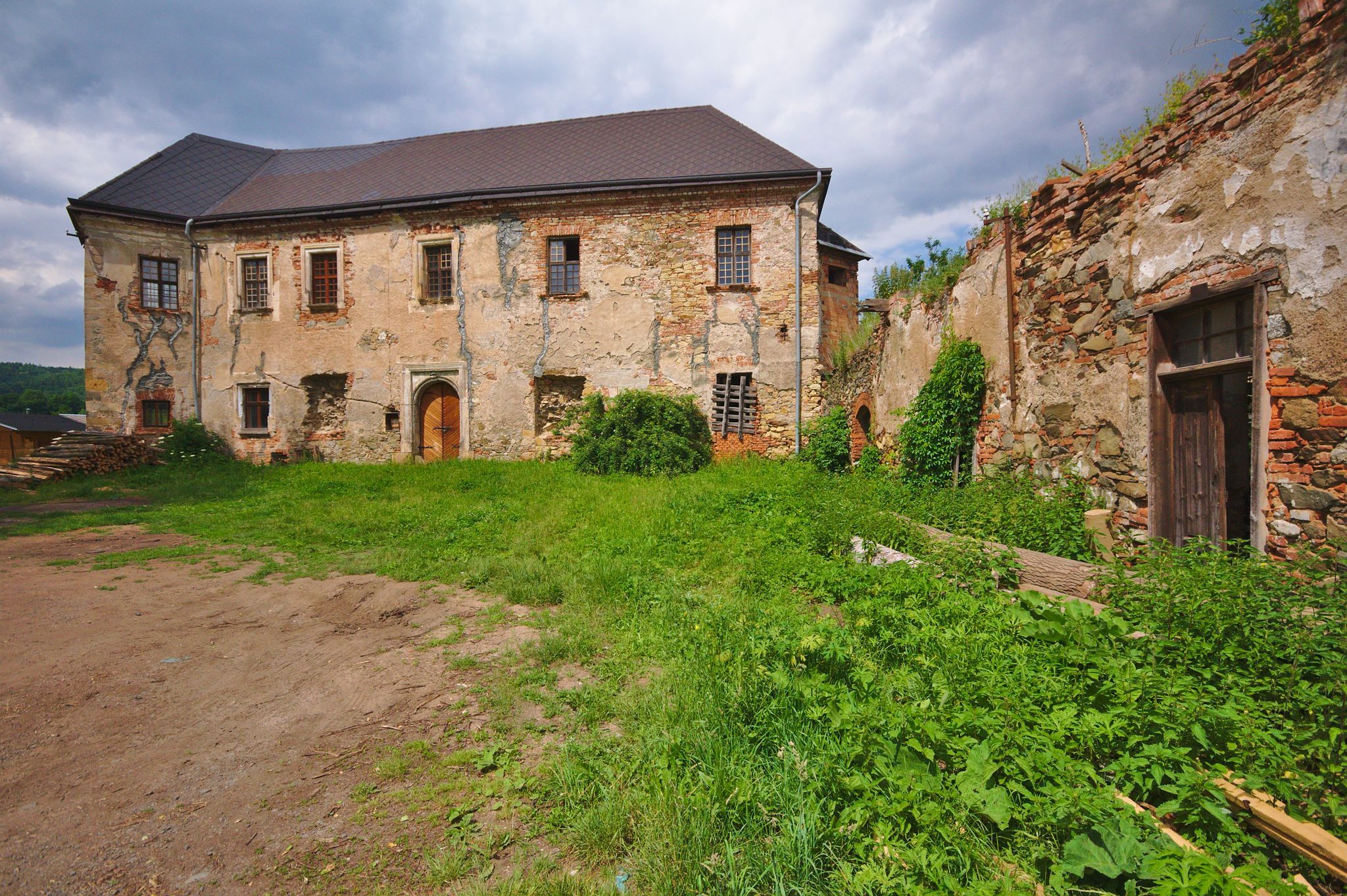
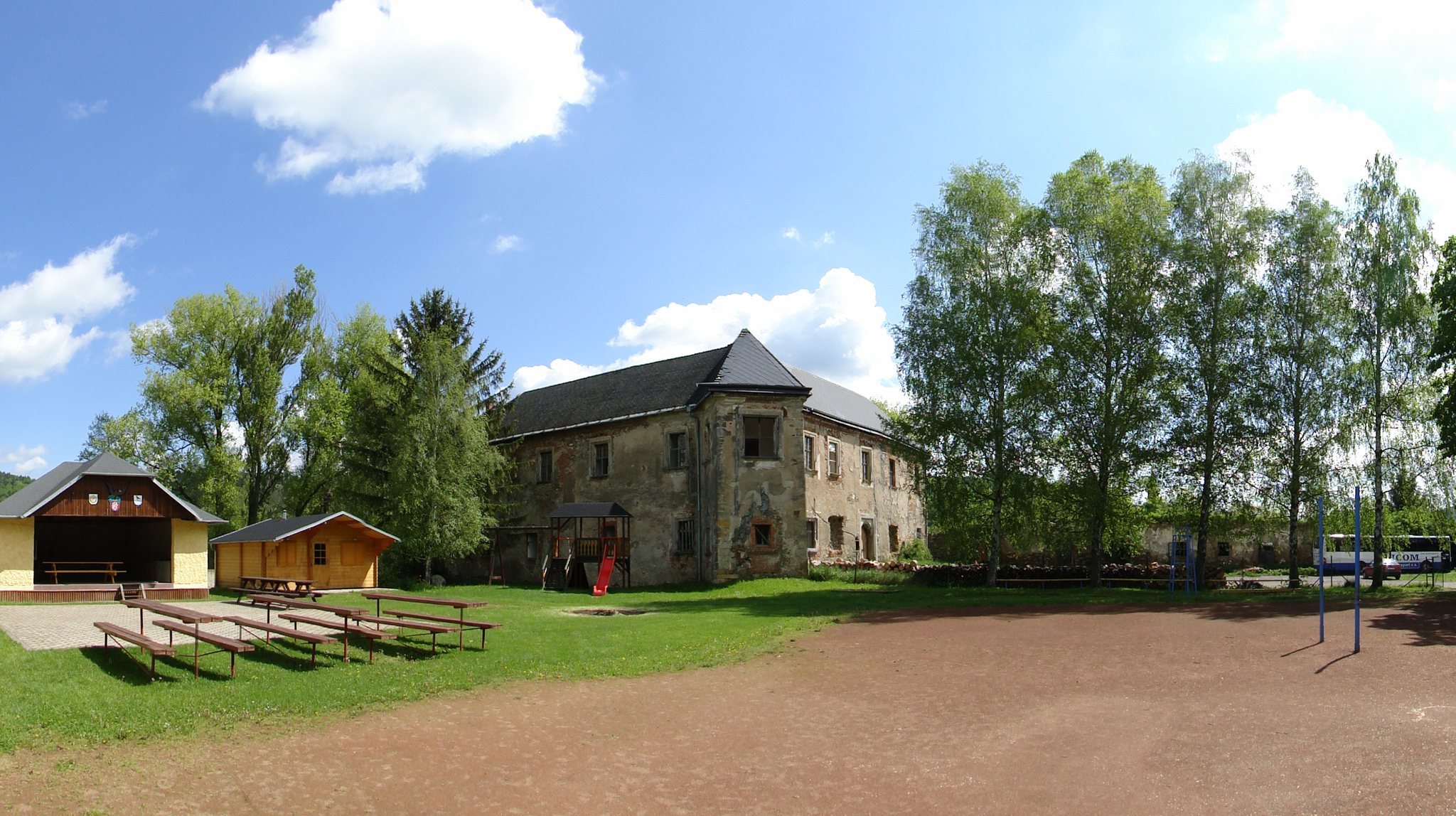
The surviving building has a T-shaped plan formed by two single-range, two-storey wings, meaning that each wing is arranged in one row of rooms. These wings are fragments of the original fortress. The structure uses mixed masonry and is covered by hipped roofs. Its south facade is arranged in five window axes, vertical lines organizing the aligned window openings.
The basement contains barrel vaults, ceilings formed by continuous curved vaults. The fortress was enlarged with two additional wings and a defensive ditch, although the date and authorship of this work remain uncertain. The surviving arrangement therefore brings together elements associated with the medieval fortress and its later Renaissance and Baroque transformations.