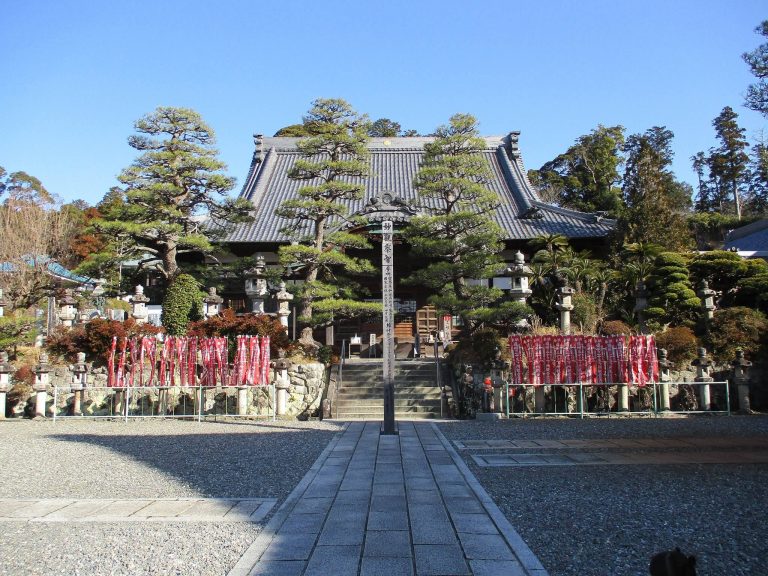
Ogasa Shrine: A Shinto Shrine on Mount Ogasa
Site at a Glance
- Rating
- 4
- Popularity
- Very Low
- Country
- Japan
- Primary era
- Early Modern
- External website
- Open
- Eras represented
- Early Modern
- Civilizations
- Tokugawa
- Site type
- Religious
- Remains
- Sanctuary
On this page8 sections
History
Ogasa Shrine is a Shinto shrine in Japan, near Kakegawa, traditionally founded in 702 during the early eighth century by order of Emperor Monmu. Its three principal kami, revered beings or spirits in Shinto, were enshrined through a transfer of worship from the Kumano Three Mountains, the three major sacred shrines of the Kumano region.
Foundation and Kumano traditions
The shrine is traditionally said to have been established on the eighteenth day of the third month of the second year of the Taiho era. Along with Mitsukuma Shrine in Kakegawa and Takamatsu Shrine in Omaezaki, it became known as one of the “Three Kumano Mountains of Enshu,” linking the sanctuary to the wider Kumano tradition of pilgrimage and worship.
The November Yahagi Festival is said to have continued since the shrine’s foundation. It seeks abundant harvests, household safety, and safe childbirth. During the rite, a shrine priest shoots sacred arrows intended to drive away evil, while parishioners compete to seize them. The arrows are then dedicated at the neighboring Tamonten Shrine.
Domain patronage and modern status
In 1682, Nishio Tadanari designated Ogasa Shrine as a prayer site of the Yokosuka Domain, a feudal territorial government ruled by a daimyo. During the Bunka era, Ota Sukeyori gave it the same role for the Kakegawa Domain. These appointments connected the shrine with the religious life of two local domains.
Japan’s modern shrine-ranking system initially classified Ogasa Shrine as a village shrine. It was promoted to district shrine in 1919 and became a prefectural shrine in 1945. This official ranking system was abolished after the Second World War. In 1990, Daito Town designated an old cedar on the approach as a natural monument. The precincts also preserve remains of Ogasayama Fort, a military fortification.
Remains
Shrine precinct and surviving features
Main sanctuary complex
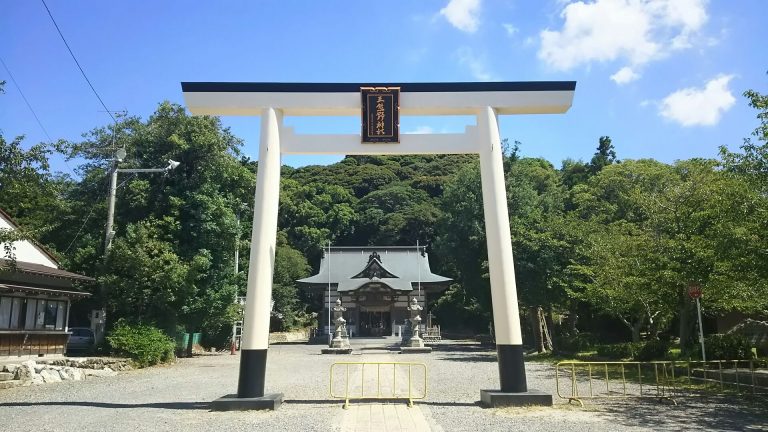
Ogasa Shrine stands near the summit of Mount Ogasa in the Iriyamase area of Kakegawa. Its principal complex is formed by the honden, or main sanctuary, the heiden, the space used for offerings, and the haiden, or worship hall. A kaguraden, a hall for sacred ritual performances, stands in front of the worship hall. The honden is considered to date from the Bunka era.
Associated shrines
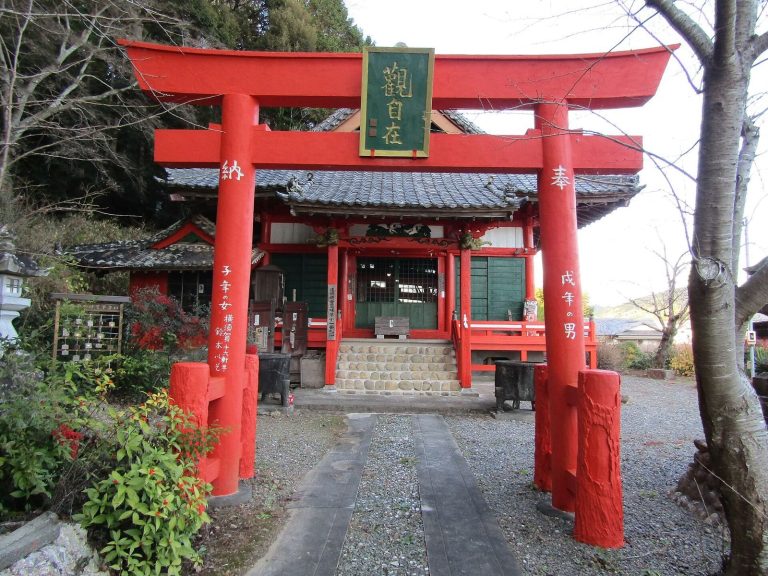
Tamonten Shrine stands beside Ogasa Shrine and retains a close ritual relationship with it through the Yahagi Festival, whose sacred arrows are dedicated there. Tamonten is the Japanese Buddhist name for Vaisravana, a guardian deity associated with protection. Konpira Shrine also lies within the precincts. It is dedicated to Konpira, a deity especially associated with maritime protection and safe travel.
Approach and fort remains
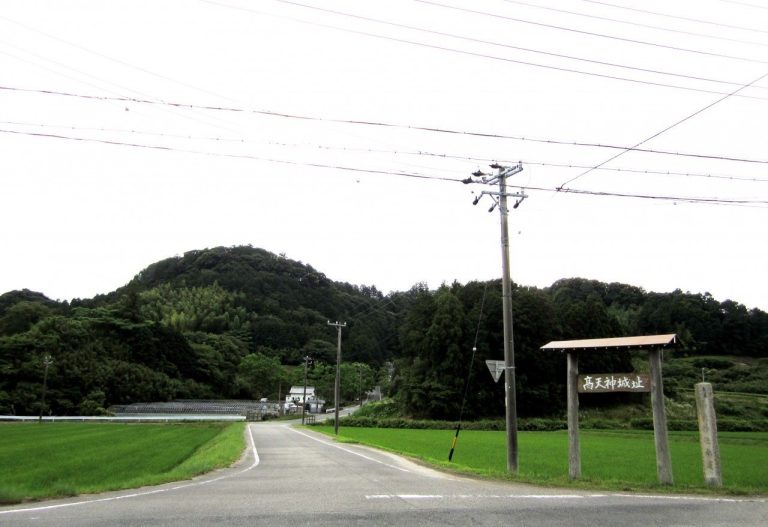
The approach contains an old cedar approximately 20 meters tall and estimated to be more than 400 years old. The shrine precincts also contain the surviving remains of Ogasayama Fort, preserving a military element within the sacred mountain setting.