Shida Gunga Ruins: An Ancient District Administrative Complex in Japan
Site at a Glance
- Rating
- 3.6
- Popularity
- Very Low
- Country
- Japan
- Primary era
- Medieval
- External website
- Open
- Eras represented
- Medieval
- Civilizations
- Japanese
- Site type
- Civic
On this page8 sections
History
The Shida Gunga ruins in Fujieda, Japan, are the remains of an ancient district government complex built under Japan’s centralized Ritsuryō system between the eighth and ninth centuries. A gunga was a district-level government center, and this complex administered Shida District in the former Suruga Province. Its repeated rebuilding and inscribed objects provide evidence for how provincial administration operated in ancient Japan.
Formation under the Ritsuryō system
The complex formed part of the standardized governmental order developed after the seventh-century Taika Reforms. The Ritsuryō system organized Japan through formal legal and administrative codes. Provinces were governed from kokufu, or provincial capitals, while smaller districts known as gun or kōri were administered from centers such as Shida Gunga. These administrative complexes followed layouts influenced by contemporary Chinese governmental design.
Renewal and administrative use
Shida Gunga was repeatedly renewed or rebuilt during its period of use. Archaeological evidence identifies three major phases extending from the first half of the eighth century to the first half of the ninth century. More than 260 pottery fragments bearing black-ink inscriptions helped identify the place-name “Shida” and the titles of district officials, including the dairyō and shōryō, who were senior administrators, and the shuchō, an official associated with record keeping. The inscriptions, together with the layout of the remains, established the site as the Shida District administrative complex.
Discovery and protection
The ruins were discovered in 1977 during construction for a housing development. The project was cancelled, and excavation began in 1980. The area was later developed as an archaeological park with reconstructed buildings and the Shida Gunga Ruins Museum. The site was designated a National Historic Site of Japan on October 22, 1980. Inscribed excavated materials associated with the ruins received cultural-property designation from Shizuoka Prefecture in 2004. The site is also known as the Mikogaya Site.
Remains
Valley setting and enclosure
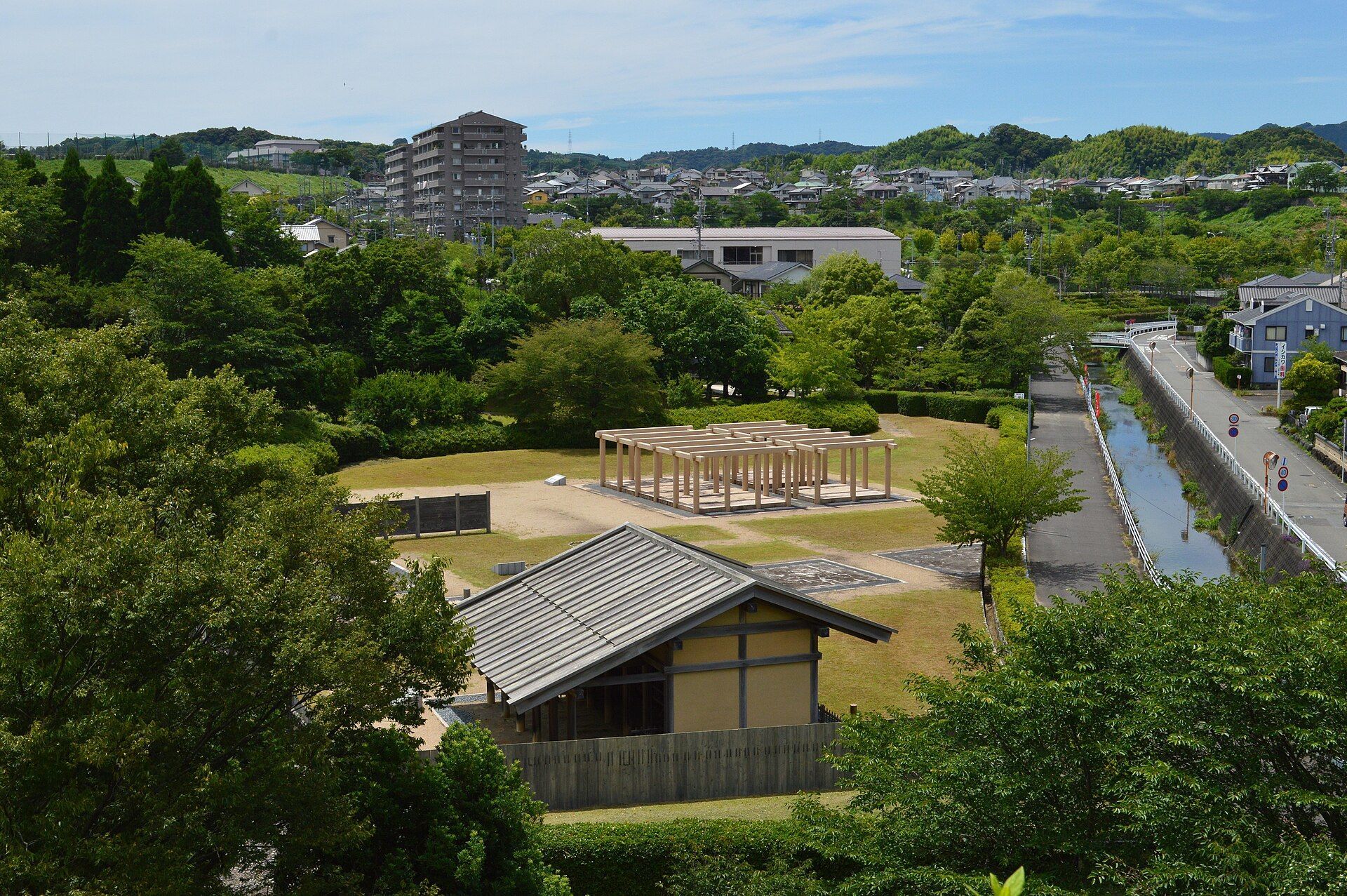
The ruins occupy a valley on the northern side of the delta formed by the Ōi River, on the west bank of Suruga Bay. The valley is approximately 100 meters wide and 150 meters long, with the complex situated at its highest elevation. The built area occupies a compact tract of narrow alluvial land measuring about 80 meters from east to west and 60 meters from north to south. Hills enclose the valley on the east, west, and south.
Buildings, boundaries, and roads
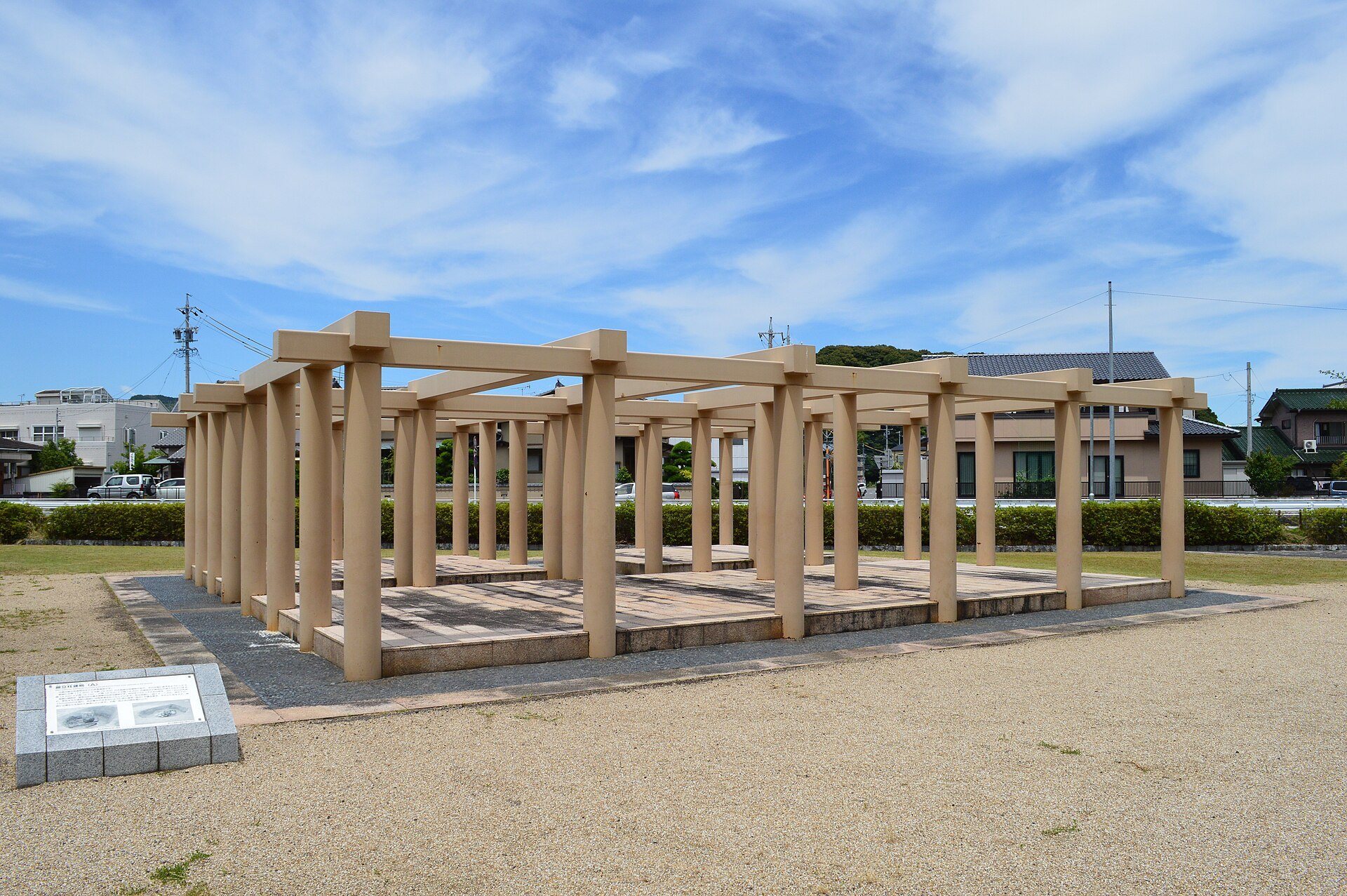
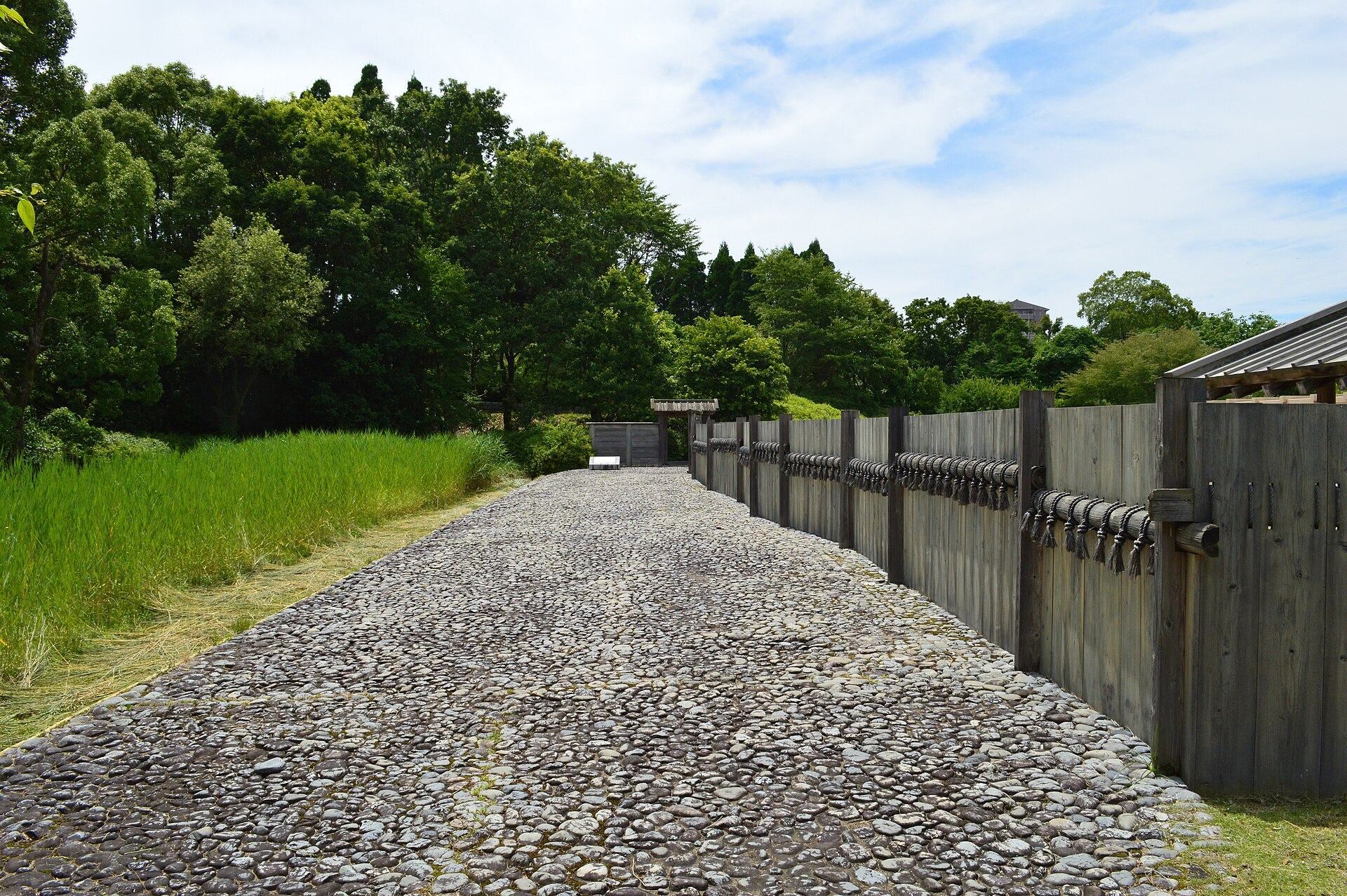
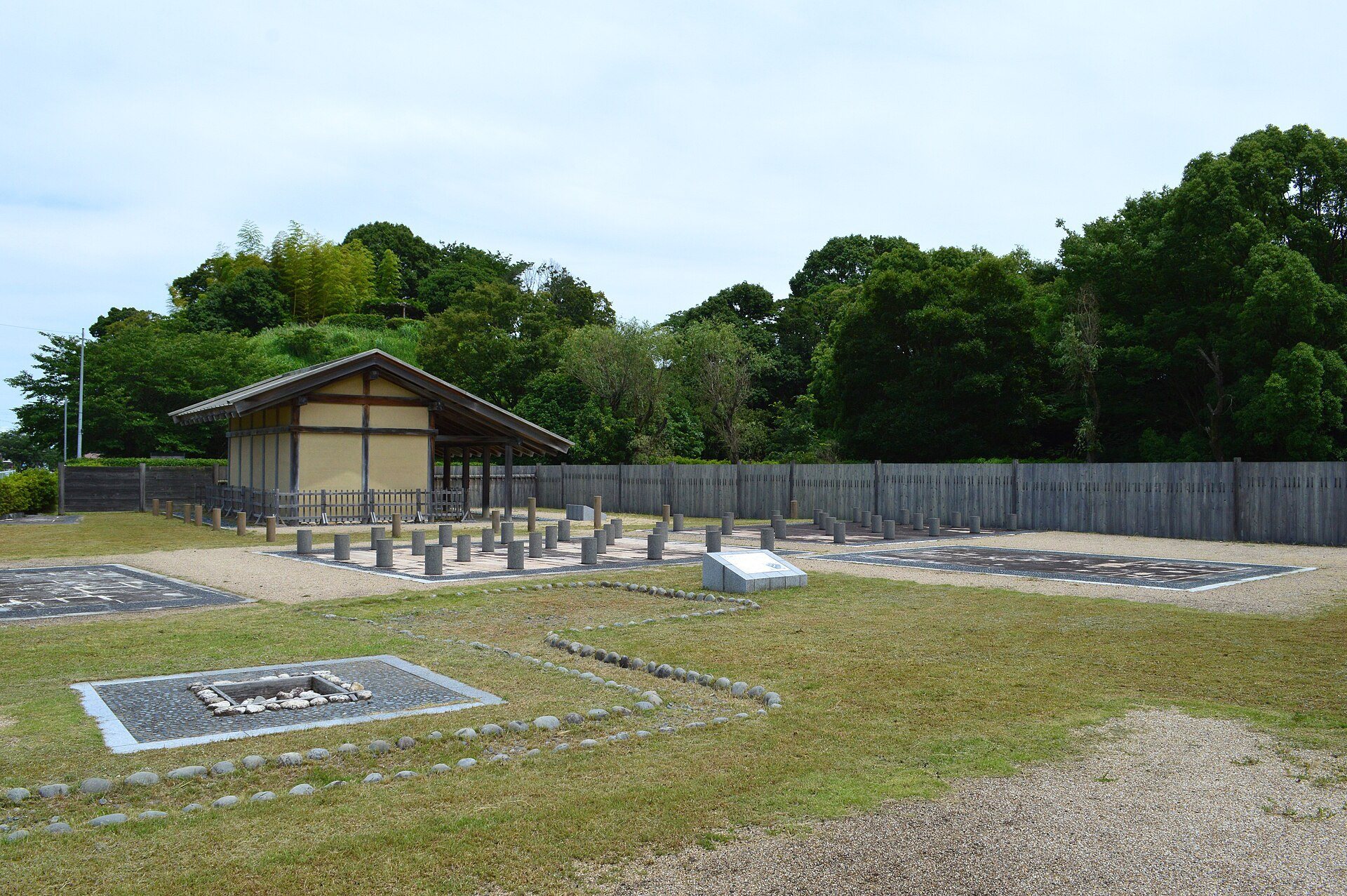
Excavation uncovered the remains of 30 post-built buildings, along with gates, board fences, a well, and roads. Their ridgelines were regularly aligned from north to south. An earthen rampart with a wooden palisade originally occupied the eastern side of the complex. By the eighth century, the rampart had been replaced by a densely arranged group of granaries, leaving a small fenced area in the southeast corner. A road approximately four to six meters wide ran outside the palisade along the southern side, and a gate stood in its western section.
The complex’s limited size and unusual arrangement differ from the expected pattern of a district government office combined with granaries. Its buildings have therefore been interpreted as possibly belonging to kitchen or provisioning facilities and to official lodging or an administrative residence rather than to the main district office and storehouses. The archaeological park includes reconstructed buildings that convey this excavated arrangement.
Excavated materials
Finds from the site include roof tiles, agricultural implements, dolls, wooden tags, Haji ware, Sue ware, and lacquer objects. Haji ware is unglazed earthenware, while Sue ware is a high-fired ceramic tradition introduced to Japan from the Korean Peninsula. Some pottery and lacquer objects carry the word “Shida” in black ink, linking the objects to the district name and helping clarify the administrative identity of the ruins.