Kamikasuya Shrine: A Shinto Shrine in Isehara, Japan


Site at a Glance
- Rating
- 3.9
- Popularity
- Very Low
- Country
- Japan
- Primary era
- Early Modern
- Eras represented
- Early Modern
- Civilizations
- Tokugawa
- Site type
- Religious
- Remains
- Sanctuary
On this page9 sections
History
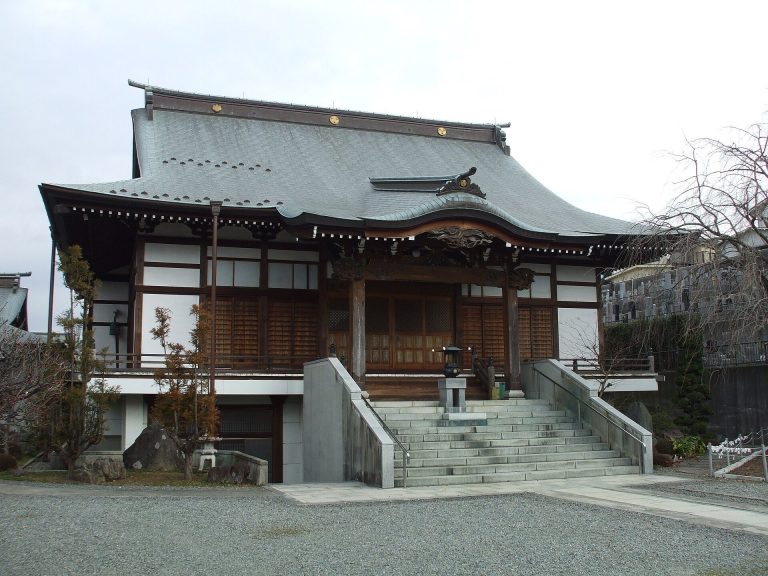
Kamikasuya Shrine is a Shinto shrine in Isehara, Kanagawa, Japan, traditionally associated with the Tenpyo period between 729 and 749 and with the worship of Oyama-kui-no-Kami, a mountain deity connected with the protection of agricultural land. Formerly called Sanno-sha, it served as the tutelary shrine of the Sanno-hara hamlet in Kamikasuya Village and was classified as a village shrine.
Origins and Sanno worship
The shrine’s origins are traditionally linked to Ryoben, an eighth-century Buddhist monk who is said to have invited the Sanno deity to the area while founding Oyama-dera. Another tradition places the arrival of the Hie deity from Omi Province in either the Daito period, from 806 to 810, or the Konin period, from 810 to 824. Following this tradition, the shrine was known as Sanno-sha.
Sanno-sha also served as the tutelary shrine of the Uesugi Residence, traditionally identified as the former base of the Ogigayatsu branch of the Uesugi family. The plateau beyond the former moat is associated with that residence and overlooks the Sagamino plain. Kichijo-in, a temple of the Old Shingon school, served as the former betto, a Buddhist institution that administered a shrine under Japan’s former combined Buddhist-Shinto system. In November 1591, the shrine received a vermilion-seal charter, and a donation of 1.5 koku of rice was recorded.
Changes from the early modern period
During the Genroku period, from 1688 to 1704, Sanno Gongen was enshrined. This was a Buddhist manifestation associated with the Hie deities. In the early Meiji period, when Buddhist and Shinto institutions were separated, the shrine was renamed Hie Shrine.
In July 1873, Wadauchi Kumano Shrine and Ishikura Kamihakusan Shrine were merged into Hie Shrine, which then took the name Kamikasuya Shrine. Later changes brought nearby shrines into the same institution. Minegishi Mitake Shrine was merged with Kamikasuya Shrine in April 1964, followed by Akiyama Goryo Shrine in October 1966. Both mergers were connected with the lack of resident Shinto priests at the smaller shrines. The shrine’s history also includes the consolidation of nearby Mitake, Kumano, and Goryo shrines.
Festivals and observances
The major festival has traditionally been held on April 3. Its rites include prayers for household safety and a good harvest, led by the chief priest of Hibita Shrine. Festival stalls extend across the grounds and approach, while nearby houses display lanterns marked with the words “sacred light.” A Satokagura performance, a form of ritual Shinto dance and music, is presented in the evening. A year-end market was formerly held on the grounds each December 20.
Remains
The surviving physical setting combines the shrine precinct with traces associated with the former Uesugi Residence. Behind the shrine are remains of the residence’s dry moat, while the plateau beyond it extends across the area traditionally identified with the former residence site. The grounds also contain subsidiary Tenno and Yasaka shrines, as well as several stone Koshin monuments. Koshin monuments commemorate religious observances associated with Shomen Kongo and three monkeys representing the injunctions to see no evil, hear no evil, and speak no evil.
Koshin monuments in the precinct
Stone-shrine Koshin monument
Behind the main sanctuary stands a stone-shrine-type Koshin monument erected in 1670. It is made from Hinata stone and bears a kiriku, a sacred seed syllable, representing Shomen Kongo. Inscriptions convey the meanings “Koshin memorial offering” and “dedicated to the shrine.” Three carved monkeys appear on the monument, with one covering its mouth, another its ears, and the third its eyes.
Koshin monument beside Yasaka Shrine
Yasaka Shrine stands beside a stone-lantern-type Koshin monument on the left side of the worship hall when facing it. Erected in 1668, the monument now survives only as its shaft. Although worn and damaged, it retains the three monkey carvings. The monkey covering its mouth is on the front, the one covering its ears is on the left, and the one covering its eyes is on the right.
Koshin monument at the shrine office
Another stone-lantern-type Koshin monument stands at the shrine office west of the precinct. Its date is unknown, and only its shaft survives. Its form matches the 1668 monument beside Yasaka Shrine, and the two are regarded as a pair. The same arrangement of three monkeys appears on its faces, with the mouth-covering monkey at the front, the ear-covering monkey on the left, and the eye-covering monkey on the right.