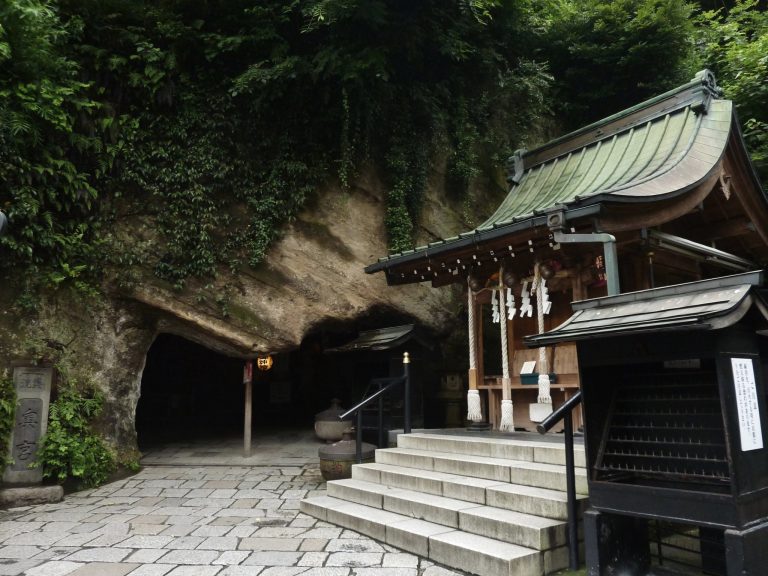
Shōjōkō-ji Temple: Head Temple of the Yugyō Branch of Ji-shu Buddhism


Site at a Glance
- Rating
- 4.2
- Popularity
- Medium
- Country
- Japan
- Primary era
- Early Modern
- External website
- Open
- Eras represented
- Medieval, Early Modern
- Civilizations
- Ashikaga shogunate, Tokugawa
- Site type
- Religious
On this page18 sections
History
Shōjōkō-ji Temple is a Japanese Buddhist temple in Fujisawa, Japan, founded in 1325 as the center of the Yugyō branch of Ji-shu, a Pure Land Buddhist tradition founded by Ippen. Its formal name is Fujisawa-san Muryōkō-in Shōjōkō-ji. The temple is also called Yugyō-ji and Fujisawa Dōjō, names that reflect its role as the institutional center of a tradition based on itinerant preaching, recitation of the nenbutsu, or the Buddha’s name, and the distribution of devotional slips.
Foundation and the Fujisawa Dōjō
The temple’s founding patron was Matano Gorō Kagehira of the Matano clan, whose estates included areas corresponding to present-day Nishimatano in Fujisawa and Matano and Higashimatano in Totsuka, Yokohama. In 1325, Kagehira’s brother Donkai, the fourth Yugyō Shōnin, is said to have revived an abandoned temple called Gokuraku-ji and established it as Shōjōkō-in.
The first temple stood at Kōtoku, approximately 400 meters north of the present grounds. It later became known as Fujisawa Dōjō, and Yugyō Shōnins who lived there independently came to be called Fujisawa Shōnins. A tradition also associates Donkai with another temple at Dōjōgahara in northern Nishimatano, sometimes identified as the Old Yugyō-ji site.
Another tradition attributes a donation of an estate measuring 60,000 kan, a historical Japanese unit used for land or monetary value, to Ashikaga Takauji, founder of the Ashikaga shogunate. A different tradition credits Fujisawa Shirōtarō. Shōjōkō-ji eventually surpassed the older Taima Dōjō, also called Muryōkō-ji, in influence. Fujisawa then developed first as a settlement in front of the temple and later as a post town on the Tōkaidō highway.
Medieval destruction and rebuilding
A bronze bell cast in 1356 identifies the institution as Shōjōkō-in. The name was later changed to Shōjōkō-ji. The temple burned twice during the Ōei era and was rebuilt with larger halls. In 1418, the fourteenth Yugyō Shōnin, Taikū, erected a memorial for people killed in the Uesugi Zenshū Rebellion of 1416. In 1435, Ashikaga Mochiuji, the Kantō kubō, a military governor of the Kantō region, donated a Buddhist hall measuring 120 tsubo, a traditional unit of area.
Fighting in 1513 involving Hōjō Sōun, Miura Dōsun, and Ōta Sukeyasu destroyed the entire temple complex. Shōjōkō-ji had been allied with Miura Dōsun and consequently came into conflict with the Later Hōjō clan. Its request for the return of former estates was rejected by the lord of Tamanawa Castle, and reconstruction was not permitted at that time.
The principal image was moved to Chōzen-ji in Fuchū, Suruga, on January 29, 1513. In 1520, the twenty-fourth Yugyō Shōnin, Fuga, transferred it to Ichiren-ji in Kai. The twenty-fifth Yugyō Shōnin, Butten, later moved it to Shinzenkō-ji at Tsuruga Igawa.
Takeda Shingen, a warlord of Japan’s Sengoku period, offered estates amounting to 200 kan in Fujisawa and 100 kan in Matano in 1571. The donation was never realized because the Later Hōjō campaign failed. In 1591, the thirty-second Yugyō Shōnin, Fuko, was invited by Satake Yoshinobu of Hitachi to establish the Mito Fujisawa Dōjō, later called Jinnō-ji, as a Ji-shu base in Mito.
Fuko appointed Tenjun of Ichiren-ji in Kōfu as abbot of Shōjōkō-ji. Tenjun rebuilt the temple in 1607, ninety-four years after its destruction under the Later Hōjō.
Tokugawa-era institutional authority
In 1631, an order from the Tokugawa shogunate’s magistrate for temples and shrines required Shōjōkō-ji to submit a register of its subordinate temples. The shogunate recognized it as the head temple of 274 Ji-shu temples. A fire destroyed the temple in 1661, and a new Main Hall was completed in 1664.
Shōjōkō-ji formerly appointed the abbots of five temples: Nichirin-ji in Asakusa, Ichiren-ji in Kōfu, Kōmyō-ji in Yamagata, Hōkoku-ji in Kyoto, and Shōmyō-ji in Ōhama. From around 1687, it allowed these branches to call themselves head temples while retaining its own superior position as the grand head temple.
Under Tokugawa Tsunayoshi’s Edicts on Compassion for Living Things, the temple became a refuge for goldfish in Edo. The present principal image was transferred from Hōju-in, a subtemple of Nichirin-ji in Asakusa, on October 15, 1737.
Education, relief, and modern transformations
The Fujisawa Academy was established at Shōjōkō-ji in 1748 because Ji-shu had previously lacked an academic institution. The Asakusa Academy was transferred there in 1894 and became the Eastern University Grove. In 1903, it merged with the Western University Grove, formerly the Seventh Academy, and was renamed the Ji-shu Seminary. Tōrei Middle School was established within the temple complex in 1916 and later developed into Tōrei Gakuen, while the Ji-shu Seminary continued separately as an institution for training clergy.
Emperor Meiji stayed at the temple on October 10, 1868, during his journey to Tokyo. After the Meiji Restoration, Shōjōkō-ji lost the travel red seal issued by the shogunate that had authorized the Yugyō Shōnin to travel throughout the country. It also lost the estates that had supported the temple. The Yugyō Shōnin and Fujisawa Shōnin consequently became the same officeholder.
A major fire in Fujisawa in 1880 destroyed most of the temple, while the Chūjakumon Gate survived. A second fire on July 6, 1911, destroyed the reception hall, living quarters, and Banpō kitchen quarters. It also destroyed the former National Treasure picture scrolls known as the Illustrated Tales of Yugyō Shōnin. The Great Kantō Earthquake of 1923 caused further extensive damage, including the collapse of the Main Hall. The Main Hall was rebuilt in 1937.
During the early twentieth century, Shōjōkō-ji sheltered unemployed people traveling along the Tōkaidō. During the economic depression of 1929, its free relief station received 11,000 visitors in one year.
Memorial observances and religious traditions
The temple commemorated the 650th anniversary of Shinkyō’s death in 1969 by erecting a haiku monument. An image of Ippen was installed and a Manyō botanical garden was created in 1970. The Yugyō-ji Treasure Museum was established in 1977 to display Ippen-related picture scrolls that had previously been dispersed across Japan.
Annual observances include the spring Donkai memorial, the autumn Ippen memorial, and the November separate-time nenbutsu assembly. The Susuki Nenbutsu observance is held on September 15. The November rite extends from the Renka ceremony on November 18 to the Ōmidai ceremony on November 28. Its central night ceremony on November 27 is called Mettō or Hitotsubi. The temple’s lights are extinguished for confession in darkness, after which a single fire is kindled with flint and lamps are gradually relit before the Buddha as the chanting intensifies.
Ji-shu’s practice of fusan, the distribution of slips bearing the formula “Namu Amida Butsu, certain rebirth for six hundred thousand,” is performed at the temple after the morning service, at the initial distribution on January 12, during the spring and autumn founder’s observances, and after the Hitotsubi ceremony.
Suwa Shrine, the temple’s eastern guardian shrine, was separated from Shōjōkō-ji under the Meiji-era policy of separating Buddhism and Shinto. Its New Year and annual festival observances nevertheless retain a relationship with the temple. Shōjōkō-ji is also connected with the medieval and modern narrative of Oguri Hangan and Terute-hime and provides the setting for the rakugo story Suzu-furi, a comic oral narrative tradition.
Remains
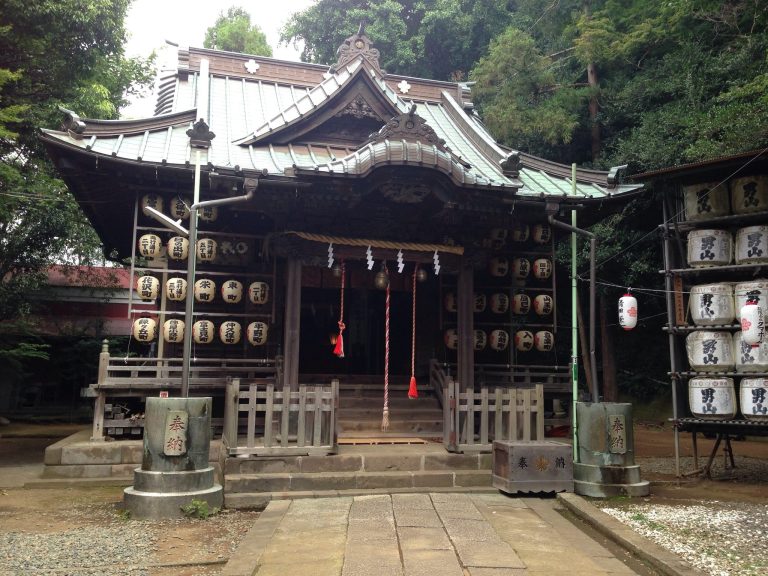
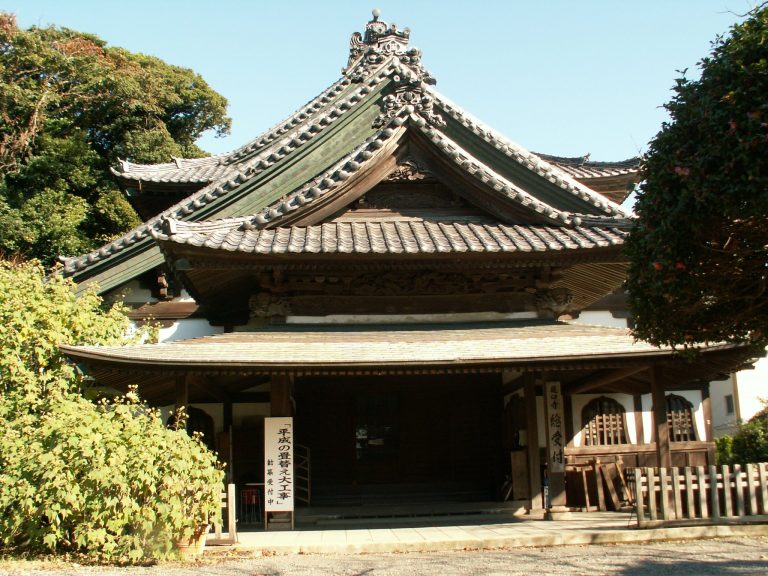
Shōjōkō-ji’s surviving complex includes the Main Hall, the Chūjakumon Gate, the Jizō Hall, the Yugyō-ji Treasure Museum, the graves of successive Yugyō Shōnins, the graves associated with Oguri Hangan and Terute-hime, an image of Ippen, and a large ginkgo tree. The grounds also preserve historic Buddhist images, a bronze bell, memorial monuments, and objects connected with the temple’s religious and artistic heritage.
Principal buildings and Buddhist images
Main Hall and principal image
The Main Hall contains the temple’s principal image, a seated Amida Nyorai dating from the Kamakura period. Amida Nyorai is Amitabha Buddha, associated with the Pure Land and salvation through devotion and nenbutsu practice. The sculpture is a wooden image assembled from separately carved blocks, a technique known as yosegi-zukuri. It represents the raigō Amida, the Buddha welcoming the dead to the Pure Land, and makes the upper-grade, lower-birth hand gesture used in Buddhist art. The image is 141 centimeters high, its pedestal is 109 centimeters high, and its halo is 229 centimeters high. It was transferred to Shōjōkō-ji from Hōju-in in Asakusa in 1737.
A plaque engraved with the characters for “Shōjōkō-ji,” attributed to the calligraphy of Emperor Go-Kōgon, hangs in the Main Hall’s outer worship gallery. Go-Kōgon was a medieval Japanese emperor.
Chūjakumon Gate
The Chūjakumon Gate was built in 1859. Its carvings include chrysanthemum crests and the Tokugawa three-leaf hollyhock crest. The gate is a Fujisawa City cultural property and survived the 1880 fire that destroyed most of the temple complex.
Jizō Hall
The Jizō Hall stands east of the Main Hall’s front. A Jizō Bodhisattva image that had formerly been enshrined on the right side of the Main Hall was repaired and installed there in September 2014, when it acquired the name Higiri Jizō Bodhisattva. The repair revealed an inscription dating the image to the twenty-fourth day of the fourth month in the sixth year of Kyōhō, corresponding to 1721.
The Jizō is a seated, half-lotus wooden sculpture made with the yosegi-zukuri technique. Its seated height is 198 centimeters, its total height is 266 centimeters, and its pedestal is 124 centimeters high. By the end of the nineteenth century, it had been kept in the Kōhan Dormitory.
Memorials, graves, and natural features
Fujisawa Memorial Tower
The Fujisawa Memorial Tower to Friends and Foe stands within the temple grounds. The fourteenth Yugyō Shōnin, Taikū, erected it in 1418 for people killed in the Uesugi Zenshū Rebellion of 1416. It is also called the Enshin Equality Monument. The memorial is approximately 130 centimeters high and 28 centimeters wide and was designated a National Historic Site in 1926.
Graves of religious and legendary figures
The graves of successive Yugyō Shōnins are located behind the Main Hall. Behind the same hall, at Chōsei-in, also called the Oguri Hall, are the graves of Oguri Hangan and Terute-hime. Terute-hime is traditionally said to have become a nun there after Oguri Hangan’s death.
Bronze bell and ginkgo tree
The temple’s bronze bell was cast in 1356 and carries a raised inscription identifying the institution as Shōjōkō-in. It is an important cultural property designated by Kanagawa Prefecture.
A large ginkgo tree on the grounds is traditionally said to be about 600 years old and is designated a Fujisawa City natural monument. A typhoon in the summer of 1982 broke off approximately one-third of the tree, after which it regrew to nearly its former condition.
Picture scrolls and cultural properties
Illustrated Biography of Ippen
The National Treasure Illustrated Biography of Ippen consists of twelve silk picture-scroll volumes painted in color and completed in 1299, ten years after Ippen’s death. Ippen’s younger brother Shōkai compiled the work, and En’i painted it. The scrolls portray landscapes, customs, and places visited by Ippen during his itinerant preaching journeys, preserving observed scenes as evidence of historical and social life.
The scrolls originated at Kanki-kōji in Kyoto and were once jointly owned by that temple and Shōjōkō-ji. They are now solely owned by Shōjōkō-ji while deposited at the Kyoto National Museum and Nara National Museum.
Other images and manuscripts
Other nationally designated Important Cultural Properties associated with Shōjōkō-ji include a silk, color-painted portrait of Emperor Go-Daigo, whose consecration was performed by Monkan Bō Kōshin; a silk, color-painted portrait of Ikkō; two volumes of Ji-shu death registers; and two volumes containing the Six-Time Praise and the Ajiki Debate.
Kanagawa Prefecture-designated cultural properties include the 1356 bronze bell, the painting The Two Rivers and the White Way, a ten-volume illustrated biography of the Yugyō Shōnin compiled by Hira Munetoshi, and an image of Ippen. The illustrated biography is a copy of the Munetoshi version and combines artistic styles from the Muromachi through Edo periods, so its date has not been determined.
A bronze statue of Ippen stands in the grounds. The Yugyō-ji Treasure Museum preserves and displays Ippen-related picture scrolls that had been dispersed across Japan before the museum was established.