Zuiryū-ji Temple: A Rinzai Buddhist Training Monastery in Gifu


Site at a Glance
- Rating
- 4.1
- Popularity
- Very Low
- Country
- Japan
- Primary era
- Medieval
- External website
- Open
- Eras represented
- Medieval
- Civilizations
- Ashikaga shogunate
- Site type
- Religious
- Remains
- Monastery
On this page8 sections
History
Zuiryū-ji Temple is a Rinzai Buddhist temple in Gifu City, Japan, founded in 1468 as the mortuary temple of Toki Shigeyori, the military governor of Mino Province. Rinzai is a major Japanese Zen tradition centered on seated meditation, disciplined monastic training, and guidance from a teacher. The temple belongs to the Myōshin-ji school, headquartered in Kyoto, and specifically to its Tōkai-mon branch. Its formal name is Kinpōzan Zuiryū Zen-ji, while earlier names associated with the site include Churin-ji and Atsumi-ji.
Earlier Institution and Foundation
An earlier religious institution called Churin-ji or Atsumi-ji was traditionally believed to have occupied the site from the Asuka period, an early era of Japanese history conventionally dated to the sixth and seventh centuries. That institution later became abandoned. In 1468, Saitō Myōchin, a fifteenth-century military leader who controlled political power in Mino, re-established the temple to commemorate Toki Shigeyori. He invited the Zen master Gokei Sōton to become its founding abbot. The name Zuiryū-ji came from Toki Shigeyori’s posthumous Buddhist name.
Emperor Go-Hanazono granted the temple an imperial plaque bearing its mountain name. Its seven-hall monastic complex was completed in 1470, and Emperor Tsuchimikado subsequently ranked Zuiryū-ji among the quasi-jussetsu temples. The temple became an established center of Zen practice for the Tōkai-mon branch in Mino and Owari provinces. After 1500, Gokei Sōton’s disciples maintained it through a system in which abbots served in rotation.
Conflict and War Damage
Zuiryū-ji’s institutional independence brought it into conflict with efforts to reorganize the Myōshin-ji temples in Mino. In 1561, Saitō Yoshitatsu attempted to place them under the control of Bessenden Sōki of the Reiun branch. Zuiryū-ji opposed the measure, and its abbot Sokuden Sōhan temporarily withdrew to Zuisen-ji in Inuyama with Kaisen Jōki and others.
The temple suffered war damage in 1536 and 1564. It was burned again during Oda Nobunaga’s 1567 campaign against Gifu Castle, and once more during the 1600 campaign in which Fukushima Masanori and other retainers of Tokugawa Ieyasu attacked the castle. These episodes formed part of the repeated political and military upheavals that affected the temple during the sixteenth century.
Revival and Later Disasters
The rotating-abbot system ended in 1747, after which Zuiryū-ji temporarily declined. In 1806, the Zen master Inzan Iryū rebuilt the temple and established a monks’ training hall as part of the reconstruction. Inzan belonged to a teaching lineage descending from Hakuin Ekaku, a major eighteenth-century Rinzai master. During the Edo period, the era of Tokugawa rule from 1603 to 1868, Zuiryū-ji also served as the Buddhist temple associated with Kashimori Shrine.
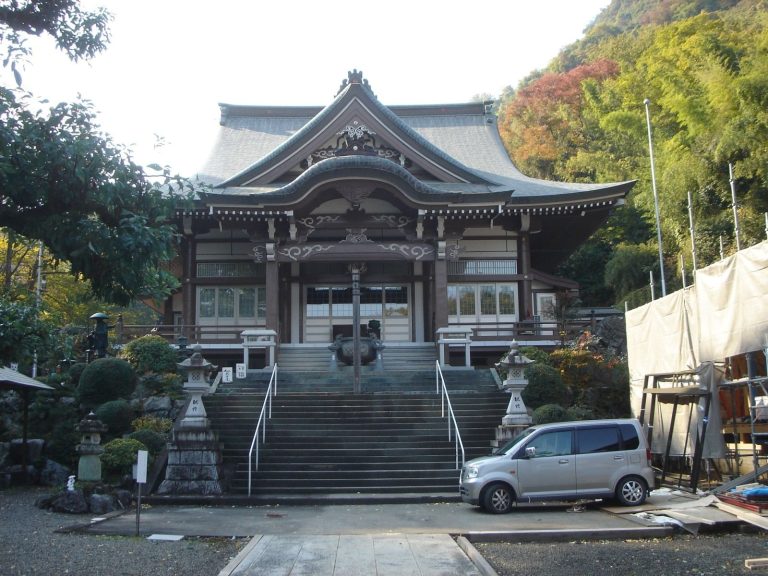
The Nōbi Earthquake damaged the temple in 1891. Its buildings later burned in the Gifu air raid of 1945, and rebuilding proceeded progressively. The Isewan Typhoon caused further damage in 1959, after which reconstruction continued. The main hall was rebuilt in 1992, and seismic reinforcement followed in 2005. Zuiryū-ji remains a specialized training monastery for Zen practice and is normally closed to the public, with free viewing offered during the Gifu Plum Festival in early March.
Subtemples and Institutional Lineage
The six subtemples reflect the development of the wider Myōshin-ji community around Zuiryū-ji. Zuiun-in was founded by Tenjū Sōju, one of Gokei Sōton’s eight leading disciples, and later appointed Kosai Sōitsu as its third abbot. After becoming vacant during the Edo period, it was revived in the Genroku era by the monk Jōgan. A 2021 electrical fire destroyed its buildings and some records.
Kakusei-in was founded by Dokushū Kansai, another of Gokei Sōton’s eight leading disciples. Inzan Iryū served as its abbot from 1791, and his grave is located there. Gaun-in began around 1580 as Tokurin-in under Tōgai Sōfu of Tenshō-ji, a monk in Gokei Sōton’s extended lineage. It moved to its present location in 1609 and adopted the name Gaun-in. In 1872, residents of Kamikano Village asked it to open the Tetsumei School, which became the founding site of Gifu Municipal Tetsumei Elementary School.
Tentaku-in was founded by the monk Tenzui, also connected to Gokei Sōton through a two-generation teaching lineage. It assumed its present name in 1801 and, after its revival, was led by Inzan. Until 1891, it functioned as a monks’ training hall. Kaizen-in was founded by Kōshū Sōshō, one of Gokei Sōton’s eight leading disciples, and served as Saitō Myōchin’s mortuary temple. A monk from Myōshin-ji’s Tenkyū-in revived it in 1867. Unryū-in was founded by Jūgaku Sōhō, another of Gokei Sōton’s eight leading disciples.
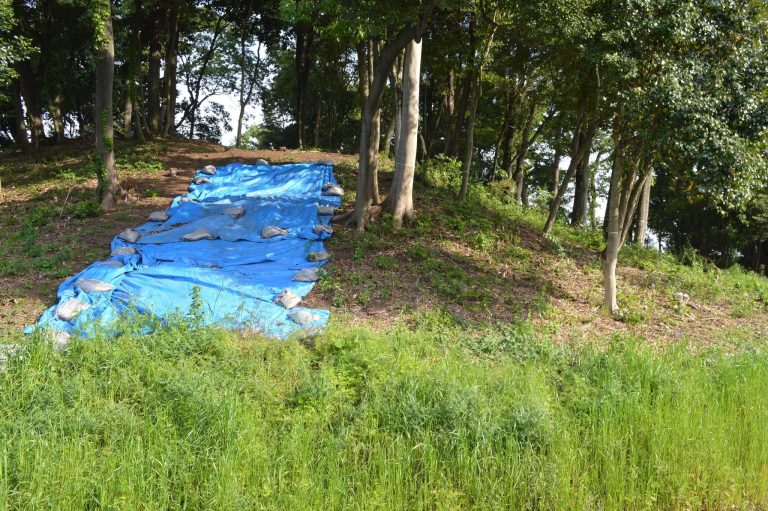
The Atsumi-ji ruins and the graves of Toki Shigeyori and Gokei Sōton have prefectural historical-site status. The grave of Inzan Enshō and a portrait of Saitō Myōchin are municipal cultural properties, with the portrait preserved at Kaizen-in.
Remains
Layout and Monastic Buildings
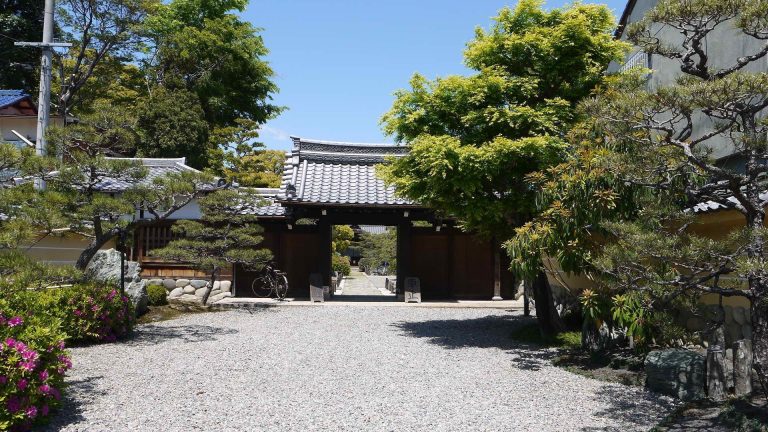
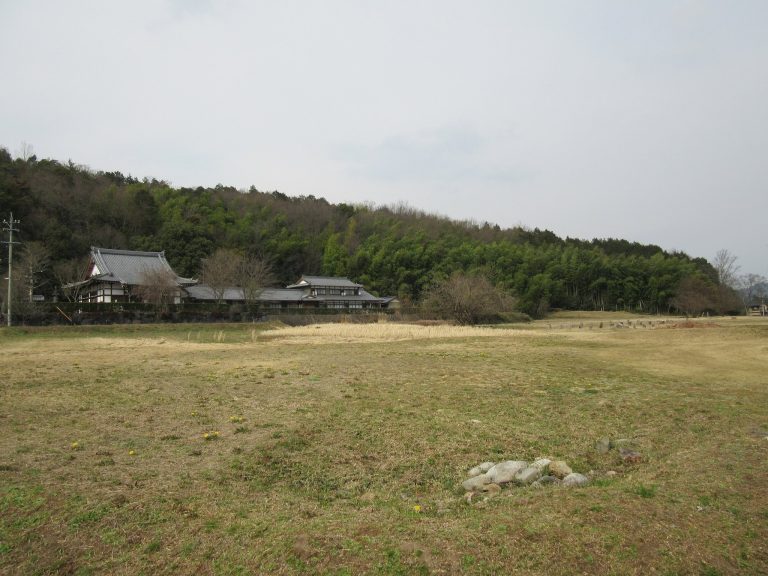
The complex is arranged along a principal approach entered through a main gate. Three subtemples, Tentaku-in, Kaizen-in, and Unryū-in, stand on the left side of the path, while Zuiun-in, Kakusei-in, and Gaun-in occupy the right. This linear arrangement brings the six subsidiary institutions into the structure of the main temple compound.
At the far end of the grounds stands the monks’ training hall, a facility where itinerant Zen monks live, meditate, and undertake disciplined communal practice. Zuiryū-ji is a specialized center for zazen, or seated Zen meditation. The compound also contains the graves of Saitō Myōchin, Toki Shigeyori, and Gokei Sōton, while Inzan Enshō’s grave lies at Kakusei-in. The Atsumi-ji ruins survive as an associated archaeological feature of the site.
Subtemple Features and Memorial Stones
Gaun-in contains a connected five-ring stone monument traditionally identified as the grave of Toki Masafusa’s widow. A five-ring monument is a Buddhist funerary structure whose five sections represent earth, water, fire, air, and space. The monument bears an inscription naming a Buddhist nun and giving a date. Gaun-in also preserves a stone monument commemorating the late-Edo-period painter Takahashi Kyōson. Its inscription gives him a Buddhist posthumous name.
Kaizen-in houses a paper-mounted, color-painted portrait of Saitō Myōchin. The temple’s principal Buddhist image is Bhaisajyaguru, the Medicine Buddha, a Mahayana Buddha associated with healing and the alleviation of suffering.