Igenoyama Kofun: A Kofun-Period Burial Mound in Kyoto
Site at a Glance
- Rating
- 4
- Popularity
- Low
- Country
- Japan
- Primary era
- Classical
- External website
- Open
- Eras represented
- Classical
- Civilizations
- Yamato
- Site type
- Burial
- Remains
- Burial Mound
On this page6 sections
History
Igenoyama Kofun is a Kofun-period burial mound in Nagaokakyō, Kyoto, Japan, built by an ancient Japanese ruling group during the first half of the fifth century. The Kofun period, conventionally dated from approximately the third to the sixth century, was an era when powerful groups constructed large burial mounds. Igenoyama stands on the plain northeast of the confluence of the Katsura, Uji, and Kizu rivers, at a narrow passage linking the Kyoto Basin with the Osaka Plain. It is the largest kofun in the Otokuni region.
Regional Power in the Fifth Century
The unusually large deposit of iron weapons has led to the interpretation that the mound was the tomb of a chief who ruled the Otokuni region west of the Katsura River. This identification remains an interpretation rather than a certainty, but the burial goods indicate the importance attached to the person buried there and to the community that created the monument.
Damage, Investigation, and Preservation
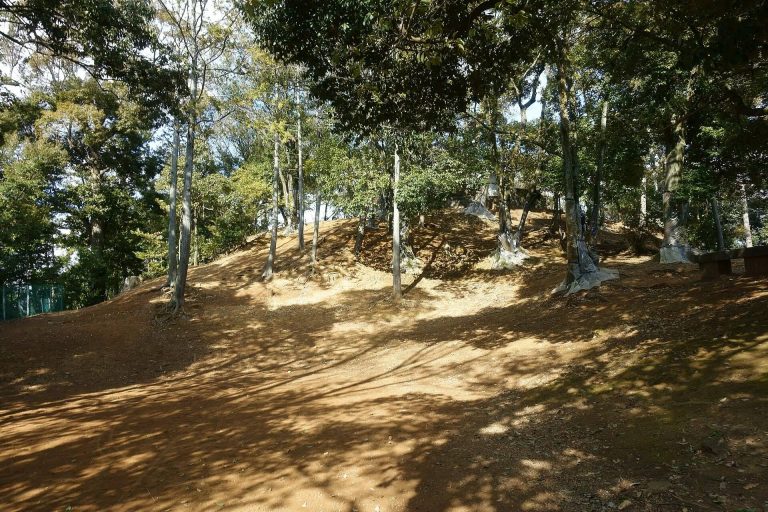
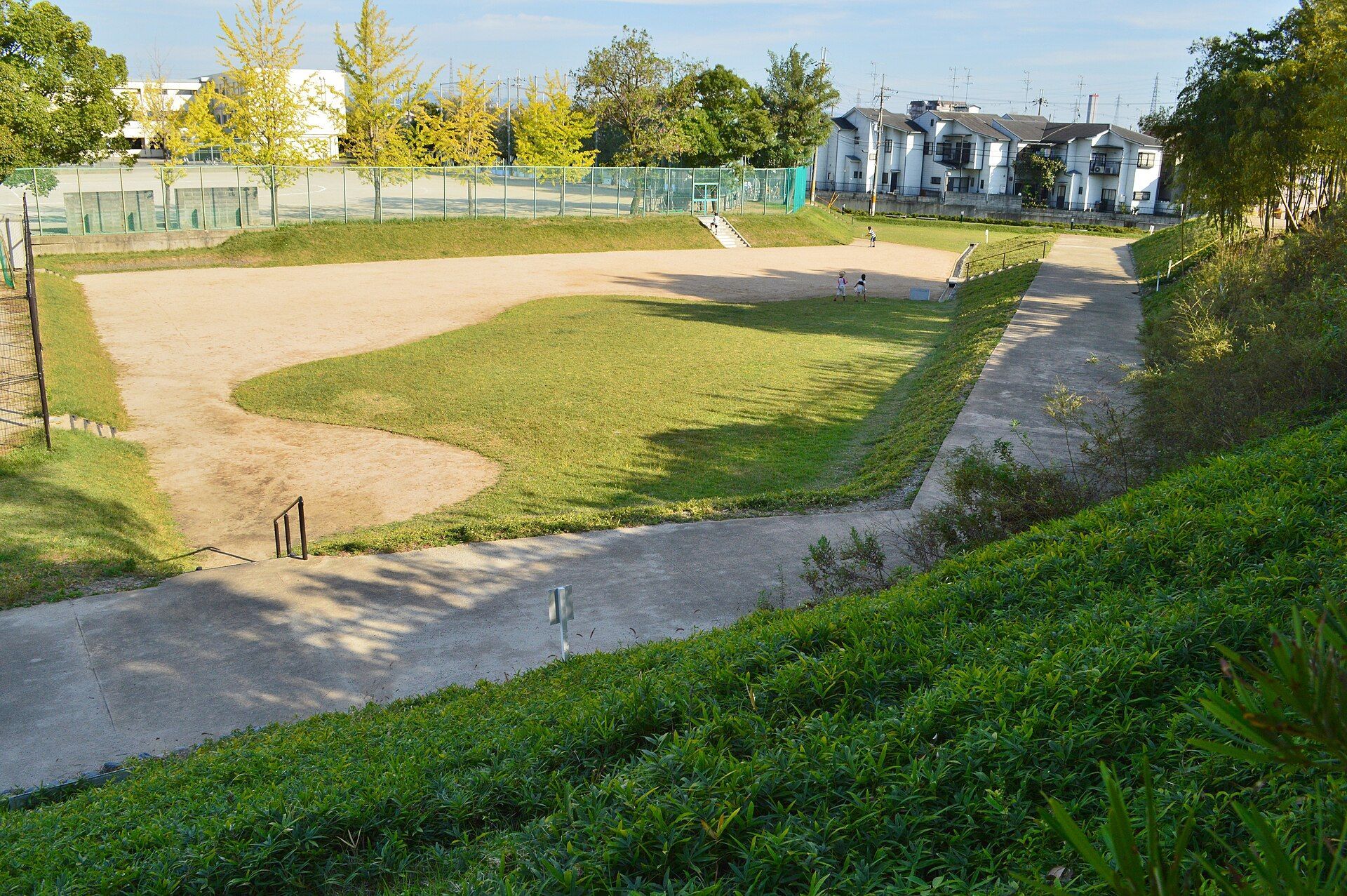
A cemetery occupied the posterior mound for several centuries and substantially damaged it. In 1980, when expansion of the cemetery was planned in another part of the mound, Nagaokakyō municipal education authorities carried out a preliminary investigation. Further excavations followed. Investigation and conservation work continued from 2003 to 2013, and the site became Igenoyama Kofun Park in 2014. Igenoyama Kofun was designated a National Historic Site in 1981. In 2016, it joined Emperor’s Mound Kofun, Terado Ōtsuka Kofun, and eight additional kofun in the Otokuni Kofun Cluster, a designated group of ancient burial mounds in southern Kyoto Prefecture. Excavated objects from the mound became Kyoto Prefecture Tangible Cultural Properties in 1999.
Local tradition holds that Akechi Mitsuhide, a military commander who fought Toyotomi Hideyoshi during the conflicts of late sixteenth-century Japan, may have established his field headquarters on the mound during the Battle of Yamazaki in 1582. The association remains possible rather than confirmed.
Remains
Mound and Moat
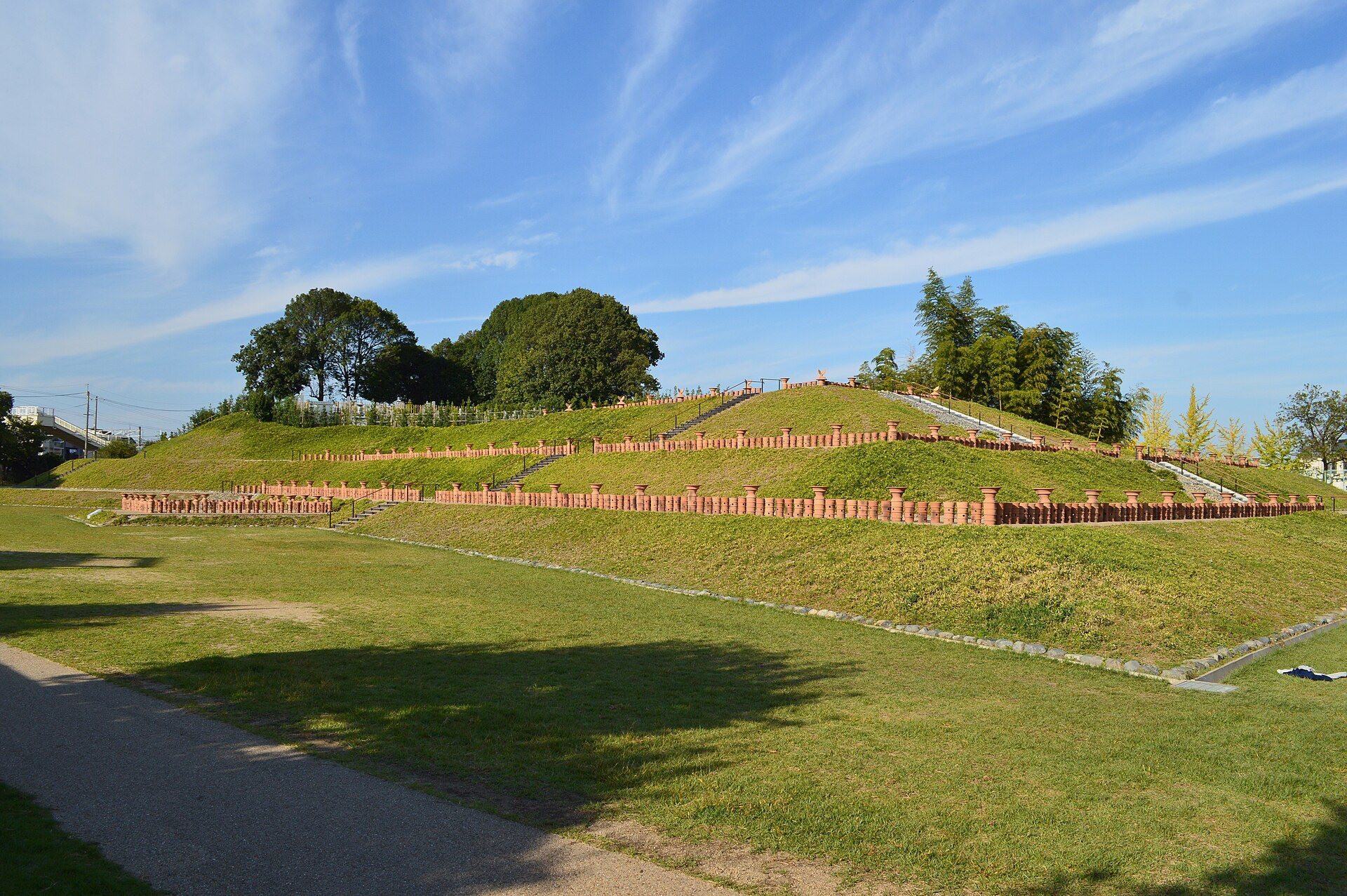
Igenoyama Kofun is a keyhole-shaped mound, formed by a circular posterior burial area and a square section projecting to the south-southeast. It is approximately 128 meters long. The circular rear section measures about 78.6 meters across and rises 10.4 meters, while the square front section is about 78.6 meters wide and 7.6 meters high. A moat approximately 30 meters wide surrounds the mound, bringing the monument’s overall length, including the moat, to about 180 meters.
Sandstone and chert surface stones covered the mound as fukiishi, stones laid over burial mounds to protect their surfaces. Rows of haniwa, clay figures and cylinders placed on or around mounds, were arranged across it. The burial facility itself is no longer preserved because of the cemetery on the posterior mound, although it is believed to have been a pit-type stone burial chamber, a below-ground, stone-lined burial facility associated with elite mound burials.
Weapon Deposit
The 1980 excavation uncovered a chamber used to store grave goods. It contained more than 700 iron weapons, including 146 straight swords, 11 iron swords, 52 daggers, one knife, five chisel-shaped iron objects, 10 fern-shaped blades, and 472 iron arrowheads. The scale of this weapon deposit is rare both in the Yamashiro region, the historical name for the Kyoto area, and across Japan.