Ganjōju-in Temple: A Hōjō Family Memorial Temple in Japan


Site at a Glance
- Rating
- 4.2
- Popularity
- Low
- Country
- Japan
- Primary era
- Early Modern
- External website
- Open
- Eras represented
- Medieval, Early Modern, Modern
- Civilizations
- Japanese, Kamakura shogunate, Tokugawa
- Site type
- Religious
- Remains
- Monastery
On this page11 sections
History
Ganjōju-in Temple is a Kōyasan Shingon-shū Buddhist temple in Japan, founded in 1189 during the Kamakura period by Hōjō Tokimasa. Its principal image is Amida Nyōrai, the Buddha of the Pure Land tradition. The temple was established to pray for the victory of Minamoto forces in their campaign against the Northern Fujiwara at Hiraizumi, but the earlier date of its Unkei sculptures indicates that it also served as the Hōjō family’s bodaiji, a Buddhist memorial temple for family ancestors.
Foundation and Hōjō patronage
The Azuma Kagami, a medieval chronicle of the Kamakura shogunate, records Tokimasa’s foundation of the temple. Its halls, pagoda, and other buildings were expanded over successive generations by Tokimasa, his son Hōjō Yoshitoki, and his grandson Hōjō Yasutoki. Tokimasa, Yoshitoki, and Yasutoki each held the office of shikken, or regent of the Kamakura shogunate. During the Kamakura period, Ganjōju-in developed into one of the largest and most important Buddhist temples in Izu Province.
At its height, the temple was a substantial complex of halls and towers. Its prosperity ended in 1493, when Hōjō Sōun’s invasion of Izu left it almost entirely burned. Sōun was a late-Muromachi-period warlord who established the Later Hōjō house’s position in the Kantō region. The partially rebuilt complex suffered another major fire during the 1590 Siege of Odawara, when forces led by Toyotomi Hideyoshi, the military ruler who unified Japan in the late sixteenth century, attacked the Hōjō. Monks removed the principal image and several other Buddhist statues, while many of the temple’s treasures were destroyed.
Rebuilding and archaeological investigation
During the Edo period, Hōjō Ujisada, a descendant of the Later Hōjō clan and a daimyō, or major feudal lord governing a domain under the shogunate, rebuilt Ganjōju-in. Most of the remains visible today date from this rebuilding. A Great Hall was added beside the main hall during the 1950s or 1960s.
Archaeological investigations in 1970 uncovered foundations belonging to several buildings described in the Azuma Kagami that no longer survive. The Ganjōju-in ruins were designated a National Historic Site on February 14, 1973. The group of sculptures attributed to Unkei received collective National Treasure status on June 19, 2013. Associated records include a portrait of Hōjō Tokimasa, a 1753 account of the temple’s restoration and the repair of Unkei’s sculptures, and Later Hōjō documents authenticated with red seals that were issued to the temple’s ascetic practitioners in 1546, 1553, and 1559.
Remains
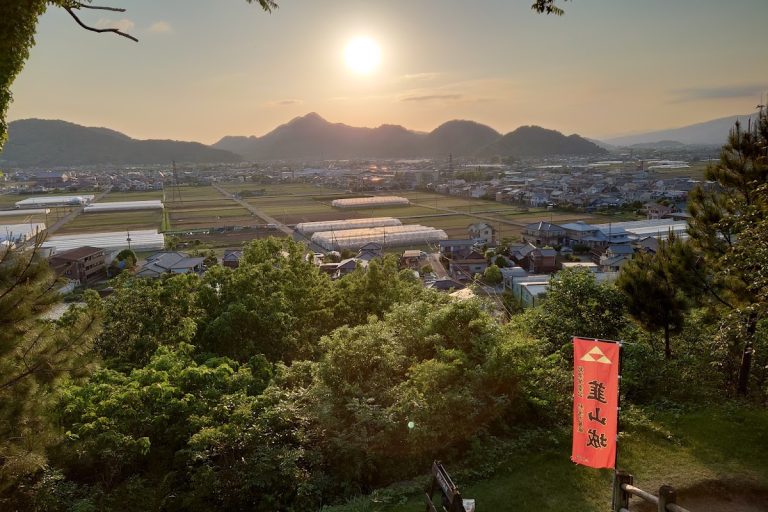
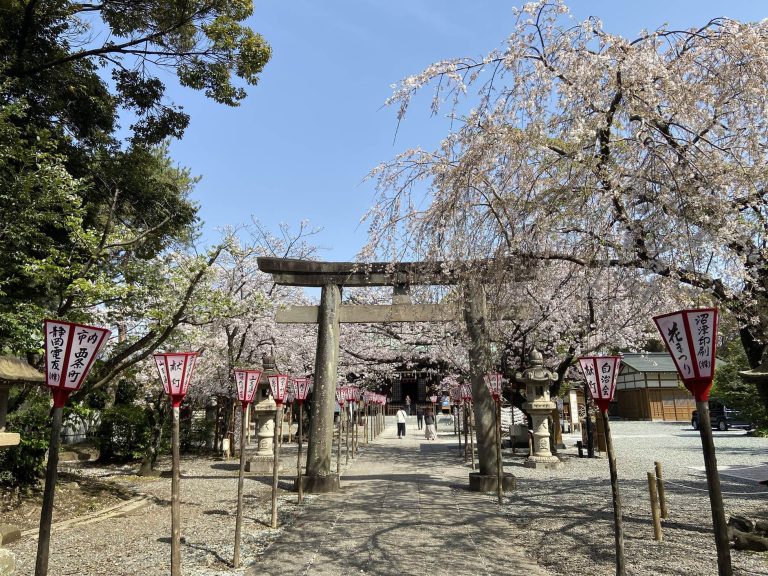
Ganjōju-in stands at about 100 meters above sea level on the eastern foot of Mount Moriyama, beside the Kano River on the Izu Peninsula. The present precinct is small, while the hills behind it formed part of the former temple grounds. The earlier complex included a large pond with an island joined by bridges and numerous halls and towers arranged in an architectural style associated with the Fujiwara period, the aristocratic era of Fujiwara influence at the imperial court. The surviving arrangement remains consistent with the layout described in the Azuma Kagami.
Former grounds and surviving buildings
Archaeological remains
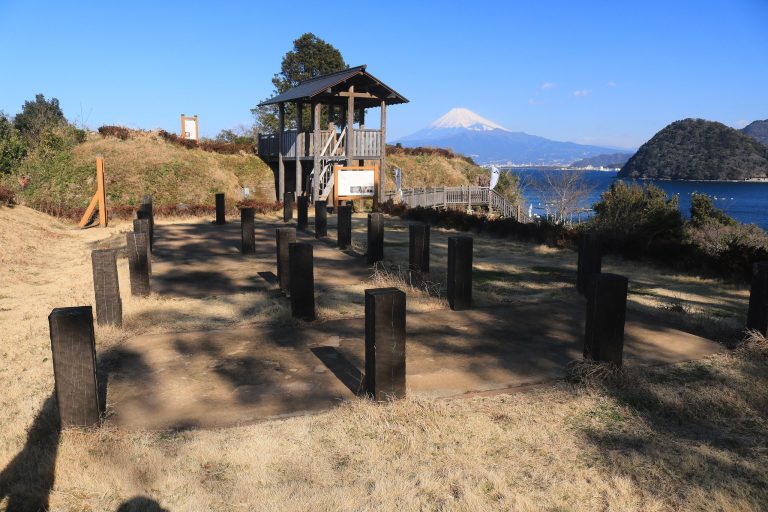
About 500 meters north of the present precinct, beyond a residential area, are foundations and other remains of former temple buildings. Traces of a garden pond survive in the area between these remains and the current precinct. Excavated roof tiles and pottery shards from the former complex are displayed at the Nagiyama Folk Museum.
Main hall and Great Hall
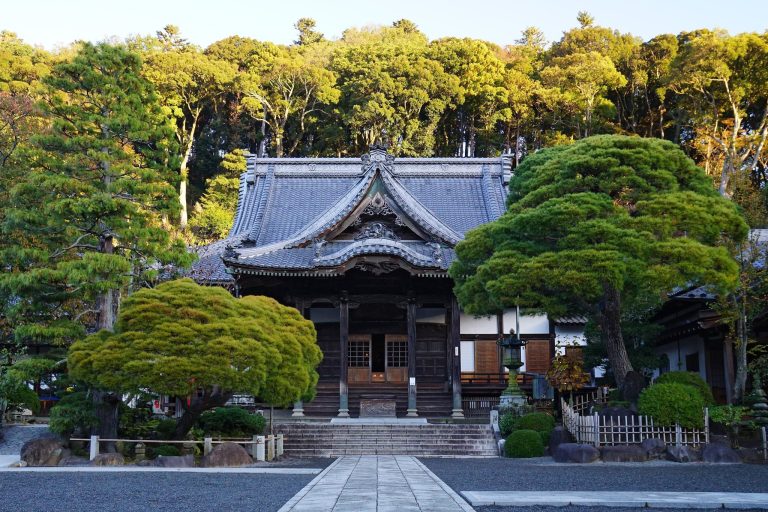
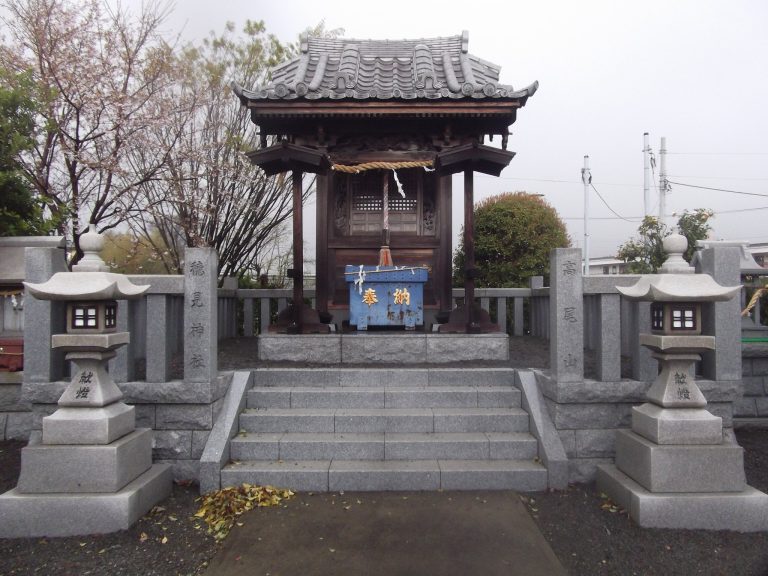
The surviving main hall has a thatched roof and was built in 1789, a date preserved on its ridgepole tablet, the wooden inscription placed near a building’s ridgepole to record construction or ritual information. The Great Hall stands beside it and forms part of the present temple buildings.
Buddhist sculpture
Unkei’s five-statue group
Five wooden Buddhist statues attributed to the early Kamakura-period sculptor Unkei are preserved at Ganjōju-in. The group consists of a seated Amida Nyōrai, a standing Bishamonten, a protective deity associated with war and wealth, and a standing Fudō Myōō with two attendants. Fudō Myōō is a wrathful guardian associated with immovable resolve. Inscriptions inside the sculptures date the group to 1186.
Masako Jizō
The seated Jizō Bosatsu is a 51.6-centimeter-high wooden figure dating from 1229 to 1232. Jizō is a bodhisattva associated with protecting and guiding beings. The head and trunk are formed from two joined pieces of wood, and the base is hollowed at knee height. A red inscription on the base gives a date in the Kanki era, which lasted from 1229 to 1232. The figure’s slightly arched posture, seated pose, and expression suggest an early Kamakura-period work, although additions are also present. Tradition identifies its appearance with Hōjō Masako, the wife of Minamoto no Yoritomo and an influential political figure in the early Kamakura shogunate, giving the statue its familiar name, “Masako Jizō.”
Second Amida Nyōrai
A second seated wooden Amida Nyōrai measures 86.8 centimeters in height and is attributed to the early Kamakura period. Its head and trunk are made from two joined pieces, creating a split neck, while the base is carved out at knee height using a top-and-bottom construction. The firm expression, topknot, clothing, and substantial body are associated with the sculptural tradition of Unkei’s school.