Saikyō-ji Temple: Head Temple of the Tendai Shinsei School in Japan


Site at a Glance
- Rating
- 4.3
- Popularity
- Medium
- Country
- Japan
- Primary era
- Unclassified
- External website
- Open
- Eras represented
- Unclassified
- Civilizations
- Oda regime
- Site type
- Religious
- Remains
- Monastery
On this page8 sections
History
Saikyō-ji Temple in Otsu, Japan, is the head temple of the Tendai Shinsei school, a Japanese Buddhist tradition that combines disciplined observance of Buddhist precepts with recitation of Amida Buddha’s name. Its foundation is traditionally placed in 618, although the early history is uncertain, and the institution is thought to have taken shape around the middle of the Heian period through close ties with Mount Hiei.
Traditional Origins and Mount Hiei
One tradition attributes the temple’s foundation to Prince Shōtoku, an early imperial regent associated with the spread of Buddhism in Japan. According to this account, it was established for the Korean monks Hyeja and Hyesong. The tradition also says that Emperor Tenji later bestowed the name Saikyō-ji. These stories do not provide a secure historical foundation for the temple.
A different tradition appears in a 1495 biography of Shinsei. It traces Saikyō-ji to a hermitage established by Ryōgen, the tenth-century Tendai monk associated with the revival of Mount Hiei, and says that his disciple Genshin organized the temple complex. Although the connection with these monks remains unconfirmed, Saikyō-ji is understood to have originated as a Mount Hiei institution during the middle of the Heian period. It now stands on the eastern foothills of the mountain, in the northern part of the Sakamoto district near the ascent to Yokawa, one of Mount Hiei’s three principal precincts.
Revival Under Enkan and Shinsei
In 1325, the Tendai monk Enkan, also known as Echin and Jii, revived Saikyō-ji. With the patronage of Emperor Go-Daigo, the fourteenth-century emperor who sought to restore direct imperial rule, the temple became a center for conferring Tendai precepts. A precept is a rule of conduct followed by Buddhist monastics or devotees.
The temple flourished after Shinsei entered it in 1486. Born in Ise Province in 1443, Shinsei entered religious life at fourteen and went to Mount Hiei at nineteen. He spent more than twenty years studying and practicing there, eventually attaining the rank of gon-daisōzu. After withdrawing to Kurotani Seiryū-ji in 1483, reportedly following his mother’s death, he descended from the mountain in 1485 and lectured at the imperial court on Genshin’s Essentials for Rebirth, an influential work on rebirth in Amida’s Pure Land.
Shinsei devoted the final ten years of his life to restoring Saikyō-ji and preaching there. His teaching joined Buddhist discipline with invocation, meaning the devotional repetition of Amida Buddha’s name. This approach became known as “precepts and invocation” and “perfect precepts and devotional chanting.” It distinguished the Tendai Shinsei tradition from the exclusive devotional chanting associated with Hōnen and from the teaching associated with Shinran concerning the salvation of evil persons. Shinsei died at the age of fifty-three at Sairen-ji in Iga Province in 1495.
Destruction, Reconstruction, and Succession
Oda Nobunaga’s attack on Mount Hiei in 1571, part of the military ruler’s campaigns during the conflicts of the sixteenth century, burned Saikyō-ji. The Main Hall was rebuilt three years later, and a wooden seated image of Amida Buddha was brought from Jufuku-ji in Kōka District to replace the destroyed principal image. The restoration is associated with assistance from Akechi Mitsuhide, the commander who governed Shiga District after the attack and built Sakamoto Castle nearby. A surviving donation document records Mitsuhide’s contribution of rice for memorial services for soldiers who had died under his command.
In 1590, Emperor Go-Yōzei issued an imperial decree merging the ruined Hōshō-ji of Okazaki in Kyoto, together with its temple register, into Saikyō-ji. Objects transmitted by Hōshō-ji were also moved to the temple. The formal name Kaikōzan Kenhōshō Saikyō-ji reflects this succession.
The Tendai Shinsei Institution
During the early-modern period, Saikyō-ji maintained its distinct Tendai-related tradition of precepts and devotional chanting while, like other Tendai-related temples, coming under the authority of Rinnō-ji on Mount Nikkō. It adopted the name Tendai Shinsei school in 1878. After the major Tendai branches were temporarily united in 1941 and separated again in 1946, Saikyō-ji became independent as the Tendai Shinsei school.
Saikyō-ji is the head institution of a network of more than 400 affiliated temples. It became a component property of the Japan Heritage designation “Lake Biwa and Its Waterfront Landscape: A Water Heritage of Prayer and Everyday Life” on 24 April 2015.
Remains
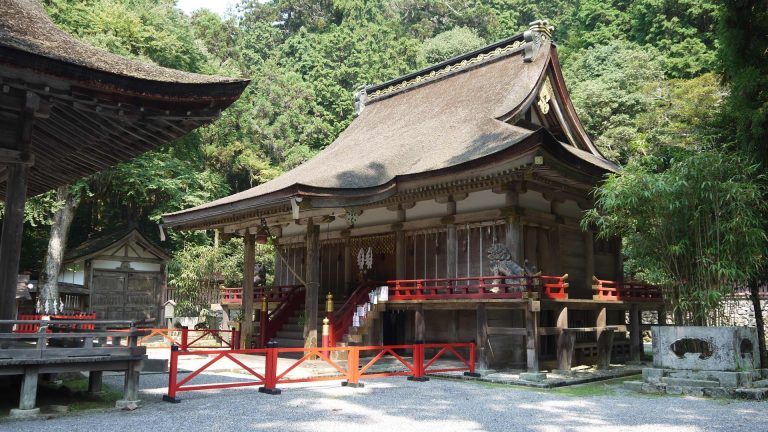
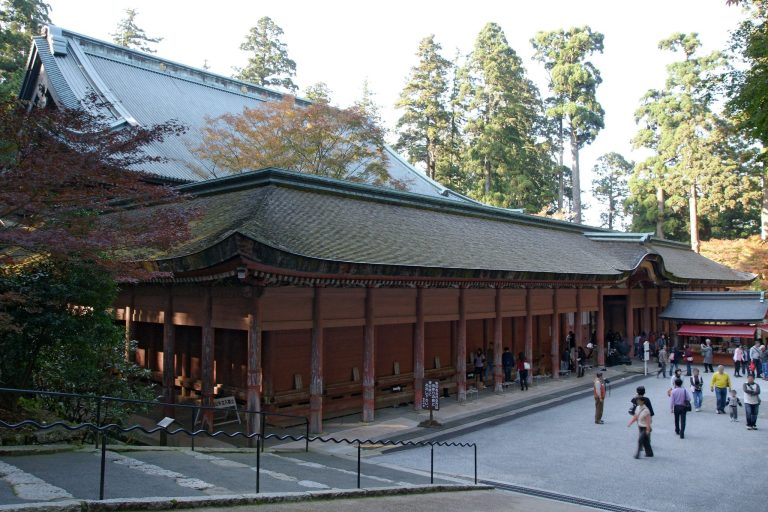
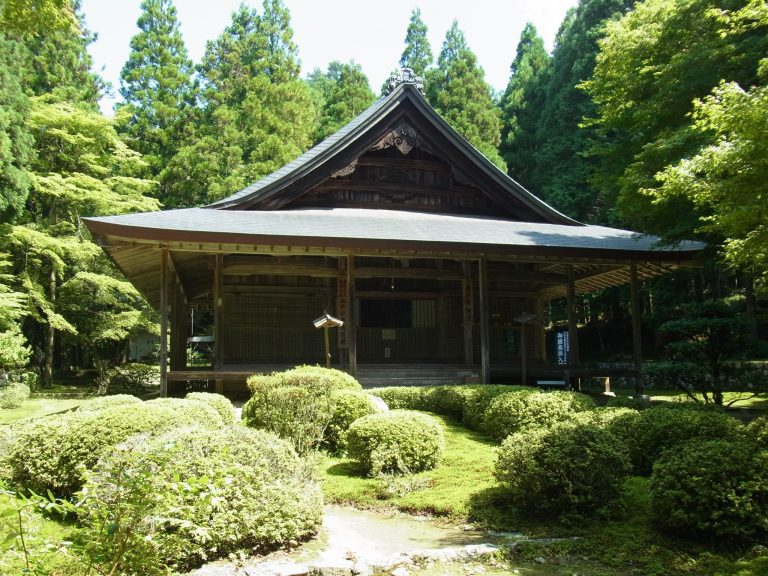
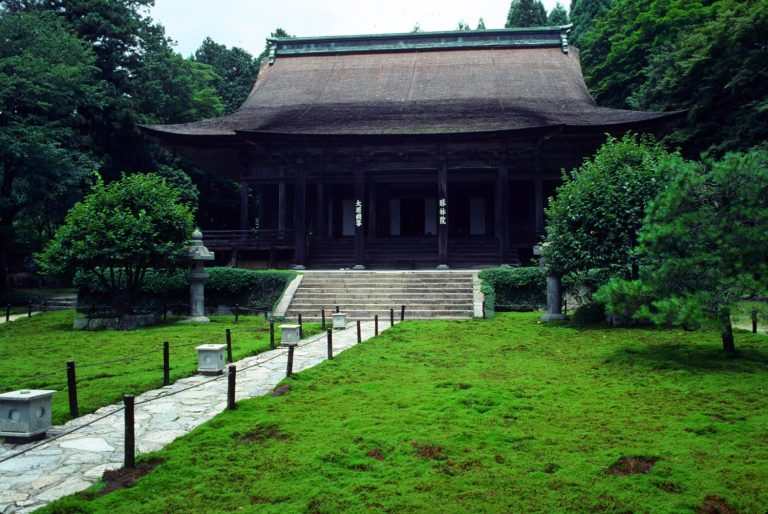
The temple is arranged on rising ground along the eastern foothills of Mount Hiei. A long approach begins at the Main Gate and is lined by six subsidiary temples. At its far end is an Imperial Messenger Gate, with the Founder’s Hall standing to the left. Beyond this approach, the principal compound occupies higher ground and contains the Main Hall, Guest Hall, study hall, and other buildings linked by covered corridors. A mausoleum dedicated to Shinsei stands above the central compound.
Principal Buildings and Religious Images
The Main Hall and Guest Hall are Important Cultural Properties, a Japanese legal designation that protects culturally significant buildings, artworks, and objects. The Main Hall houses the temple’s principal image, a wooden seated statue of Amida Buddha. Brought from Jufuku-ji after the destruction of 1571, the statue is also designated an Important Cultural Property. Its presence reflects Saikyō-ji’s continuing emphasis on Amida devotion and the recitation of his name.
The Guest Hall contains a Buddhist-image room where a hidden wooden seated image of Yakushi Buddha is enshrined. Yakushi is traditionally associated with healing and medicine. The image is regarded as an object transmitted from Hōshō-ji when that ruined temple was merged with Saikyō-ji in 1590. The bell tower is a designated cultural property of Otsu City.
Memorial Features and Preserved Evidence
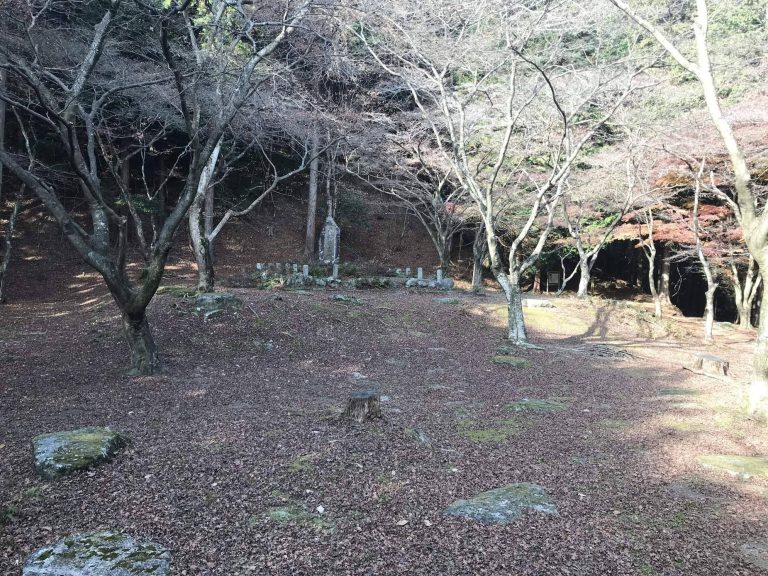
The grounds include a memorial tower for Akechi Mitsuhide and the graves of members of the Akechi family. They also contain stone images of Amida Buddha accompanied by twenty-five bodhisattvas. These features stand alongside the temple’s buildings and express the religious and commemorative traditions associated with the site.
Saikyō-ji preserves the donation document that records Mitsuhide’s contribution of rice for memorial rites for soldiers under his command. Together with the Amida image brought from Jufuku-ji, this document connects the surviving temple to the destruction of 1571 and the rebuilding that followed.