Kitaōya Kofun: A Seventh-Century Elite Burial Mound in Japan
Site at a Glance
- Rating
- 3.4
- Popularity
- Very Low
- Country
- Japan
- Primary era
- Medieval
- Eras represented
- Medieval
- Civilizations
- Yamato
- Site type
- Burial
- Remains
- Burial Mound
On this page9 sections
History
Kitaōya Kofun is a monumental Japanese burial mound in Hachiōji, Japan, built during the first half of the seventh century in the terminal Kofun period, the final phase of Japan’s mound-building burial tradition. Its large, multi-chambered stone burial facility places it among the leading burial monuments of the Tama region for that period. The scale and form of the tomb indicate that a regional elite or another person of exceptional local importance may have been buried there.
Construction in the terminal Kofun period
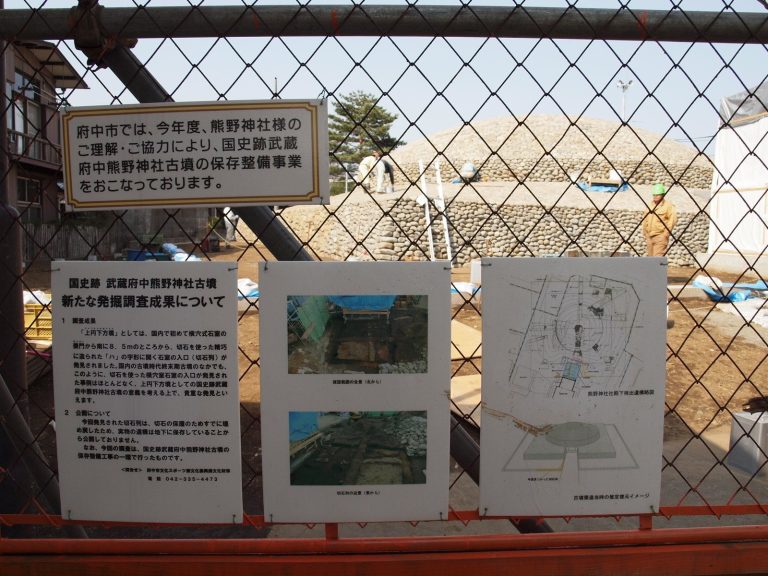
The tomb’s date is supported by its unusually large barrel-shaped stone chamber and by a fragment of Haji ware found directly in front of the burial facility. Haji ware was low-fired earthenware made in ancient Japan, and this fragment belongs to the early seventh century. The chamber’s design also links Kitaōya Kofun with the Musashi Fuchu Kumano Shrine Kofun and the Tenmondai Campus Kofun, generally dated to the middle or latter half of the seventh century.
Kitaōya was probably constructed before those two monuments. Its chamber is also larger than that of Inarizuka Kofun, an approximately contemporary tomb in Tama. These relationships support the interpretation that Kitaōya served as the burial place of a prominent regional figure. The tomb shares with the later monuments the use of a prepared foundation made from compacted layers of silt, although the mound itself does not appear to have been built with the same technique. This difference suggests that local building conditions varied among the monuments.
Excavation and deterioration
Residents of Komiya Village excavated the tomb in 1899. By then it had already been robbed, and no grave goods were recovered from the stone chamber. The excavation nevertheless recorded details that later became difficult or impossible to distinguish as the chamber deteriorated. These included an arched tendency in the stonework near the ceiling and blocking stones positioned in the forecourt at the entrance.
A further investigation in 1933 identified the mound as circular and approximately 29 meters in diameter. It had substantially collapsed and spread toward the south, while the chamber was already close to its present condition and in worse shape than it had been in 1899. Kitaōya Kofun was designated a Tokyo Metropolitan Historic Site in March 1936.
Modern archaeological investigations
From September to October 1993, researchers carried out a site-wide investigation and ground-penetrating radar survey as part of a study of kofun in the Tama area. The work examined the surrounding ditch and tested whether other tombs stood in the surrounding hill area. The radar survey detected no additional kofun. After the investigation, the stone chamber was reburied to protect its very soft stones from further deterioration.
Remains
Mound and surrounding ditch
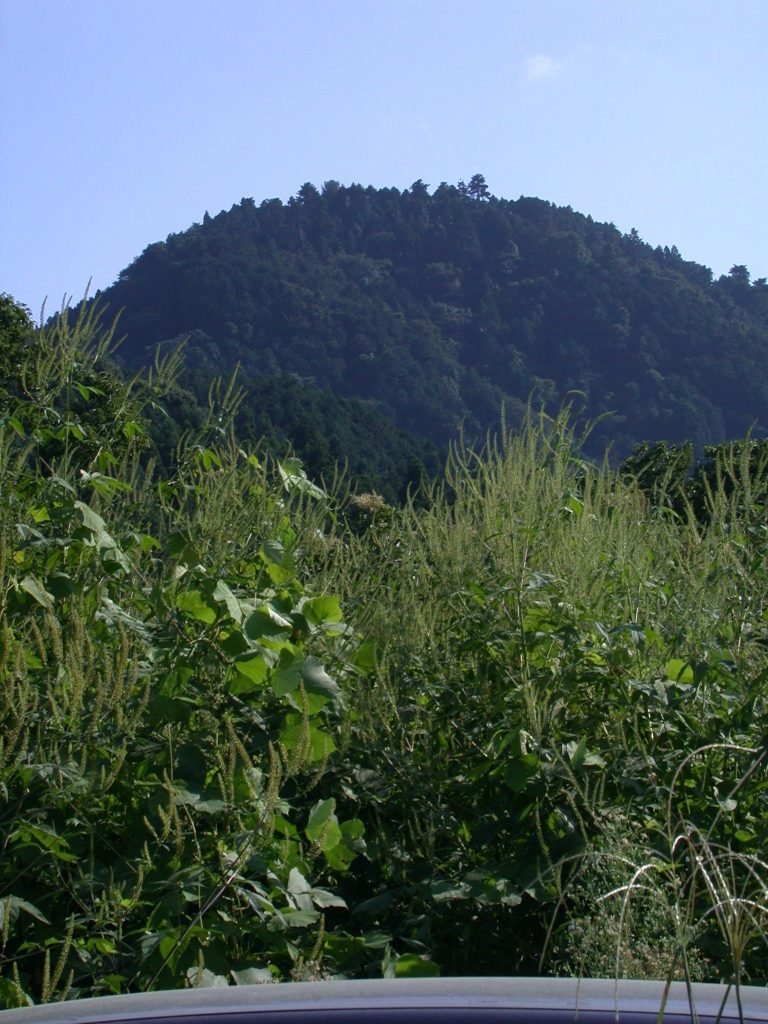
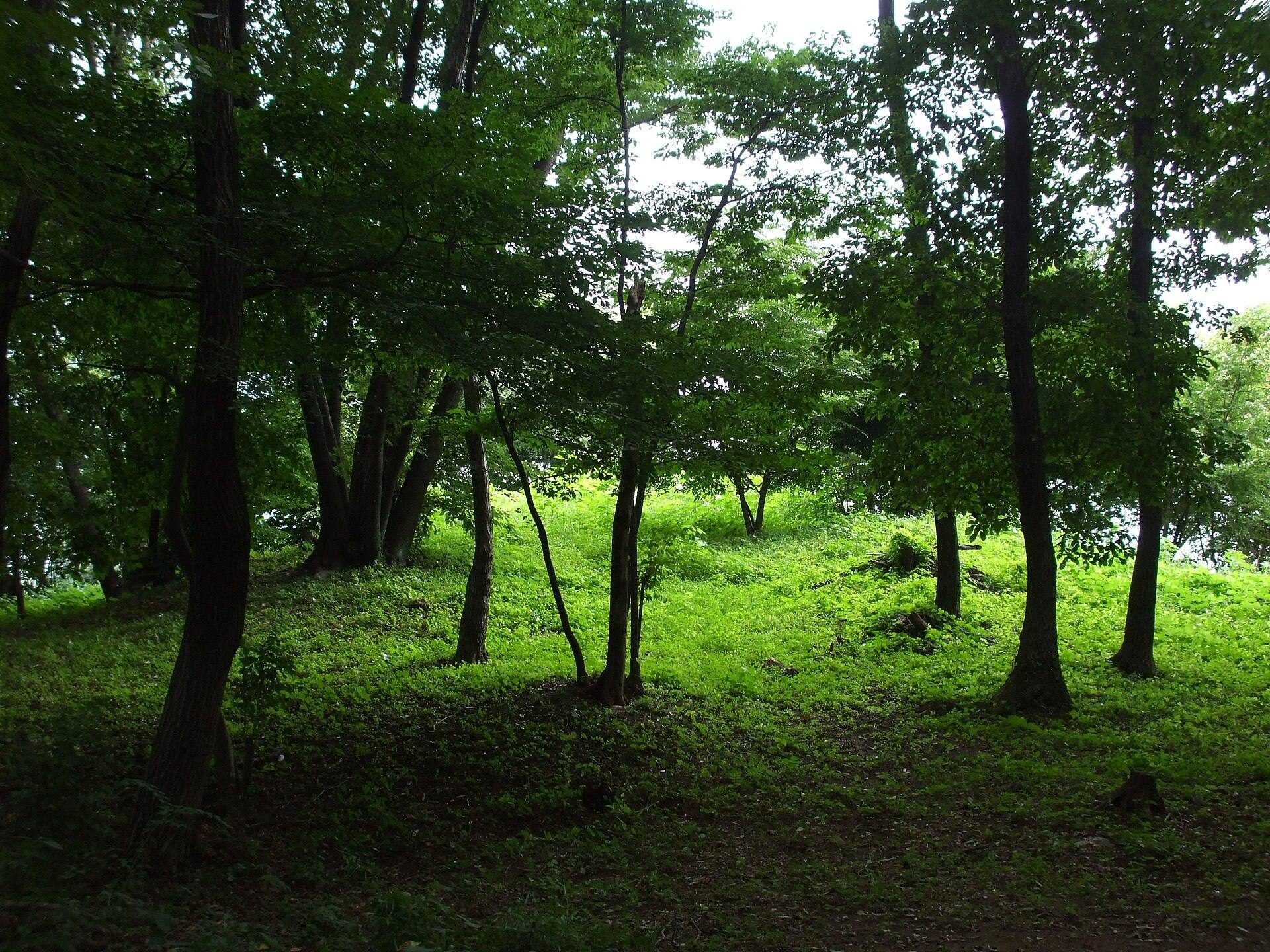
Kitaōya Kofun stands on a gentle south-facing slope on the southern side of the Tama Hills, at an elevation of about 140 meters. Its original mound shape remains uncertain. It may have been circular, with an estimated diameter of 39 meters, or square, with an estimated side length of approximately 39 meters. The surviving mound is 2.1 meters high. A 1933 investigation measured the collapsed mound at about 29 meters across, reflecting the effects of its later spread toward the south.
A ditch survives along the west, north, and east sides, forming roughly half a circuit around the mound. It measures between 3.2 and 4.2 meters in width and between 0.5 and 0.9 meters in depth. Because the tomb occupies a south-facing slope, the northern ditch is broad and separates the mound precinct from the rising hill behind it. The area from the east side around the front toward the southwest has no ditch, and this arrangement is considered part of the original design. Haniwa, clay objects often placed on Japanese burial mounds, and a stone revetment, a protective facing of stones, were not part of the original construction.
Three-room stone chamber
The burial facility is a horizontal stone chamber about 10 meters long. A horizontal chamber is entered from the side through a passage rather than from above. At Kitaōya, the passage leads to an antechamber and then to the burial chamber, creating a three-room layout. The burial chamber has a rounded, barrel-shaped form, an unusual feature that contributes to the tomb’s importance within the seventh-century burial landscape of Tama.
Extremely soft siltstone forms the chamber. Builders chipped the corners of individual stones so that adjoining blocks could interlock. About 10 centimeters of rounded gravel remains at the rear of the burial chamber, suggesting that the floor was originally covered with paving stones. The chamber rested on a specially prepared foundation made by cutting into the original dark-brown soil and filling the excavation with yellow-brown silt compacted in successive layers. This tamped-earth foundation extended 0.9 to 1.2 meters below the structure and rose about 20 centimeters above the original ground surface.
Condition of the chamber
The 1899 excavation recorded the chamber’s arched stonework near the ceiling and blocking stones at the entrance forecourt, but these details are no longer clearly visible. Some stones were apparently put back after the chamber collapsed during the excavation, without a sufficient structural examination. As a result, parts of the present masonry do not interlock with neighboring stones, and the chamber has suffered extensive collapse. Its reburial after the 1993 investigation preserves the surviving structure by limiting further exposure of the siltstone.
Recovered pottery
The only artifact recovered from Kitaōya Kofun is a fragment of Haji ware found immediately in front of the main burial facility. Its early seventh-century date accords with the proposed construction period of the tomb and provides material support for placing the monument in the first half of that century. Several tombs are known in the wider surrounding area, but relatively few are found nearby, and no additional kofun was detected around Kitaōya during the 1993 radar survey.