Tadeiyama Kofun: A Fifth-Century Keyhole Burial Mound in Japan


Site at a Glance
- Rating
- 3.7
- Popularity
- Low
- Country
- Japan
- Primary era
- Classical
- External website
- Open
- Eras represented
- Classical
- Civilizations
- Yamato
- Site type
- Burial
- Remains
- Burial Mound
On this page8 sections
History
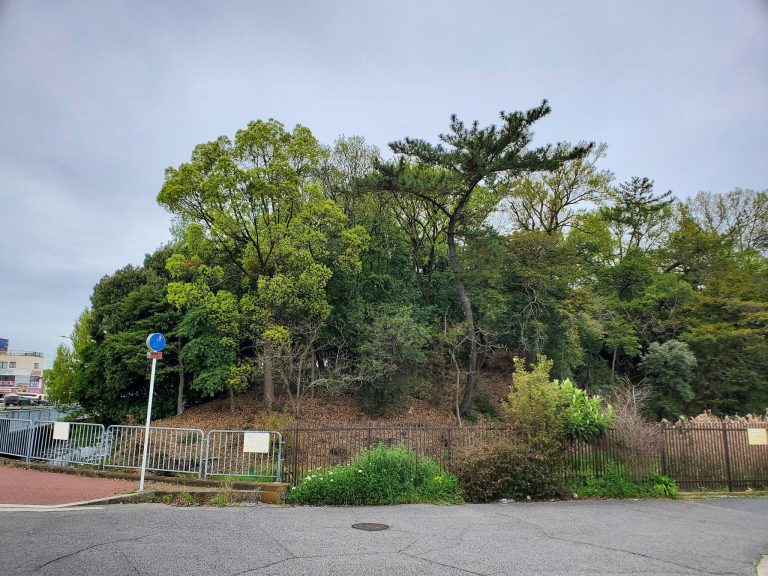
Tadeiyama Kofun is a fifth-century Japanese burial mound in Sakai, Osaka, Japan, built during the Kofun period in the form of a keyhole-shaped tomb. It stands at the northern end of the Mozu Kofungun, a group of ancient Japanese burial mounds, and was probably constructed around the middle of the fifth century. The form of its moats and the associated haniwa, clay objects placed around or on burial mounds, support this dating, while characteristics of the excavated haniwa have also been assigned to the early part of the later fifth century.
Burial and Imperial Identification
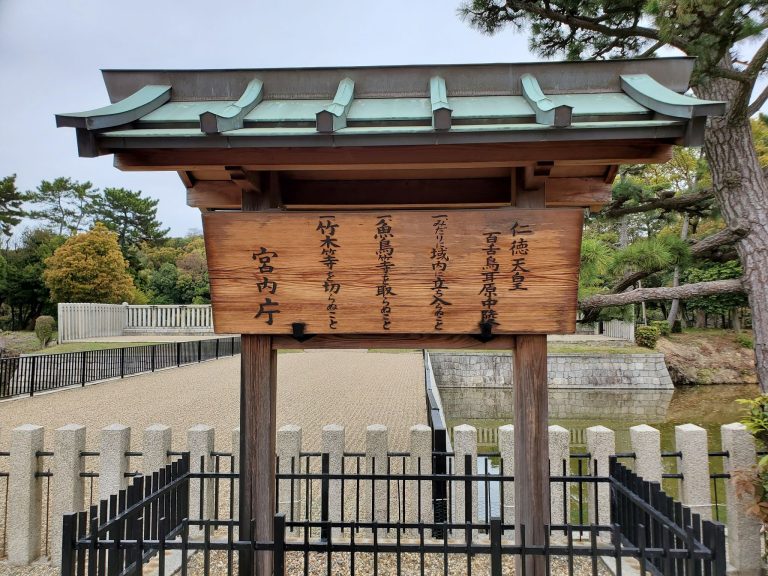
The person buried in Tadeiyama Kofun is unknown. The Imperial Household Agency, the Japanese state institution responsible for managing the imperial household and officially designated imperial mausoleums, identifies the mound as the mausoleum of Emperor Hanzei, traditionally counted as the eighteenth emperor of Japan. Its official designation is Mozu Mimihara Northern Mausoleum.
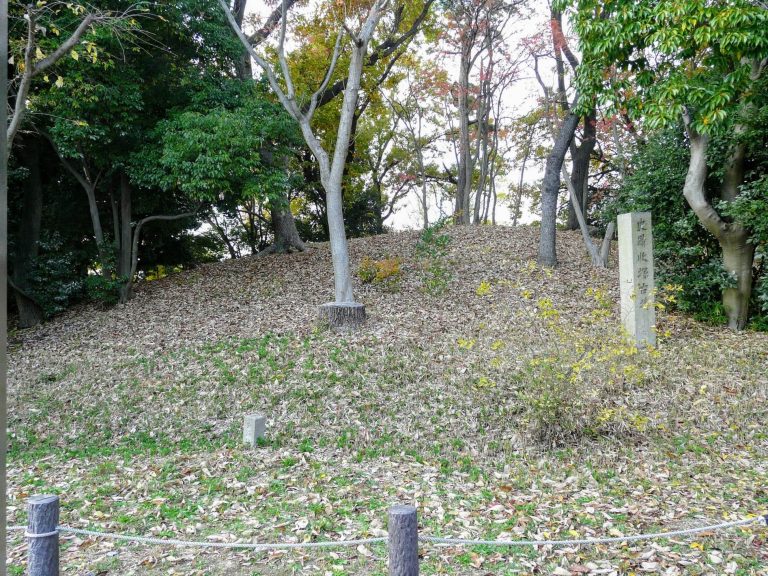
This identification has been widely questioned because Tadeiyama Kofun is considerably smaller than Daisenryo Kofun and Kamiishizu Misanzai Kofun, the two other mounds traditionally identified as imperial mausoleums in the Mozu area. The larger Haji Nisanzai Kofun is also treated by the Imperial Household Agency as a possible reference site for Emperor Hanzei’s mausoleum. Two nearby square tombs have traditionally been associated with Tadeiyama Kofun as possible subsidiary mounds, and both are managed by the Imperial Household Agency.
Names and Historical Records
Maps from the Edo period refer to the mound as the Mausoleum of Emperor Hanzei and as Tatei Mausoleum. Tatei was an alternative name for the broader Mukai area, and the name is considered to have developed into the present form, Tadeiyama. A survey drawing titled “Outer Survey of the Mausoleum of Emperor Hanzei,” produced in 1869, is preserved in the Sakai Municipal Library.
Moat Investigations and Preservation
Investigations by Sakai municipal authorities and the Imperial Household Agency in 1980 and 1987 established that the mound originally had an outer moat in addition to the surviving inner moat. Later archaeological investigations and monitoring connected with private development located further sections of the outer moat around the site.
The outer moat was probably filled between the middle of the thirteenth century and the late fourteenth century. In 2002, the planned position of a road was changed so that the buried moat would not be cut, allowing its remains to be preserved in place.
In 2019, the mound was registered under the name Hanzei-tenno-ryo Kofun as part of the Mozu Kofungun component of the UNESCO World Heritage property Mozu-Furuichi Kofungun: Ancient Tumulus Clusters of Japan. The property comprises ancient Japanese burial-mound groups in the Osaka region.
Remains
Mound and Setting
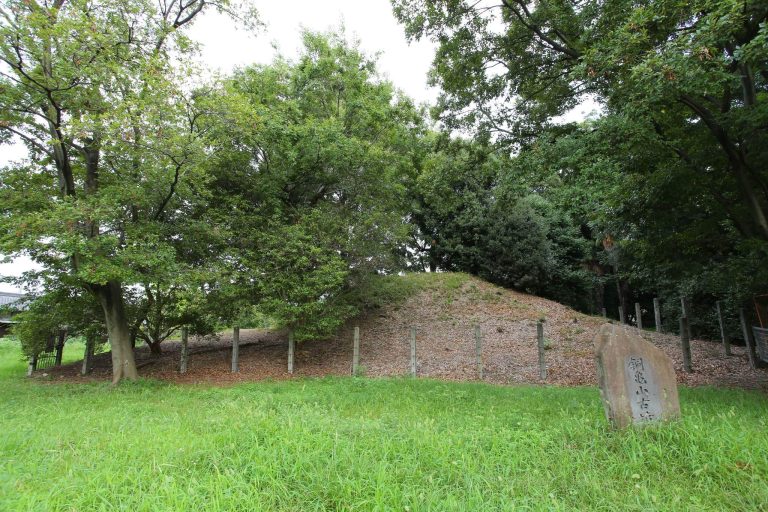
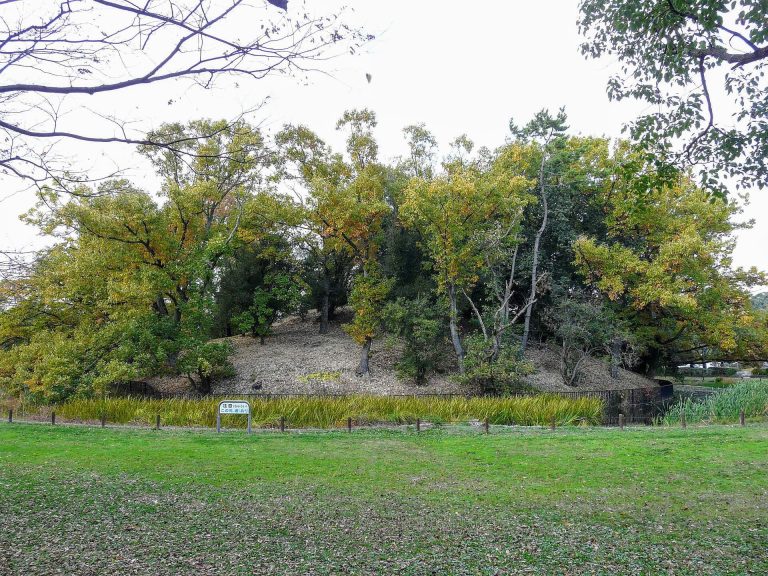
Tadeiyama Kofun is a keyhole-shaped mound with a total length of approximately 148 metres. Its circular rear section measures about 76 metres across and rises roughly 13 metres high. The projecting square front section is about 110 metres wide and reaches approximately 14.8 metres in height. Both sections were built in three tiers, while the form of the burial facility remains unknown.
The mound follows the contours along the western edge of a plateau, with its front section facing south. This position and orientation are thought to have been influenced by a desire to make the tomb visible from Osaka Bay. A projecting platform was constructed only on the western side of the junction between the circular rear mound and the square front section. The precinct of a shrine adjoins the inner moat at the northeastern corner on the side of the front section.
Inner and Outer Moats
The inner moat has a shield-shaped outline. Although only this moat is visible today, the original arrangement consisted of two moats separated by an intermediate bank about 23 metres wide. The outer moat was approximately 11.5 metres wide. Investigations identified it on the eastern and western sides of the mound and near the extension of the mound’s central axis.
At the eastern front-section area examined in 1980, the outer shoulder of the moat was found beside a stone-covered slope more than 1 metre deep. A trench across the intermediate bank located the inner shoulder and indicated a width of about 12 metres. At the southeastern corner, examined in 1992, the outer shoulder lay more than 0.7 metres below the surface and had a slope angle of 25 degrees.
The western area investigated in 1987 revealed an outer moat about 11.5 metres wide and 0.8 metres deep, with a slope angle of approximately 22 degrees. Stone surfacing occurred on the outer shoulder. At the northern part of the rear mound, investigated in 2005, the moat measured between 11 and 13 metres wide and just under 1 metre deep. Its outer shoulder was surfaced with relatively small stones.
Boundary-confirmation and construction-monitoring investigations located the outer moat at three points east of the mound and two points west of it. At one eastern location, the presumed inner shoulder extended broadly toward the inner moat but had been modified later. One western location revealed a slope interpreted as the outer shoulder. At another, two trenches established a width of 11.7 metres and a depth of 1.05 metres. The mainly clayey deposits suggest that this part of the moat may once have held water.
Haniwa and Excavated Objects
Numerous cylindrical haniwa were recovered from the northeastern side of the circular rear mound. Cylindrical haniwa commonly formed rows or boundaries around burial mounds. Other haniwa finds include an umbrella-shaped example, a house-shaped example, and part of the hand of a human-figure haniwa. These figurative objects represented such subjects as buildings and people, but the recovered pieces were not found in their original positions.
Other excavated material includes an agate magatama bead and a Sue ware stand. A magatama is a curved, comma-shaped bead used as an ornament and ritual object. Sue ware was a high-fired ancient Japanese ceramic tradition that produced a hard, often gray body. Together with the haniwa, these finds provide material evidence for the mound’s date and funerary context.